
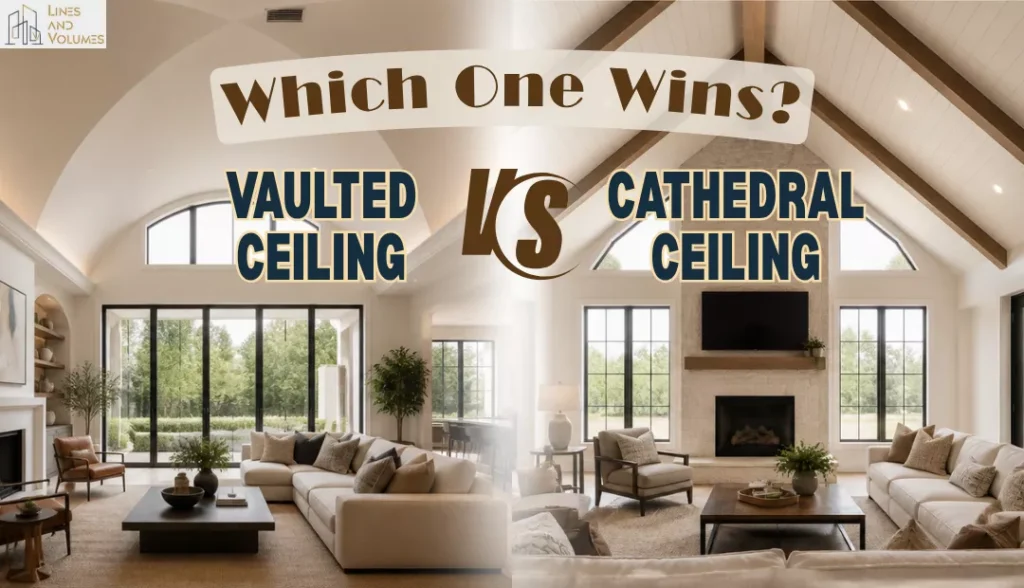
At first glance, the cathedral and vaulted ceilings appear similar, but they’re not identical. Vaulted ceiling vs. cathedral ceiling comes down to their shape and structure. Both are higher than the standard 8-foot flat ceiling and make a room feel larger and more spacious. A vaulted ceiling is any ceiling that may slope, arch, curve, or combine multiple angles. A cathedral ceiling is a specific type of vaulted ceiling that is symmetrical and follows a roof slope on both sides, ending at a central crest.
The primary difference is in the shape and structure. Cathedral ceilings follow the roofline and are an aesthetically pleasing design. Vaulted ceilings have multiple forms and are not restricted to following the roofline.
What Is a Vaulted Ceiling?
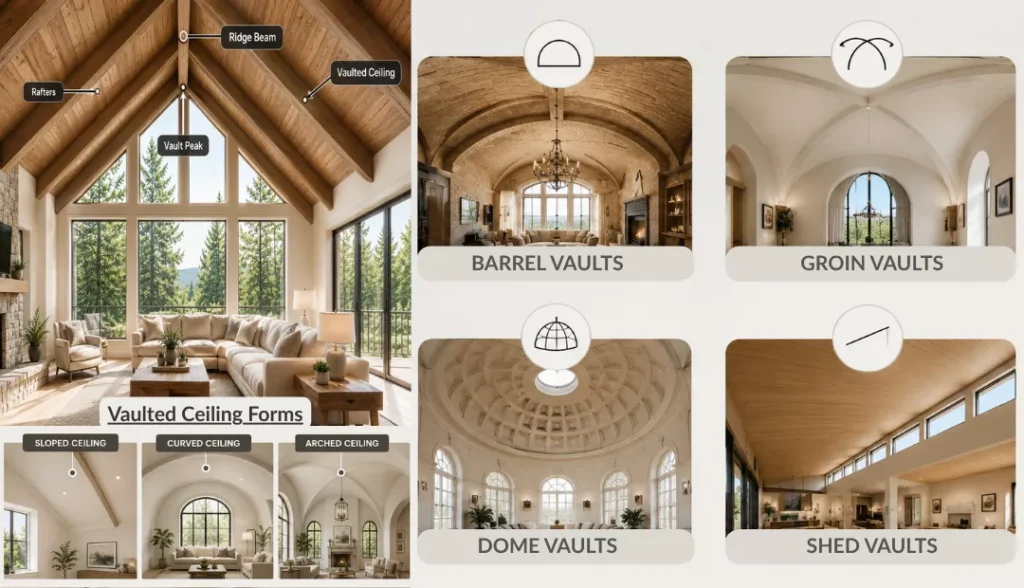
A vaulted ceiling is a broad term for any ceiling that rises above the height of a standard flat ceiling. It may slope, curve, or even arch upwards, with rises ranging from simple to dramatic.
The word “vault” comes from traditional architecture, in which arched stone and masonry constructions were built to cover large areas. Today, residential vaulted ceilings include:
- Barrel vaults – a continuous semi-circular arch resembling the inside of a barrel.
- Groin vaults – created through two vaults overlapping at right angles
- Dome vaults – a rounded bowl-like shape
- Shed vaults – a single-slope ceiling that rises from one wall to another.
Because vaulted ceilings are able to take different forms, they give greater flexibility and do not have to follow the same roofline. They can be found in bedrooms, living spaces, hallways, kitchens, sunrooms, and many other areas.
What Is a Cathedral Ceiling?
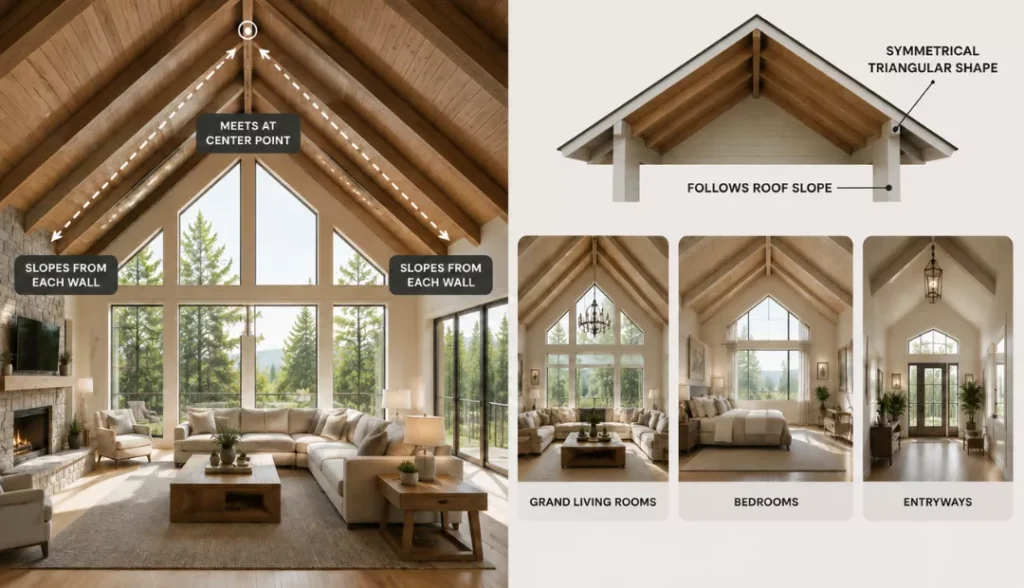
Cathedral ceilings are a type of vaulted ceiling with two equal sloping sides that rise from opposite walls and meet at a central point. It follows the shape of the roof, creating a symmetrical triangular appearance.
Cathedral ceilings are commonly found in houses with steeply pitched roofs and typically span the entire space. They are commonly seen in grand living rooms, bedrooms and entryways as their proportions and height make a striking focal point. They can help bring more natural lighting into the space when paired with skylights or large windows.
Each cathedral ceiling is a vaulted ceiling; however, not all vaulted ceilings are cathedral ceilings. The main difference in cathedral ceilings is that they are symmetrical and follow the slope of the roof.
Key Differences in Vaulted Ceiling vs. Cathedral Ceiling:
Roof Structure
In cathedral ceilings, the roof pitch follows on both sides. A steeply pitched roof is typically used to create a cathedral ceiling.
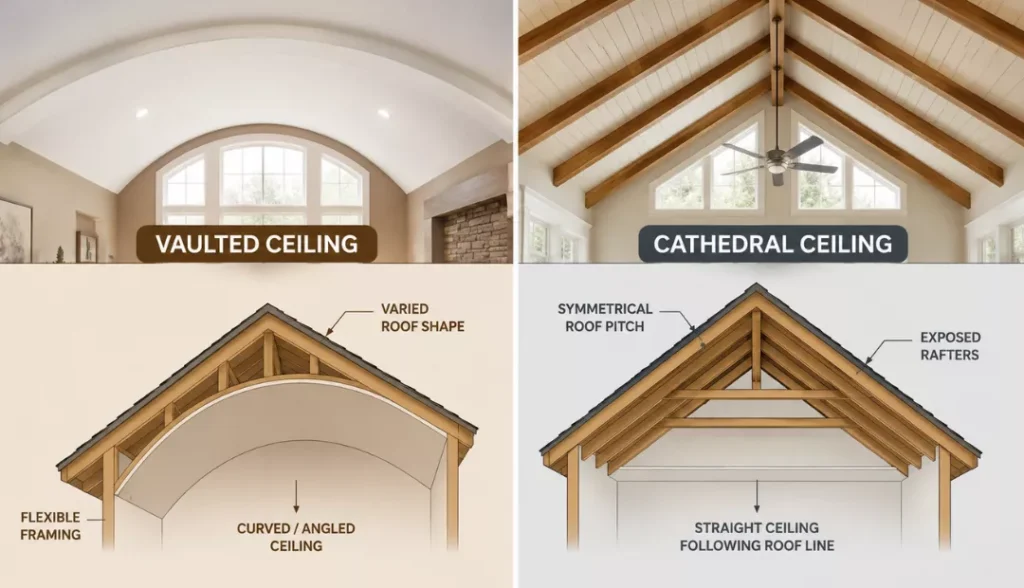
Vaulted ceilings are curved, angled, or asymmetrical and offer greater design flexibility. They utilize different framing methods, curved structures or engineered supports. They don’t need to follow the roofline.
Ceiling Shape
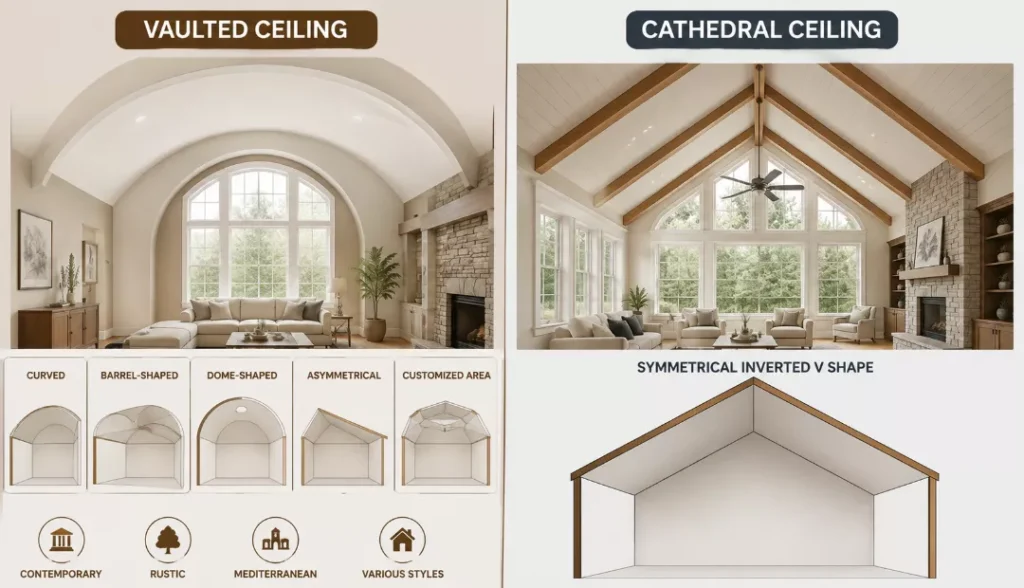
Cathedral ceilings strictly follow a symmetrical layout with two sloped sides that join at the top of a central ridge creating an inverted V shape.
Vaulted ceilings can be curved, asymmetrical, dome-shaped, barrel-shaped, or customized to a certain area. They can be used with contemporary, rustic, Mediterranean and various other styles of architecture.
Design Flexibility
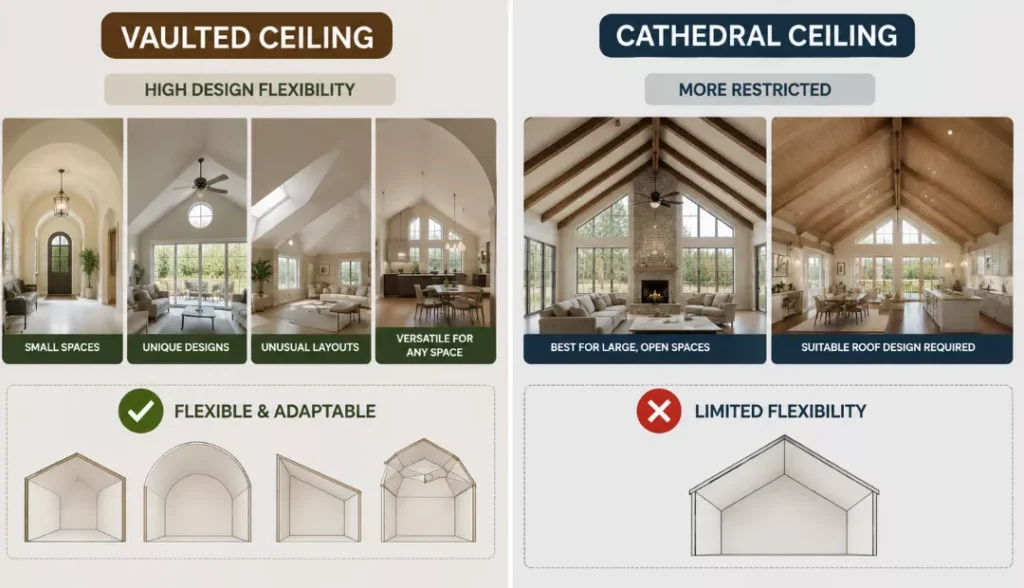
Vaulted ceilings can be applicable to smaller spaces, unique designs, and unusual layouts. Cathedral ceilings are more restricted due to their symmetrical design. They work best for larger, open spaces as well as suitable roof designs.
Construction Complexity
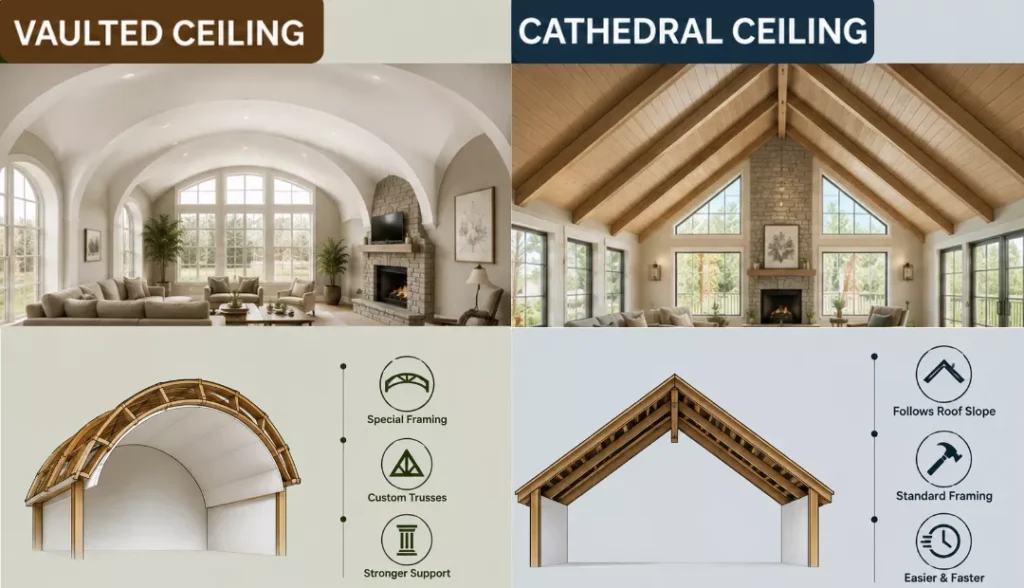
Cathedral ceilings are easier to construct because they follow the roof slope. Vaulted ceilings may require additional special framing, engineering, custom trusses or a stronger structural support. That is why vaulted ceilings are more complex than cathedral ceilings.
Cost
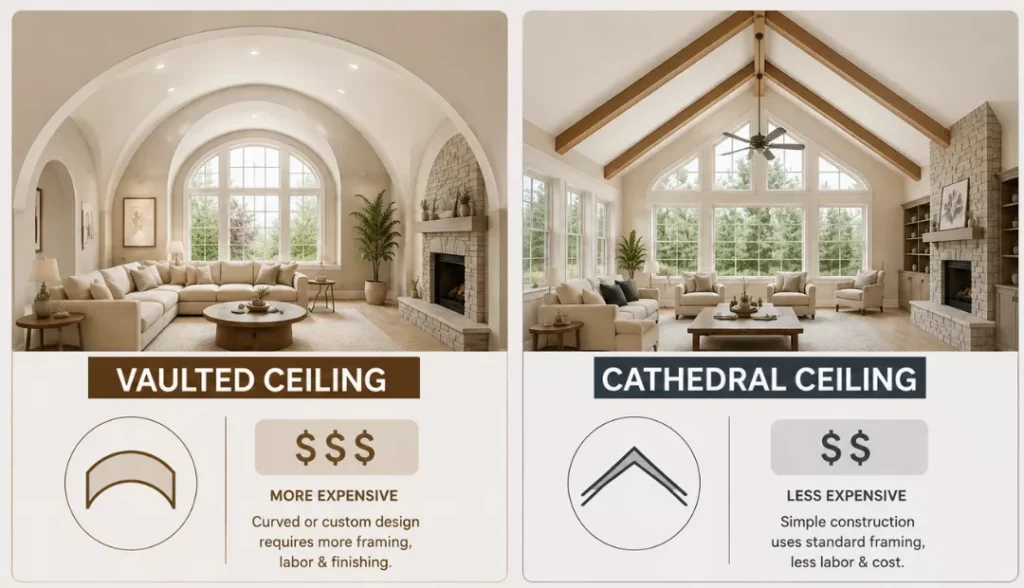
The ceilings of both styles may be more expensive than standard flat ceilings as they require more framing and finishing. But curving or custom-designed vaulted ceilings are more costly than cathedral ceilings, which are considered standard due to their simple construction.
Best Applications
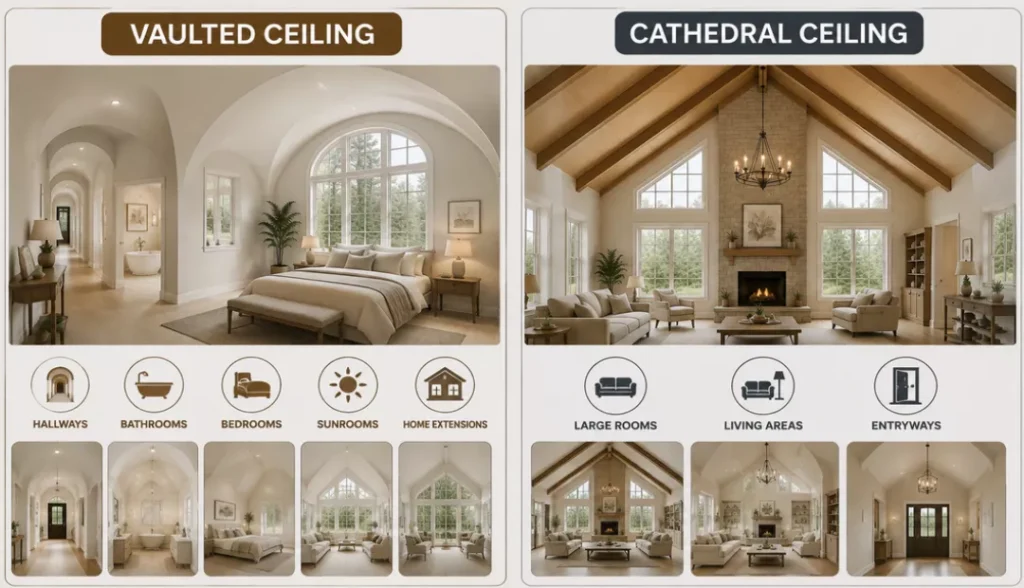
Cathedral ceilings work especially well in large rooms, living areas, and entryways, where their height and proportions can create an impressive focal point.
Vaulted ceilings offer greater versatility and can be used in hallways, bathrooms, bedrooms, sunrooms, home extensions, and other spaces that benefit from a customized ceiling design.
Pros and Cons
Vaulted Ceiling
Pros
- Available in customized shapes, including barrel, dome, asymmetrical, and shed designs
- Works well for smaller rooms and unusual layouts
- Not restricted to follow the roof slope
- Adds visual interest to less prominent spaces
Cons
- Customized designs can be expensive
- May require specialized framing or structural support
- Can be harder to insulate and may affect heating and cooling efficiency
Cathedral Ceiling
Pros
- Creates a classic, symmetrical appearance that maximizes vertical space
- Often easier to frame in new construction with matching roof pitch
- Works well with large windows and skylights
- Creates a dramatic focal point in open spaces
Cons
- Works best with a steep roof pitch
- Less suitable for small or irregular rooms
- Can increase heating and cooling costs because of greater air volume
- Its symmetrical design may not suit every layout or architectural style
Frequently Asked Questions
Can a cathedral ceiling also be a vaulted ceiling?
Yes. The cathedral ceiling is one of the types of vaulted ceiling. It is made up of two slopes that run along the roof’s pitch and meet at the central point. Vaulted ceilings come in many different shapes, such as curving, asymmetrical and dome-like styles.
Which ceiling makes a room look bigger?
Both styles increase the height and make rooms appear bigger and more spacious. Cathedral ceilings usually make a visual impact in large rooms due to their symmetrical design that draws attention to the central point. The impact of a vaulted ceiling depends on its specific shape and how it is used within the space.
Is a cathedral ceiling more expensive than a vaulted ceiling?
A standard cathedral ceiling tends to be less costly than a domed, curved or extremely custom-designed vaulted ceiling since it is a roofline-based design and requires less framing. But the cost will depend on the style and the amount of structural work required.
Which ceiling is easier to build?
Cathedral ceilings are simpler to construct, especially in new houses, since they follow the natural slope of the roof.
Conclusion
Cathedrals and vaulted ceilings offer more height, natural light and aesthetic appeal, but they’re not the same. Vaulted ceilings represent a broad category of ceiling designs with many different shapes, whereas cathedral ceilings are one particular type that follows the roof’s slope and features the appearance of symmetry.
The ideal choice in vaulted ceiling vs. cathedral ceiling will depend on the room size, roof structure and design preferences. Cathedral ceilings work well in spacious, open spaces and have a classic and dramatic look, while vaulted ceilings provide greater flexibility to accommodate different spaces, layouts and architectural designs.
More Ways to Style Your Home:
- Coffered vs Waffle Ceilings: What’s the Difference
- Ideas for Bathroom Ceilings for a Luxury Bathroom Feel

Mansi is a creative designer with three years of professional experience, specializing in clean, balanced, and purpose-driven visuals. She is also a passionate writer whose work shows a strong sense of layout, composition, and visual hierarchy. Outside work, she enjoys sketching, experimenting with color, and spending time around plants and outdoor spaces. Connect with her on LinkedIn.