

Blogging helps architects to showcase their work, share their knowledge, educate clients and attract potential clients. Most architects miss opportunities to help prospective clients, which puts them at a disadvantage. As digital marketing has become an integral part of any business, a proper content and SEO strategy offers many advantages, such as improving online visibility, attracting high-value clients, and building a brand for an architecture firm. Blogging is a key component of an effective marketing strategy, yet many architects struggle to make the most of it.
Although many architecture firms do publish certain blogs on their site, generally these blogs are either announcements of new projects or news-related articles.
In this blog, we will try to understand why content marketing is useful for architects and also we will explore the benefits of blogging.
What is Content Marketing And How Does It Benefit an Architect?
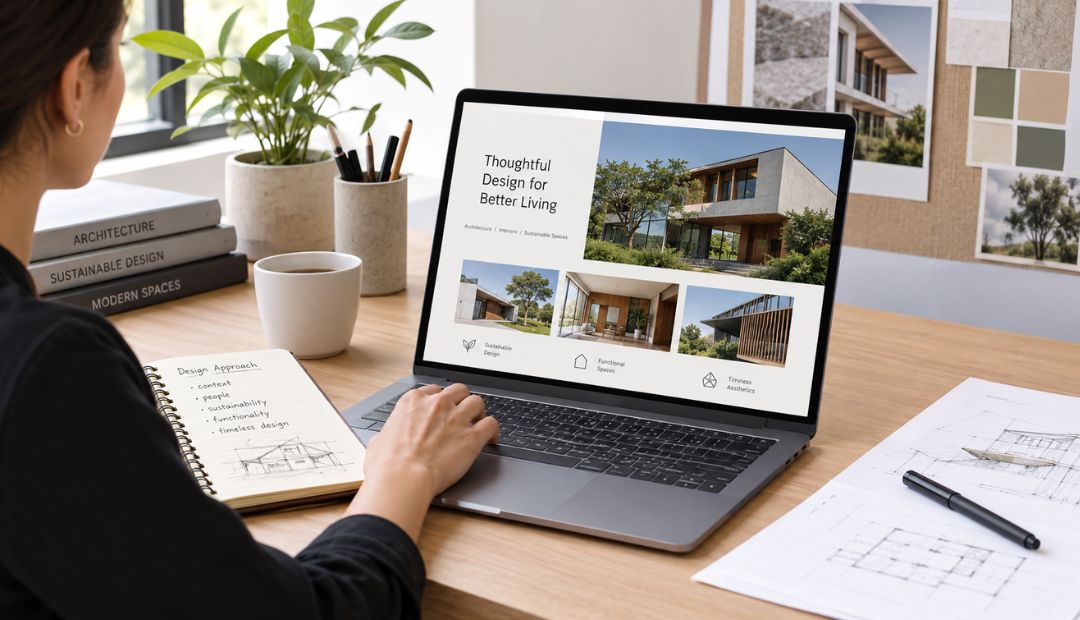
1. Build Your Brand and Show Your Design Philosophy
You’ve studied architecture, developed an interest in design and construction, and perhaps gained experience in other areas along the way. Now that you’ve established your practice, you can articulate all of your design and construction knowledge and experience to potential clients.
Blogging gives you an opportunity to discuss your past projects and help potential clients understand your design approach and expertise. You can inform readers about your design approach to various architectural issues, forms, and styles. Writing about your process helps readers understand how you approach projects similar to their own.
2. Improve Your Website’s Search Visibility
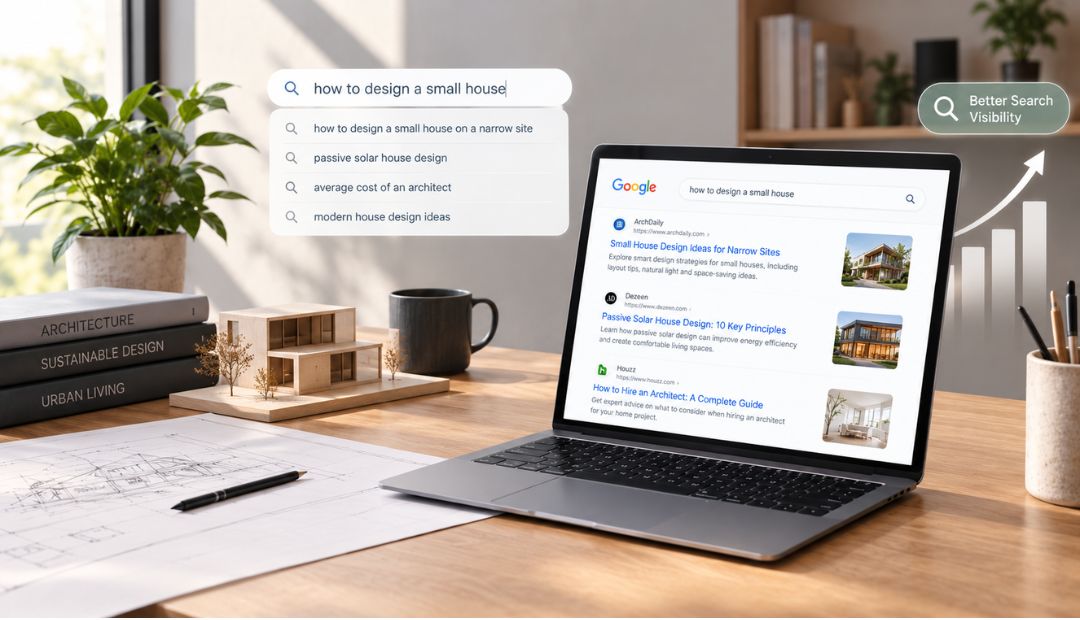
When the general public seeks an architect or researches project planning, they often use a search engine. They may search for the cost of an architect, the best way to design a small house on a narrow site, or how to design a passive solar house.
Blogging provides a platform to produce informative articles that answer questions your target audience is searching for. By writing articles around your potential clients’ questions, you attract readers who are interested in your expertise. SEO helps your site appear in search results for your area of expertise. Publishing relevant articles gives your website more opportunities to appear in search results.
3. Build Trust Before the First Meeting
Clients need confidence that you understand their needs and can guide them through the design and construction of a home, an important and often expensive investment.
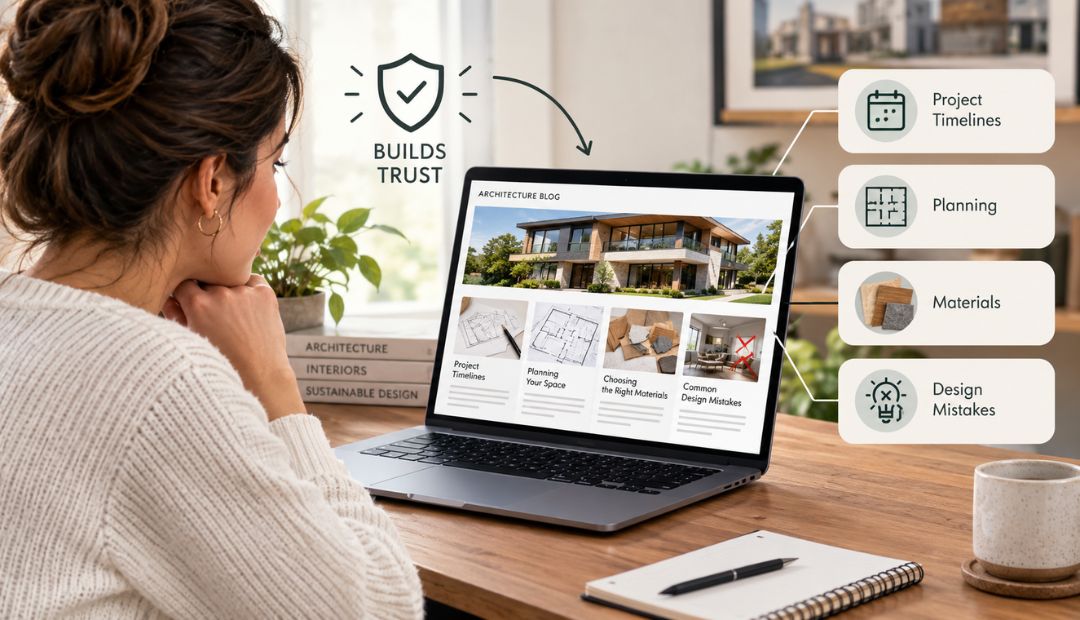
Potential clients are researching architectural firms online. A blog helps you build that confidence before a client contacts your firm. Blog articles about project timelines, planning, materials, and design mistakes help people better understand your expertise.
When people find the practical answers to their questions on your website, they have reason to trust your knowledge and consider your services.
4. Attract Better-Fit Clients
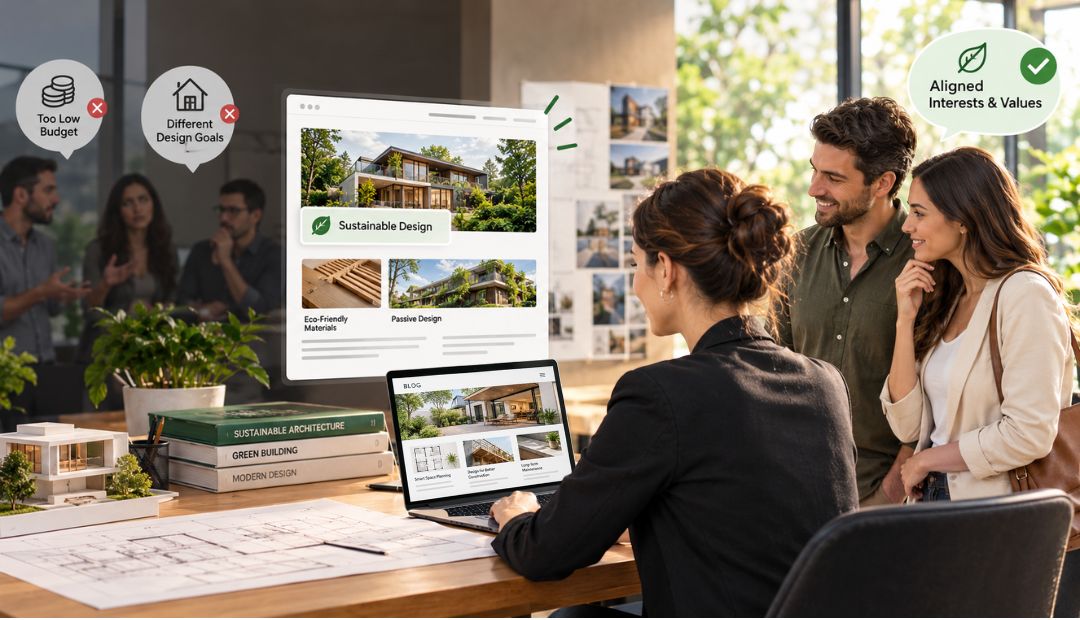
Not every inquiry will be the right fit for your architecture practice. Some clients may have a budget that is not commensurate with your services. Others may have design expectations that don’t reflect your approach.
Writing regularly about your projects and expertise helps people understand which types of projects your firm handles best. For example, if your firm specializes in sustainable architecture, articles about passive design and sustainable materials help potential clients plan their homes or offices and decide whether your approach suits their needs. These articles also help your firm attract readers whose interests and priorities align with your approach.
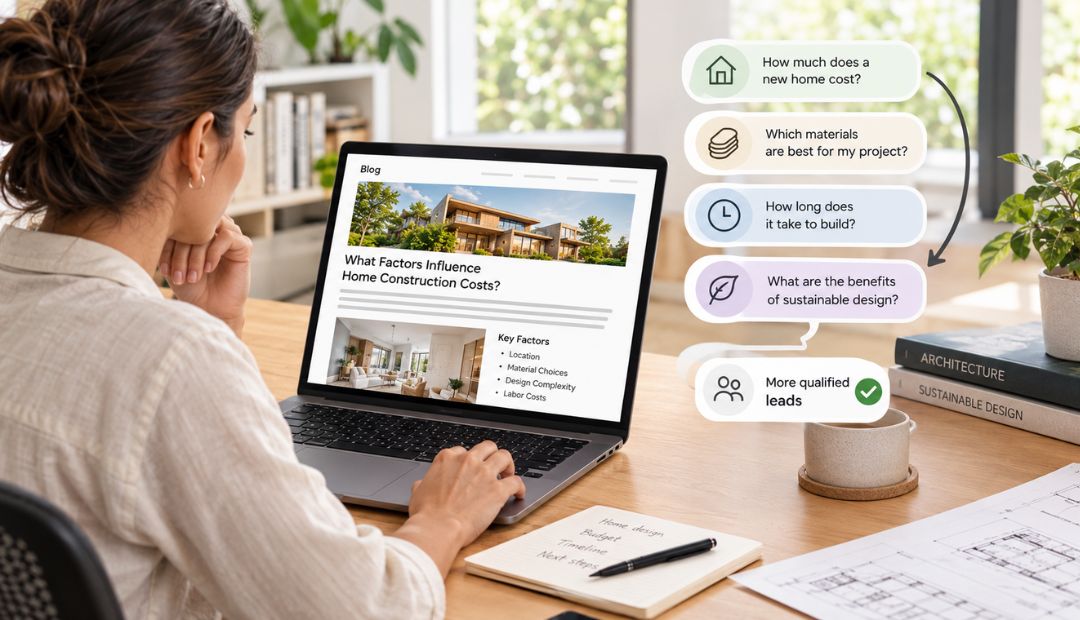
5. Generate Leads Through Helpful Content
Content marketing helps architects address potential clients’ questions and concerns through useful blog articles. Readers planning to build a home can get an overall idea of factors that affect construction costs from well-explained blog posts. Blogs can also address other questions readers may have before starting a project.
6. Explain the Value of Your Services
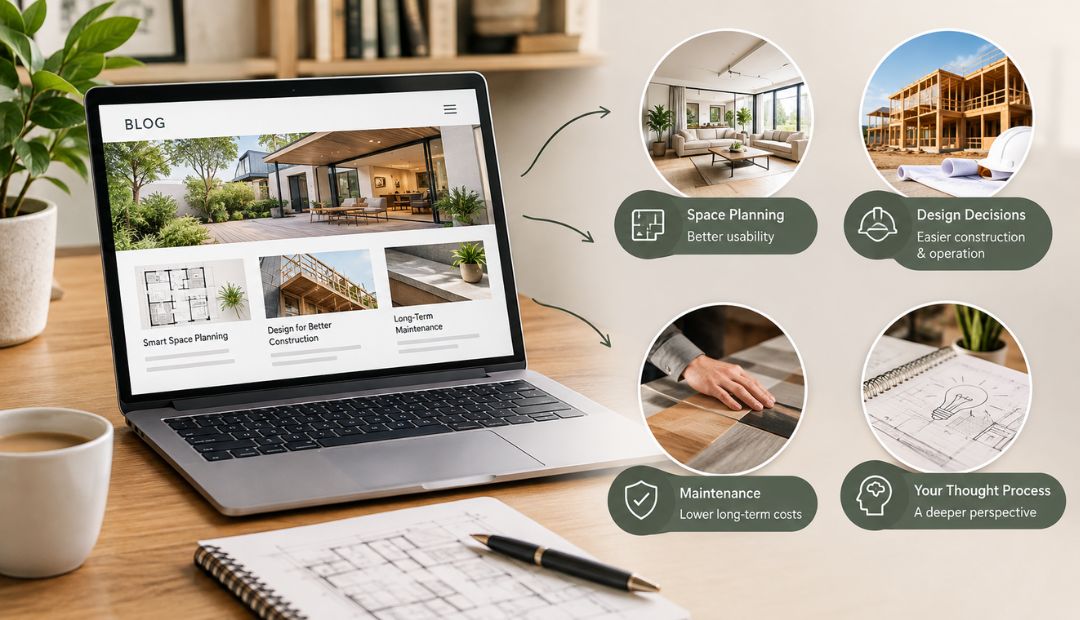
A list of services tells potential clients what you do, but it may not explain why those services matter to them.
Blogs give you space to write about that. You can explain how space planning can positively impact the use of a given space, how different design decisions can impact ease of construction and operation, and the long-term cost and impact of maintenance.
Through blogs, it’s very much possible to give potential clients insight into your thought process in a more meaningful way as compared to traditional promotional write-ups.
7. Build Industry Connections and Professional Credibility
Blogs also allow you to reach beyond your potential clients. Writing about design, construction, or materials can create a reason for engagement by builders, engineers, product manufacturers or other architects.
Connecting with these professionals can lead to knowledge sharing or referrals. Writing for architecture journals can help further connect you to professionals and give you a new audience for your work.

8. Create a Long-Term Marketing Asset
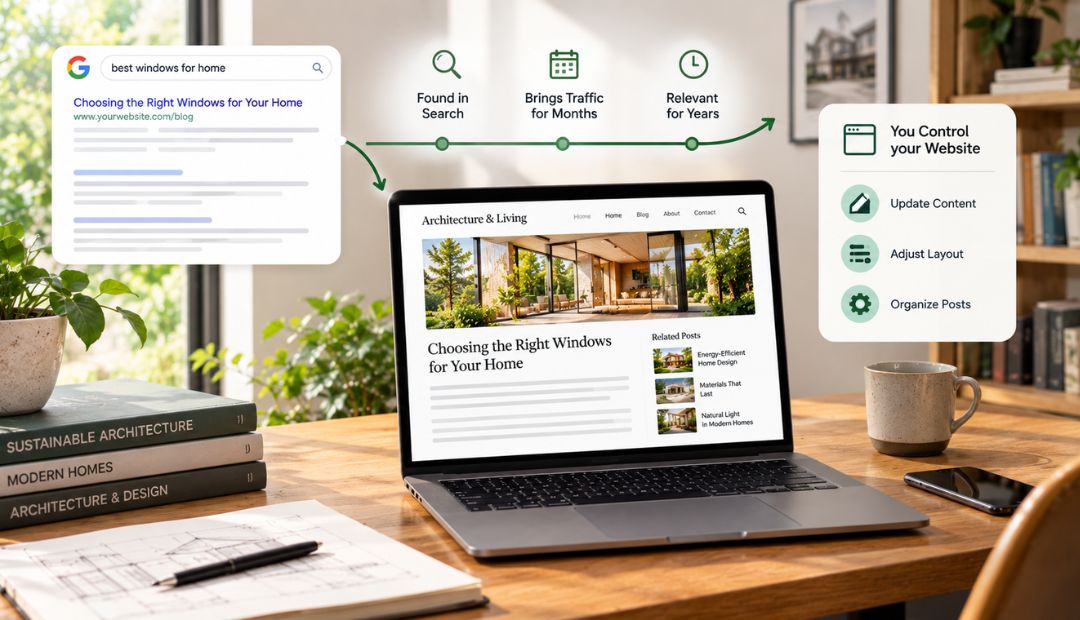
Social posts come and go, but blog posts can bring in traffic for a long time. Potential clients can discover a well-written blog post through search engines, bringing traffic to your website for months or even years. An article about choosing windows for a home can be relevant to a homeowner for years. You can update the article as needed and post more helpful content for your audience.
For your audience to learn about your content, you need to post it on your website. This allows you to fully control your posts. You can even adjust how your content is organized.
9. Understand What Your Audience Needs
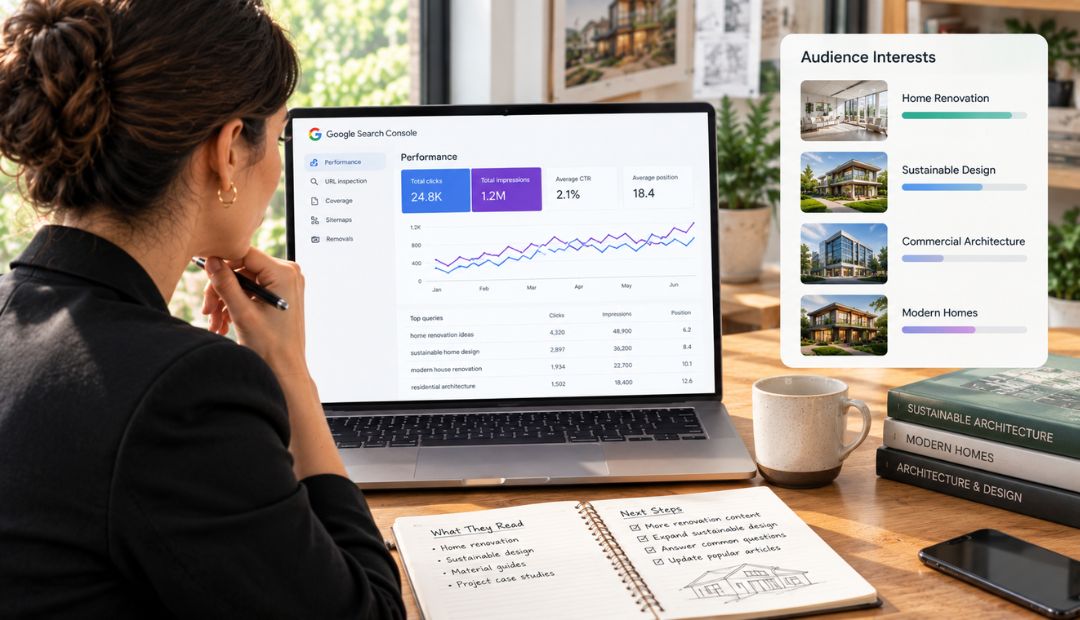
Your audience will usually tell you what their most significant concerns are by what they read, what pages they visit, what they ask, etc. Google Search Console helps identify such queries, makes it easier to know what the clients are interested in.
Analyzing this information can help you identify what your audience is looking for and determine what content they really need.
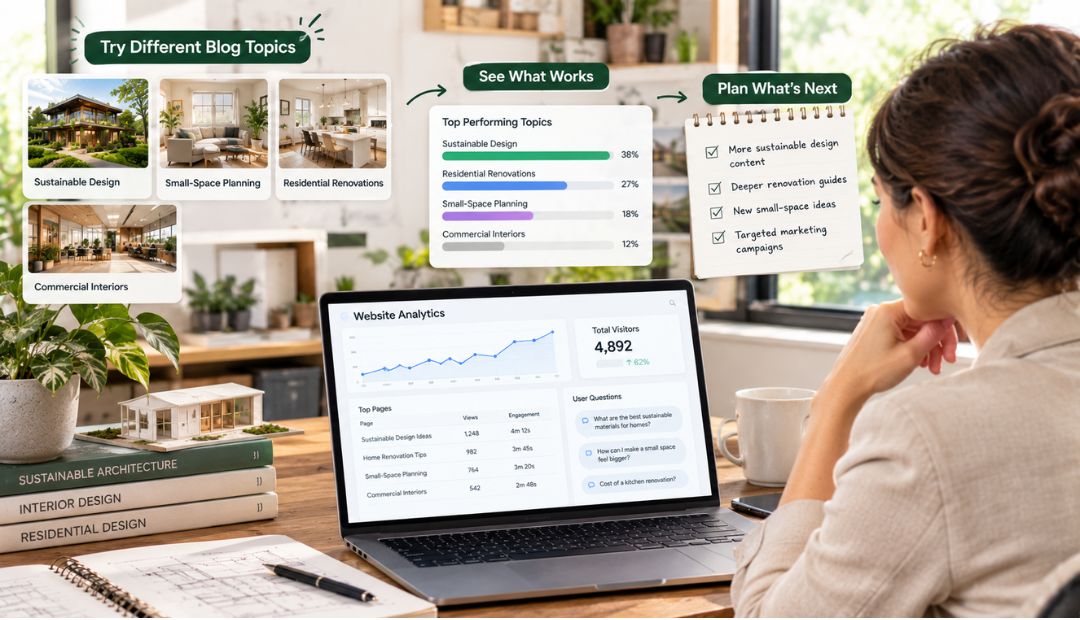
Using web analytics and search performance data, you can determine which articles draw visitors to your site, what topics prompt user questions, and what areas of your site draw the most interest. For example, if articles about home renovation draw more interest than articles about commercial architecture, you might write articles covering the renovation aspect in more depth.
This information allows you to make smart content decisions, and ultimately improve your website and marketing efforts to better serve your clients.
10. Test New Ideas Without Major Marketing Costs
Blogs present an opportunity for you to evaluate user interest in less costly ways than with full-scale marketing campaigns. While blogging, you might test articles covering different sustainable design topics, small-space planning, various residential renovations and even commercial interiors. Looking at the results, you might see what interests your users the most and even what might generate questions and inquiries for you.
Using the data, you can decide what topics you want to cover in future blogs and service pages, and even create marketing campaigns that are most aligned to your interests and expertise.
Final Thoughts
In simple words, blogging gives architects a way of communicating with clients and showcasing the projects they have worked on. By doing so, it opens up opportunities to generate leads and build your brand over the long term. Rather than filling the website with random blogs just to keep it active, focus on answering real questions, explaining your approach, and offering advice readers can use.
Explore More:
- How Architects Present Design Concepts
- Real Estate Lead Generation for Agents Who Want Results
- Outrank Your Competition With SEO for Architects

Dipanjan is a digital marketing professional with five years of hands-on experience across strategy building, content, and performance-driven campaigns. He has worked on building structured marketing systems that focus on reach, engagement, and measurable growth. Known for his analytical thinking and consistency, he brings a practical approach to digital execution. Outside of work, he loves cooking, painting and enjoys exploring interior setups. Connect with him on LinkedIn.