
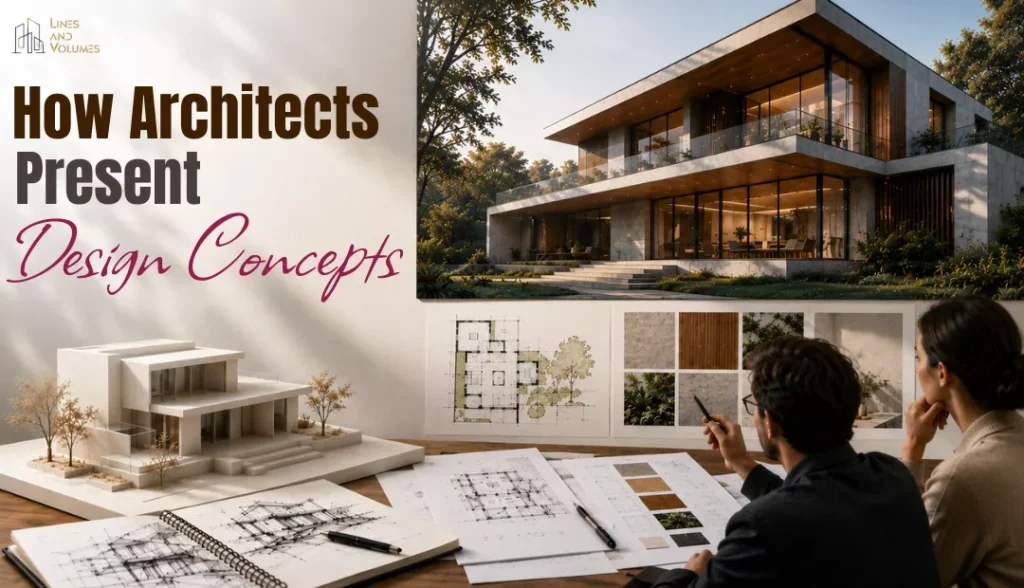
An architectural design concept presentation is basically a systematic process for architects to explain their core idea behind a project to clients. It clearly shows how architects present design concepts by linking spatial thinking with something the non-architectural public can understand, relate to, break down, and respond to. In simple terms, it’s a middle ground that sits between early design exploration and technical documentation, shaping how decisions are approved or refined.
The fundamental challenge is straightforward, but vital. Architects think of space, volume, light and movement; clients think of outcome, comfort and visuals. The most successful presentations close that gap without losing the intent of your design.
This guide explains how to come up with an architectural concept as well as the process of post-meeting feedback so that design remains clear and controlled.
What is a Design Concept for the Architectural Designers?
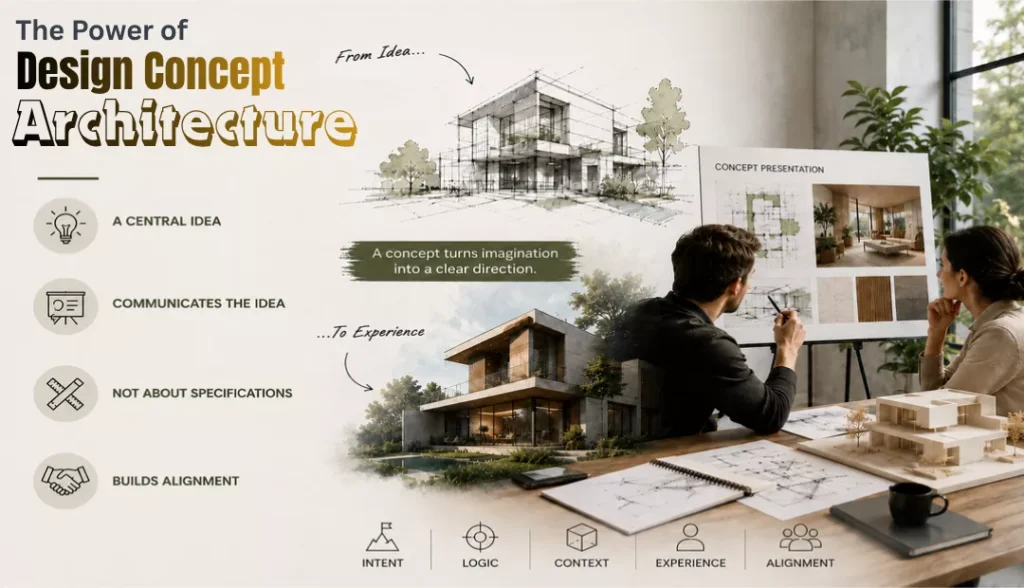
An architectural design concept is a central idea that drives the whole project. It explains why a form of a building is designed in a way, how it responds to its context, and what kind of experience users get.
A concept presentation communicates the idea in structured visual and verbal format.
This is not about specifying construction or final specifications but articulating intent, logic and direction that aligns all those involved.
Concept presentation is very different from technical drawing reviews, which focus on precision and execution. Rather than comprehending a concept, the goal here is to reach agreement. It establishes alignment in early stages, builds trust between architect and client, and secures approval before detail work begins.
How to Structure the Presentation Narrative
It’s a logical progression of information through a well thought out architectural presentation. Instead, it is a set of slides that explains the flow/process of how the design flows from idea to outcome.
Step 1: Restate The Client Brief And Project Objectives
The presentation starts with the review of client objectives. Such things include functional needs, expectations, constraints and priorities. Restating the brief ensures that both parties are on the same page before design discussions start.
Step 2: Present the Guiding Concept or Big Idea
When the brief is clear, that forms the main idea behind the design — an architect introduces this concept. This is typically an uncomplicated idea that aligns purpose, context and experience in one direction.
Step 3: Demonstrate Site and Context Responsiveness of Concept
By this point, the focus shifts to surrounding conditions. The architect explains how the site influences the design with sunlight/wind/access/noise/surrounding structures etc. It grounds the design in reality instead of abstract thought.
Step 4: Range of Motion in Space with User Experience
This is where the presentation goes from theory to application. The architect tells the story of how one flows through space, from room to room and how things transition. This allows clients to experience the realities of how the building is going to feel in use.
Step 5: Demonstrate Material, Light and Sensory Characteristics
When the spatial logic is clear, visual and sensory components are brought in. Things such as material direction, lighting strategy and atmospheric qualities are part of it. It is not decoration, but an argument that makes the concept manifest in physical experience.
Step 6: Pre-emptively invite Questions and Structure Feedback
The presentation closes with a guided discussion. While different opinion types exist, architects will often direct comments away from casual opinions and toward the layout, function or experience for comment. It makes the input editable for the revisions.
How to Deal With Client Feedback
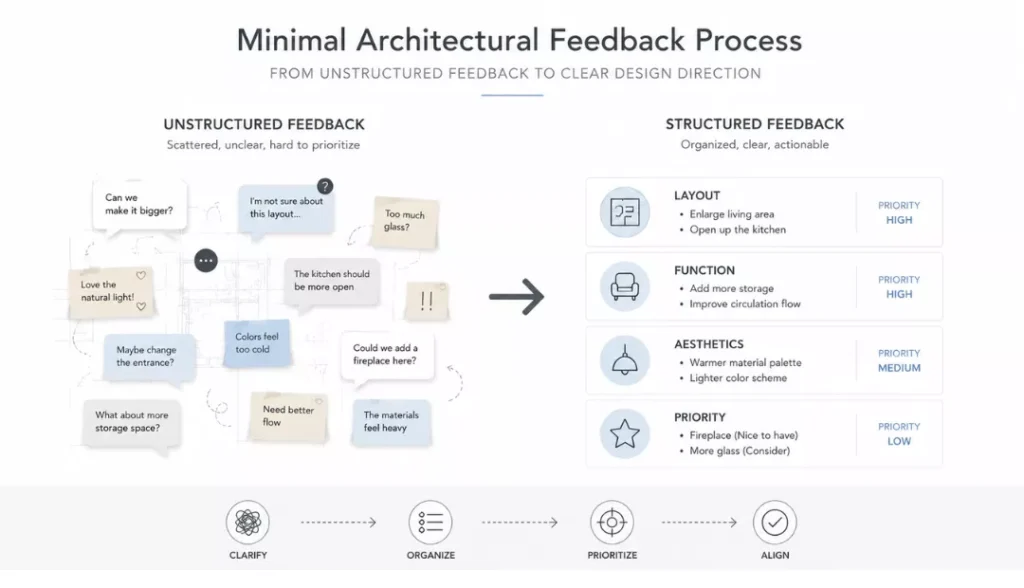
This is where the post presentation phase either clarifies or complicates many projects. Without structure, the approach can become confusing and lead to repeated redesigns.
Many opinions can shape decisions in an open setting. Instead, a more structured approach works better by grouping each piece of feedback into layout, function, aesthetics, and priority categories. This helps distinguish important design feedback from personal preferences.
Not all feedback is equal. And some of those are a matter of taste, but others show clear design flaws. It is an important part of the job of an architect to figure out whether feedback is about conceptual choices or surface-level considerations.
All decisions to which you formally agree should always be confirmed in writing. Such as concept approval, spatial layout confirmation and any major direction changes.
Final Thought
A client-facing architectural design concept presentation is never about stunning visuals. Instead, it reflects how architects present design concepts through clarity, from concept to experience. With a well-structured narrative, a clear feedback process, and consistent concepts throughout, the design finds smoother lines of least resistance.
Look into this:
- Architect Marketing Plan for Online Presence
- 5 Points of Architecture: Le Corbusier’s Principles
- How to Set Up Google Ads for Architecture Firms

Dipanjan is a digital marketing professional with five years of hands-on experience across strategy building, content, and performance-driven campaigns. He has worked on building structured marketing systems that focus on reach, engagement, and measurable growth. Known for his analytical thinking and consistency, he brings a practical approach to digital execution. Outside of work, he loves cooking, painting and enjoys exploring interior setups. Connect with him on LinkedIn.