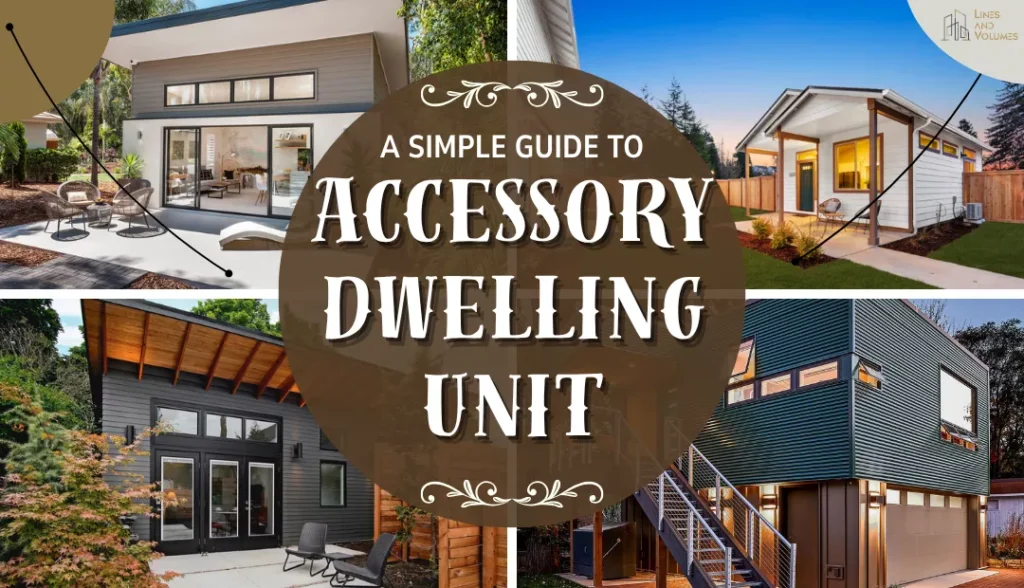
ADU, stands for Accessory Dwelling Unit, a secondary unit also a self-sufficient living space built on the same lot as a traditional single-family house. It is essentially an independent living space and also contains a small kitchen, bathroom, sleeping area and entrance separate from the main house.
Homeowners build an ADU as either an attached unit, an interior conversion, or a separate detached structure on the same lot. Law typically treats it as part of the primary residential property, not as an independent home or lot.
Other Names for an ADU
People also call an ADU a granny flat, in-law suite, carriage house, secondary suite, backyard cottage, or guest house (casita) depending on the region. They use these names interchangeably because each refers to a smaller, independent living space on the same property as the main residence.
For instance, a granny flat often refers to a space intended for aging parents, while casita is more common in Southwestern states. A detached ADU is often called a backyard cottage, while an attached or interior unit is also known as an in-law suite where family members can live. The names differ, but the meaning stays the same, a secondary dwelling that supports independent living.
Types of ADUs Explained
There is no one-size-fits-all ADU. The correct type is based on your lot size, budget, local zoning laws and how you plan to utilize the space.
Detached ADU (DADU)
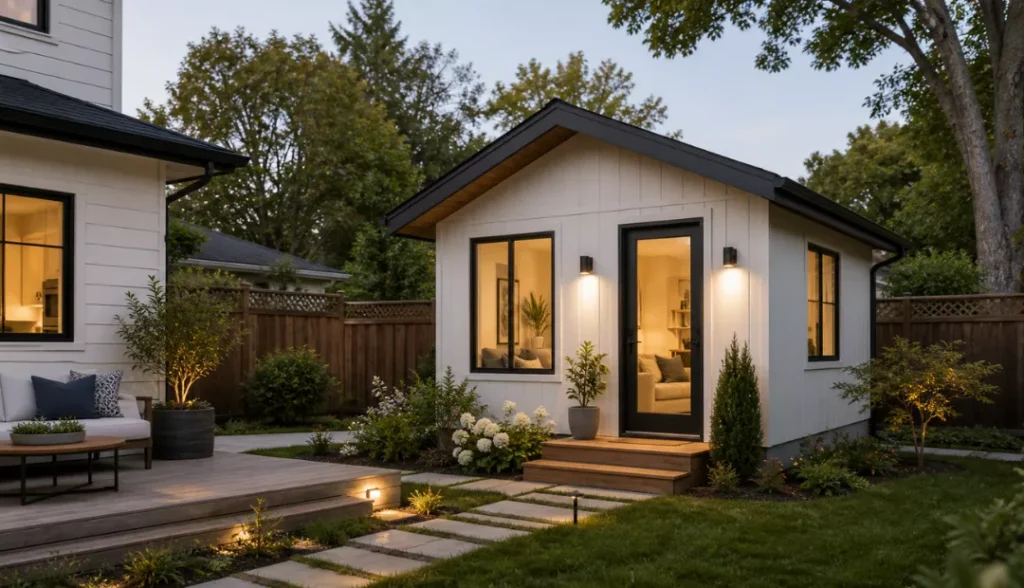
A detached ADU, often called a DADU, is a completely independent building that homeowners construct in the backyard or side yard of the home. It sits away from the main house and functions as a separate living unit.
This is the most private option for the homeowner and occupant alike, which makes it popular for rental income or guest housing as well as independent family living.
Attached ADU
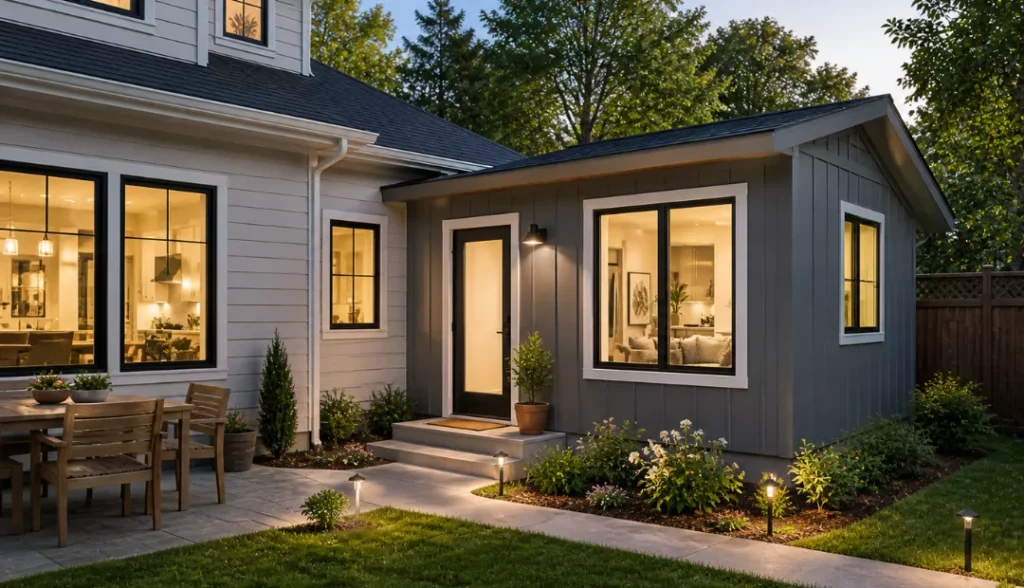
An attached ADU is built onto the side, rear, or sometimes front portion of the main house. It has at least one wall in common with the main dwelling but also provides some independent facilities like a separate entrance, kitchen, bathroom, and sleeping area.
An attached ADU is also sometimes cheaper than the detached ones, but it suits people who still want privacy and functionality.
Garage Conversion ADU
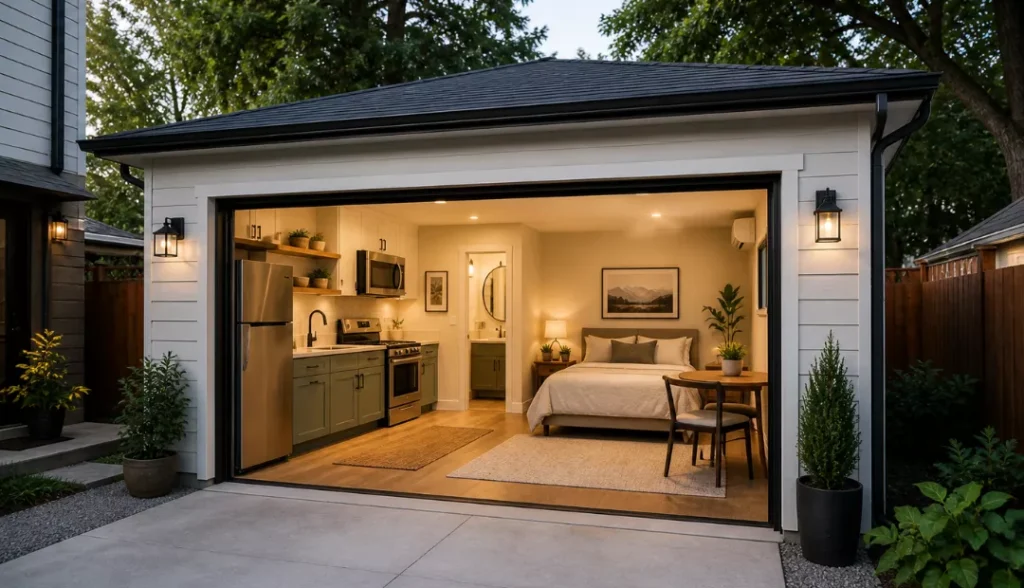
A garage conversion ADU is a legal living space created by converting an existing attached or detached garage. As the foundation is already in place, converting a garage into ADU is mostly a cheaper option than building the whole structure from scratch.
Junior ADU (JADU)
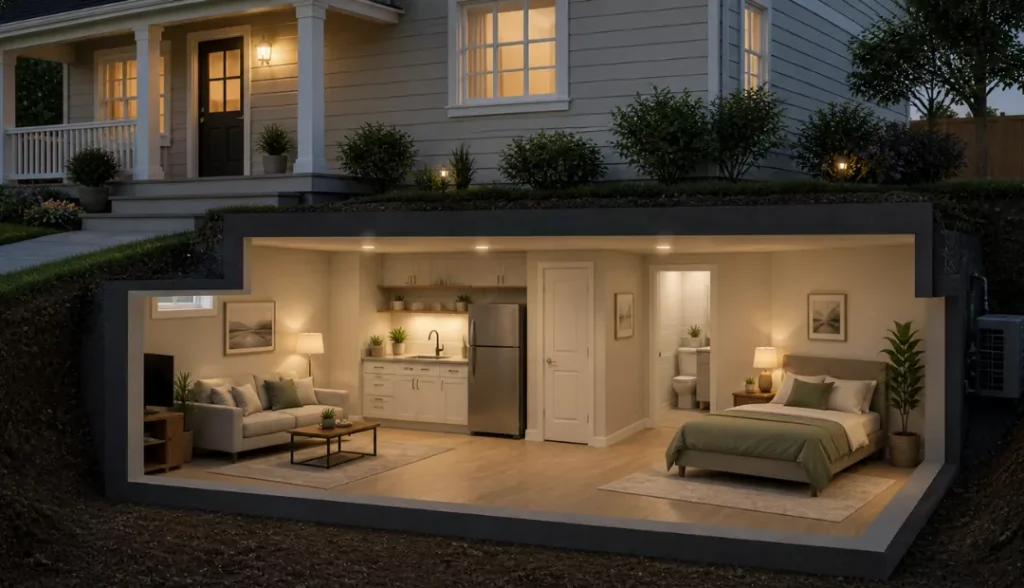
Homeowners create a Junior ADU (JADU) by converting existing interior space in the primary home, such as a basement, extra bedroom, attic, or another part of the house.
Most of these units are under 500 square feet and often exempt from zoning and permitting requirements depending on the state or city. JADUs are encouraged in many regions, as their make-up of housing supply often does not require significant structural changes.
Above-Garage ADU
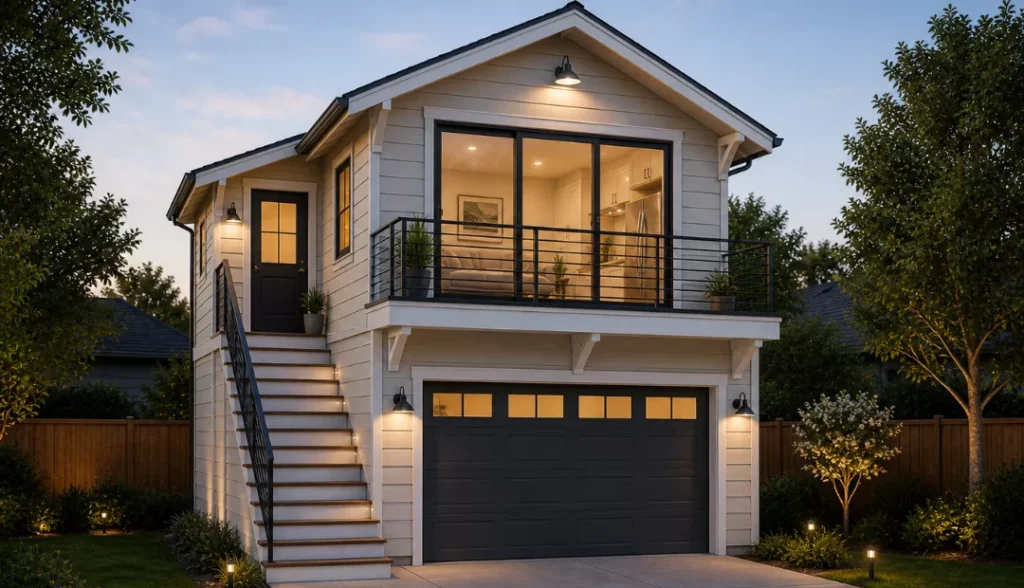
An above-garage ADU, is a living unit that sits on top of an attached or detached garage. It makes efficient use of vertical space and allows homeowners to preserve yard space while adding functional housing.
This is generally more common in cities with smaller lot sizes, where maximizing land use is important. It works best for guest lodging, rental spaces, or personal workspaces.
Benefits and Drawbacks of an ADU
ADUs have many financial and lifestyle benefits, but they also carry their own set of responsibilities and planning complexities. It’s important to have a working knowledge of both sides before building one.
Pros of Building an ADU
Building an ADU benefits homeowners who are looking for extra rental income. Many homeowners depend on long-term tenants to pay their mortgage, taxes, insurance and maintenance costs.
Buyers also prefer properties with ADUs because they offer flexible living options and income potential, boosting resale value.
They are particularly practical for multigenerational family living, letting parents, grandparents or adult children be nearby but independent and separate, to some extent.
ADUs also increase much-needed housing supply by allowing the creation of new units without requiring additional land development in high-demand housing markets.
They may function as work-from-home offices, art or music studios, private gyms, or flex space multipurpose areas that enhance your quality of life.
Cons and Challenges
The biggest challenge is that preliminary construction expenses are high. ADUs, no matter how small, still cost tens to hundreds of thousands of dollars depending on labor and materials, permits and utility upgrades.
Even permitting timelines can also be slow. Local zoning approvals, inspections and building requirements may lead to delayed projects for months.
Building an ADU may reduce available yard or outdoor space, which can affect lifestyle preferences and resale appeal for some buyers.
In some cases, adding an ADU can trigger a property tax reassessment, increasing long-term ownership costs.
Homeowners also take on landlord responsibilities if they rent out the unit, including maintenance, tenant management, insurance updates, and handling legal matters.
Final Thoughts
One of the smartest ways homeowners are boosting up their property value without buying any land, that’s ADU for you. With any accessory dwelling, you have the flexibility of income potential, housing your family, or utilizing space on a less-than-utilized piece of property.
Many homeowners use ADUs to generate rental income through long-term leases or short-term rentals on platforms like Airbnb. This can turn unused backyard space into a valuable financial asset. In 2026, ADUs no longer serve as just extra space for homeowners but as a game-changing move for anyone thinking about real estate, long-term housing, or smarter property investment.
Learn how to design smarter spaces with Lines And Volumes.
Don’t Miss This:

Navdeep is a PHP programmer by profession, & rider by passion with a strong interest in writing, reflection, and travel. His writing draws from daily experiences across online and real-world settings, often influenced by an interest in interior design and how spaces affect mood and function.