
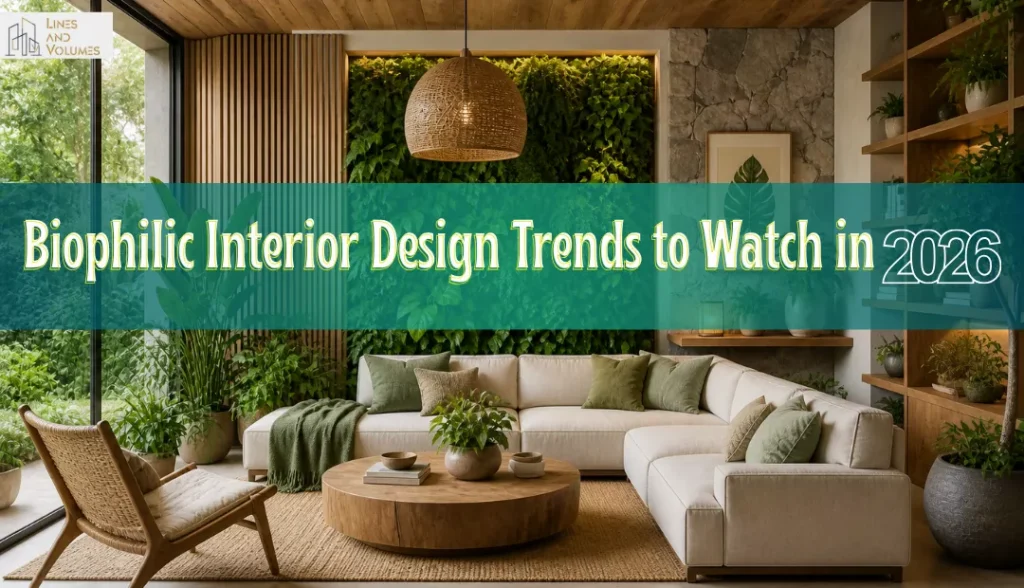
The morning light pours through giant windows with shadows on limewashed walls. A linen curtain sways in the wind, fresh moss and warm cedar fill the air, and nearby a soft sound of water source, which fills the room. That is biophilic interior design, a way to bring elements of nature into indoor spaces to enhance health and make homes feel restorative.
By 2026, biophilic interior design has evolved from the humble potted plants in the corner. It is now a wellness-centered design philosophy backed by science with references to sustainable living, sensory comfort and soul balance. Designers are building homes that not only provide an organic aesthetic but feel as if they are part of nature.
Key trends of biophilic interior design include multisensory environments, living walls, regenerative materials within smart biophilia technology, circadian lighting and earthy color palettes along with organic forms. This movement stayed and became more than just a decorative greenery, into a wellness-focused design philosophy. The trend of incorporating natural elements emphasizes homes at every level.
What Is Biophilic Design? (In Simple Terms)
Biophilic design is to create spaces that enhance our primal bond with nature. The intent is not just beautification, but interiors that facilitate mental clarity, reduce stress and optimize everyday life.
It draws heavily from the biophilia hypothesis proposed by biologist E. O. Wilson, which states humans have an inherent need to connect with nature. Hence the reason sunlight, natural materials and free flowing organic forms calm spaces down almost instantaneously.
Direct connections include viewable elements like indoor plants, natural daylight, freshwater air circulation systems, and outdoor landscape views. Indirect connections refer to the use of natural materials that are integrated into daily living spaces. These materials include wood, stone, linen, and clay, often paired with natural colors that create a warm and grounded environment.
Top 7 Biophilic Interior Design Trends to Look For
1. Multisensory Environments
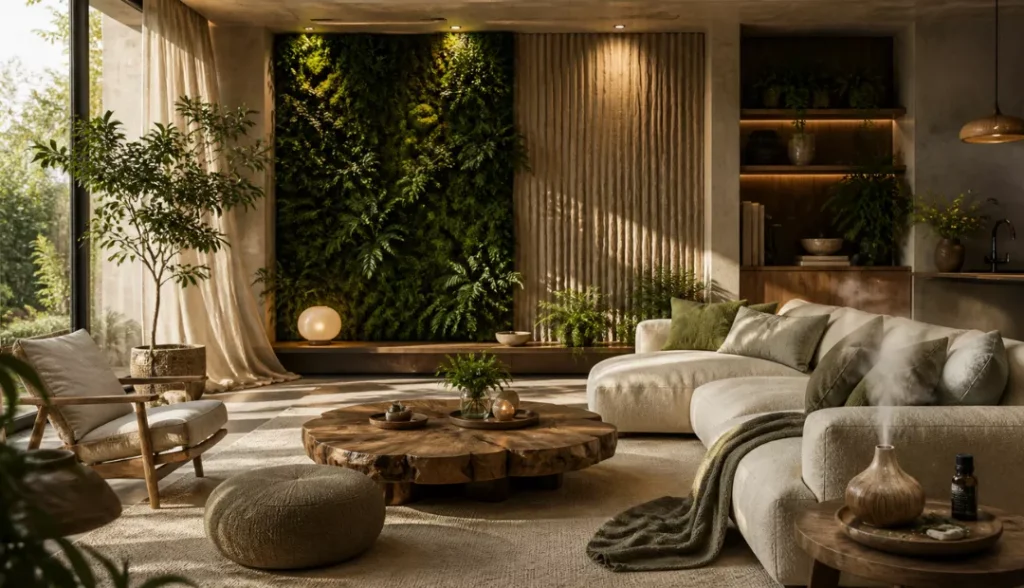
Moving beyond visual design into a full sensory place. If biophilic architecture is known for how it looks, then the new trend is to design around how it sounds, feels and even smells.
Echo-heavy minimalist interiors are being replaced with sound-absorbing wall finishes, soft natural upholstery fabrics, quieter appliances, and living walls that help absorb sound. A less audible environment seems peaceful and beneficial for mental rest.
Textures like concrete, fleece, plywood and hand-carved clay lend an intimate texture that synthetic materials often fail to convey. Design choices change when you incorporate natural scents, such as cedar and eucalyptus, subtle herbal notes, into the space.
2. Living Walls and Vertical Gardens
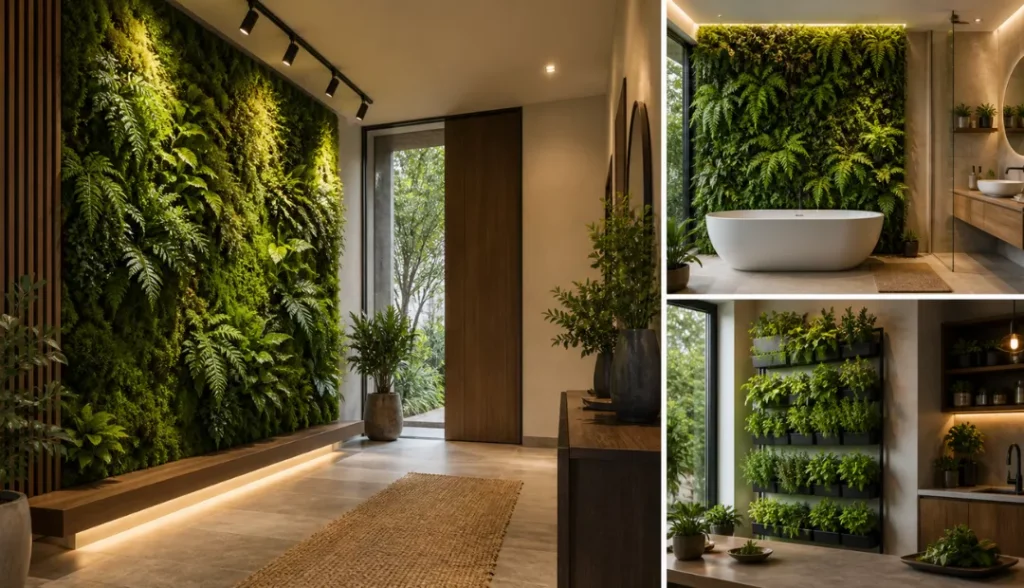
Now living walls have moved beyond decorative showstoppers into working ecosystems in their home. You will see air-purifying moss panels in entrance and home offices. Fern walls are sprouting in any kitchen or bathroom where moisture supports the growth. Vertical living herb gardens are trendy as these combine wellness, aesthetic beauty, and everyday usefulness.
These installations require planning. Design feature considerations such as wall load capacity, lighting condition and appropriate irrigation systems must be accounted for before you plan installation. In homes where natural light is limited, living walls usually rely on discreet grow lights to keep living walls healthy.
3. Regenerative and Bio-Based Materials
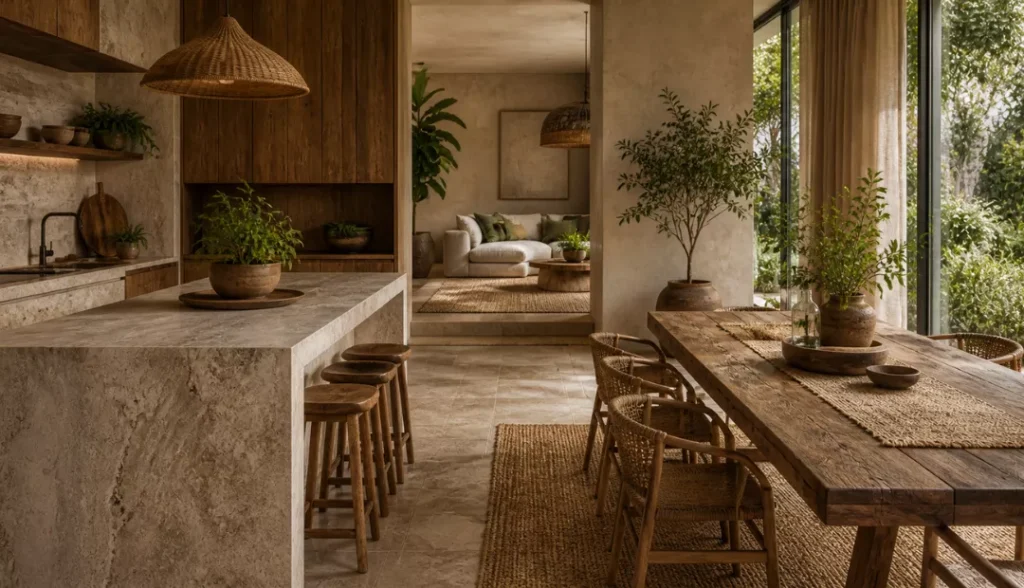
In 2026, focusing only on natural materials just for appearance is not enough, rather look for sustainable materials which increase the lifespan of a home.
Reclaimed wood, travertine, natural stone, rattan, jute and linen wool never fall out of favour as they get better with age and encourage warmth. Material choices for cabinetry, worktops and storage solutions feature composites, including recycled options or bio-based materials.
Biophilic design has learned to be less perfect, more permanent.
4. Circadian and Dynamic Lighting
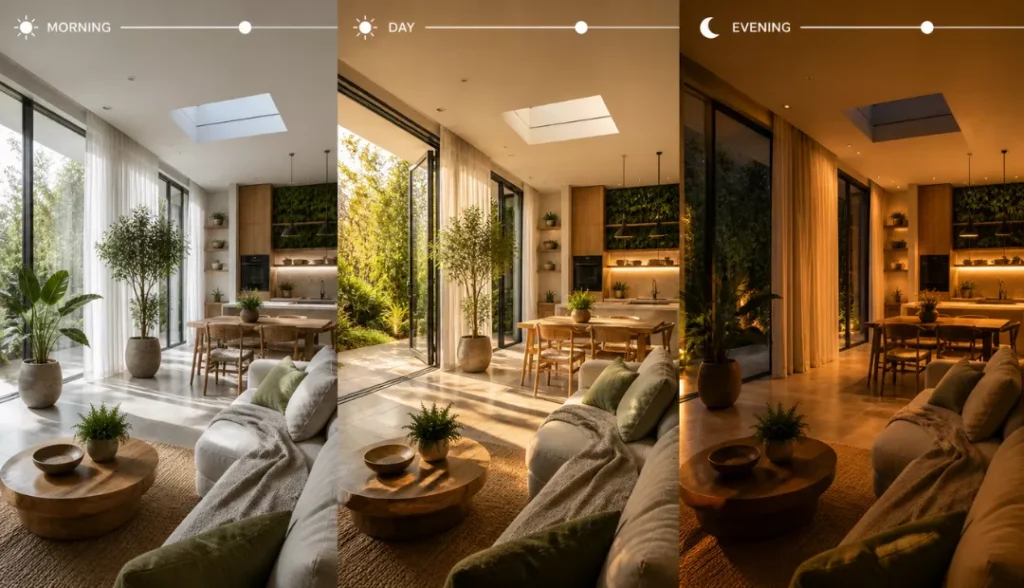
Up to October 2023, data has been used for approach. It is now a wellness tool.
Circadian lighting supports the body’s natural rhythm by changing brightness and warmth throughout a 24-hour period. Cool, bright light helps during working hours while softer amber tones will aid relaxation in the evening.
To provide the most sunlight, designers are creating oversized windows, skylights, bifolding doors and sheer drapes instead of heavy curtains. A healthy window-to-wall ratio falls between 20 and 30 percent—too much glass, and interiors become too bright to feel pleasant.
It improves mood, productivity and even sleep quality while making your house feel more instinctively organic.
5. Earthy Color Palettes
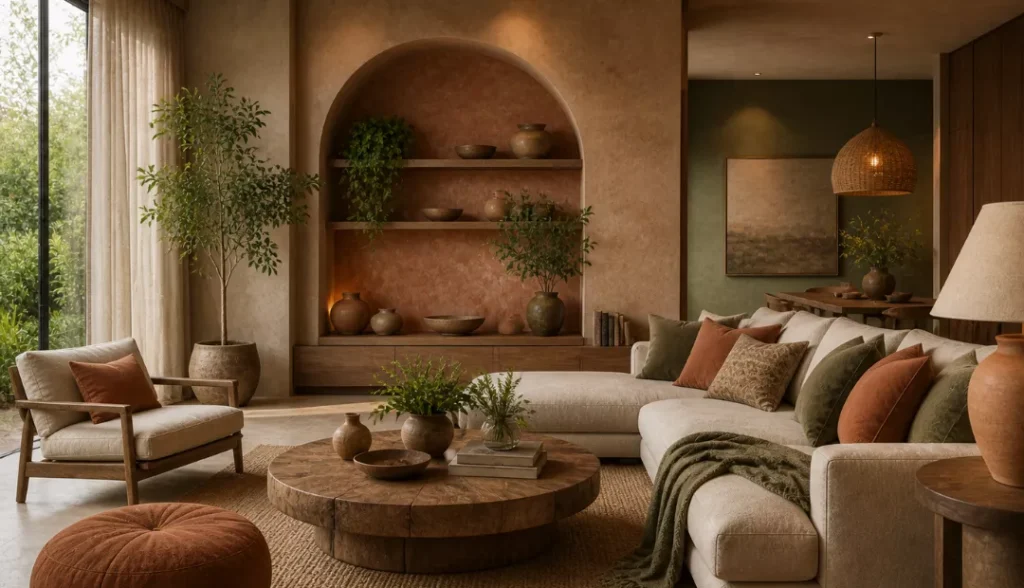
Gone are the days when greys and bright white were trending. Earthy colors have slowly become the new language of biophilic interiors.
Earthy shades like clay tones, terracotta, ochre, warm taupe, forest greens, and creamy neutrals have an anchoring effect, almost as if they make things feel visually restful. These colors are inspired by the natural landscapes added to prevent sensory overload.
Instead of bold color for drama, designers relied on layered natural tones to evoke emotional softness.
6. Organic Forms and Fractal Patterns
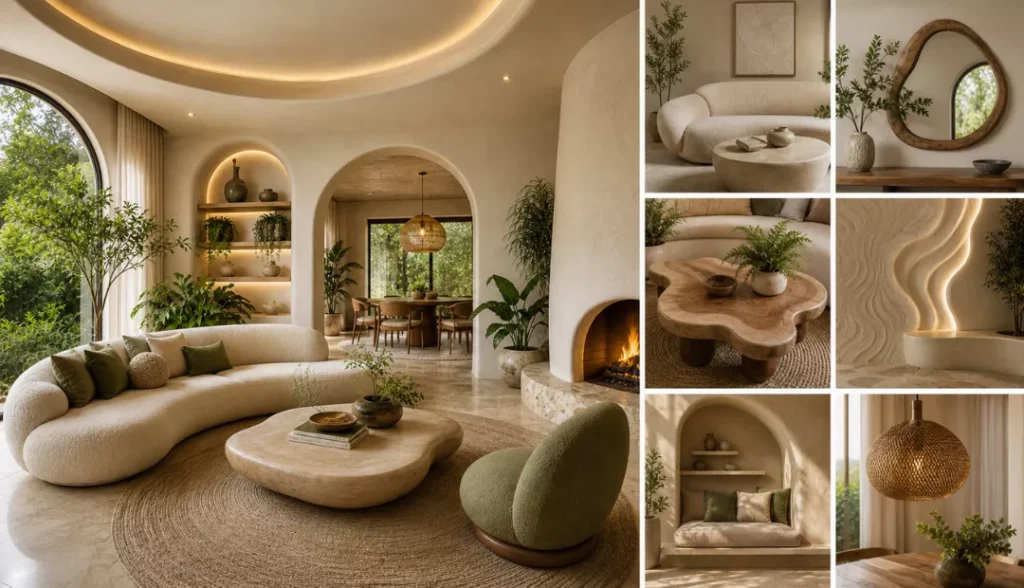
Ask yourself, does nature create perfect lines? No, so why should our interiors have perfectly straight lines?
Furniture with curves, architectural elements rich in roundness and flowing surfaces instead of grid-based layouts.
Rounded sofas, arched mirrors, oval coffee tables, and softly sculpted walls create visual softness and help spaces feel more relaxed.
Fractals are of increasing significance as well. Those are the repetitive shapes that come out in leaves, shells, branches and ocean waves. The human brain recognizes them as familiar and safe, so they create visual calm.
7. Smart Biophilia: Low-Maintenance Tech Integration
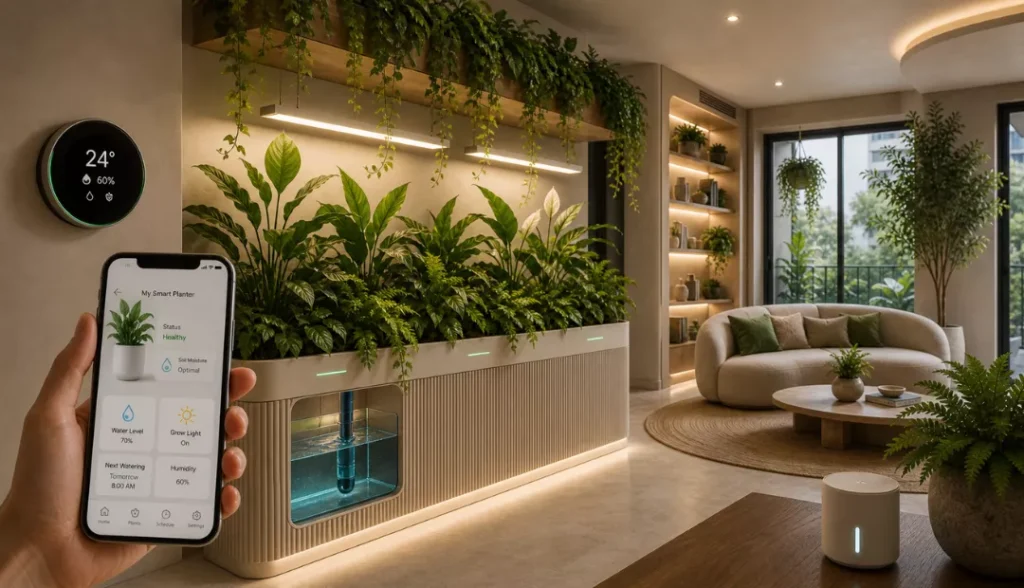
Technology makes nature easier to maintain with self-watering planters, automated grow lights, and app-controlled irrigation systems that support indoor greenery. The reason for creating a greenery-filled interior is to help people with busy routines. This allows even smaller apartments to support healthier plant ecosystems without constant manual care.
With the help of self-watering planters, automated grow lights and app-controlled irrigation systems, indoor plants become more accessible to people with hectic agendas. It means even smaller apartments can maintain a healthy plant ecosystem with minimal ongoing input.
Smart homes also integrate nature-inspired routines, so the most effective smart biophilia feels invisible. Technology fades into the background, so nature stays in the foreground.
FAQs
What is the most popular biophilic design trend?
Multisensory living environments and living walls are leading right now.
Is biophilic design expensive?
It is not that expensive, but depends on what changes you want in your interior. Like natural textures, better airflows, carefully chosen indoor plants, daylighting strategies and lighter curtains make big biophilic impacts. They all fall in the low maintenance category.
What is smart biophilia?
It means integrating technology with nature. This includes self-watering planters, automated grow lights, and app-controlled irrigation and lighting systems that automate living elements.
Final Thoughts
It is clear that a shift has already happened, and in the coming years, most homes will feel more immersive, sensory-driven, and emotionally supportive by biophilic interiors. The approach goes beyond the things that only look nice and deals with how to bring wellness experience into the rooms.
Check out more:
- What Is Transitional Style Interior Design?
- Contemporary Victorian Interior Design Ideas By-Room
- What is Postmodern Interior Design in 2026?

Mansi is a creative designer with three years of professional experience, specializing in clean, balanced, and purpose-driven visuals. She is also a passionate writer whose work shows a strong sense of layout, composition, and visual hierarchy. Outside work, she enjoys sketching, experimenting with color, and spending time around plants and outdoor spaces. Connect with her on LinkedIn.