
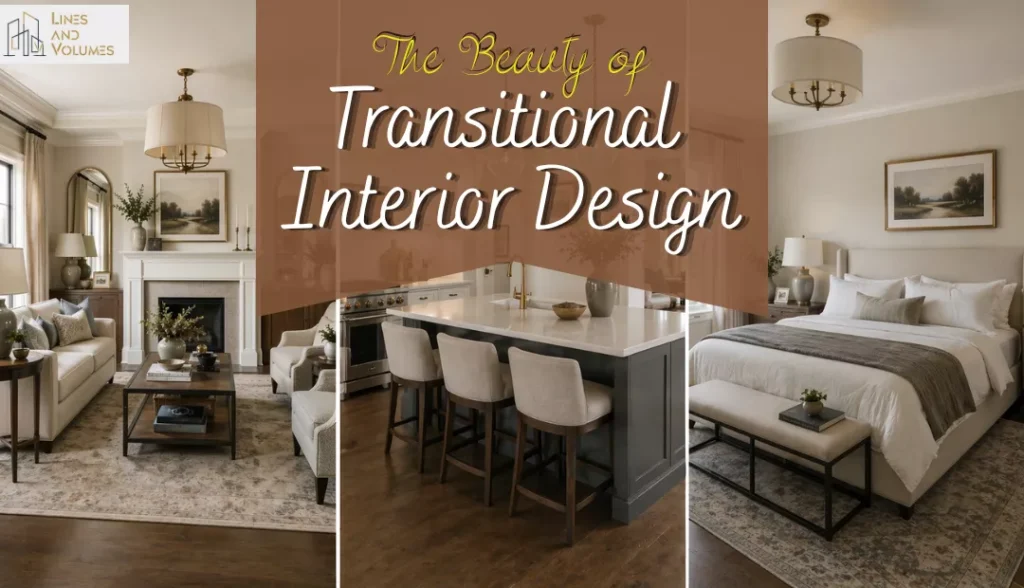
Transitional interior design is a mix of both traditional and contemporary furniture and decor. It strikes a balance between both extremes by combining classic warmth with modern simplicity, creating interiors that feel neither overly ornate nor starkly minimal.
The style emerged in the late 20th century as homeowners and designers started to rebel against strict design rules. Rather than fitting into a single historical period, transitional design embraces a fluid approach that reflects how people actually live. It blends old and new elements in a way that feels intentional and cohesive.
What Is Transitional Interior Design
Transitional interior design is a fusion of traditional and modern, combining comfort and balance for an evergreen aesthetic. It is usually marked by neutral hues, clean-lined furniture, layered textures and a combination of old and new materials.
It avoids trend fatigue and doesn’t shy away from mixing eras, it blends several references, keeping interiors feeling relevant for years.
For example, you mix heirloom furniture with modern lighting or minimalist layouts with classic textures, and it doesn’t feel mismatched.
Core Characteristics of Transitional Style Interior Design
Neutral Color Palettes
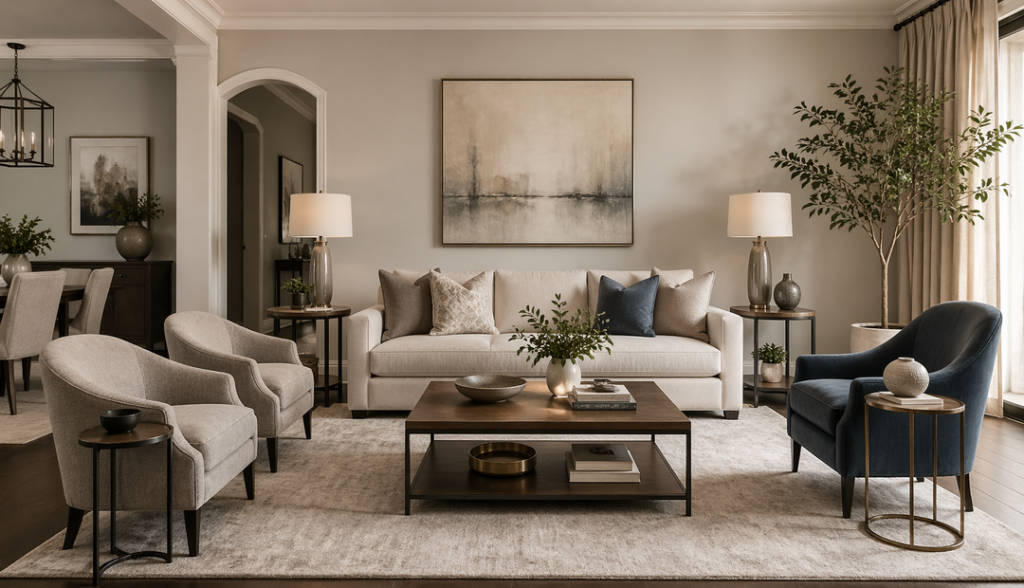
Transitional interiors start on a base of soft, neutral color. Neutral-colored shades like beige, grey, warm white and taupe — dominate the space, creating for a calm and cohesive backdrop. These colors give furniture, textures and materials space to shine without taking over a room.
Mixed Materials
This approach often combines different materials to create a balanced look. Designers frequently pair wood with metal or contrast soft fabrics like linen with richer textures such as velvet.
Clean Lines With Soft Edges
There are no extremes in furniture and architecture in transition spaces. Rather than heavy carving or ultra-sharp minimalism, the lines are structured but softened. Curves and subtle detailing keep it approachable.
Balance of Comfort and Elegance
Transitional design offers livability without sacrificing polish. Well-proportioned layouts with a plush sofa in them provide visual order as well as comfort.
Minimal clutter
Accessories are minimal and only intentional pieces are kept. Transitional interiors hold back from layering several decorative objects and instead focus on few selected well-placed pieces that add character without clutter.
Transitional vs. Traditional vs. Contemporary Design
How transitional differs from traditional
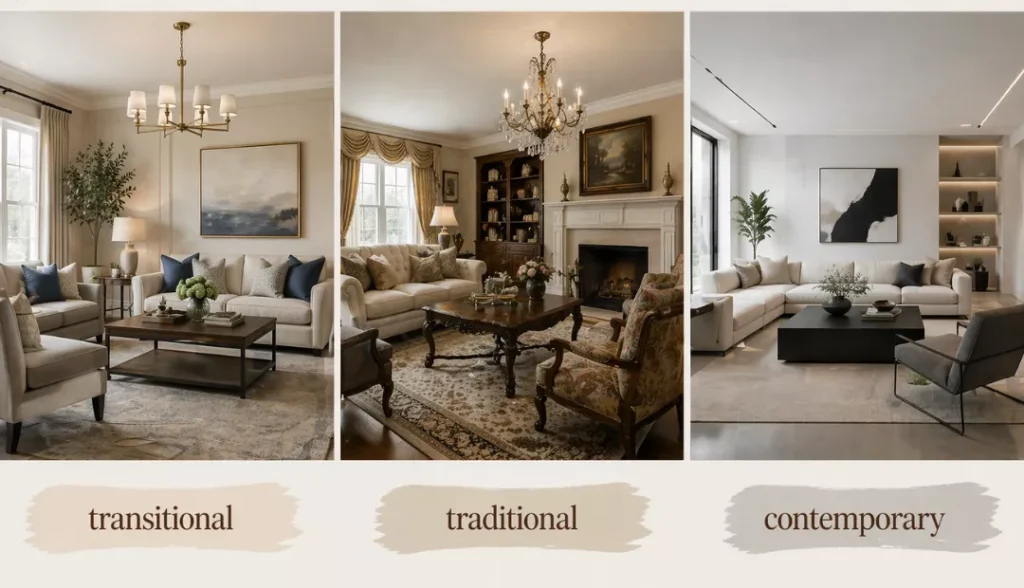
Traditional interiors are characterised by rich colors, detailed woodwork and decorative ornamentation. It maintains the sense of structure and elegance but avoids heavy detailing and dark tones, making the space feel lighter and more contemporary.
How transitional differs from contemporary
Modern design often feels simpler because it emphasizes open spaces, functional forms, and a more neutral color palette. Contemporary interior design, on the other hand, reflects current trends with a similar focus on minimalism but allows for more freedom in materials and forms. Transitional interiors feel softer because they add warmth through texture, layered materials, and furniture with gentler shapes.
Key Elements of Transitional Interior
Furniture
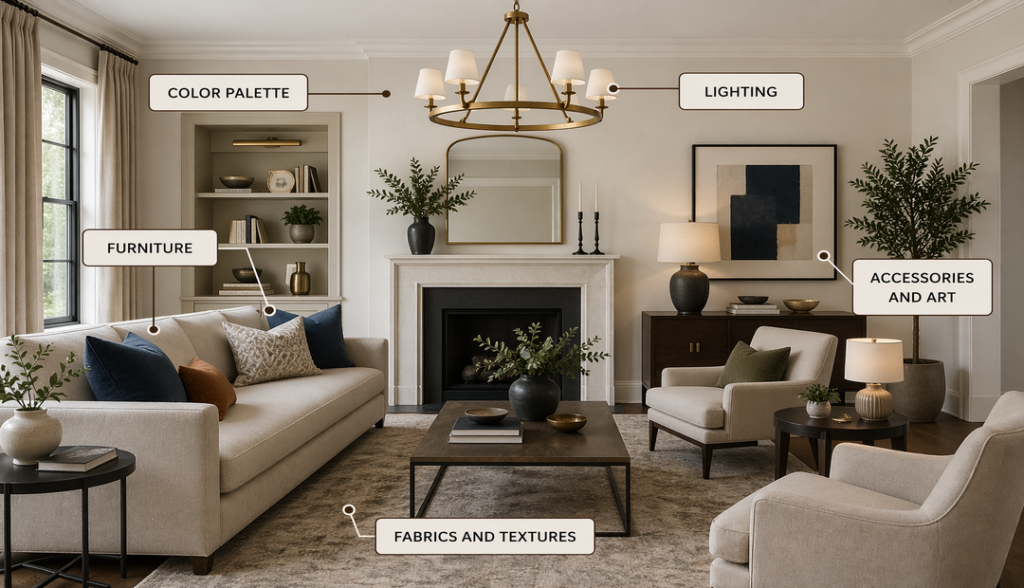
Transitional design furniture favors tailored upholstery and uncomplicated silhouettes. Sofas and chairs typically feature simple silhouettes and minimal embellishment, avoiding chunky carved wood and overly ornamental details. The focus stays on proportion and comfort rather than ornamentation.
One may find transitional furniture focuses on simple, well-proportioned pieces resulting in comfortable everyday use. Sofas and chairs usually have straight or slightly curved lines, with minimal detailing.
Color Palette
Warm neutrals predominate in the space, but designers sometimes include muted accents to add depth. Less-saturated shades of navy, sage or rust might show up in cushions, rugs or pieces of artwork.
Fabrics and Textures
In transitional interiors, texture does much of the visual heavy lifting. Linen, cotton and other soft-weave materials are layered to add interest.
Lighting
Lighting solutions are able to bridge traditional and modern. Fixtures often feature warm finishes. A combination of pendant lights, table lamps, and floor lamps helps create a layered and inviting atmosphere.
Accessories and Art
You could find vintage frames hung with contemporary art, or a single showstopping piece in place of several smaller ones. All the accessories have been carefully added to ensure balance in the overall space.
How to Achieve Transitional Interior Design in Your Home
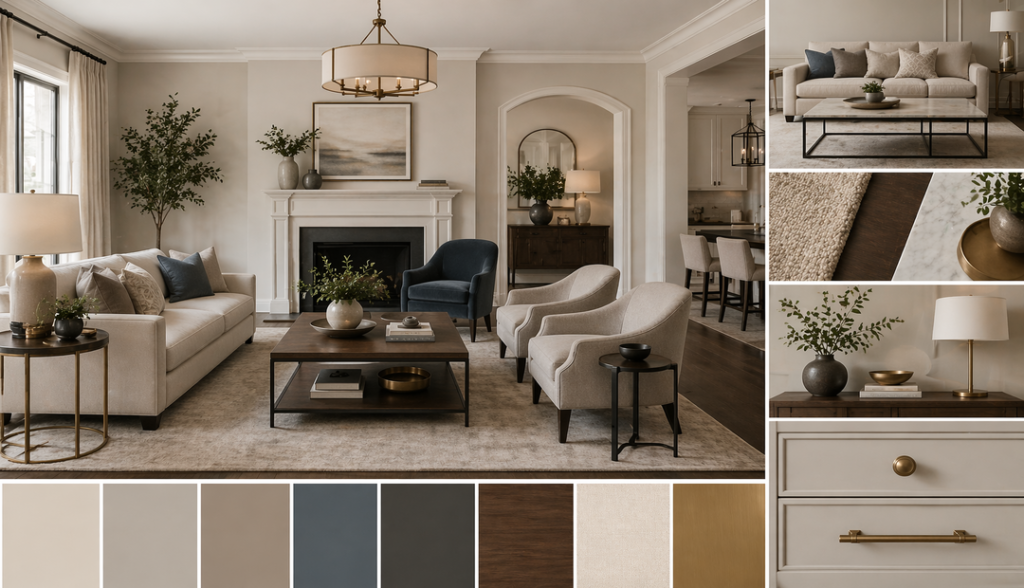
Start with a neutral base for your walls, flooring and larger pieces of furniture. That establishes a peaceful base and makes it easier to build on top of that.
Whatever you do, be intentional about pairing styles. Better use simple guidelines, let’s say thoughtful decisions to balance each traditional element with something modern. A classic sofa, for example, pairs well with a sleek coffee table or a modern lighting fixture.
Texture needs to come before the pattern. Avoid busy prints, instead go for layer textures that give a touchy experience. Like soft fabrics against smooth surfaces, or matte finishes with subtle shine, creates depth without overcrowding the visuals.
Declutter as much as you add. Remove any elements that create visual noise, or go too minimal—both extremes capable of breaking the balance. Most effective transitional designs are those which one chooses deliberately.
Finally, take smaller elements like hardware, fixtures and lighting as opportunities to bring in some contemporary touches. These elements provide contrast to softer, more traditional pieces of furniture and help keep the overall balance.
Frequently Asked Questions:
Neutral colors such as beige, grey, taupe and warm white are typically used in transitional interiors.
No, transitional design and modern farmhouse are two different styles. Transitional prefers a high-low mix, while modern farmhouses are rustic by nature.
Furniture with simple shapes and less ornamentation falls in transitional categories.
Yes, it has excellent resale value because of its blend with modern and traditional styles, which keep the design timeless.
Explore More:

Mansi is a creative designer with three years of professional experience, specializing in clean, balanced, and purpose-driven visuals. She is also a passionate writer whose work shows a strong sense of layout, composition, and visual hierarchy. Outside work, she enjoys sketching, experimenting with color, and spending time around plants and outdoor spaces. Connect with her on LinkedIn.