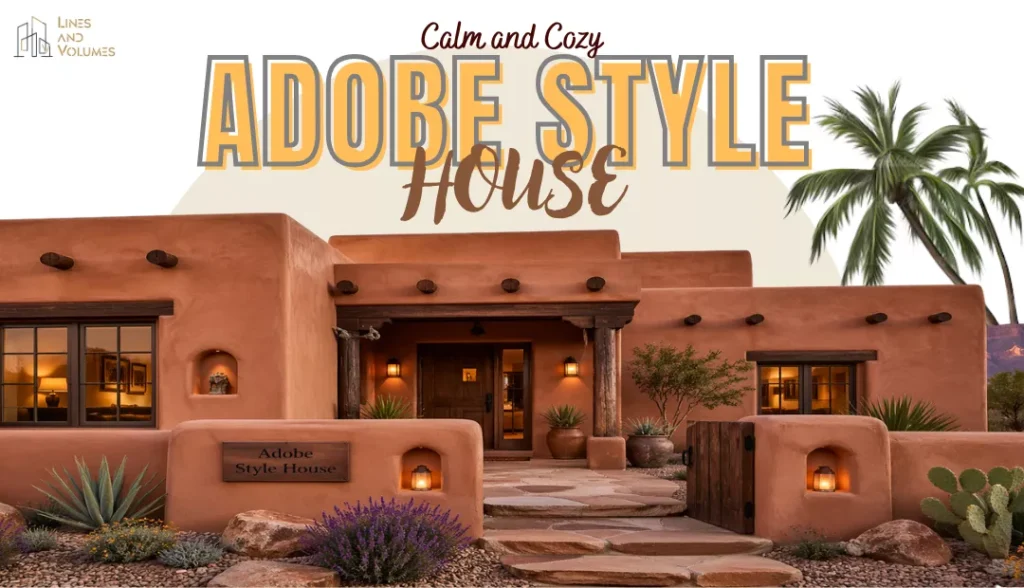
An adobe style house is a home with a warm, earthy look, thick walls made from sun-dried mud bricks, and a flat or slightly sloped roof. The architectural structure is deeply rooted to indigenous and Spanish Colonial traditions of the American Southwest.
By the end of this guide you will know exactly what adobe house is, where its roots are from, and how to identify one. We will discuss its features, pros & cons and most asked questions about adobe homes.
What Is Adobe Architecture?
The definition of adobe refers to building material, not necessarily a design style. Adobe consists of a basic blend of clay, sand, water and organic matter such as straw or grass. This mixture is moulded into bricks and left to dry naturally under the sun, creating a condensed tightly packed breathable construction material.
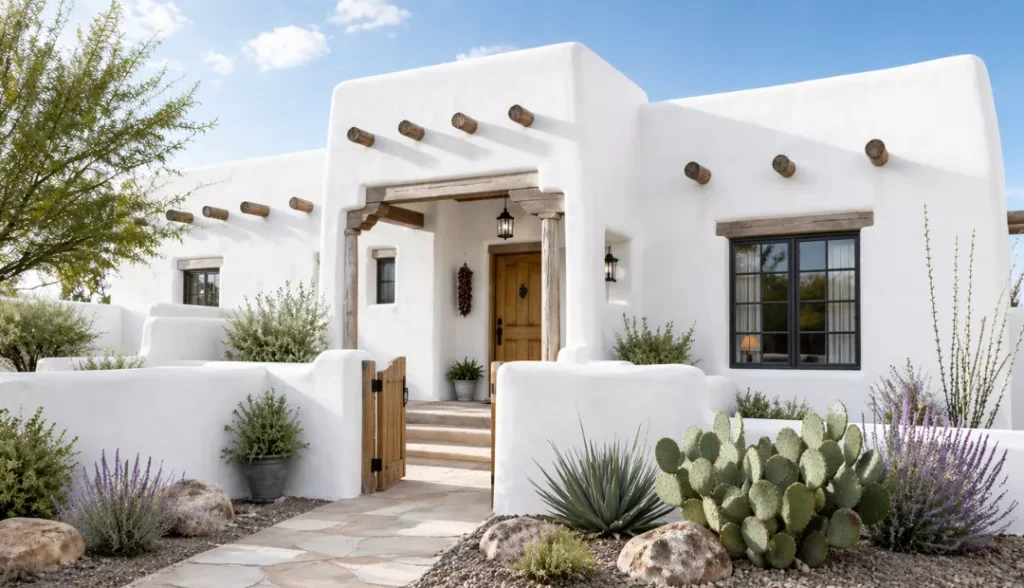
Over time, the term evolved. But nowadays we use the term “adobe style” to cover both:
- Houses built from real adobe bricks
- Houses built to look like adobe, but using contemporary materials like concrete or stucco
The material itself directly influenced the architecture.
Due to the heavy weight of adobe bricks and its load-bearing capacity, homes built with thick walls provide structural stability and thermal mass. The softness of the material prohibits sharp angles, the reason why adobe houses have rounded corners and organic shapes. These roofs are generally flat and sustained by wooden beams referred to as vigas.
Adobe homes are architecturally related to Pueblo Revival, Territorial Revival and Spanish Colonial Revival styles that evolved from traditional building methods in the American Southwest.
History & Origins of Adobe Style Homes
It is more than a thousand years since adobe construction existed in North America. The earliest of these structures were constructed by the Ancestral Puebloans about 700 AD in New Mexico, Arizona and Colorado.
Perhaps the most renowned example is Taos Pueblo, a UNESCO World Heritage Site and one of North America’s oldest continuously inhabited communities. These buildings date back more than 1,000 years and show just how long adobe houses last when well taken care of.
Key Characteristics of an Adobe Style House
Thick, Earthen-Toned Walls
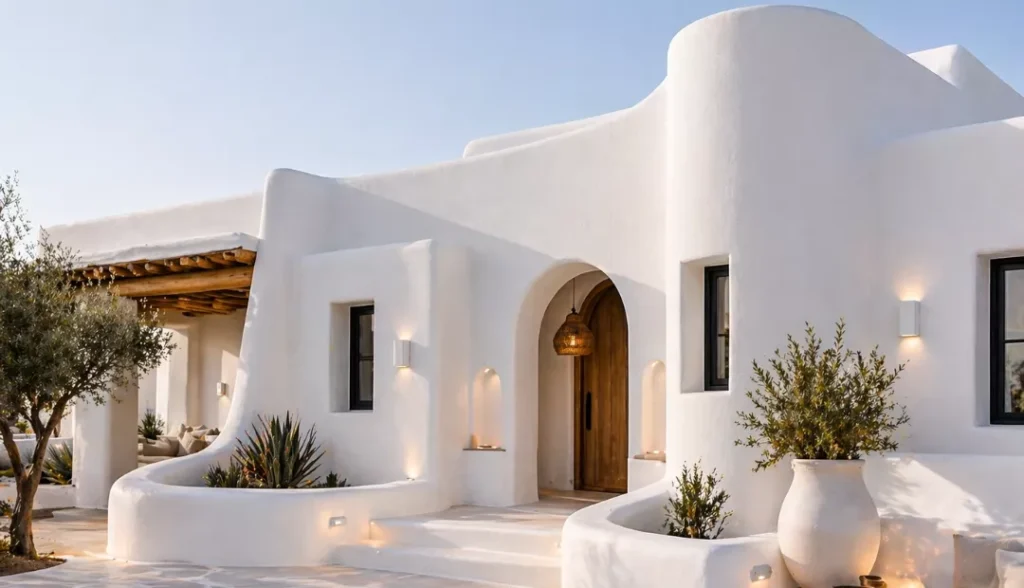
Adobe walls are usually 10 to 24 inches thick. These are often finished with spackled stucco, and come in various sand, tan, rust or brown colors. They act as thermal mass, keeping the interiors cool at day time and warmer at night time.
Flat or Slightly Sloped Roof
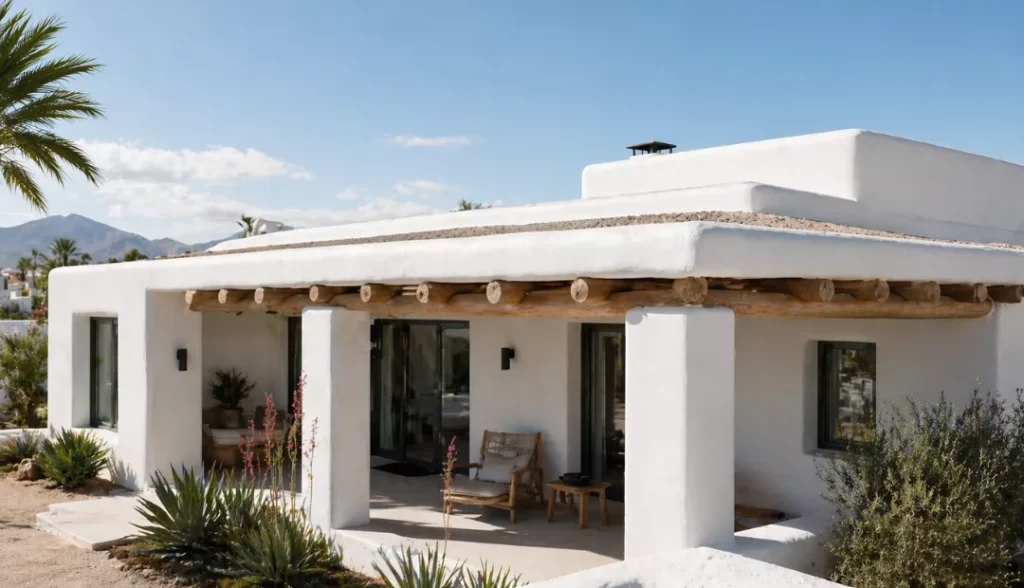
Wood vigas (exposed beams) supporting a roof made of smaller branches called latillas are used in traditional roofs. Flat roofs worked well because adobe houses developed in areas with little rain, but today they may include a slight slope for water drainage.
Rounded Corners & Organic Shapes
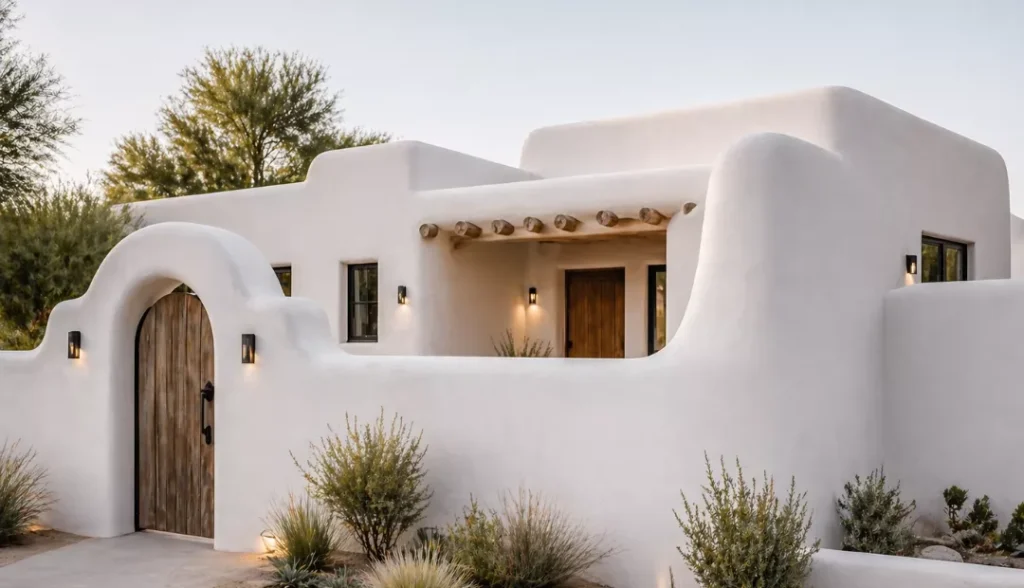
You may not find sharp corners in adobe construction, so walls and rooflines tend to have soft, rounded edges. This makes a soft, sculpted look that feels too unique and hard to replicate with standard construction.
Small, Deep-Set Windows & Doors
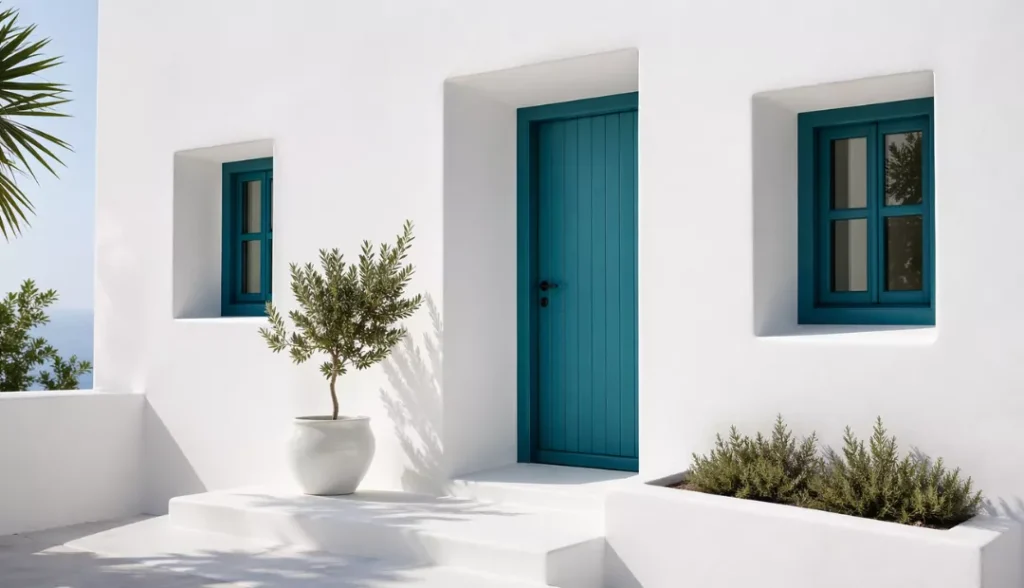
Because windows are usually recessed into thick walls, thus helping with thermal insulation. Frames are wood and sometimes painted in bold accent colors like turquoise or deep blue.
Courtyards, Portales & Enclosed Outdoor Spaces
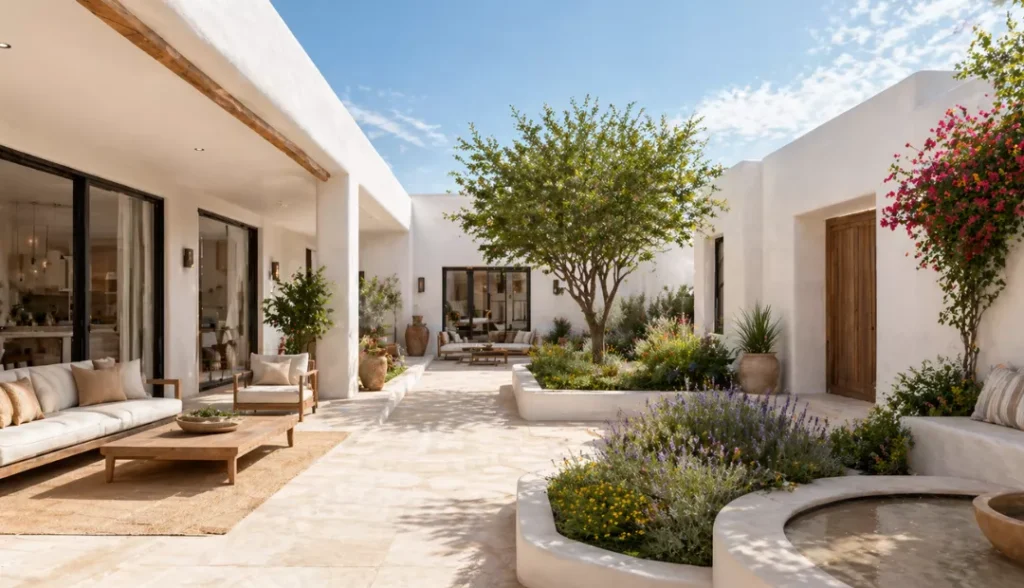
Covered porches (portales), interior courtyards (placitas) and enclosed garden areas are common features of adobe homes. They create a seamless flow between indoor and outdoor living also offering shade and privacy.
Kiva Fireplaces
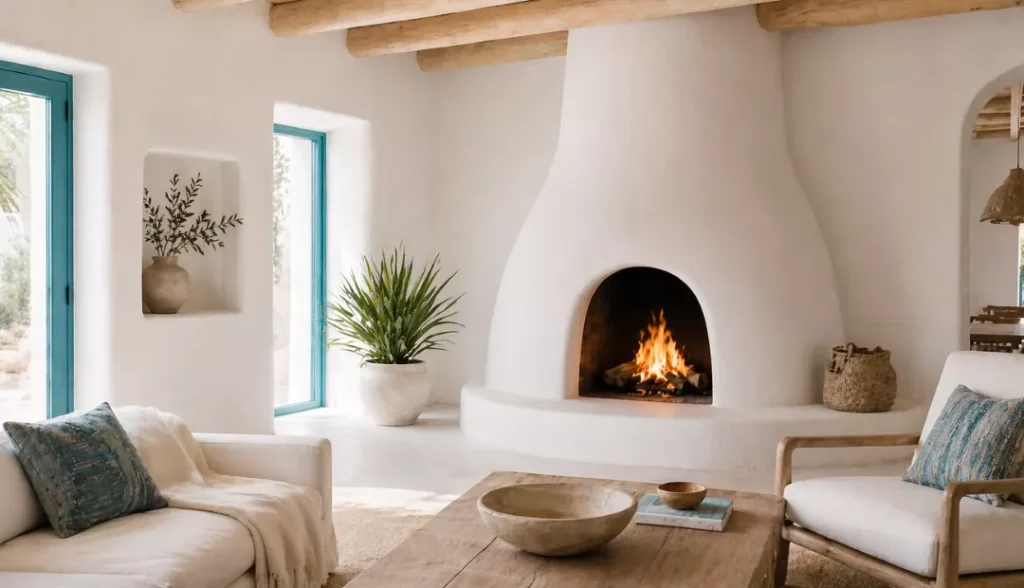
Many adobe homes feature kiva fireplaces. Builders traditionally make these round, beehive-shaped fireplaces from adobe or plaster and design them with rounded corners.
Not only do they provide heat but they also give a visual focal point.
Pros and Cons of Adobe Style House
Advantages
- They are very energy efficient when it comes to hot climates because of the thermal mass. The internal walls regulate and maintain room temperature to reduce the need for air conditioning.
- Built and maintained properly, they can last for centuries, making them incredibly durable.
- Since adobe makes use of natural materials, it is a low-embodied energy building method and hence an environmentally sustainable building process.
- The thick walls also help with sound insulation, meaning interiors are generally quieter.
Disadvantages
- In humid or rainy climates, they perform poorly unless the house is extremely modified.
- Re-coating is required every 5 to 10 years for exterior surfaces to prevent erosion.
- They are geographically limited, commonly found in New Mexico, Arizona, Texas, Colorado and California.
FAQs
Adobe homes are the most popular in New Mexico, Arizona, Texas, Colorado and California.
An example is Taos Pueblo, which houses 1,000-year-old structures. Modern adobe homes generally have a similar lifespan to conventional houses (50–100+ years when well maintained).
Yes. Adobe with thick walls absorbs heat in the daytime and releases it at night, making indoors temperatures more stable.
Adobe refers to the actual building material made from mud bricks, whereas stucco acts as a plaster-like finish that builders apply over surfaces like adobe, concrete, or wood framing to create a smooth, adobe-like appearance.
Check this out:

Navdeep is a PHP programmer by profession, & rider by passion with a strong interest in writing, reflection, and travel. His writing draws from daily experiences across online and real-world settings, often influenced by an interest in interior design and how spaces affect mood and function.