
When potential clients actively search for architectural services, Google Ads for architecture firms ensures your business appears at the top of search results. Instead of waiting for organic visibility, your firm is placed front and center, making it more likely that people with a project in mind will consider you.
This guide explores paid search mechanisms for creating high-value leads and it’s made for firm owners, marketing managers, and in-house teams. Even if you are about to launch your first campaign, this guide purely focuses on driving inquiries and not just traffic.
What is the Difference Between SEO vs Google Ads?
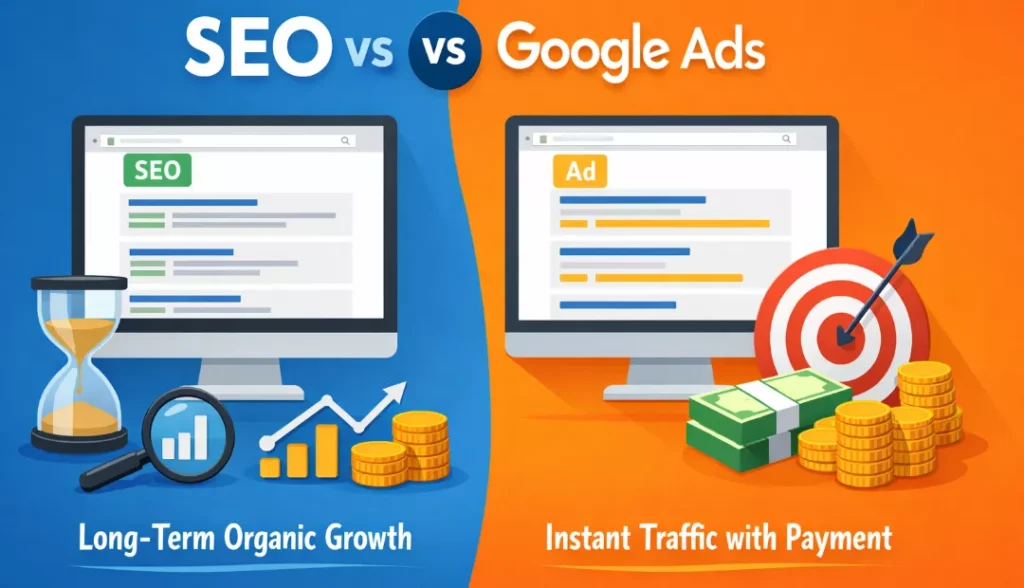
People often group SEO and Google Ads together, but they work in fundamentally different ways.
Google Ads is immediate. You only pay to rank at the top of search results and start receiving traffic from your campaign immediately after it is online. This is the most controllable, measurable and best fit to capture any demand that exists.
But SEO, on the other hand, is a long game. In the context of architect SEO strategy, it’s about ranking your website organically to show up in search results without having to pay anything. Over time it builds credibility and steady traffic, but this requires diligence and consistency.
Different Google Ads Campaign Types for Architecture Firms
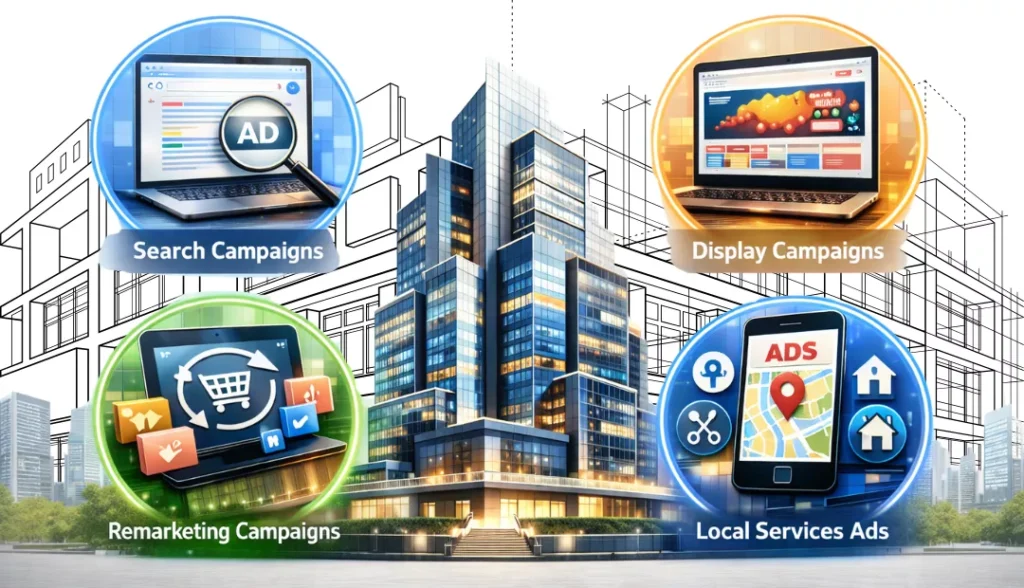
Search Campaigns
The basis of any effective Google Ads strategy for architects is search campaigns. Because these ads show when someone is actively searching for services such as “residential architect near me” or “Commercial architecture firm”, these keywords show intent.
Display Campaigns
Display campaigns, as the name suggests, show visual ads across sites on the Google Display Network instead of targeting active searchers.
Architecture firms perform best when display campaigns rely heavily on visuals. Clear layouts, quality project imagery, and distinctive design styles are enough to grab attention from audiences such as property developers, contractors, or real estate professionals.
Remarketing Campaigns
Another common tactic called remarketing, the process helps bridge the gap from interest to action. Generally, a typical visitor to an architecture website does not engage with an inquiry instantly. Users have longer decision cycles and survey multiple firms before reaching out.
This is where remarketing becomes important. When you use strong content marketing like project showcases, case studies, and design insights, it helps you reconnect with visitors who have already been to your site and keep your work fresh in their minds while they keep looking for information.
Local Services Ads
The difference is that local services Ads have an extra dose of trust which your conventional ads don’t. The ads will show Google-verified badge, which brings a touch of authenticity to potential clients.
This influences decision-making for firms focused on residential architecture. Name verification guides clients and creates minimal fear in hiring as they are cautious about taking a leap of faith for personal contracts.
Pricing Model — another differentiating factor unlike pay-per-click advertisements, LSAs generally work on a pay-per-lead basis, leading to significant shift in focus from traffic to actual enquiries.
How To Set Up Google Ads Campaigns
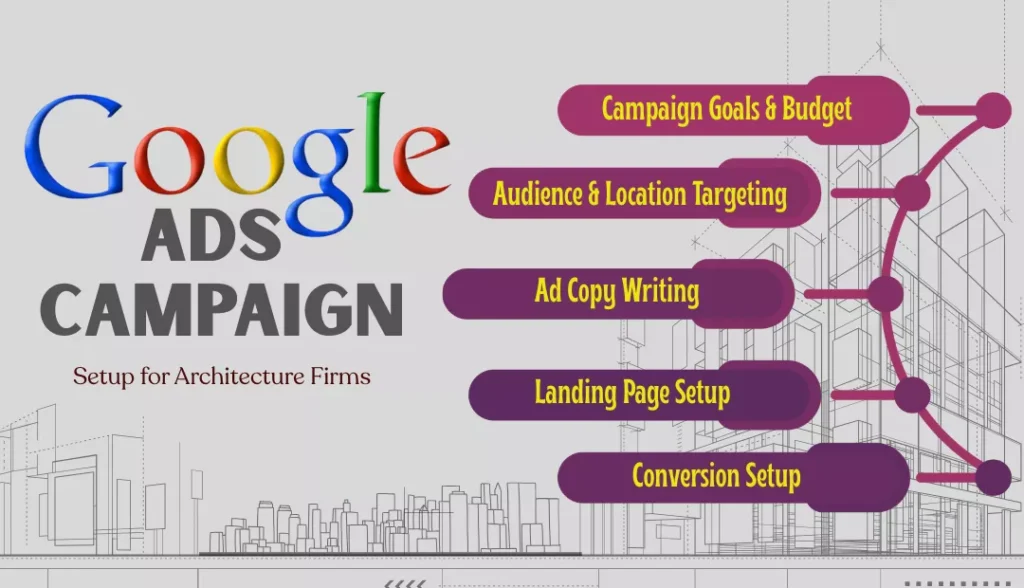
Define Campaign Goal and Budget
Defining success before doing anything on this platform. This is mainly relevant to architecture firms, which come in the form of qualified enquiries rather than simply website visits.
Often a baseline begins with about $1,000 to $3,000 a month. This proves a sufficient amount of data to perform testing and optimization without overstretching resources.
Audience and Geographic Targeting
Architecture projects are heavily influenced by the location. Most clients hire firms within a reasonable distance, so targeting should accurately reflect the radius of your work.
This is typically situated somewhere around 20 to 80 kilometers from the firm, depending on project type and scale.
Write High-Converting Ad Copy
Your ad copy must be straight to the point and provide specific details. People click on vague messaging unqualified, but clear positioning helps you filter who is right for you.
A simple structure always performs well. The first headline should contain the main keyword, the second a different individual value point like experience or specialisation, and the third urging someone to take action.
This process becomes more efficient when AI tools help generate ad variations, test messaging, and refine copy based on performance data.
For example:
“Residential Architects | 20 Years Experience | Free Consultation”
It finds the balance so much between relevance, credibility and intent that it does not over compete with the message.
Build a Dedicated Landing Page
The most common mistake one makes by sending ad traffic to the homepage. It forces users to search again for what they originally clicked on, and most will not take that extra step.
A dedicated landing page solves this by matching the intent of a user directly. The page should represent residential design and not a high-level overview of the firm.
Conversion Tracking Setup
Without tracking, it is impossible to understand whether a campaign is working.
Clicks alone do not offer very little insight. It’s only the actions that matter — filling out forms, calling, requesting quotes.
Setting this up through tools like Google Tag Manager and Google Ads conversion tracking allows you to measure actual outcomes.
Conclusion
Architecture firms connect with clients through Google Ads, which provides a direct path to reach people already searching for their services. It stands out because it captures intent rather than trying to create it, making it one of the most reliable channels for generating qualified leads. With solid conversion tracking, Google Ads turns guesswork into a full-funnel system for winning better projects.
Explore More:

Dipanjan is a digital marketing professional with five years of hands-on experience across strategy building, content, and performance-driven campaigns. He has worked on building structured marketing systems that focus on reach, engagement, and measurable growth. Known for his analytical thinking and consistency, he brings a practical approach to digital execution. Outside of work, he loves cooking, painting and enjoys exploring interior setups. Connect with him on LinkedIn.