
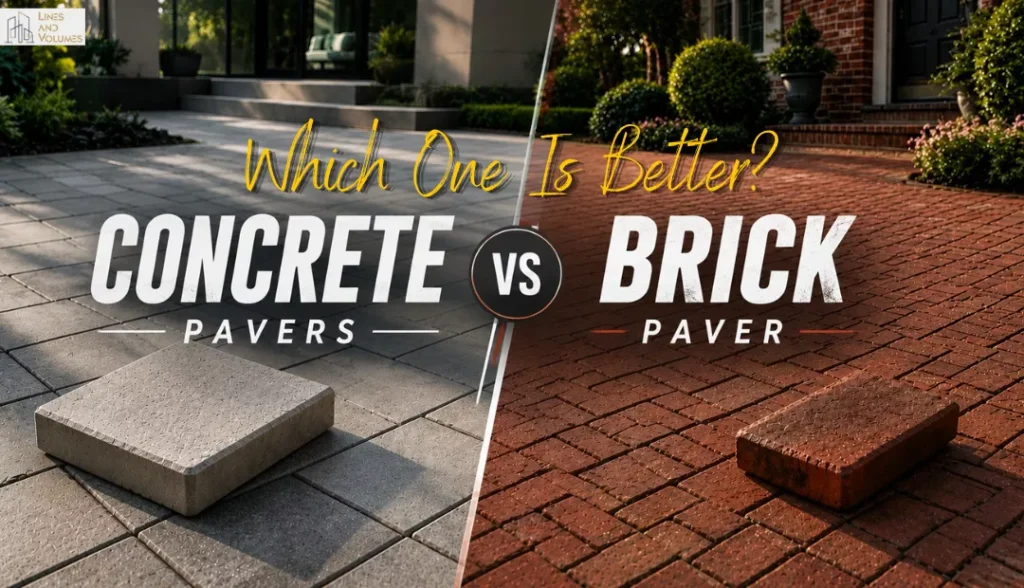
Landscape hardscaping requires making long-term commitments. The kind of paving material you choose will influence your property’s overall value, appearance, and maintenance requirements. When comparing concrete pavers vs brick paver, both are popular choices for patios, driveways, walkways, and pool decks. They are durable, attractive, and suitable for a wide range of outdoor spaces.
The core trade-off of two materials is straightforward, brick pavers are superior in aesthetics and long-term color retention, but concrete pavers are more affordable, and have more variety.
This guide gives you a clear comparison of the two paving options across cost, durability, maintenance, design, and long-term value, helping you confidently choose the one that best suits your home and landscape.
What Are Concrete Pavers?
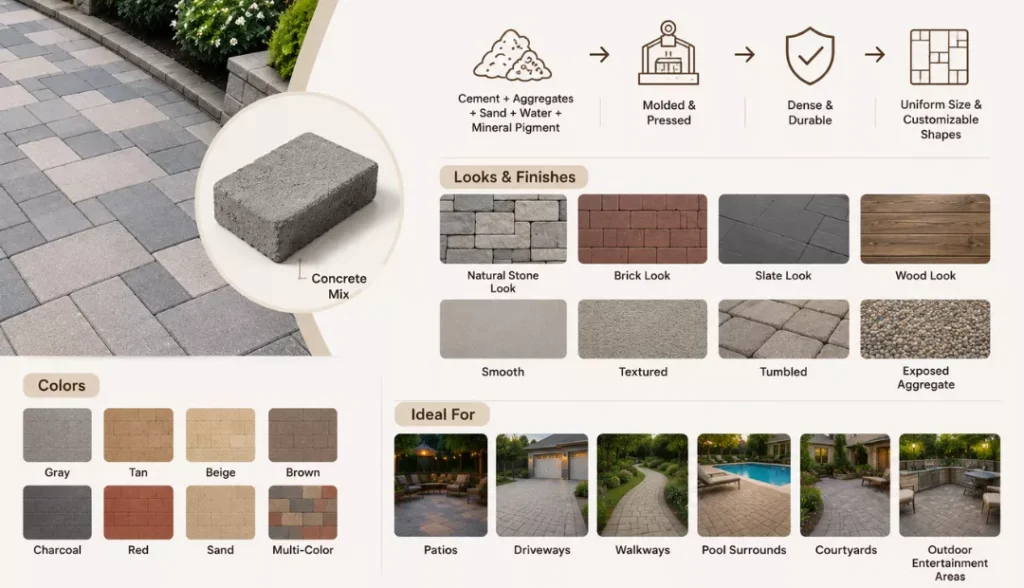
Concrete pavers are manufactured by combining Portland cement, aggregates, sand, water, and mineral pigment that are molded and pressed into individual paving units. The mixture is put under high pressure, resulting in dense and durable paving block that are uniform in size and customizable in shape.
With modern manufacturing techniques, it resembles natural stone, brick, slate, and even wood. Homeowners can even choose from smooth, textured, tumbled, or exposed-aggregate finishes based on their preferred style.
Because of excellent versatility, they are commonly used for patios, driveways, walkways, pool surrounds, courtyards, and outdoor entertainment areas. They are even popular in modern landscape design because of their variety in color and size.
Pros And Cons of Concrete Pavers
| Pros | Cons |
| Lower initial cost than concrete | Surface color may gradually fade over time |
| Vast range of colors, textures, and shapes | Periodic sealing is often recommended |
| Suitable for modern landscapes | Performance depends on proper installation |
| Easier to customize with unique layouts | |
| Individual pavers can be replaced if damaged |
What Are Brick Pavers?
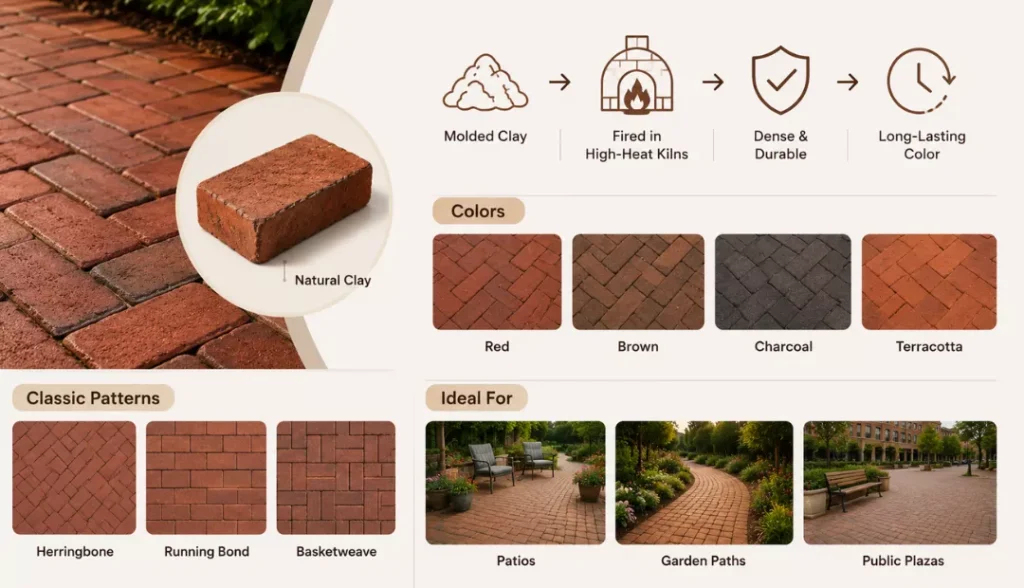
Brick pavers are made from natural clay. They are produced by molding clay and firing it in high-temperature kilns, where it forms a dense, durable building material. Additionally, compared to concrete, as color comes directly from the clay, brick pavers retain its appearance for decades with minimal effect of fading due to weather and usage.
Like most paving block, brick pavers are made in rectangular shapes making them ideal for classic installation patterns. These patterns include herringbone, running bond, and basketweave. In contrast color options are more limited than concrete, ranging from warm red, brown, charcoal, and terracotta tones.
The timelessness of brick pavers make them a popular choice for not only restoration projects, but also traditional patios, garden paths, and public plazas.
Pros And Cons of Brick Pavers
| Pros | Cons |
| Excellent long-term color retention | Costlier than concrete |
| Proven to last for decades | Fewer colors and shapes than concrete |
| Good traction for patios and walkway | Time-consuming installation |
| Individual bricks are easy to replace | May move in freezing weather |
Concrete Pavers Vs Brick Paver: Cost comparison
Concrete Pavers
It costs around $5 to $10 per square foot depending on thickness, finish, and manufacturer. Since these are consistent in size, they simplify installation, resulting in lower labor costs compared to brick.
Brick Pavers
Brick pavers typically cost $4 to $10 per square foot for standard materials, with premium clay products costing more. Because bricks often require more precise alignment and slightly longer installation times, for that reason labor costs may be higher on some projects.
Although regional labor rates vary, concrete is usually the more budget-friendly option for homeowners seeking maximum value.
Durability and Lifespan
Both materials have the potential to last for decades when built over a properly prepared base.
Concrete pavers are highly durable and can last up to 20 to 30 years. They are also strong enough to withstand the weight of both pedestrians and vehicles. Their segmented structure allows for the pavement to flex with ground movement and reduces the likelihood of large structural cracks commonly found in poured concrete.
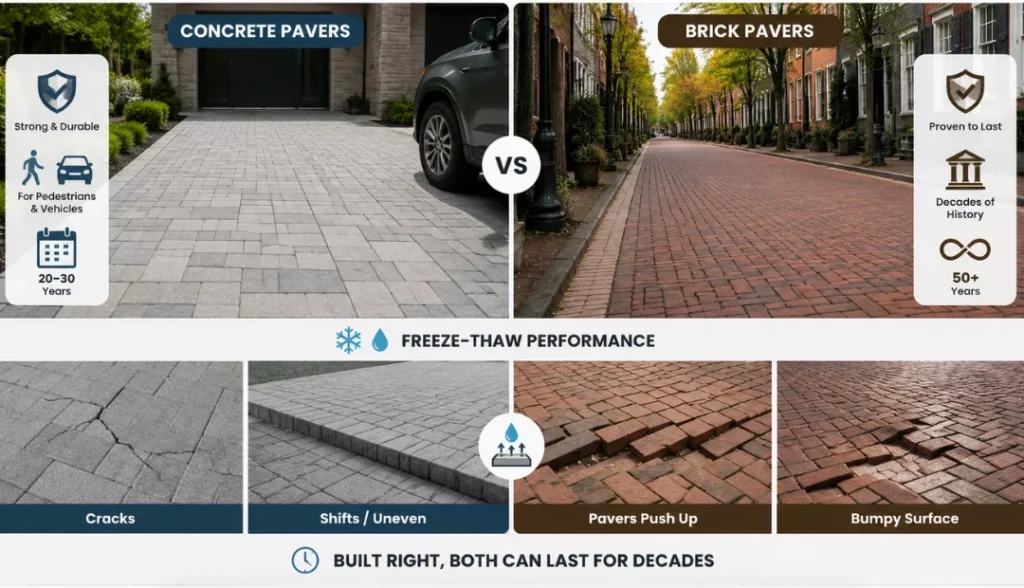
Brick pavers have even longer historical evidence to support their performance. Streets made of clay bricks built decades ago still remain in service today.
Both materials do well in freeze-thaw climates as long as there are adequate drainage systems and installation. But if water trapped beneath paving systems can cause movement on either surface. In concrete paver typically causes cracks, shifts, or becomes uneven. With brick, it pushes individual paving block up unevenly causing a bumpy surface.
Maintenance Requirements
Neither materials require costly maintenance, but brick pavers require less cosmetic maintenance.
While concrete pavers need to be cleaned and sealed occasionally to maintain their aesthetic and resist surface staining, brick pavers do not require as much cosmetic maintenance. Clay bricks maintain their color and do not require a surface treatment like concrete pavers.
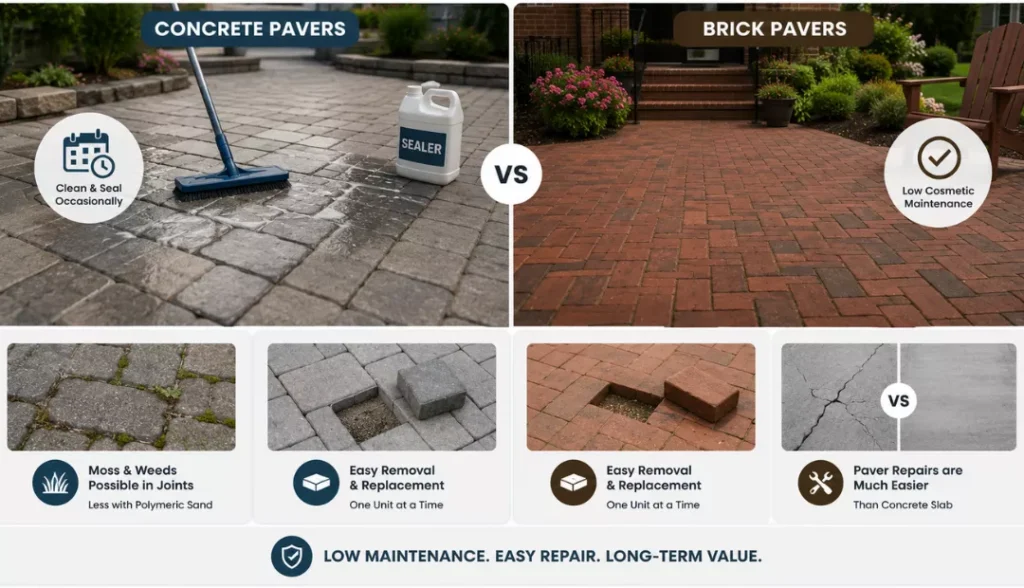
In unmaintained joints, moss and weeds may grow, but this problem is less pronounced with polymeric sand.
Both concrete and brick pavers facilitate the simple removal and replacement of a single failed unit without taking up the entire system. Compared to the replacement of a failed concrete slab, the repair of paving block is much easier.
Design and Aesthetic Differences
Design flexibility of concrete paver has a clear advantage over brick paver.
There are a multitude of paving block options available. Manufacturers produce concrete pavers in numerous colors, shapes, textures, and finishes, ranging from smooth architectural slabs to tumbled stone-look products.
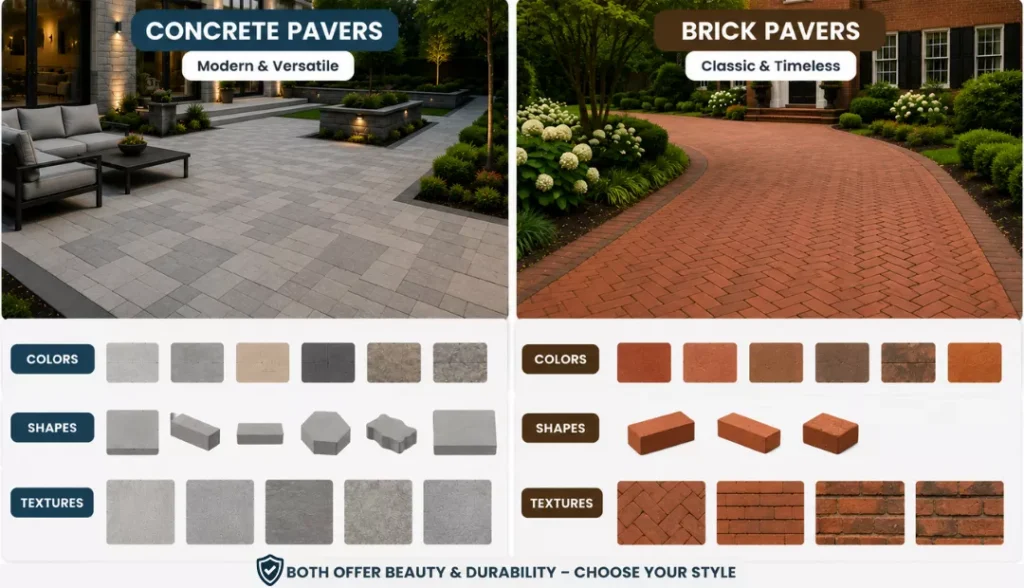
Brick pavers have more of a traditional look by natural variation and earth tones, which can complement a number of different architectural styles. Their classic proportions pair beautifully with Colonial, Craftsman, Tudor, Victorian, and farmhouse architecture.
Conclusion
The decision between concrete pavers vs brick paver ultimately comes down to your preferences and priorities. Concrete pavers offer a wide selection of colors, design flexibility, and finishes, making them an excellent investment if affordability is your priority. If you prefer timeless character, exceptional color longevity, and a material with a centuries-long track record of durability, brick pavers remain one of the best choices available.
Read Next:

Ashish is a seasoned digital marketing professional with over twelve years of experience in Facebook advertising and four years of hands-on experience in SEO. He has worked extensively on campaign strategy, audience targeting, and performance optimization. In his free time, he likes to travel, studying city layouts and natural surroundings. Connect with him on LinkedIn.