
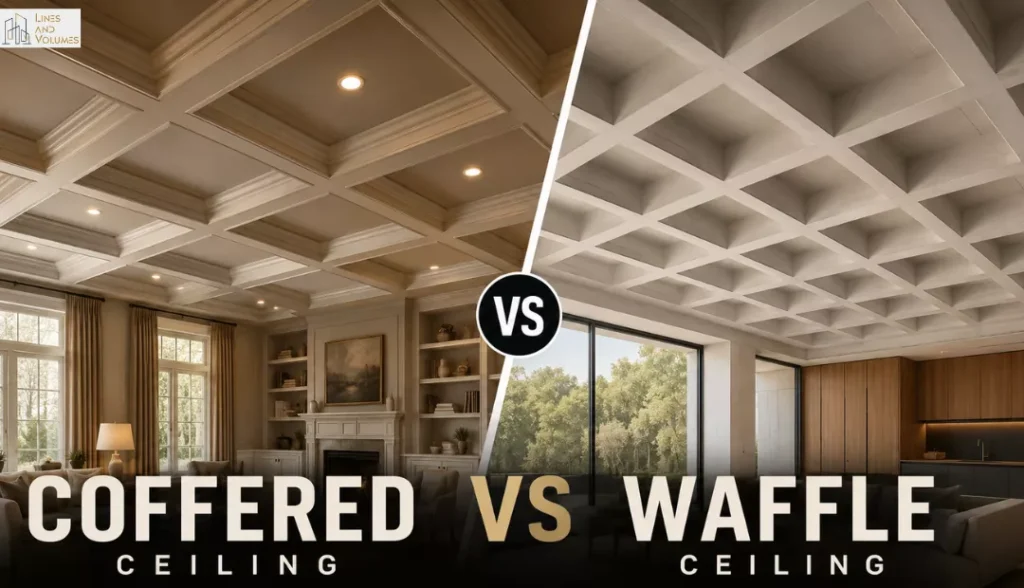
A coffered ceiling features a grid of square or rectangular recessed panels formed by intersecting beams to create a rich three-dimensional effect. A waffle ceiling uses a crisscrossing grid of sunken square recessed panels to have a more geometric appearance. In simple terms, the difference between coffered vs waffle ceiling is about depth and decoration while waffle ceilings focus on symmetry and minimalist grid design. There is so much variety when it comes to ceiling design.
Coffered and waffle ceilings are among the most popular. Many people use the two terms interchangeably but they aren’t the same. Knowing the differences in design, construction, appearance and cost will help you in making the right choice for you and your home.
What Are Coffered Ceilings?
Coffered ceilings have decorative recessed panels framed by beams that run in one or more intersecting directions. The depth, size, and shape of the panels can also be customized.
Coffer panels were first seen in the stone ceilings of ancient Greek and Roman constructions. The recessed panels decreased the weight of the ceilings and increased the aesthetics. During the Renaissance, recessed panels were a common design in churches and palaces. Modern coffered ceilings are mainly decorative.
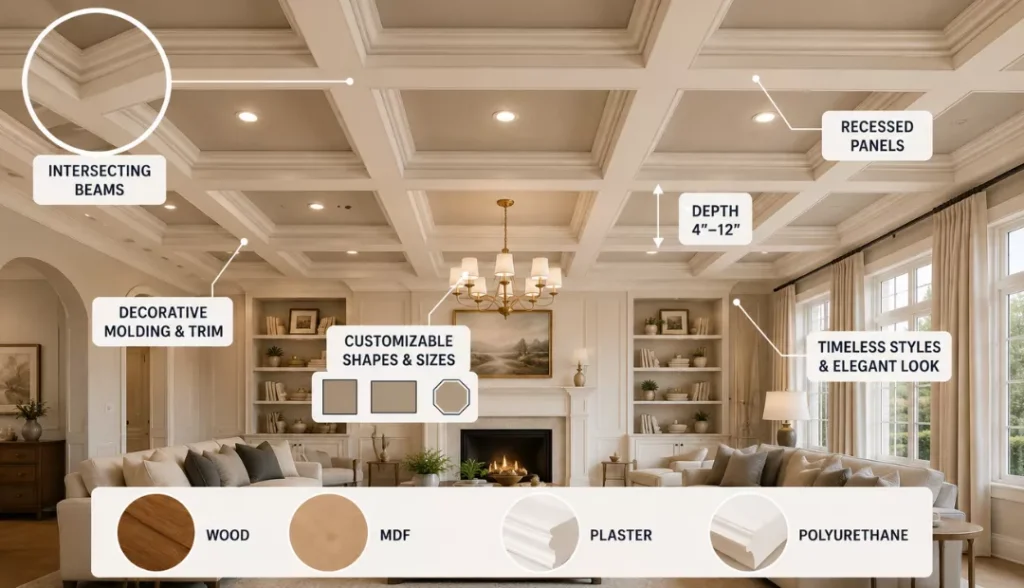
MDF, wood, engineered trims, plaster, and polyurethane beams are some of the common materials that are used to make coffered ceilings. Each of these options allows a coffered ceiling to maintain the traditional look of wood while being easy to install.
Typically, recessed panels are 4-12 inches deep. The height of the ceilings, and the intended design and layout of the panels, determine the depth. Squares and rectangles are the most common panel shapes, but some designs also incorporate octagonal or hexagonal patterns.
Coffered ceiling commonly associated with colonial, traditional, farmhouse, luxury, and transitional interior design styles due to its detailed molding and layered construction.
What are Waffle Ceilings?
Waffle Ceilings use a consistent grid of evenly spaced beams to form identical square recesses across the whole ceiling. Unlike coffered ceilings which add decorative elements, waffle ceilings like to keep things uniform.
Modern architecture and concrete grid systems helped waffle ceilings become more popular in the mid-20th century. Although structural waffle slabs are commonly used in commercial builds, decorative waffle ceilings are made of lightweight framing materials.
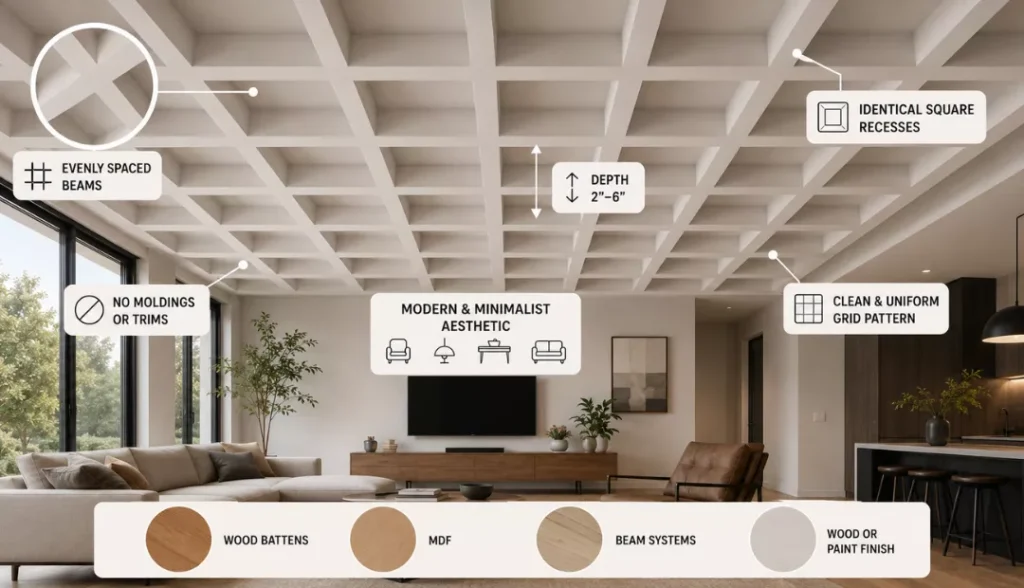
These are designed with MDF, wood battens, beam systems, and a wood or paint finish. Unlike coffered ceilings, moldings and trims are left off. These are flatter too, as the recesses are typically between 2 and 6 inches deep.
Thanks to their clean lines and geometric symmetry, waffle ceilings complement modern, minimalist, Scandinavian, industrial, and contemporary interiors.
Coffered Ceilings vs Waffle Ceilings: Key Differences Explained
Depth and Dimensionality
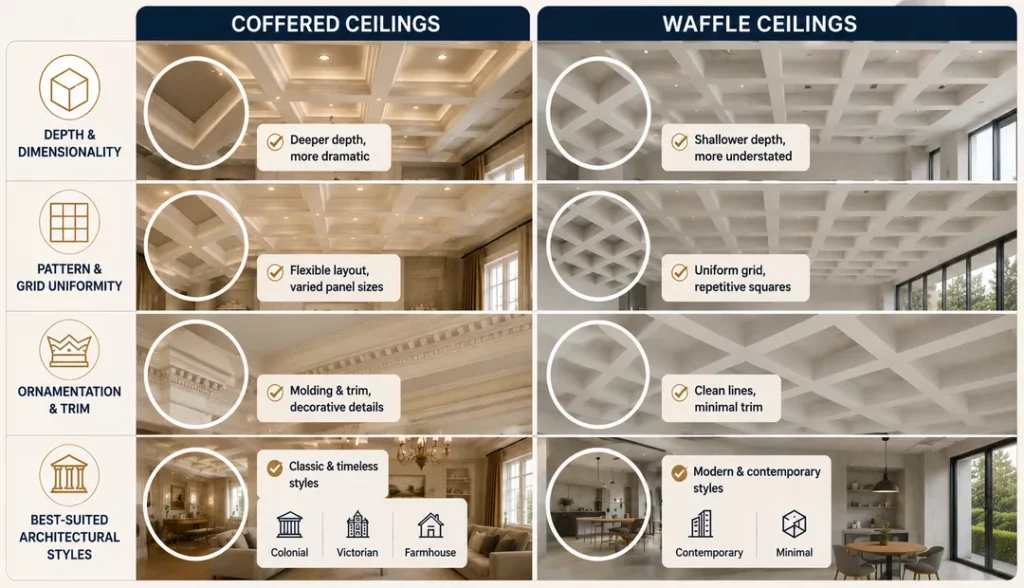
In a coffered vs waffle ceiling comparison, coffered ceilings create greater visual depth in ceiling designs than that of a waffle pattern.
Because the ceiling panels are more deeply recessed, they create a greater contrast, and therefore, greater visual depth. The layers of shadows created by recessed panels draw the viewer’s eye to the ceiling more than waffle ceilings.
The design of a waffle ceiling gives a textured ceiling, but does not draw as much attention to itself. Because of this, waffle ceilings appear more modern, whereas coffered ceilings appear more formal.
Pattern and Grid Uniformity
Coffered ceilings allow variations in design, whereas a ceiling that features a waffle design is a repetitive pattern. A coffered ceiling can feature panels in various sizes and widths and incorporate different layouts to suit the ceiling.
A waffle ceiling features repeated identical squares and panels, which creates an aesthetically pleasing ceiling pattern as a result of symmetry and balance.
Ornamentation and Trim
Because of their design, coffered ceilings will often feature molding or decorate paneling. Waffle ceilings will rely on geometry and the lines made by the design. Because they lack the features that embellish coffered ceilings, waffle ceilings will have a more modern look.
Best-Suited Architectural Styles
Timeless and classic interiors pair best with coffered ceilings while waffle ceilings look best with modern and contemporary architecture.
Classic styles like Colonial, Victorian, and farmhouse can incorporate coffered ceilings while contemporary and minimal designs can incorporate waffle ceilings.
Pros and Cons
Coffered Ceiling
Pros:
- Adds architectural depth, dimensions and elegance.
- Highly customizable in layout and detailing.
- Increases the illusion of a taller ceiling.
- Works with both traditional and transitional interiors.
- Conceals wiring, ducts, and ceiling imperfections.
Cons:
- Higher material and labor costs.
- Requires taller ceilings for the best proportions.
- Decorative detailing increases installation time.
- May overwhelm smaller rooms if overdesigned.
Waffle Ceiling
Pros:
- Create clean sophisticated architectural focal point
- Its deep cavities reduce echoes and environment noise.
- Creates visual depth and luxury without heavy ornamentation.
- Works well with recessed lighting.
- Repeating the grid enhances spacious rooms.
Cons:
- Requires a ceiling height of at least 9 feet.
- Its complex form requires skilled labor for precise alignment.
- The grid structure traps dust, making regular cleaning necessary.
- Offers fewer decorative customization and is difficult to redesign.
Conclusion
Choose a coffered ceiling if your design style is traditional and you want something more detailed and flexible. In the debate of coffered vs waffle ceiling designs, a waffle ceiling is a better choice for modern interiors that need a cleaner and less busy appearance. Also, make sure you have tall ceilings if you want a waffle ceiling, as its grid layout can make the room feel larger and more open.
Discover More Topics:

Mansi is a creative designer with three years of professional experience, specializing in clean, balanced, and purpose-driven visuals. She is also a passionate writer whose work shows a strong sense of layout, composition, and visual hierarchy. Outside work, she enjoys sketching, experimenting with color, and spending time around plants and outdoor spaces. Connect with her on LinkedIn.