
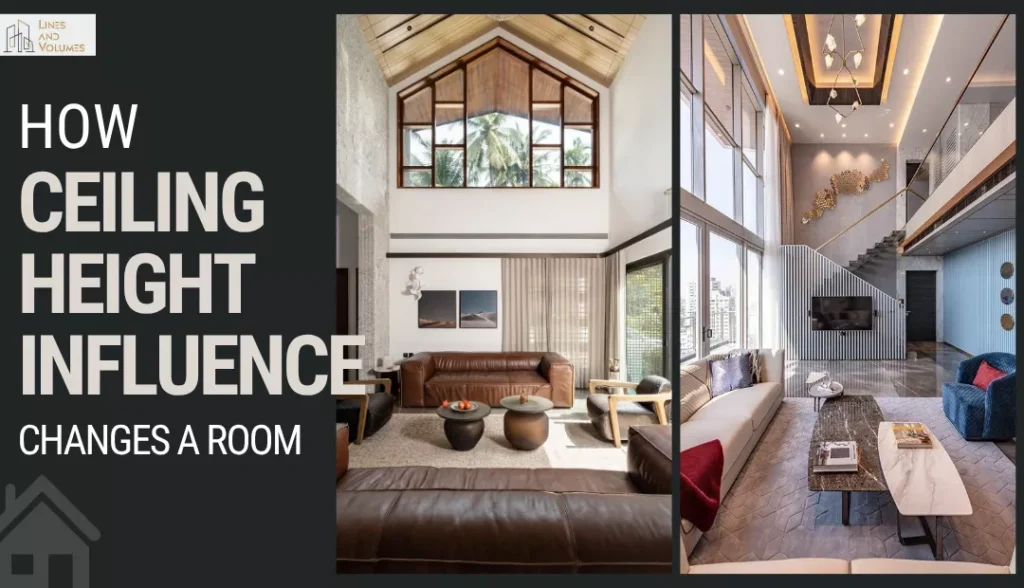
Very few people actively pay attention to ceiling height, but it is a strong factor that can influence even decision-making. Ceiling height influence how a room feels and how people respond emotionally to a space. It quietly affects everything from comfort to perceived luxury, lighting and acoustic performance.
In modern interior design, the ceiling is always treated to be merely a fixed structure detail. But today with research in psychological and experiential tools it is confirmed how ceiling significantly influences how humans respond to space.
Ceiling Height Influences Room Design
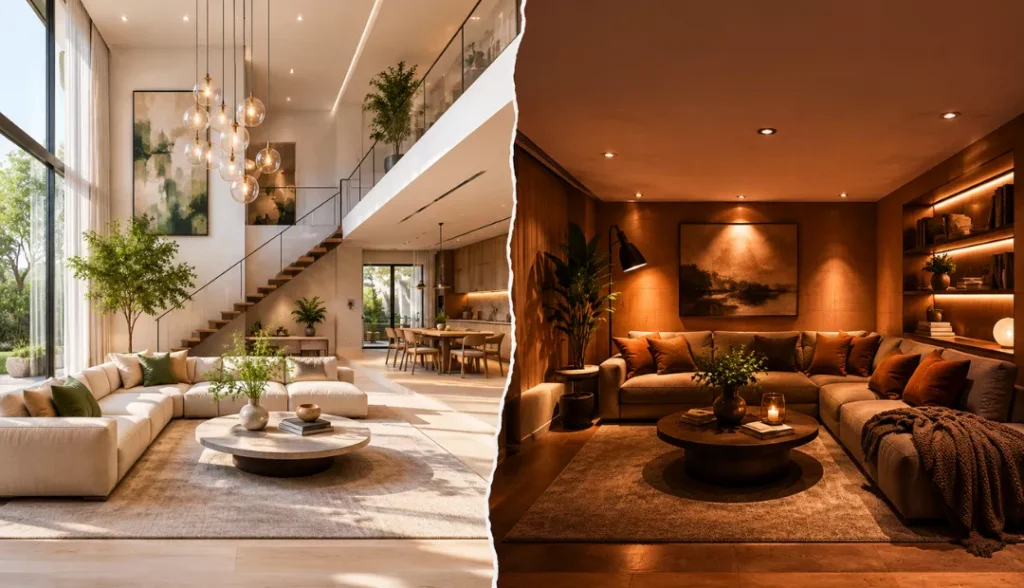
The ceiling height of an indoor space directly affects people’s spatial perception of a room. This perception is not only rooted in visual input, but also possesses both cognitive and emotional attributes.
Consistent long-running research in the field of environmental psychology shows that high ceilings foster feelings of openness, freedom, and abstract thinking, while low ceilings produce feelings of enclosure, focused attention, and intimacy. With follow-up controlled studies it’s also revealed that unbalanced low-ceiling designs can also trigger a strong sense of being restricted.
Psychological Spectrum: Intimacy vs. Grandeur
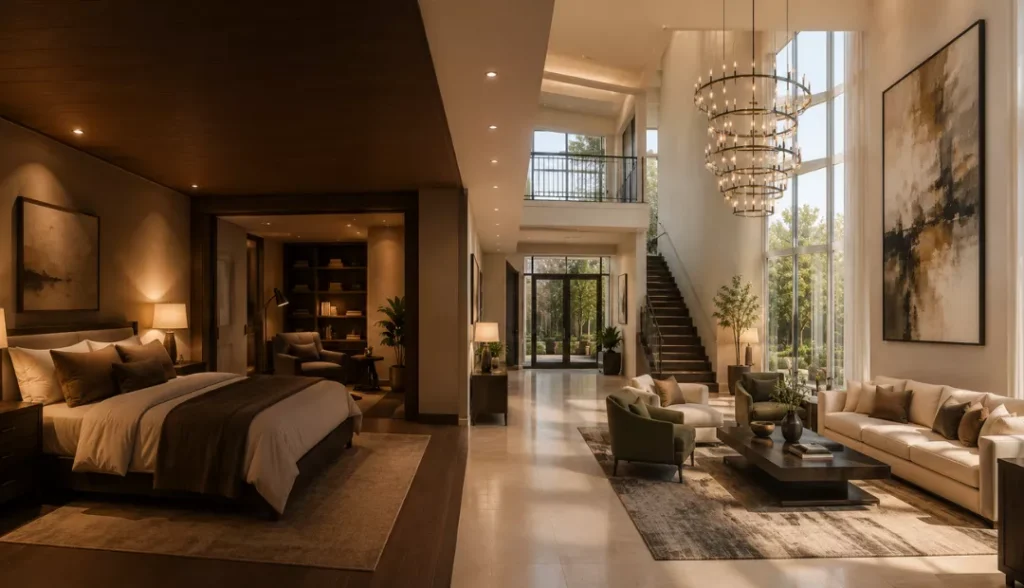
Lower ceilings are often perceived as more intimate, emotional warmth, and psychological grounding. Bedrooms, dens, and smaller private rooms often benefit from this effect. In contrast, a high ceiling gives a sense of grandeur experience. They commonly work best in living rooms, galleries, hotels, and entry spaces where first impressions matter.
The best-designed spaces often combine both, using variation in ceiling height to create emotional rhythm across a home.
How Ceiling Height Changes Interior Design Decisions
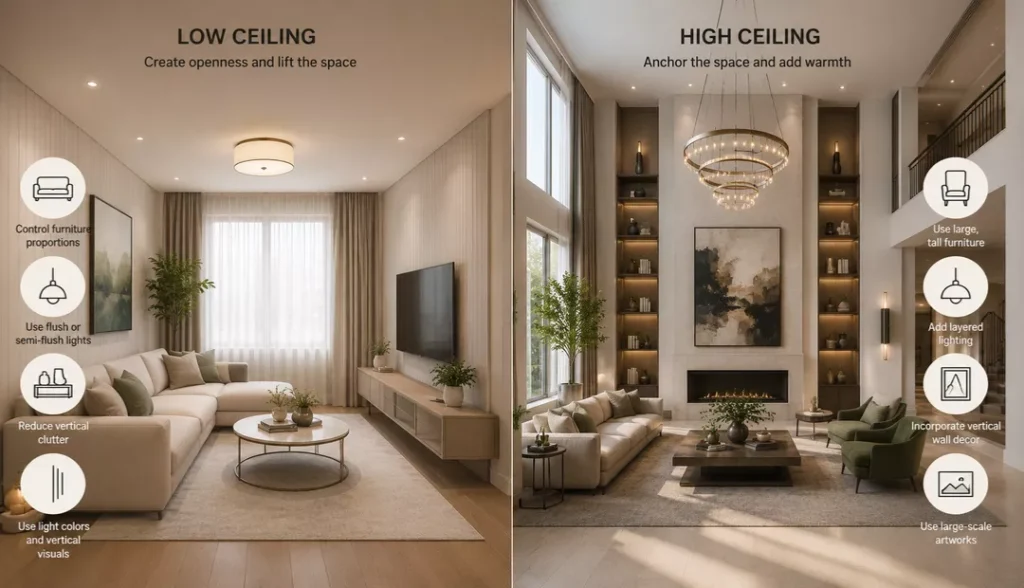
It is a core variable that guides key decision-making in interior design, and it directly determines the overall visual construction logic of a space. If the floor-to-ceiling height is too low, the space easily feels cramped.
In this case, designers must first control furniture proportions, select visually lightweight styles, reduce the vertical stacking of miscellaneous items, use flush-mount or semi-flush-mount ceiling fixtures, and pair light-toned walls with vertical visual illusions to lift the perceived height of the space.
If the floor-to-ceiling height is too high, while it offers sufficient design freedom, the space can easily feel empty and disconnected. To resolve this, designers can add large, tall furniture, layered lighting, vertical wall decorations, and large-scale artworks to anchor the spatial scale.
Light, Sound, and the Sensory Experience of Height
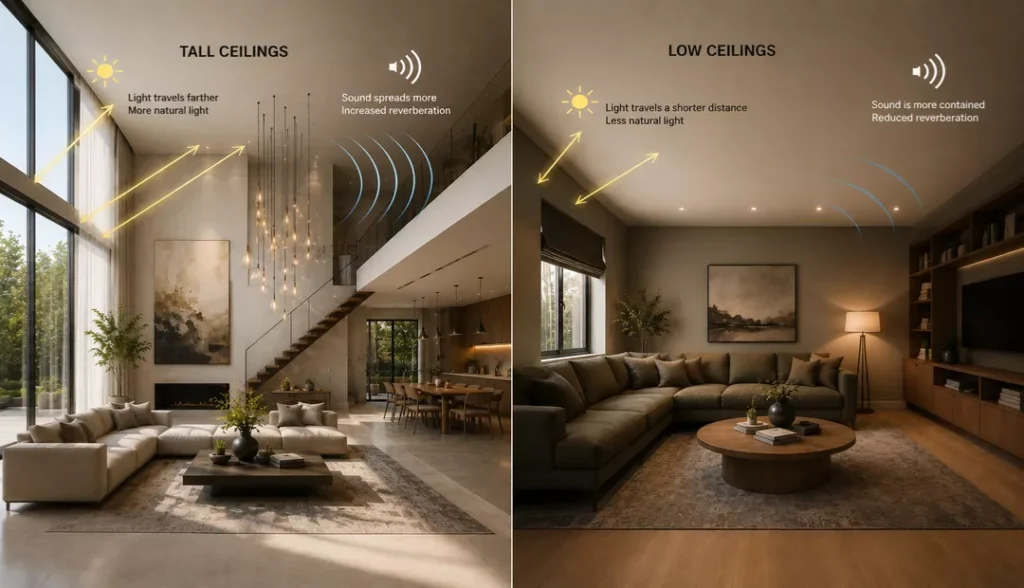
It directly impacts how light and sound behaves.
In tall interior space, it is the core physical variable that shapes the overall sensory experience. In open areas, high ceilings extend light reflection paths and amplify reverberation, which can sometimes lead to insufficient lighting or excessive echo if not properly managed.
On the other hand, low ceilings compress the space available for light and sound to travel, which may feel uncomfortable or cramped when overdone.
For this reason, architects incorporate it into the coordinated design of the overall sensory experience rather than treating it as an isolated dimensional parameter.
Ceiling Height and Cognitive Behavior
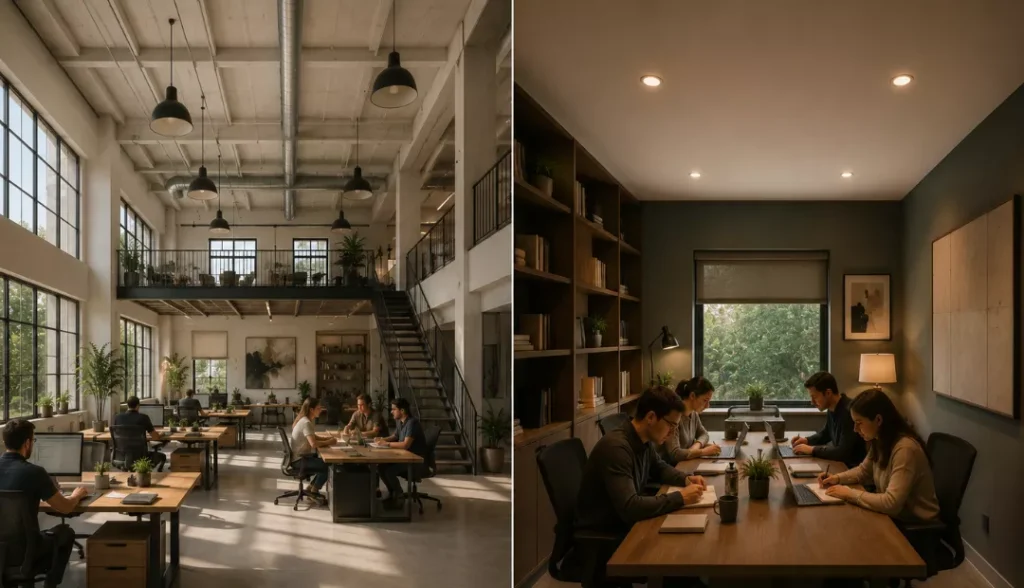
Most interesting finds in environmental psychology show how ceiling height influences human thought process.
The explanation is not mystical. It relates to how spatial openness signals freedom versus constraint, which in turn influences cognitive framing.
For this reason, collaborative open-plan offices and studios mostly use high ceilings, while study rooms and meeting rooms or private workspaces use more contained working proportions.
Improve Room Design for Different Ceiling Heights
When structural changes are not possible, perception can still be adjusted through design.
To make ceilings feel higher:
- Use vertical elements like tall curtains or shelving
- Keep wall colors light and continuous
- Extend visual lines upward with mirrors or artwork
- Maintain clean upper wall space
To make high ceilings feel grounded:
- Add layered lighting at different heights
- Use tall furniture and vertical wall elements
- Introduce texture and acoustic materials
- Create smaller “zones” within the room
These techniques don’t change the structure, but they automatically change perception.
Also Read:

Navdeep is a PHP programmer by profession, & rider by passion with a strong interest in writing, reflection, and travel. His writing draws from daily experiences across online and real-world settings, often influenced by an interest in interior design and how spaces affect mood and function.