Tile showrooms often have hundreds of choices to consider. The various colours, sizes, finishes and materials can make it difficult to decide, particularly when two kinds of tile appear almost identical but have different prices. Most tiles can be classified into several broad categories. Understanding how each one works can help make the choice easier. This guide discusses the different types of tile, their advantages and disadvantages, and the contexts in which they are most suitable.
Common Types of Tile
There are different types of tile, primarily classified by their material, finish, durability and where they are used.
Ceramic Tile
Ceramic tile is clay that is shaped, glazed and fired in a kiln. It is softer and more porous than porcelain, and is easier to cut and work with. If the glaze is damaged, it can absorb water and may break easily.
Ceramic tiles work well for bathroom walls, kitchen backsplashes and floors in low-traffic areas.
Porcelain Tile
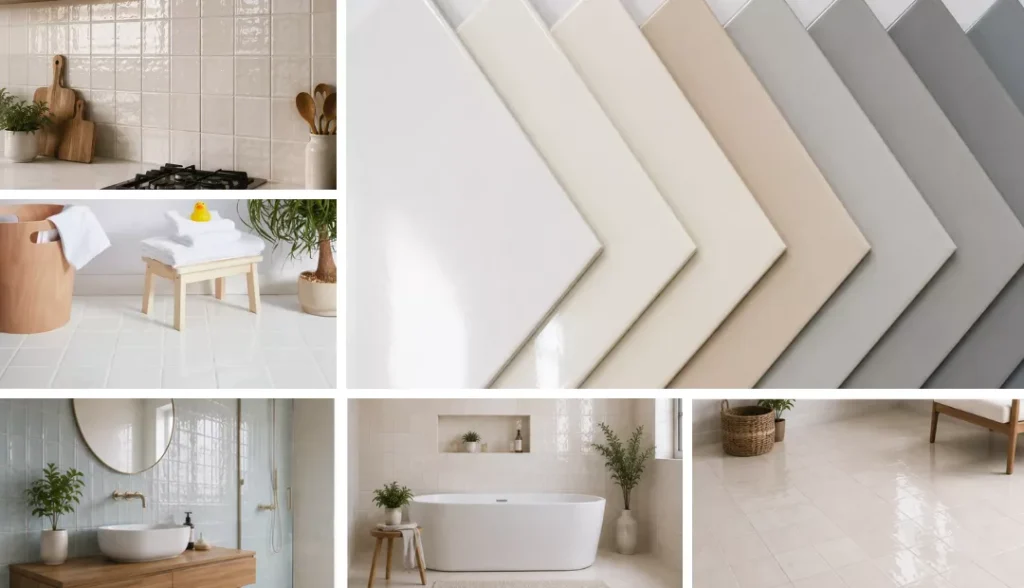
Porcelain is also made of clay, though it is much denser and is fired at a much higher temperature. This creates a hard, low-absorption tile. The industry defines porcelain tile as having a water absorption rate of 0.5% or less.
Therefore, it is ideal for wet areas, high-traffic floors, and outdoor areas. It’s suitable for kitchens, bathrooms, entryways and commercial applications. Porcelain can be more expensive to install as it is harder to cut. Check whether the tile is glazed or through-body, as a chip in a glazed tile may reveal another color underneath.
For wet areas, consider the tile’s slip-resistance rating when selecting a finish. Matte and textured porcelain tiles offer better grip, making them a better choice for bathrooms and outdoor patios.
Natural Stone Tile
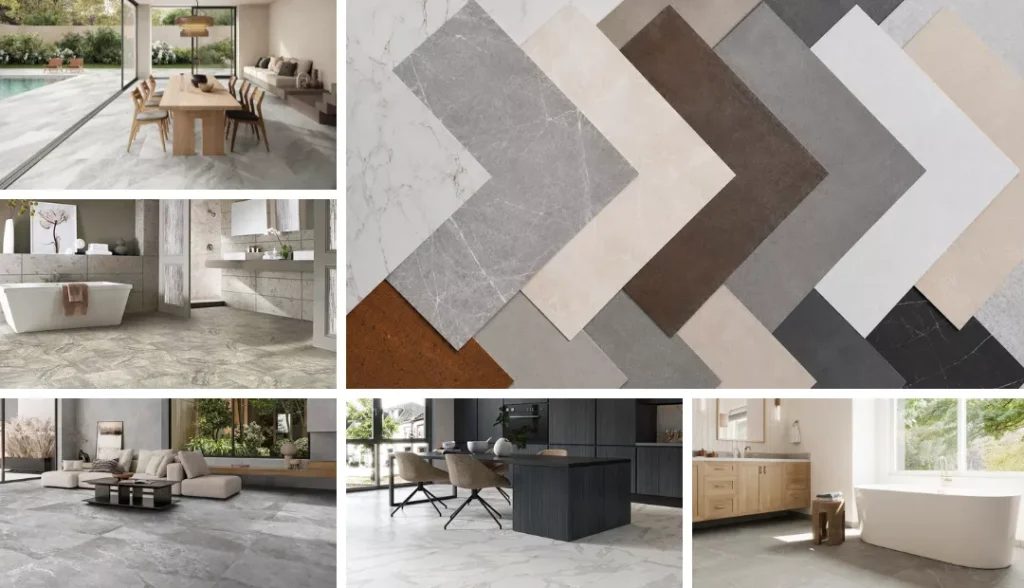
These tiles are cut from natural rocks mined from quarries, so each tile is unique.
- Marble has an expensive look with subtle veining. It can scratch and stain easily and is acid-sensitive.
- Granite is a difficult material to work with and highly resistant to heat and scratches.
- Travertine has a warm look and a slightly coarse texture.
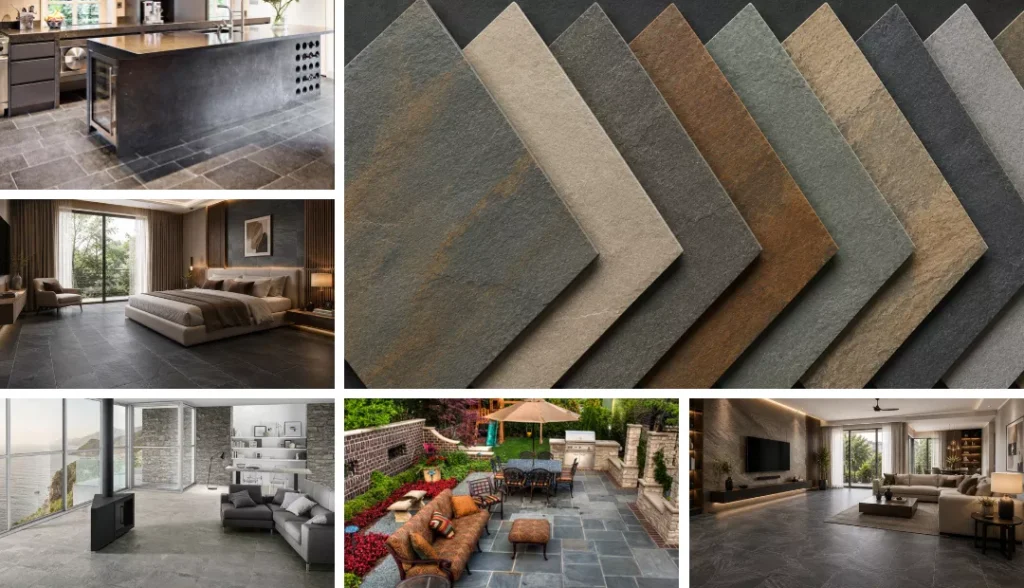
- Slate is dark in color and has a textured surface that gives grip at entrances and patios.
- Limestone offers soft hues and is porous in nature, so it should be sealed and cleaned gently.
Natural stone will likely need to be sealed when installed and resealed very often. Accent walls, living rooms, and bathrooms are all suitable applications for natural stone if you’re willing to put up with the care.
Glass Tile
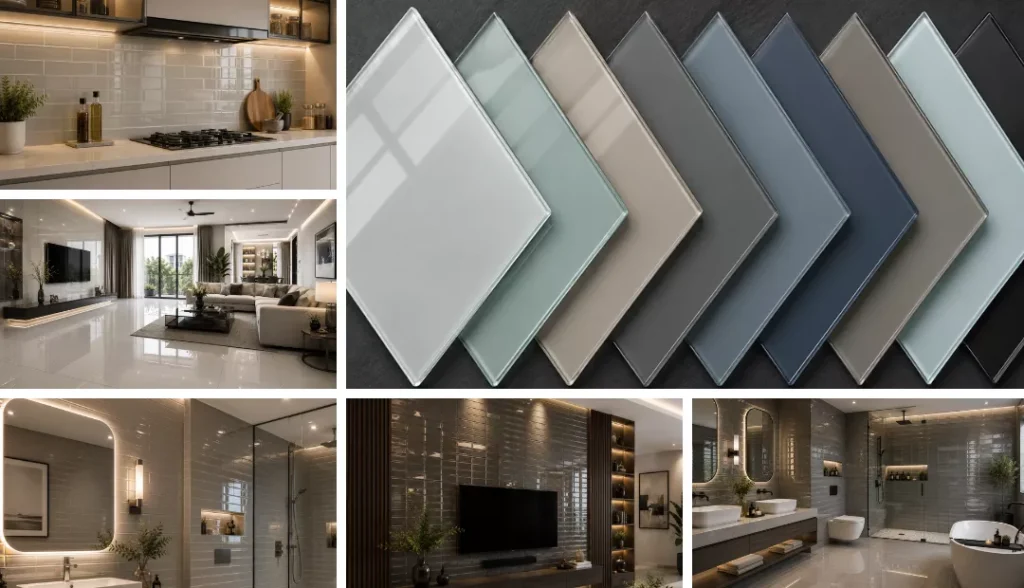
Glass tile is smooth, shiny, and non-porous, so it doesn’t absorb water or stains. The tile will reflect light in small or dark spaces.
It is often thinner than porcelain or ceramic, so the substrate must be installed with great care. Some of these tiles are see-through, so the adhesive behind it may be visible. Glass works great on backsplashes, shower walls, and accent strips. Avoid using it on floors unless the tile is rated for walking on.
Mosaic Tile
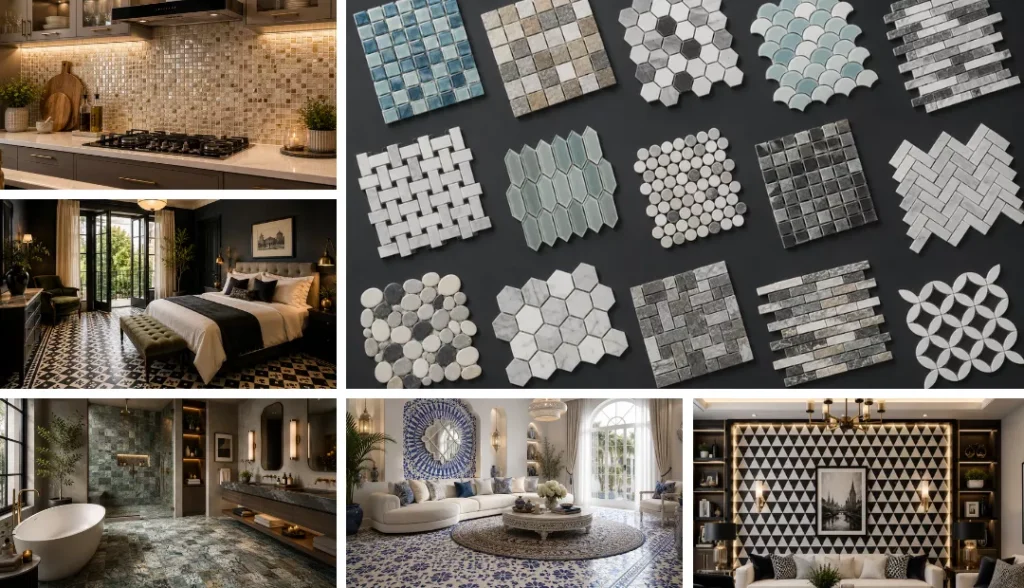
Mosaic tiles are tiny tiles that are usually attached to a mesh sheet making them easier to install. These tiles can be glass, ceramic, porcelain, or stone.
More grout lines can give extra grip, and small tiles are easier to follow the shower slope than large tiles. They are most used for borders or decorative panels, but there will be more grout lines that need occasional maintenance.
Cement (Encaustic) Tiles
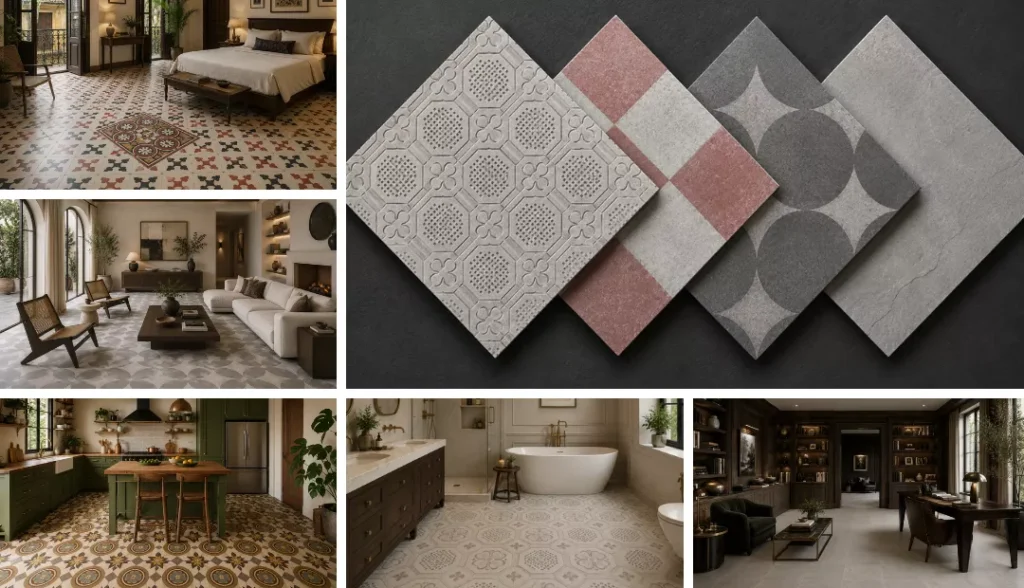
Cement tile is usually handcrafted, with the pattern formed into the tile rather than printed on a glaze. It is often used in vintage and geometric design.
Because cement tile is porous, it must be sealed before and after installation. The surface can wear or fade over time. These tiles are a good option for hallways, living rooms, covered patios or as an accent floor in a kitchen.
Terracotta Tile
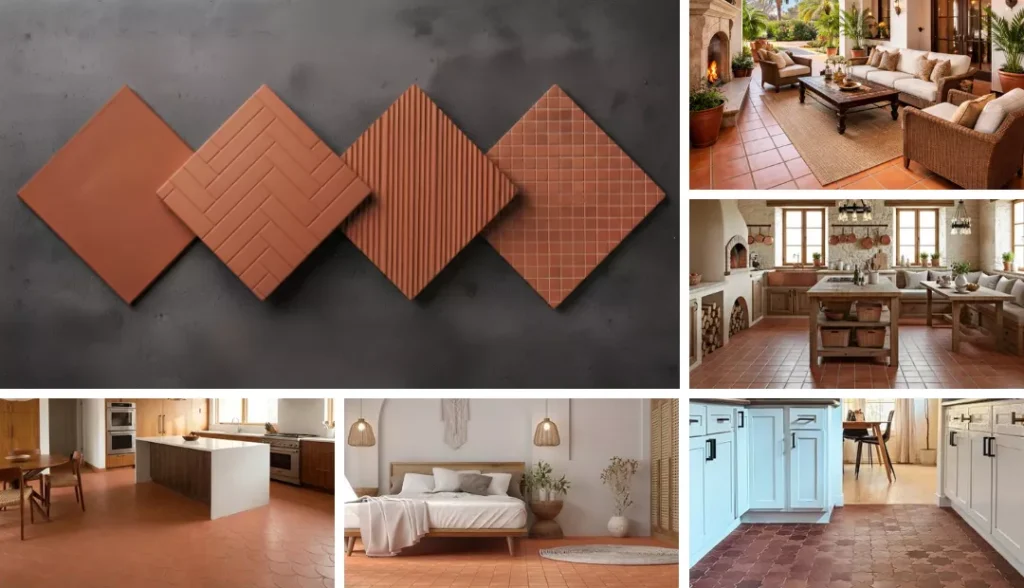
As the name suggests, Terracotta is a type of clay tile, typically in earthy red/orange hues. It lends a warm and rustic appeal to traditionally styled spaces, courtyards, and modern patios. It is porous, so it generally needs to be sealed. Without sealing, it will absorb water and stain quite easily.
Quarry Tile
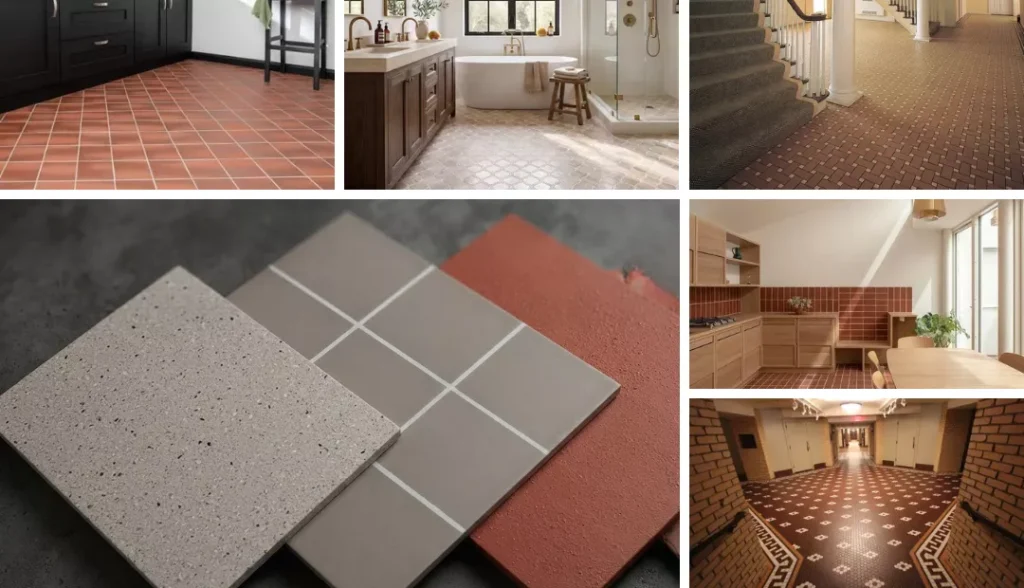
Quarry tile is an unglazed tile in shades of red, gray, or brown. It’s a very hard and durable tile that offers good slip resistance, which makes it more suitable for use in commercial kitchens.
It has a more utilitarian appearance that makes it suitable for applications where you want durability and grip more than looks. Typical applications are commercial kitchens, garages, utility rooms and exterior floors.
Other Types of Tile Worth Knowing
Terrazzo tile is a type of tile made up of marble, glass, or stone chips embedded in cement or resin. It has a speckled look.
Metal tiles are made up of stainless steel, copper, or aluminum. They are commonly used for backsplashes or as accents. They tend to dent and scratch easily, so prefer them for walls rather than floors.
Vinyl and LVT (luxury vinyl tile) are intended to resemble stone, ceramic, or wood as realistically as possible. They have a protective wear layer that helps resist scratches, dents, and everyday wear.
Conclusion
Choosing the right types of tile that fits your needs varies depending on where you are placing it, how much foot traffic it will have, and levels of maintenance. Porcelain and ceramic are very hard-wearing and are suitable for many indoor applications. Natural stone, glass, cement, terracotta and quarry tiles each have their specific features and special considerations. Check water exposure, slip resistance, durability, and maintenance before making your final choice.
What to read next:

Mansi is a creative designer with three years of professional experience, specializing in clean, balanced, and purpose-driven visuals. She is also a passionate writer whose work shows a strong sense of layout, composition, and visual hierarchy. Outside work, she enjoys sketching, experimenting with color, and spending time around plants and outdoor spaces. Connect with her on LinkedIn.