
A conventional ceilings is generally a flat, horizontal ceiling set at a height of 8 to 9 feet and finished with drywall or plaster. These are the most common in residential construction as they are inexpensive, cheaper to construct, and complement almost all architectural styles and room designs.
They are also the most common type of ceiling finished with a smooth, continuous surface in a residential and commercial building. These are the most common because of their simple construction, easy to find materials, compatible with modern homes and low maintenance.
Comparing Traditional Ceilings with Other Ceilings
There are plenty of decorative ceiling options to choose from, even though most homes and buildings have traditional flat ceilings. Most of these offer different design and spatial options, but they come with increased costs and design and construction complexities.
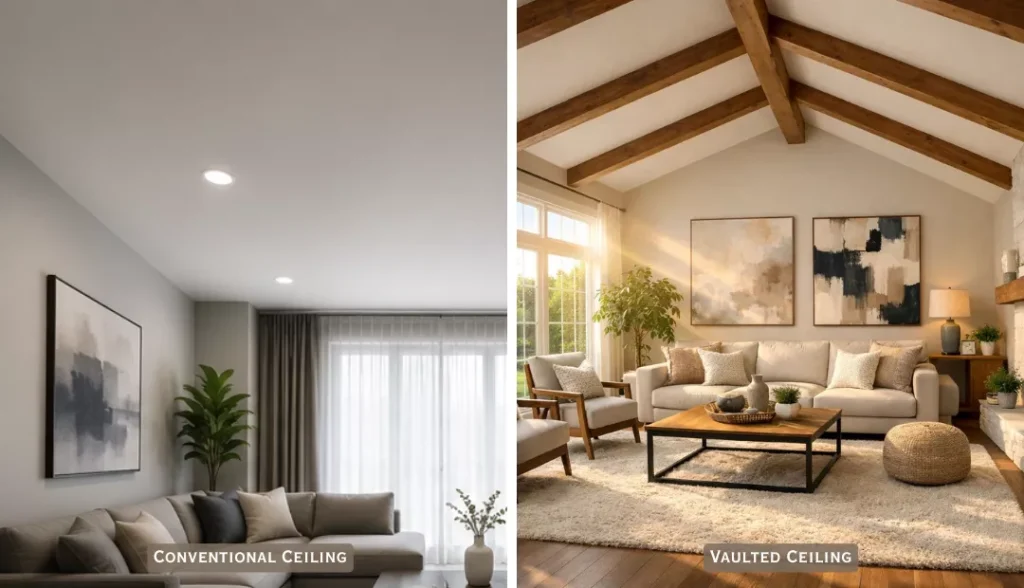
Conventional Ceiling vs. Vaulted Ceiling
As described previously, conventional is a flat. A vaulted ceiling, on the other hand, slopes up to the roof and also slants up across the volume of the space. Because of this, vaulted ceilings create larger spaces. However, these ceilings can be harder to insulate and require more heating and cooling.
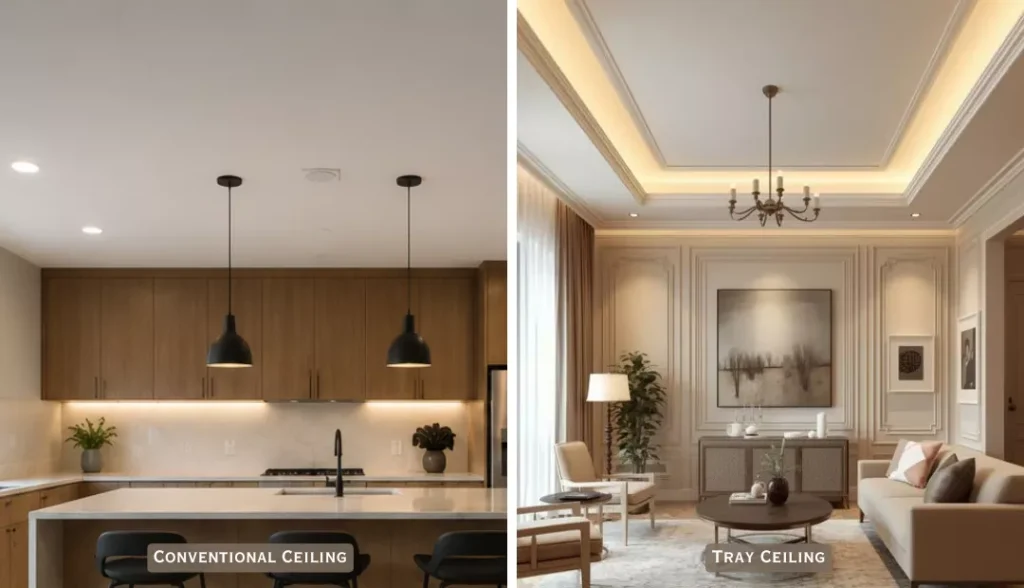
Tray vs Conventional Ceiling
A tray ceiling is flat with a raised center, emphasizing a perimeter that is lower than the middle. This design helps add depth and interest. A conventional overhead finish is entirely flat and offers simple and inexpensive design.
Best for: A conventional ceiling is the best choice for a minimalist design element. A tray ceiling offers the opportunity for design that is elegant without greatly increasing the ceiling height.
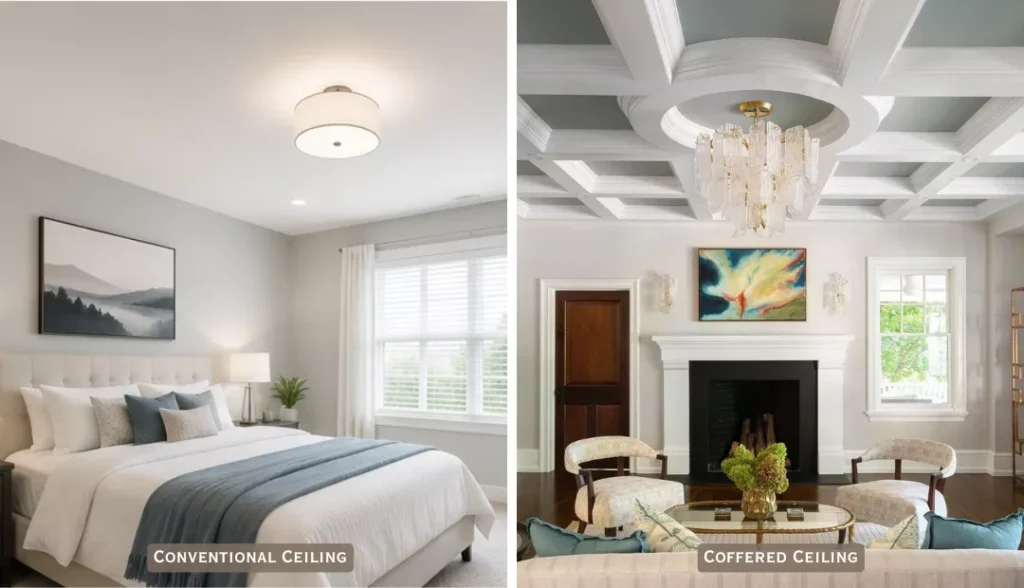
Coffered vs Conventional Ceiling
Unlike a conventional, which is completely flat and focuses on simplicity, a coffered ceiling is made up of a grid with a three dimensional decorative design and recessed panels framed by molding or beams.
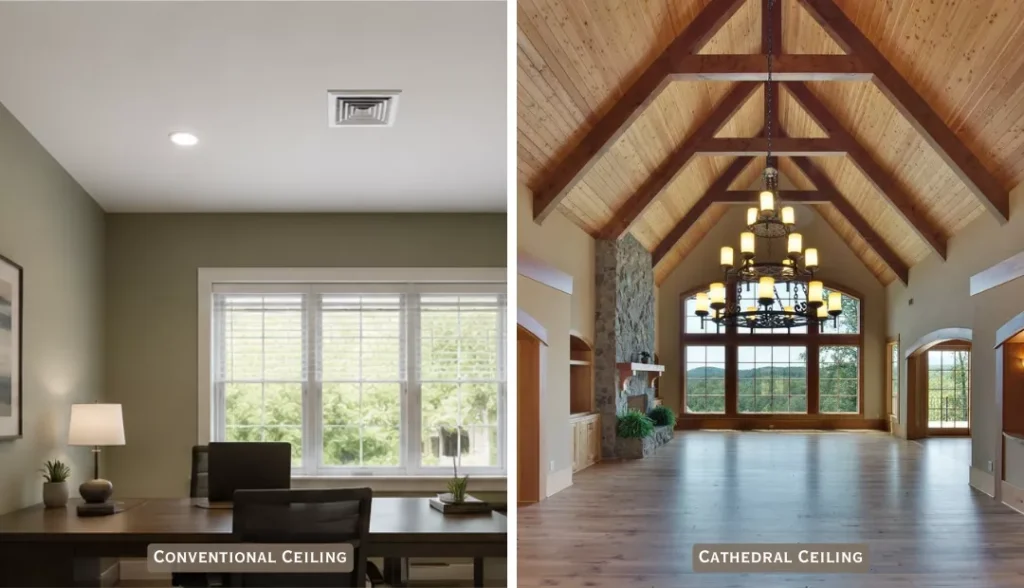
Cathedral vs Conventional Ceiling
A cathedral ceiling follows the slope of a roof and has two sides that meet a peak at the middle. This design creates a dramatic vertical height and enhances natural light. Cathedral ceilings will increase the energy consumption of a space and also increase construction costs. Due to its design even a small space feels significantly larger and less compact.
Conventional ceilings offer practicality, while cathedral ceilings create a bold statement in living rooms, entryways, and spacious homes.
Materials Used in Conventional Ceilings
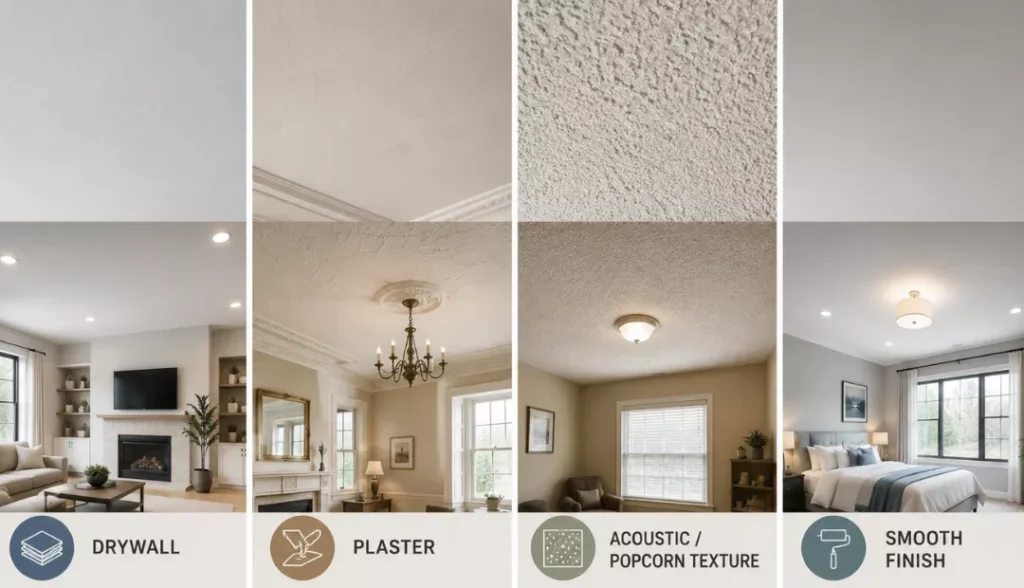
The age of a building, the budget available, and the design finish that is desired will impact the materials that are used to create a conventional overhead finish.
Drywall
The most common contemporary material is drywall. Drywall (or gypsum board) is inexpensive, lightweight, and simple to install. Its smooth and paint ready finish makes it an attractive material that is also affordable. Drywall material is also fire resistant and easy to repair.
Plaster
If you step into an older home or a historic building, you’ll probably spot some plaster ceilings. Plaster is lath-ed to create a hard, long-lasting, and beautiful ceiling. Compared to drywall, plaster is significantly more expensive and more susceptible to cracking. However, when taken care of, plaster will last a lifetime.
Acoustic or Popcorn Texture
Popcorn ceilings, formally known as textured acoustic ceilings, gained popularity in the mid-20th century. While they are still present in many homes, their popularity has diminished. While they are good at concealing imperfections, they are very unattractive and difficult to maintain.
Smooth Finish
A smooth painted finish is the new modern classic. Unlike the old designs that conceal texture, a smooth ceiling brightens the room and invites a more open feeling.
Pros & Cons of a Traditional Ceiling
Advantages
- Construction costs are reduced when compared to most decorative ceiling options.
- Less time is required in installation of a conventional overhead finish.
- Simple integration of recessed lighting, ceiling fans, HVAC vents, and smoke detectors.
- Conventional ceilings are easy to, and inexpensive to, repair and renovate.
- Suitable for nearly every architectural style and room type.
Drawbacks
- Compared with vaulted, coffered, and tray ceilings, the visual impact of conventional overhead finish are off.
- Standard ceiling heights may make smaller rooms feel less spacious.
- Less ceiling heights do not give opportunities for architectural detailing.
- A conventional ceiling appears like a plain surface without proper decorative lighting or molding.
Conclusion
Conventional ceilings are affordable and functional, which is why they are the preferred choice in most residential designs. They are easy to install and can improve energy efficiency while concealing modern electrical, plumbing, and HVAC systems. While other decorative ceiling styles create engaging visual statements, conventional ceilings are still the most practical and versatile design for homes, apartments, offices, and commercial buildings.
More helpful reads:

Mansi is a creative designer with three years of professional experience, specializing in clean, balanced, and purpose-driven visuals. She is also a passionate writer whose work shows a strong sense of layout, composition, and visual hierarchy. Outside work, she enjoys sketching, experimenting with color, and spending time around plants and outdoor spaces. Connect with her on LinkedIn.