
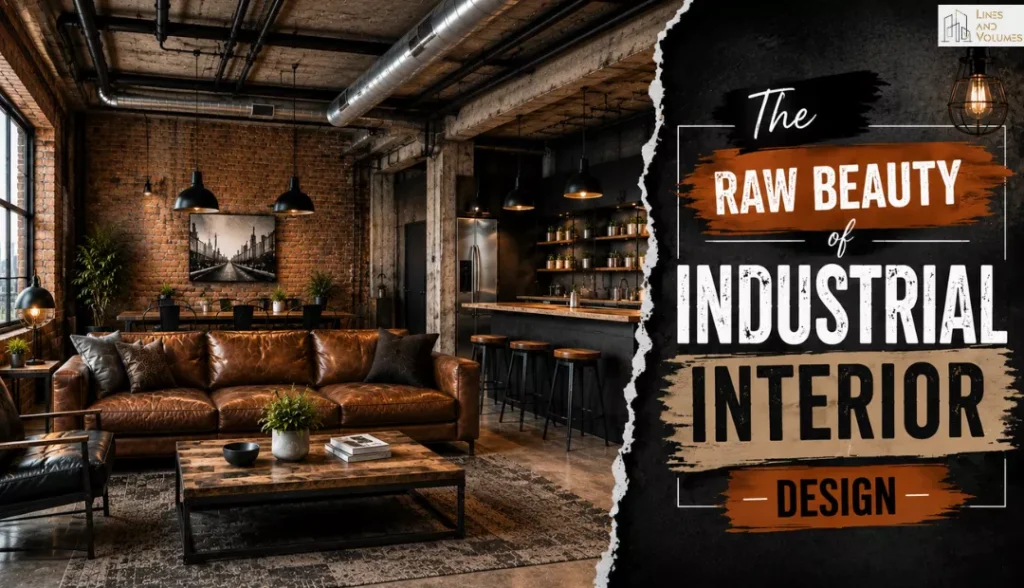
Industrial interior design is inspired by old warehouses, factories, and workshops. Instead of hiding industrial features like ducts, pipes and beams, this design keeps them visible. This creates a raw, simple and practical appearance in the space.
The style became popular during the late 20th century. Old warehouses and factories were converted into offices and various other working spaces. Instead of covering up the raw features, designers made these features visible and included them in the interior. Today, industrial interior design is popular for offices, restaurants and stores all around the world.
Key Principles of Industrial Interior Design
Industrial interior design focuses on a building’s natural structure. It uses materials such as brick, concrete, wood, and steel for their practical qualities as well as their visual appeal.
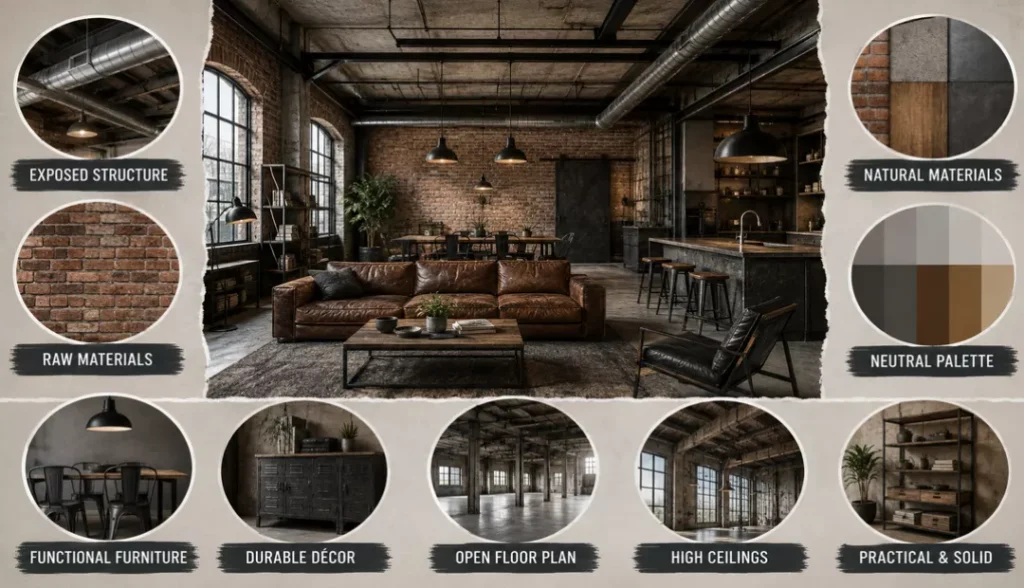
The design follows a few basic principles. The space often keeps ceilings, beams, pipes, and other building features exposed. It also preserves materials in their original or unfinished form. The color palette is generally neutral and includes shades of gray and black, brown and other earthy hues. Decor and furniture are basic, solid, durable and practical instead of overly decorated. Open floor plans, large spaces, and high ceilings are common defining features because they create an industrial or warehouse-inspired feel.
Industrial design is different from minimalism, though they may look similar. Minimalism focuses on reducing clutter and keeping spaces simple, whereas industrial design focuses on the use of industrial-inspired materials, structures and other details.
Characteristics of Industrial Interior Design
Industrial interior design has a clear and distinct appearance. It uses selected colors, materials, furniture, as well as the structural aspects that give the space a factory-inspired look. Below are the essential features that define the style.
Raw Brick Walls
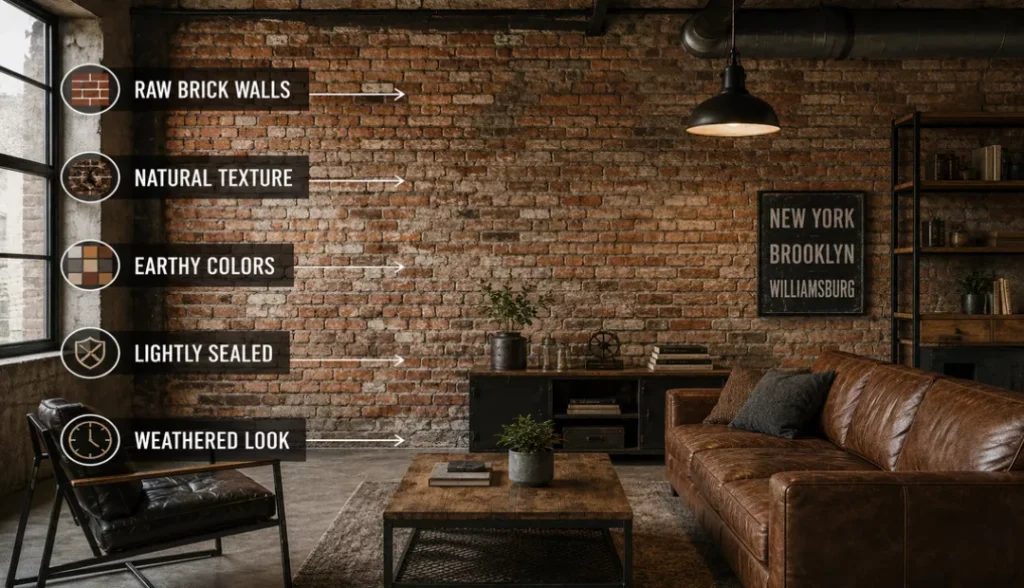
Unfinished bricks that are lightly sealed are among the most frequent elements that characterize industrial style. The brick generally retains its natural, weathered state instead of using a coating. This allows its texture, natural color variations, and aging signs to be visible.
Exposed Ductwork and Pipes
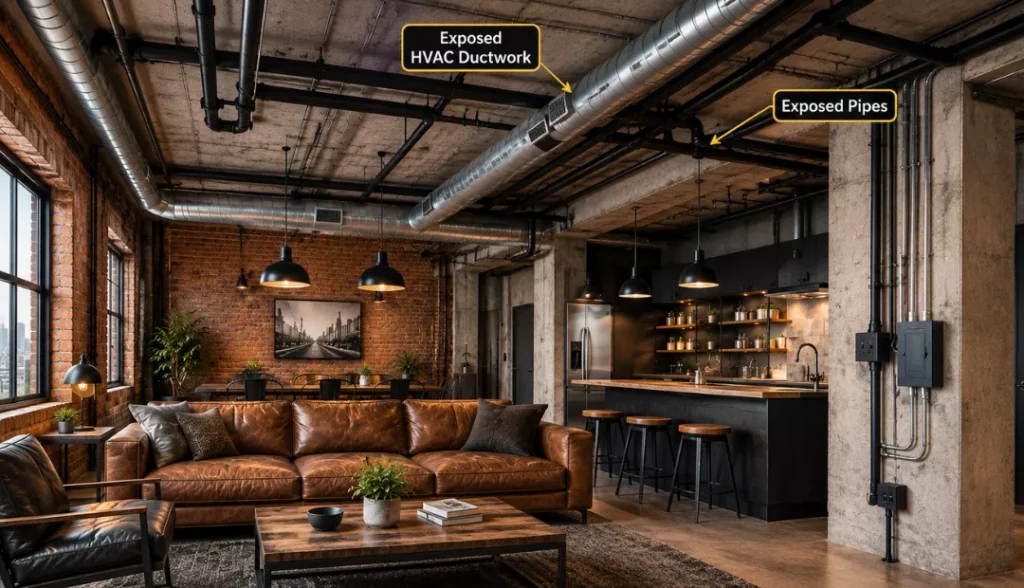
HVAC ducts, plumbing pipes, and electrical conduits often remain visible. Black paint or an original metal finish can emphasize the area’s practical and mechanical look.
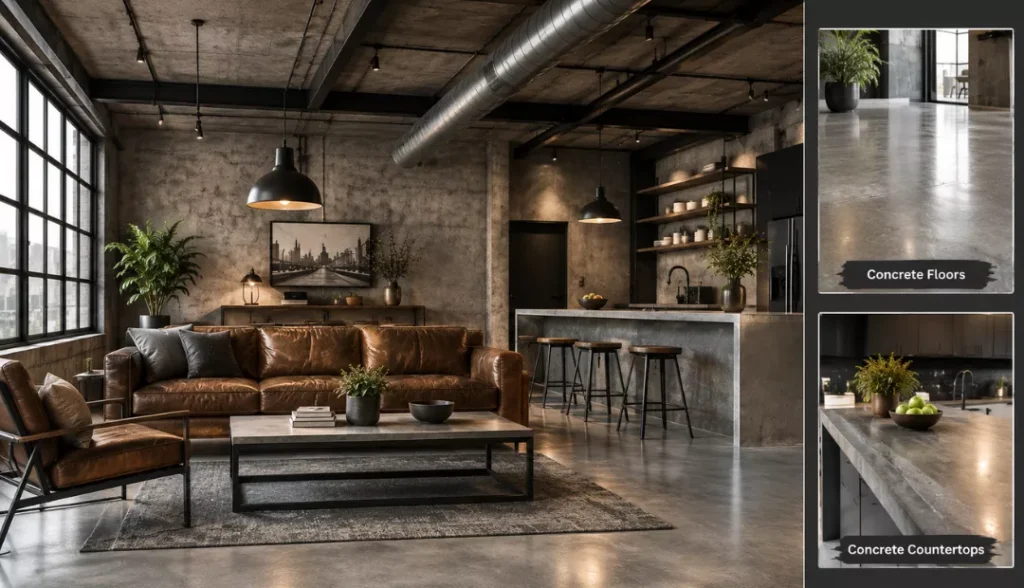
Concrete Floors and Surfaces
The concrete floor can be polished or sealed, and is a popular choice for countertops, floors, or even walls. It’s durable, easy to clean, and can help to create the industrial appearance that is the hallmark of industrial design.
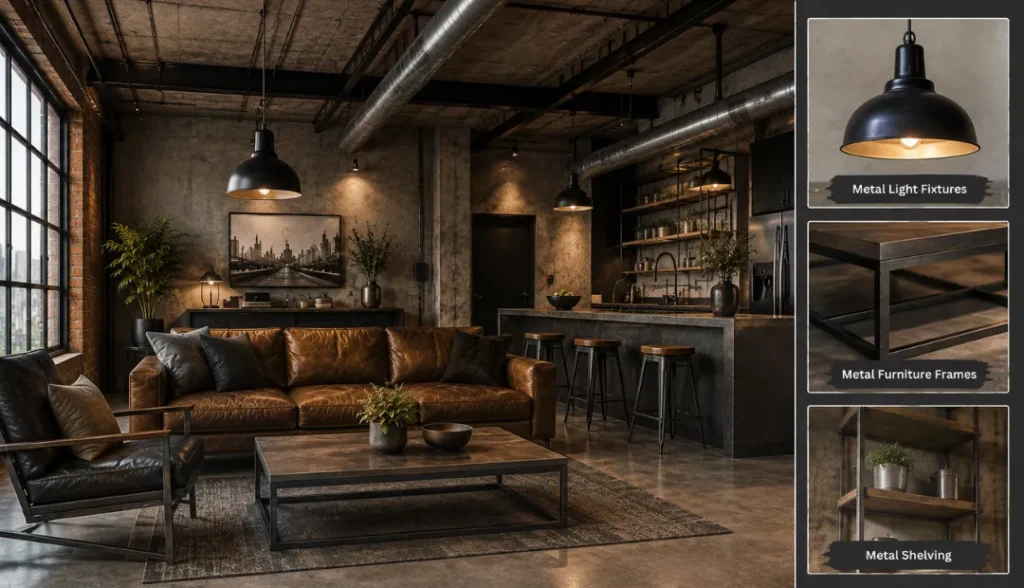
Metal Accents
Designers commonly use iron, steel, and other metals in industrial interiors. They serve as furniture frames, structural beams, shelves, and light fixtures. Metal is often given a matte or slightly weathered finish rather than a shiny or glossy appearance.
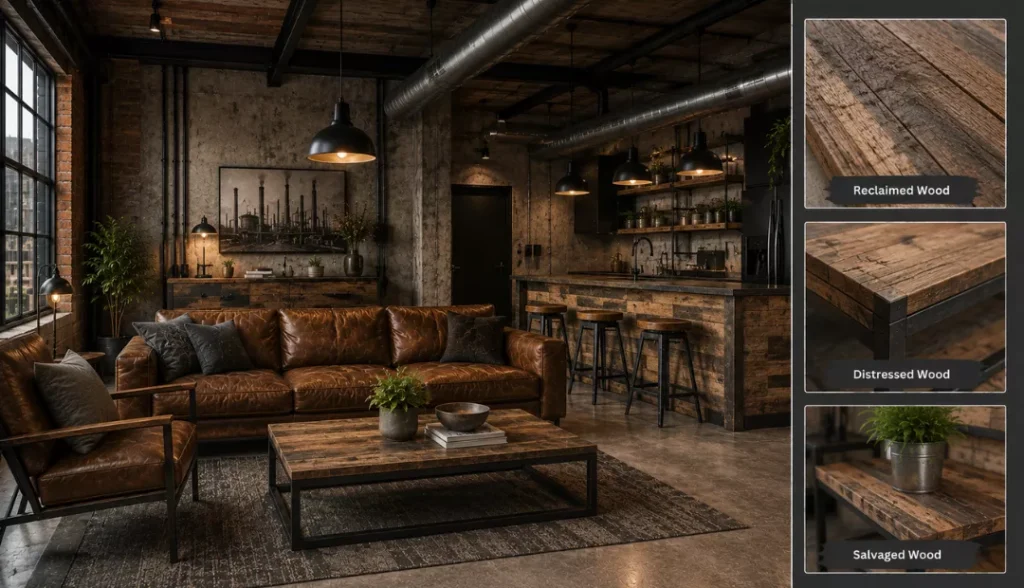
Reclaimed and Distressed Wood
The wood used for industrial designs is typically salvaged from old factories, barns and shipping pallets. It is valued for its rough, noticeable grain and aged look. The warmth of wood can also provide a pleasing contrast to the hard metal surfaces and concrete.
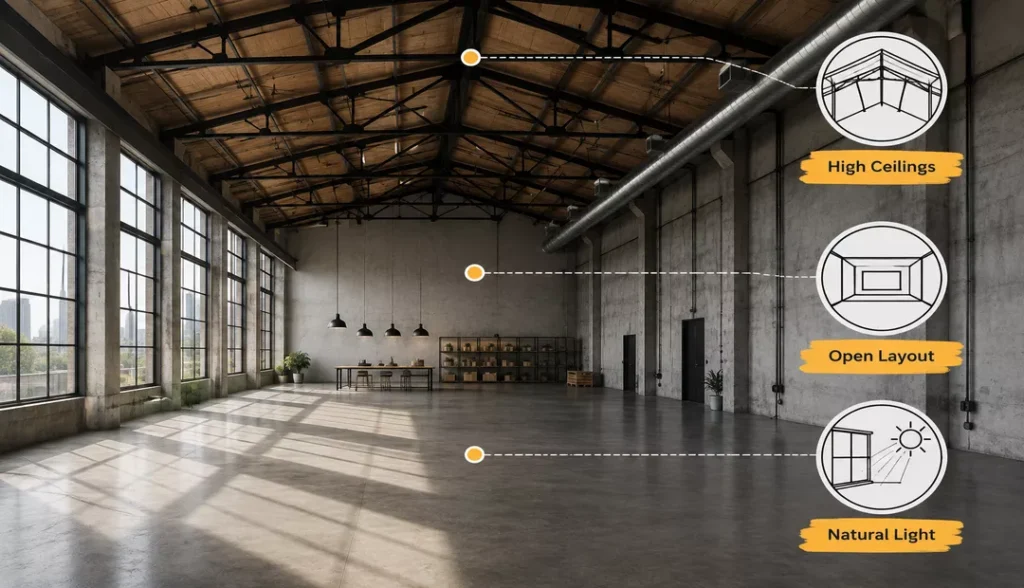
High Ceilings and Open Layouts
Industrial spaces often have high ceilings and few interior walls. These features create the open, spacious, and airy feel found in old factories. The area feels spacious, even when heavy materials like concrete and metal fill the room.
Large Windows
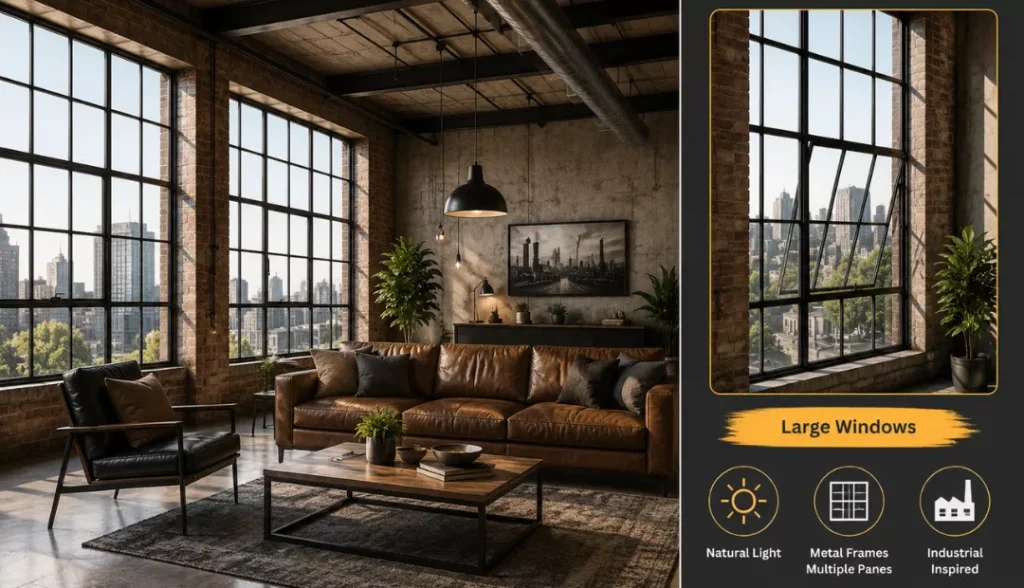
Factory-style windows usually feature large frames that are made of metal and have multiple panes that allow natural light to enter the area. These windows are inspired by industrial buildings of the past, which relied on daylight to lighten the work area more efficiently.
Neutral and Muted Color Palette
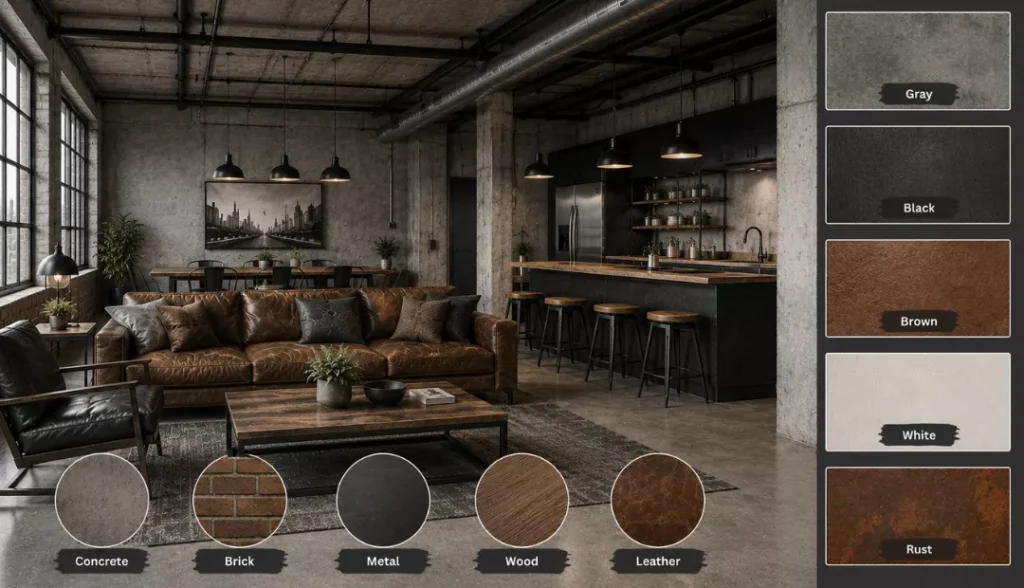
Industrial interior design generally uses the basic color palette of gray, black, brown, and white, as well as rust-colored tones. Bright colors rarely appear, while natural textures and materials remain the primary focus of the room.
Statement Lighting
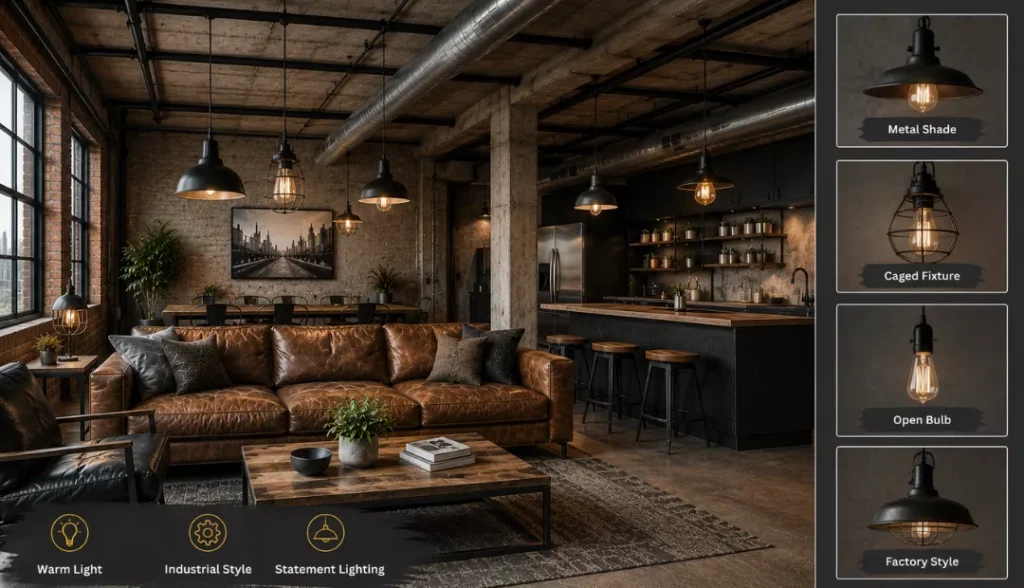
Pendant lights with open bulbs, caged fixtures, as well as metal shades are common in industrial spaces. They are usually constructed to resemble fixtures that were used in the old workshops or factories built in the traditional style.
Vintage and Utilitarian Furniture
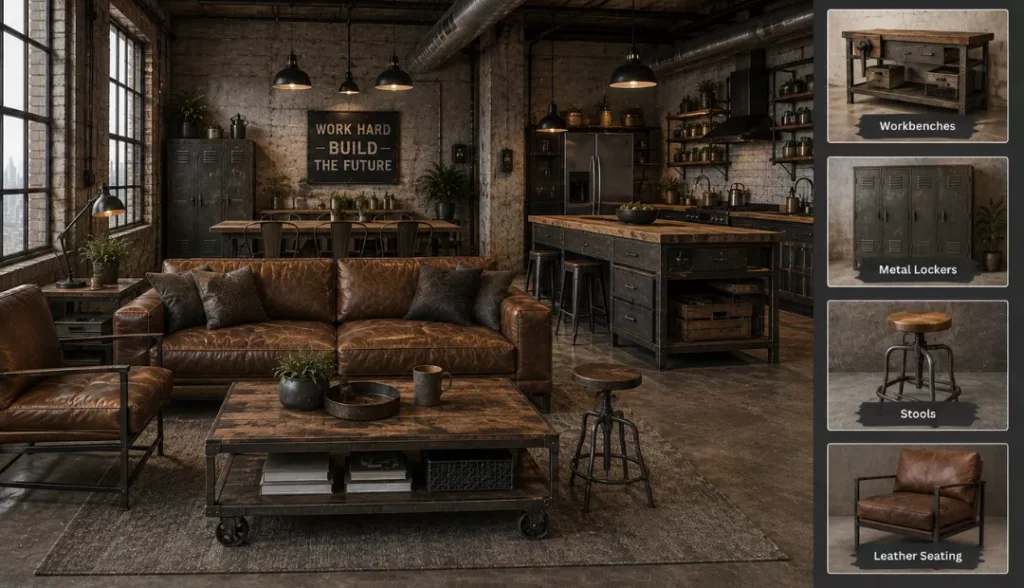
Industrial furniture usually draws inspiration from factory equipment and vintage tools, like workbenches, metal lockers, and stools. Leather often adds warmth and comfort to chairs and sofas on solid surfaces.
How to Bring Industrial Interior Design Into Your Home
There is no need to reside in an old warehouse to incorporate industrial style in your living space. You can achieve this look with just a few minor changes.
Start by exposing elements like wooden beams, brick walls or ductwork. An exposed brick wall can immediately add an industrial feel. Use a neutral color palette with shades of white, gray, and charcoal, and add metal and wood for texture. Metal shelves, lamps, side tables and furniture frames are a great way to strengthen the style.
Reclaimed wood works well for tables, shelves and even accent walls. Its warm look creates a contrast to the concrete and metal. Pendant lighting that has open bulbs, or fixtures that resemble cages could provide a more industrial look without structural modifications.
If real concrete isn’t an option, consider concrete-look tiles or polished floors. The decor should be simple and functional to ensure that the materials of the room remain focused.
Pair concrete and metal with wool, leather, or wood in order to make the space feel warm, cozy, and lived-in, instead of cold. Mix hard and soft textures to create balance.
Final Thoughts
Industrial interior design turns exposed features such as pipes, brick, and beams into important elements of the overall design. It focuses on simple materials and a neutral color palette, allowing the texture and structure of the room to stand out. When you’re looking to renovate or update your home, you can incorporate industrial styles in every room. Even a single brick wall or metal accents can help to provide an industrial touch.
More Interior Design Ideas:
- What is Postmodern Interior Design in 2026?
- 25+ Modern Cabin Interior Design Ideas
- Coffered vs Waffle Ceilings: What’s the Difference

Mansi is a creative designer with three years of professional experience, specializing in clean, balanced, and purpose-driven visuals. She is also a passionate writer whose work shows a strong sense of layout, composition, and visual hierarchy. Outside work, she enjoys sketching, experimenting with color, and spending time around plants and outdoor spaces. Connect with her on LinkedIn.