
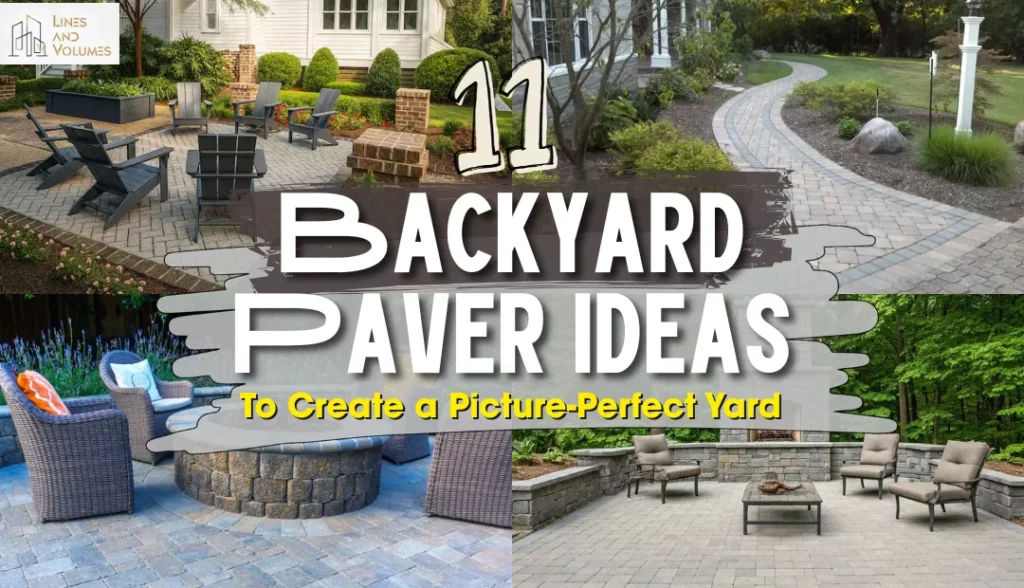
Pavers are pieces of natural stone, clay brick, or concrete placed on a compacted base. From patios and walkways to fire pits and pool decks, there are plenty of backyard paver ideas to suit different outdoor spaces. You can remove and replace a damaged piece without redoing the whole surface, unlike a poured slab.
The ideas below cover a variety of patterns, so it’s easy to find a design for your yard size and climate. There are multiple options available for every type of home and budget.
11 Paver Patio Design Ideas for Your Backyard
1. Herringbone Pattern for Patios
Rectangular pavers laid at 45 or 90 degrees provide strong interlock and help resist movement. This pattern is often used in areas that get heavy loads such as driveways, but it also works well for a dining patio. The 45-degree layout requires more cuts along the edges, producing more waste material than the 90-degree layout.

2. Running Bond Pattern for Walkways
Long lines of pavers laid in a brick-wall stagger pattern guide the eye along a path. A width of 36 to 48 inches is comfortable for two people walking abreast. It’s a simple pattern and takes fewer cuts, so it’s easier to install for a beginner.

3. Basket Weave Pattern for Small Patios
Pairs of pavers are placed in different directions to create a woven look. This pattern works well for small, traditional patios, although the extra joints may need occasional sand added to them. Its repeating design adds visual interest without making a small space feel too busy.

4. Large-Format Pavers for Modern Patios
Large pavers create fewer joints and give the surface a clean, modern look. They are heavy and do not handle uneven ground well, so the base needs to be quite level.

5. Grass or Gravel Joints for Garden Paths
To soften the look of a hard surface, leave 1 to 3 inches between pavers and fill the gaps with grass, moss, or pea gravel. This works well for stepping-stone paths and garden borders, but it is less suitable for areas with heavy foot traffic.

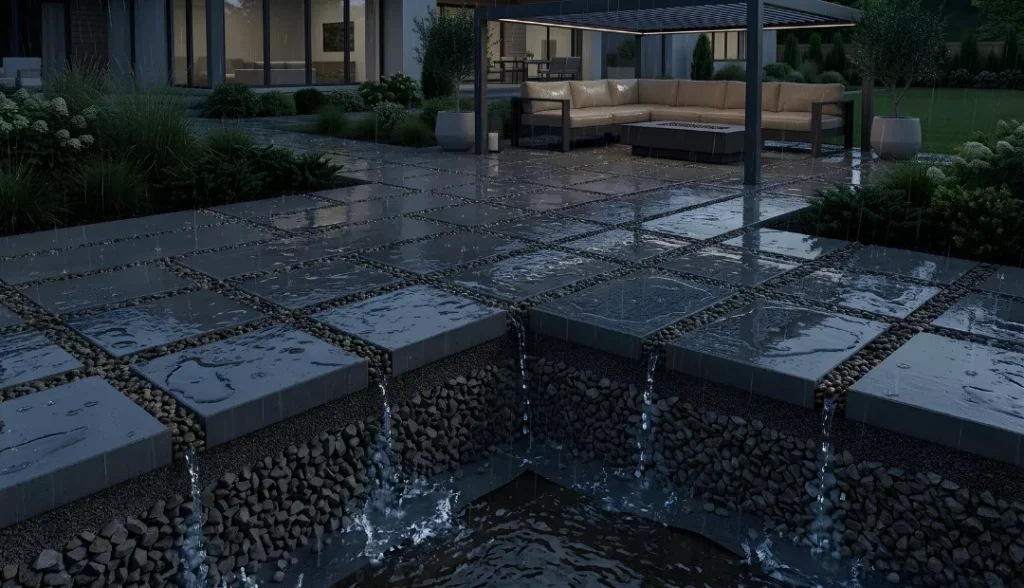
6. Permeable Pavers for Better Drainage
These pavers have wider joints filled with small stones, allowing rainwater to drain into the gravel layer underneath rather than run across the surface. They are useful for improving drainage problems and local governments encourage their use for stormwater management.
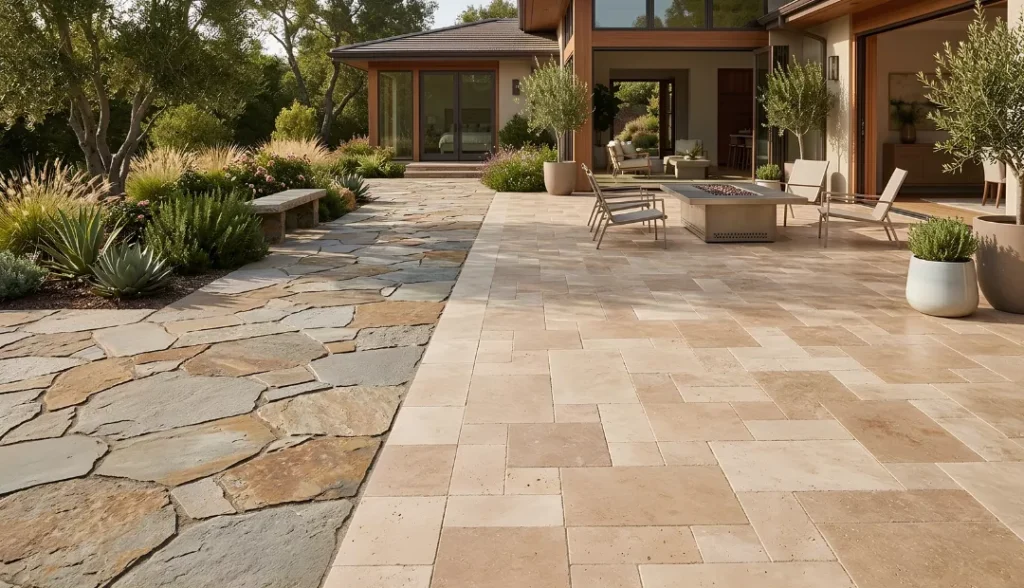
7. Natural Stone Pavers for a Natural Look
Natural stone includes travertine and flagstone, which have different properties. Travertine feels cooler in direct sunlight, while flagstone is irregular in shape for a less formal look. Natural stone is usually sealed to prevent stains and moisture absorption.
8. Circular Paver Pattern for Fire Pit Areas
A circle of wedge-shaped fire-resistant pavers around a fire pit defines a gathering space. Manufacturers and local codes may specify clearances. The pit should be located some distance from the house, fences and overhanging branches.
For the paver closest to the flames, follow the fire-pit manufacturer’s recommendations and local code requirements for suitable materials.

9. Textured Pavers for Pool Decks
Textured or tumbled pavers provide better grip on wet surfaces. Dark colors feel warmer to bare feet because they absorb more heat than light colors. Choose pavers rated for outdoor use and that can handle plenty of water.

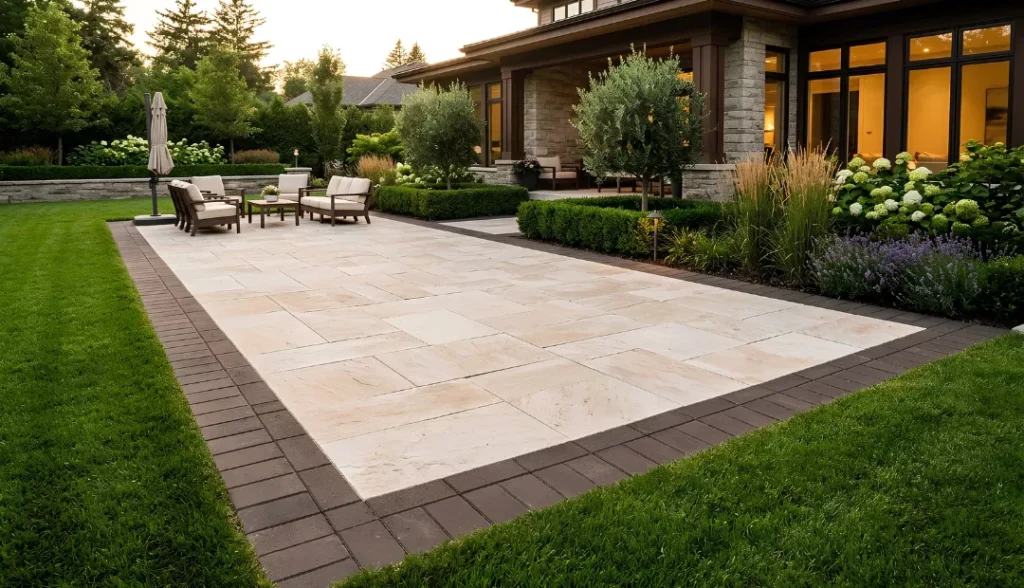
10. Contrasting Border Pattern for Patio Edges
A border made with pavers in a different color or arranged in a “soldier course” (bricks placed end to end) frames the patio and adds visual interest in the lawn. A border also helps keep the edges in place when used with proper edge restraints.
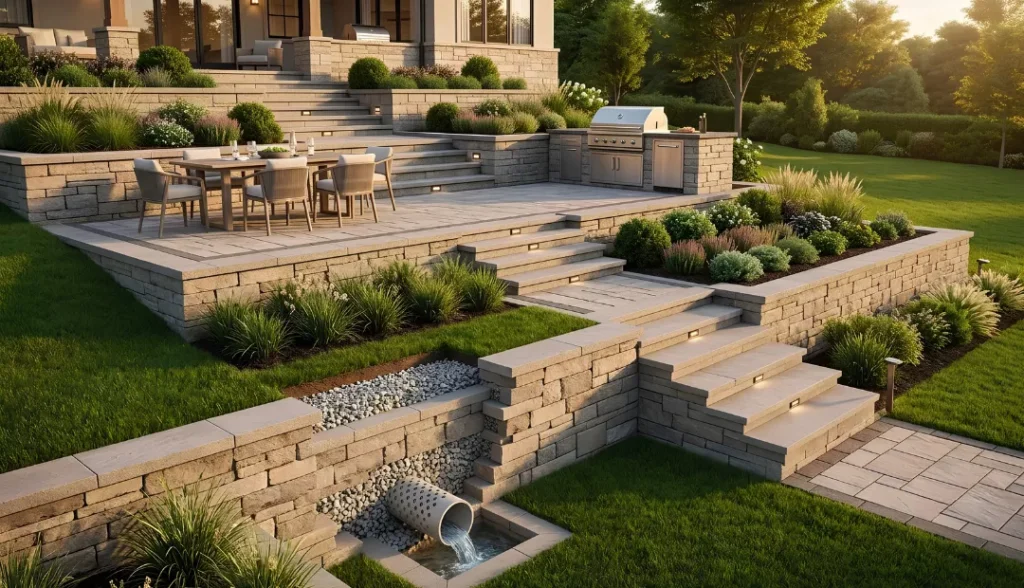
11. Paver Steps for Multi-Level Terraces
Sloped yards can be divided into flat levels connected by paver steps. Each level provides a flat space for a table, grill, or planting bed, and it can reduce runoff compared with one long slope.
Steps are generally most comfortable with risers about 6 to 7 inches high and a consistent tread depth of 11 inches or more. Uneven step heights are a common cause, so every riser in a set of steps should be the same height. Paver steps also need a firmly compacted base and, for taller sets of steps, a concrete footing beneath the first course.
Terraces like these usually need retaining walls. Walls taller than about 3 to 4 feet may require a permit, depending on local building codes, so check with the building department before planning the layout. Drainage behind the wall, usually using a perforated pipe and gravel backfill, helps prevent water pressure from pushing the wall out of place.
Paver Installation: Base, Slope, and Thickness
The installation is as important as the design. A poor base often causes problems such as sinking, rocking and weeds. A typical patio or walkway foundation is 4 to 6 inches of compacted gravel with about an inch of bedding sand on top. Depending on soil conditions, drainage, climate and expected loads, base depth may need to be increased.
The slope of the surface should be approximately a quarter of an inch for every foot, that is to say two per cent, in the direction away from the house in order that the water may drain off.
Paver thickness also matters. For foot traffic, concrete pavers are usually 60 mm thick, and for driveways, 80 mm is a common choice. Joints are often filled with polymeric sand, which hardens slightly to resist washout and minimize weed growth. Perimeter edge restraints can also help prevent the pavers from spreading over time.
Conclusion
The best paver design for your backyard depends on how you’ll use the space, how much maintenance it will require and the conditions of the yard. The look can be varied and practical needs met with options such as herringbone, running bond, natural stone, grass joints and more. A good pattern, well-prepared sub-base, proper grade, and suitable paver thickness all contribute to a stable, lasting surface.
Don’t Miss These Ideas:

Ashish is a seasoned digital marketing professional with over twelve years of experience in Facebook advertising and four years of hands-on experience in SEO. He has worked extensively on campaign strategy, audience targeting, and performance optimization. In his free time, he likes to travel, studying city layouts and natural surroundings. Connect with him on LinkedIn.