

Neoclassical house interior design mixes old Greek and Roman art ideas with modern comfort. The interiors often draw inspiration from sturdy ancient Greek Doric columns and other decorative elements rooted in Greek design. Balance, symmetry, and soft neutral colors define this style. It creates interiors that feel timeless and luxurious.
This guide explains the key elements of neoclassical house interior design and how to incorporate them into your home interior.
History of Neoclassical House Interior
The style first appeared in the late 1700s within France and England. Designers drew inspiration from the discoveries of the ancient towns of Pompeii and Herculaneum. Architects and designers admired features such as columns, pediments, and symmetrical layouts, which they perceived as a symbol of beauty and order. These concepts continue to influence neoclassical design today. Instead of using a lot of ornamentation, neoclassical interiors focus on clear forms, balanced proportions and elegant designs.
Nowadays, neoclassical interiors are commonly used in luxurious villas, homes, apartments as well as more formal living spaces. In contemporary homes, neoclassical interiors incorporate these classical elements into modern living areas. The most common features are delicate color palettes, sophisticated furniture, ornamental moldings and a well-balanced arrangement that provides a refined appearance.
Key Characteristics of Neoclassical Interior Design
Neoclassical interiors can be distinguished by five primary characteristics, such as symmetrical layouts, neutral color palettes, classical architectural features, high-quality materials, and the use of statement lighting. All of these elements come together to create a harmonious, elegant, and timeless style.
1. Symmetry & Balance
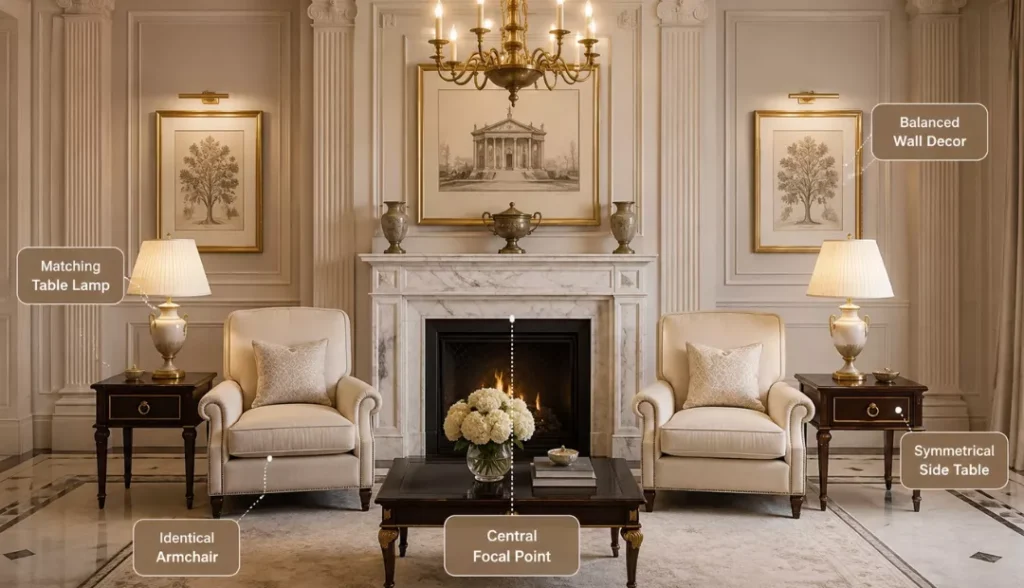
Each neoclassical space is built around a central focal point. Lighting, furniture and other decor elements are typically placed in pairs that are in the opposite direction of this center point.
For example, two identical armchairs could be set next to the fireplace, or two matching table lamps placed on either side of an end table. This balanced arrangement provides a serene style that is one of the noticeable characteristics in neoclassical design.
2. Neutral Color Palette
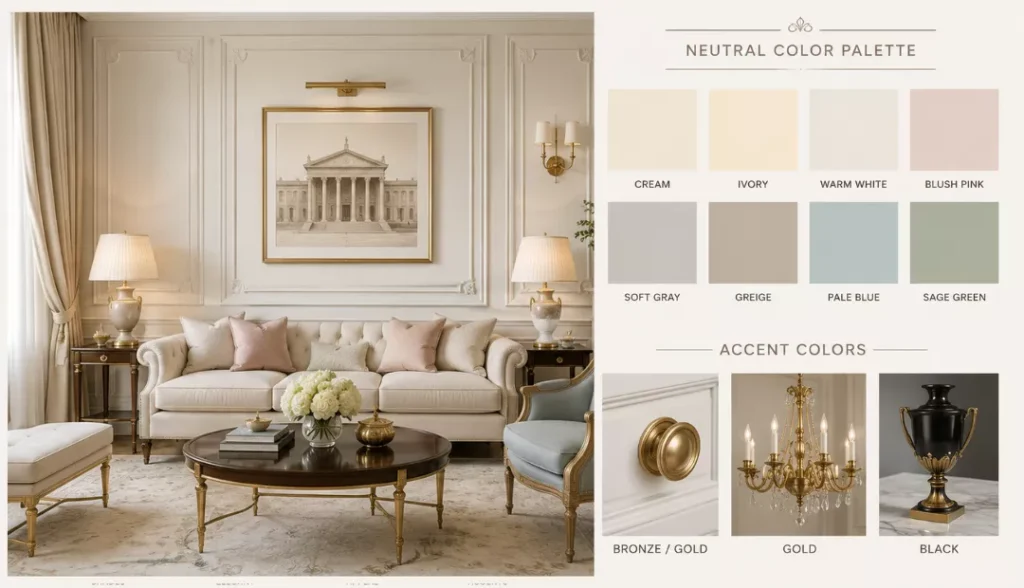
Neoclassical color schemes utilize subtle, soft colors rather than bright or striking shades. Some of the most well-known shades are:
- Cream and ivory
- Warm white
- Blush pink
- Soft gray and greige
- Pale blue and blue duck egg
- Sage green
Accent colors like bronze, gold or black are often used in tiny amounts to create contrast. They appear on hardware, trims, lighting fixtures, or decorative accessories.
3. Classical Architectural Details (Molding, Columns & Wall Panels)
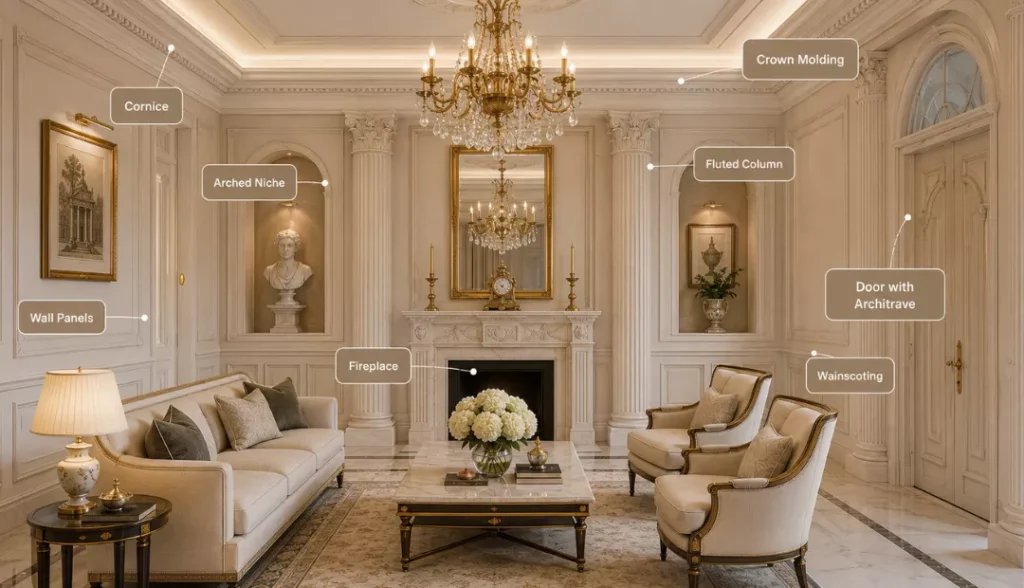
Structural ornamentation is one of the most prominent characteristics of neoclassical design. It is usually composed of cornices and crown molding at the ceiling, wainscoting, walls panels, flutes columns at the entrance of fireplaces.
Arched doors showcase art pieces as decorative elements. These are generally painted with similar colors or tones to the walls, which gives them the appearance of a well-balanced and neat design but without giving the impression of being overwhelming.
4. Luxurious Materials & Finishes
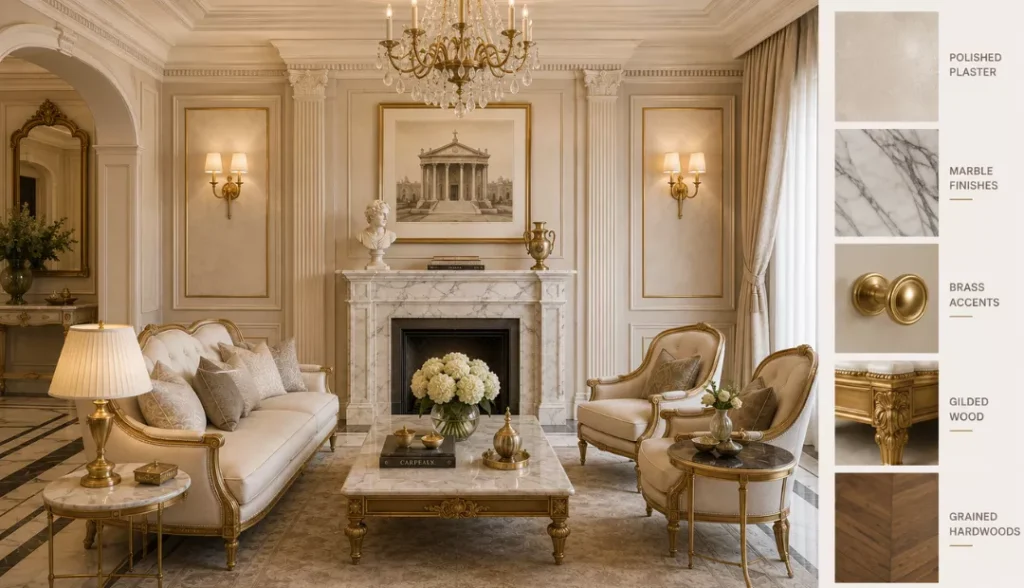
Neoclassical interiors use high-quality materials including polished plaster, marble, brass, gilded wood and grained hardwoods. These materials usually feature a soft, refined polish, rather than a sparkling shine or totally matte finish.
5. Statement Lighting
Lighting plays an important role in neoclassical interiors and often serves as a focal point. Crystal chandeliers, candelabra-design wall sconces, and brass pendant lights are the most popular choices. They are usually placed in the center of the room, for example, above the dining table or on top of a ceiling medallion. This arrangement helps maintain the symmetry and balanced appearance that characterize the Neoclassical style.
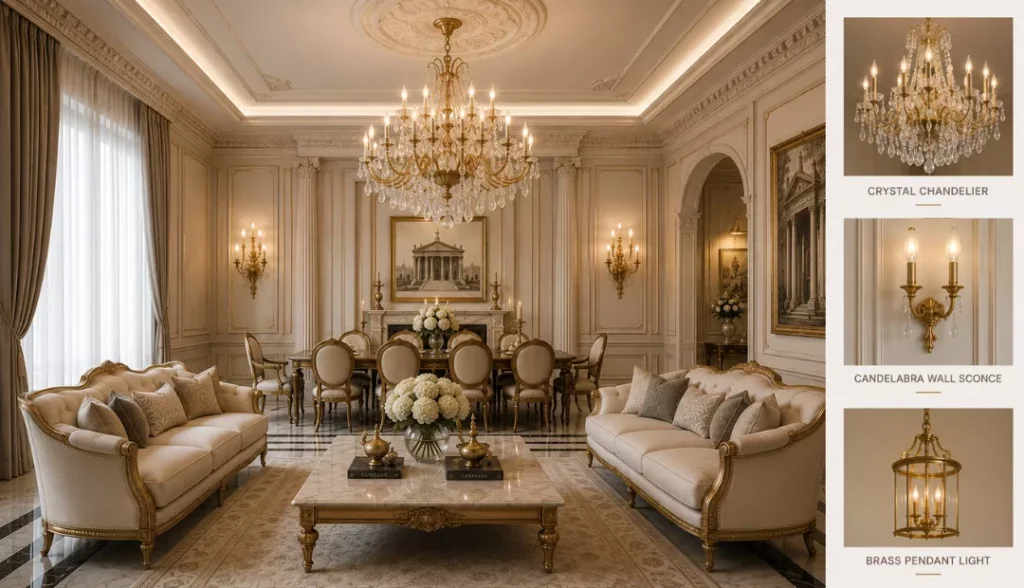
Important elements of a Neoclassical House Interior
Neoclassical design follows certain guidelines for furniture, flooring, walls and textiles.
Flooring
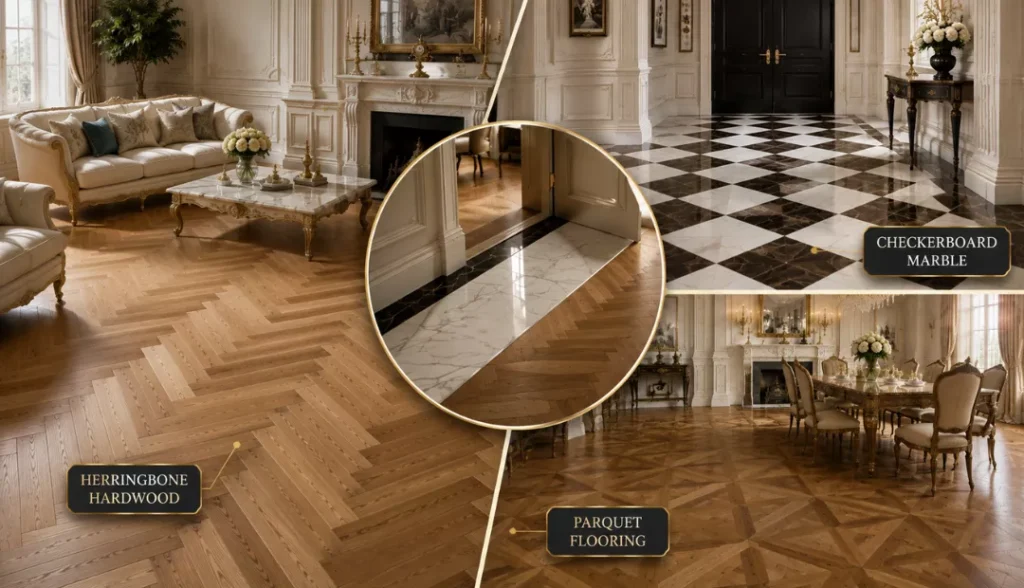
Parquet and Herringbone hardwood floors are the most popular options for neoclassical interiors. They are usually with natural or medium wood tones. Checkerboard-pattern and marble flooring are popular for entryways or formal dining rooms.
Walls & Ceilings
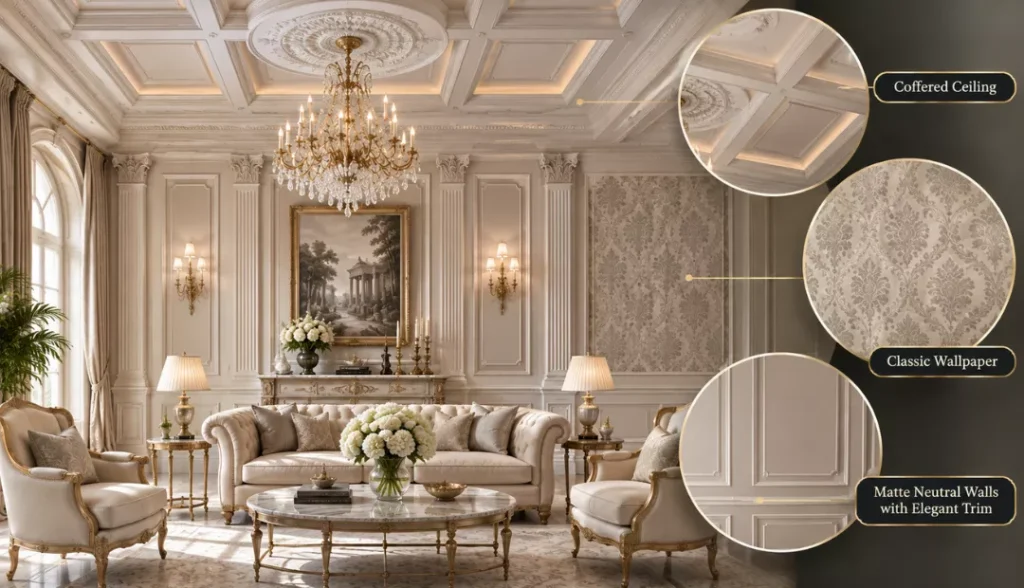
Neoclassical designers typically use matte neutral shades on the walls. Using a contrasting trim color can highlight architectural features. High ceilings decor are common features, such as chandeliers, coffered panels, or subtle plaster details, provide texture without making the space look overcrowded. When used, wallpaper often features traditional patterns such as damask, stripes, or toile in soft, understated colors.
Furniture
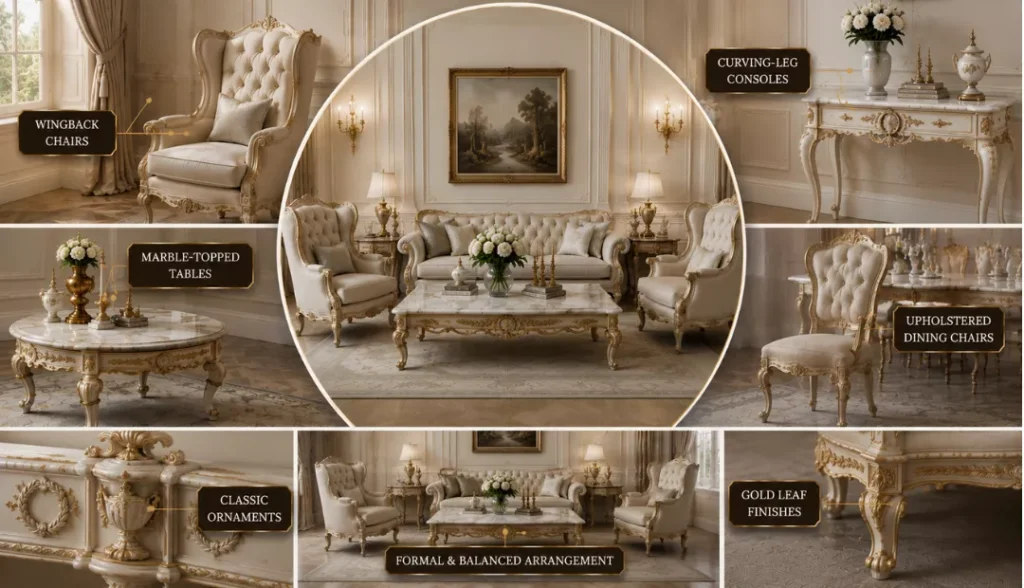
Neoclassical furniture draws inspiration from Greek and Roman styles. The styles are typically balanced and the furniture has ornaments, such as laurel wreaths, urns, and rosettes.
Neoclassical interiors often feature tufted and wingback chairs, curving-leg consoles, marble-topped tables, and upholstered dining chairs. This furniture is a blend of elegant designs, sophisticated materials, and classic elements to give a balanced look while retaining a warm atmosphere.
The furniture surfaces may feature white or light (pastel) or gold-leaf finishes. Designers generally arrange this furniture in a formal, balanced manner, often using matching sets. This helps to give a sense of the visual order and symmetry.
Fabrics & Upholstery
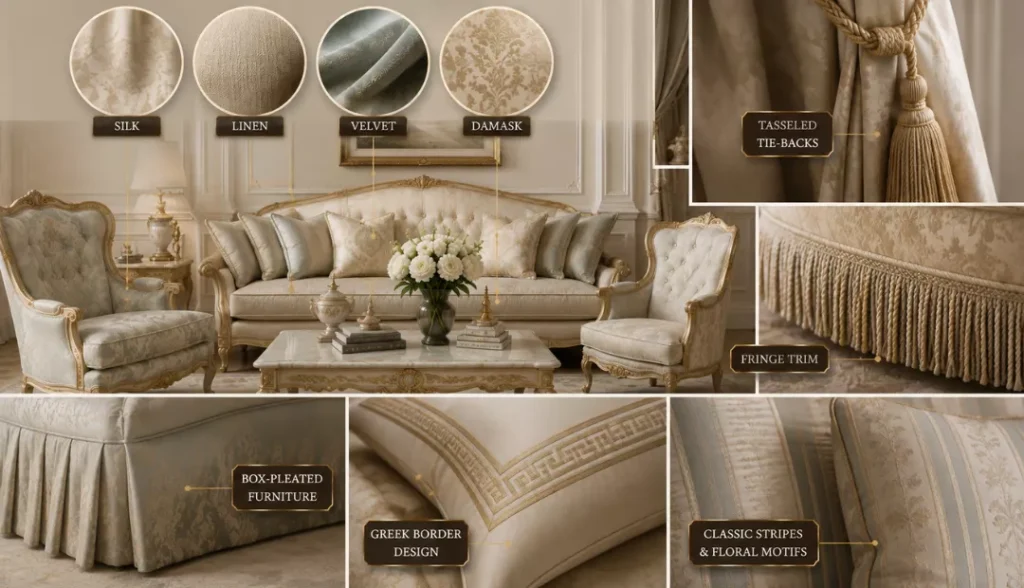
Neoclassical interiors often use upholstery fabrics that are made of natural materials like silk, linen, velvet and damask. They usually have a soft and sophisticated appearance. Their patterns are simple and classic. Instead of bold graphics or abstract prints, these feature striped patterns, small floral motifs, and Greek border designs. Details such as fringe trim, tasseled tie-backs, and box-pleated furniture create a magnificent look inspired by 18th-century design.
Frequently Asked Questions
What defines a neoclassical interior?
The neoclassical interior is characterized by a balanced layout with a neutral color scheme and classical architectural features like molding, columns and pediments. Classical Greek and Roman architectural styles influence the furniture, creating a graceful and timeless look.
Is neoclassical the same as traditional interior design?
No, neoclassical is an individual design that is part of the larger traditional design. It takes inspiration from Greek as well as Roman architecture in the 18th-century revival.
Can a small house have a neoclassical interior?
Yes, neoclassical style can also work beautifully in smaller spaces. A subtle and uniform color palette makes a space appear bigger, brighter, and more spacious, while preserving the beauty of neoclassical design.
What colors work best in neoclassical interiors?
Neoclassical interiors commonly use soft neutral shades. The most popular colors are the classic ivory, beige, light gray, and soft pastel shades like blush pink or sage green.
Is neoclassical interior design expensive?
Neoclassical style can be expensive due to the use of premium materials like solid hardwood, marble, and custom-designed millwork.
Conclusion
Neoclassical house interior design gives an elegant and timeless look by combining symmetry, soft hues and details that are inspired by ancient Greek and Roman architecture. You can adapt neoclassical style to different budgets, whether you choose marble floors and elegant furniture or simple molding and neutral colors.
Neoclassical design centers on proportion, balance, and timeless traditional elements. These principles make neoclassical interiors perfect for homes of every size and budget.
More Ways to Elevate Your Space:

Mansi is a creative designer with three years of professional experience, specializing in clean, balanced, and purpose-driven visuals. She is also a passionate writer whose work shows a strong sense of layout, composition, and visual hierarchy. Outside work, she enjoys sketching, experimenting with color, and spending time around plants and outdoor spaces. Connect with her on LinkedIn.