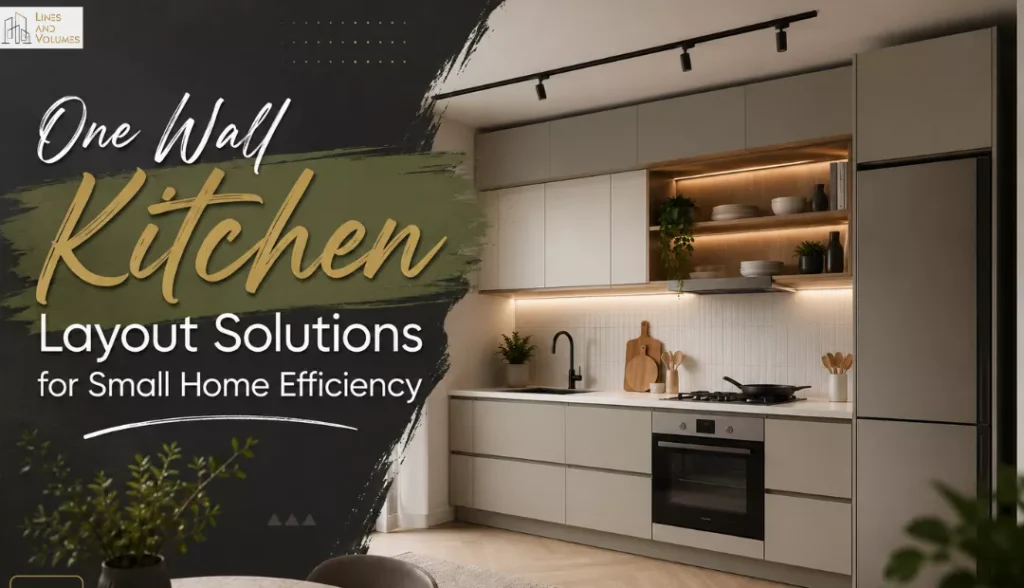
In a one wall kitchen layout, all the kitchen elements from the appliances to the cabinets sit on one wall. One wall kitchens, single wall kitchens, and Pullman kitchens are all names for this type of kitchen, typically found in lofts, studio apartments, small homes, and in houses with open plan designs. This layout is popular for its clean appearance and efficient use of compact spaces.
Single wall kitchens utilize the best use of space, incorporating all of the necessary features and functionality of a kitchen. They are also commonly used in accessory dwelling units (ADUs), where maximizing space is essential. Though there are limitations to this kitchen design, which includes lack of counter space and storage space, and a kitchen workflow that is not designed for multiple users.
Pros of a One Wall Kitchen Layout
These are particularly favored for compact and open plan homes, and for good reason.
Best Use of Space
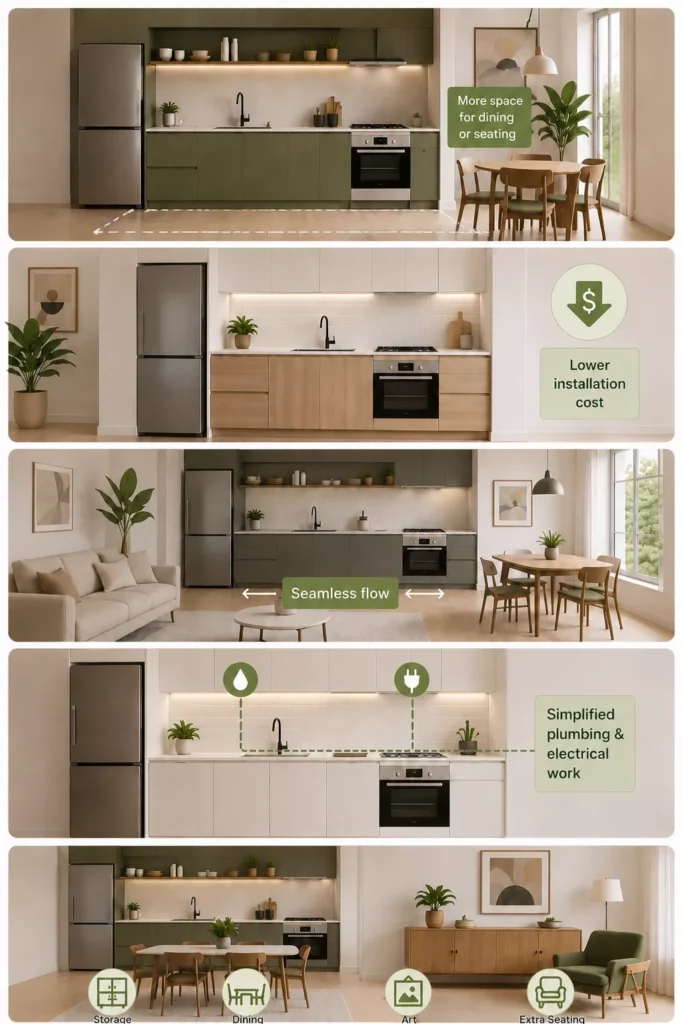
They give the most space efficient of the different kitchen layouts and can be used in kitchens of less than 150 square feet. This layout maximizes unused space for dining or seating.
Reduced Expense
Significant reduction in installation costs compared to layouts with multiple cabinet runs and utility connections. Because most cabinets, plumbing, and utilities are located along a single continuous wall, installation is often simpler and more efficient.
Integrates with Open Plan Spaces
They come fully integrated with the living and dining spaces, making them ideal for modern, open plan homes, lofts and apartments.
Simplified Construction
A single run of cabinetry simplifies plumbing and electrical work. This reduces the complexity of construction during compact linear kitchen installation for new homes and renovations.
Flexible Furniture Layout
With one wall dedicated to kitchen functions, the other walls can hold storage, dining furniture, art, or extra seating.
Cons and Limitations to Consider
For all the efficiency a compact linear kitchen brings, it does create a few different types of problems that users should consider during the design phase.
Less Counter Space
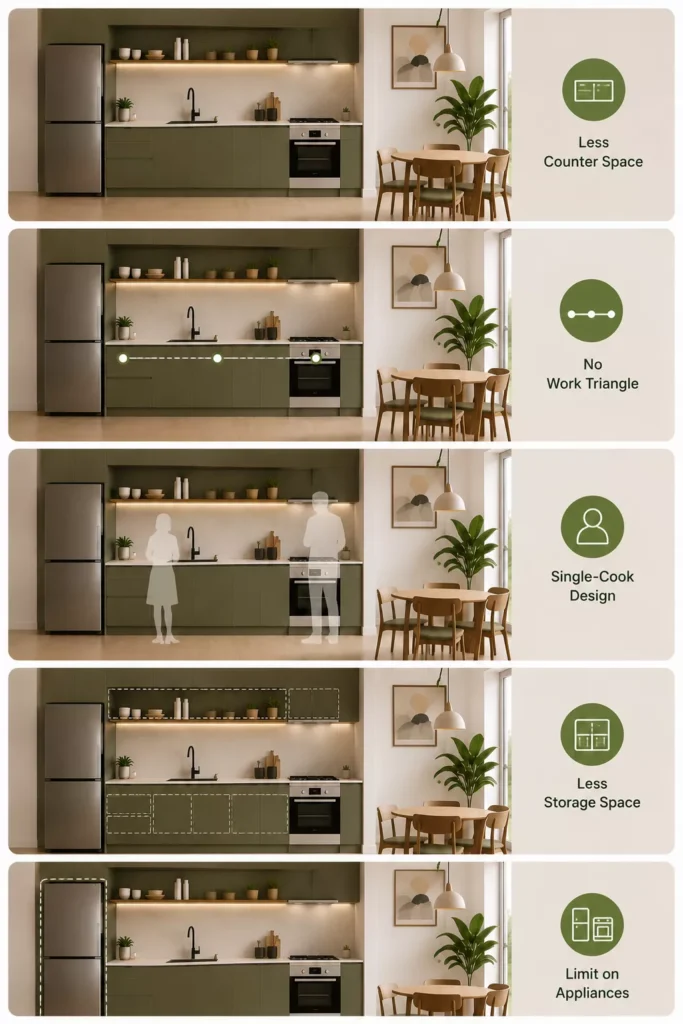
The space used for counter tops will be inadequate if it is used for food prep, cooking, serving, and storage of cooking appliances.
No Work Triangle
An L-shaped or U-shaped kitchen allows the work triangle between the refrigerator, sink, and stove to function efficiently. In a one-wall kitchen, movement tends to follow a more linear path.
Single-Cook Design
Limited space may make it difficult for more than one person to use the kitchen at the same time.
Less Storage Space
It provides only one wall for both upper and lower storage units, so less storage option compared to larger kitchen designs.
Limit on Appliances
Some compromises need to be made, as limited space does not allow for large refrigerators or large ovens.
How to Maximize a One Wall Kitchen Layout
Smart design and storage, along with appliances, can make this kitchen very functional.
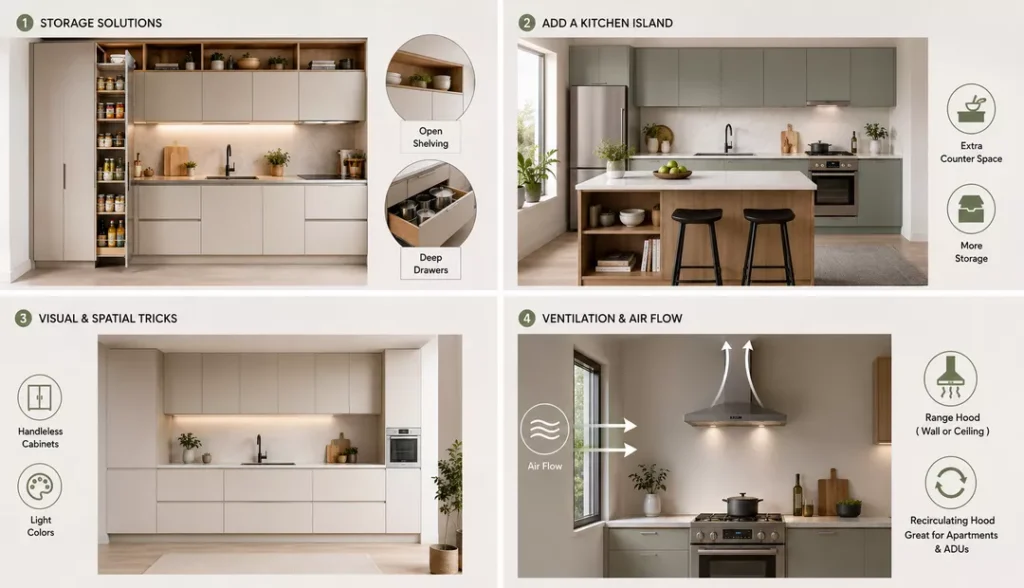
Storage Solutions
Floor to ceiling cabinets helps to maximize kitchen storage without additional space being used. Tall cabinet pantries help to store food and other kitchen items as well as small appliances.
Interior accessibility is enhanced by incorporating deep drawer base cabinets and pull-out pantry columns. Additionally, open shelving installed above upper cabinets can be used to store seasonal and less frequently used kitchen items.
Adding a Kitchen Island for Counter Space
A common challenge a homeowner faces with a single wall kitchen is small counter space. Adding a kitchen island opposite the main kitchen wall offers space for additional storage and counter space for food preparation and serving.
Visual and Spatial Tricks
One-wall kitchens should incorporate design elements which provide a sense of spaciousness and/or a larger footprint, such as handleless cabinets, which reduce visual and physical clutter.
Ventilation and Air Flow
With a kitchen design that places all cooking elements in one location, carefully consider airflow. Position the cooking area as close to a window as possible.
For optimal ventilation, a range hood should be mounted either on the ceiling or wall. A recirculating range hood is a good alternative for apartments, loft conversions, ADUs, or renovations where ducting to the exterior is difficult.
Simple One Wall Kitchen Layout: Dimensions and Space Requirements
Proper dimensions play a major role in determining how comfortable and functional the wall kitchen will be.
Minimum and Recommended Widths:
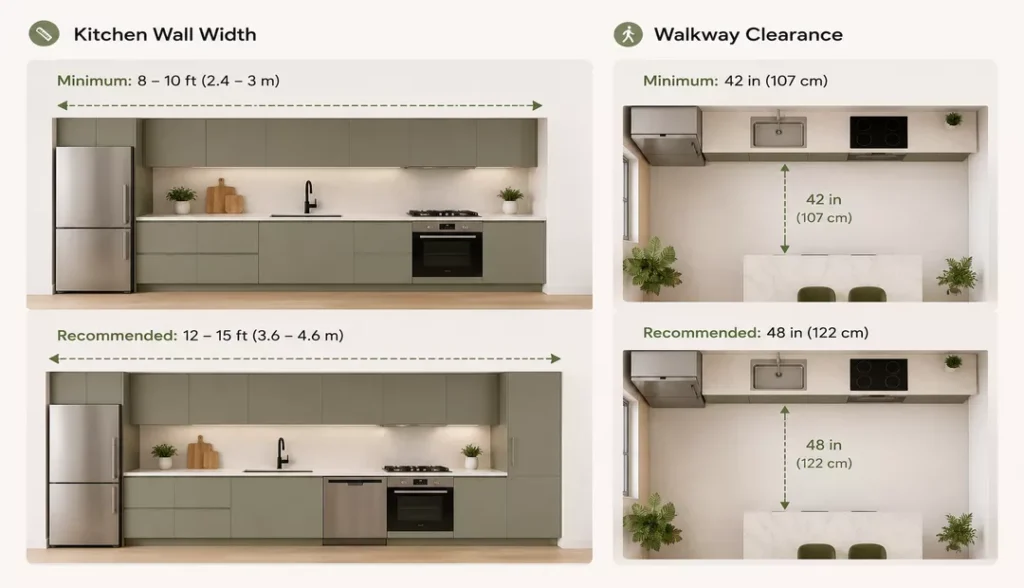
A practical one wall kitchen typically requires between 8 and 10 feet (2.4 to 3 meters) of wall space to accommodate essential appliances and work zones.
For homeowners seeking a full appliance suite with comfortable preparation areas, a wall length of 12 to 15 feet (3.6 to 4.6 meters) is generally considered ideal.
The space opposite the kitchen wall is equally important. A minimum walkway clearance of 42 inches (107 cm) is recommended, while 48 inches (122 cm) provides a more comfortable experience.
Counter and Cabinet Heights
Most single wall kitchen follow standard kitchen dimensions:
| Element | Standard Dimension |
| Base cabinet height | 34.5 in (87.5 cm) |
| Countertop height | 36 in (91.5 cm) |
| Upper cabinet clearance above counter | 18 in (46 cm) |
These measurements provide ergonomic comfort for most users while maintaining compatibility with standard appliances.
Are You Considering a One Wall Kitchen?
If you live in a studio apartment, loft, or tiny home, or have a condo with an open-concept floor plan and are trying to maximize your living space, a one wall kitchen is a great option.
They also come with clean, modern designs and functional beauty. A one-wall kitchen can be a great option if you have one or two main cooks in the household. This layout can also make the rest of your home feel more spacious and free of clutter.
Also Read:

Mansi is a creative designer with three years of professional experience, specializing in clean, balanced, and purpose-driven visuals. She is also a passionate writer whose work shows a strong sense of layout, composition, and visual hierarchy. Outside work, she enjoys sketching, experimenting with color, and spending time around plants and outdoor spaces. Connect with her on LinkedIn.