
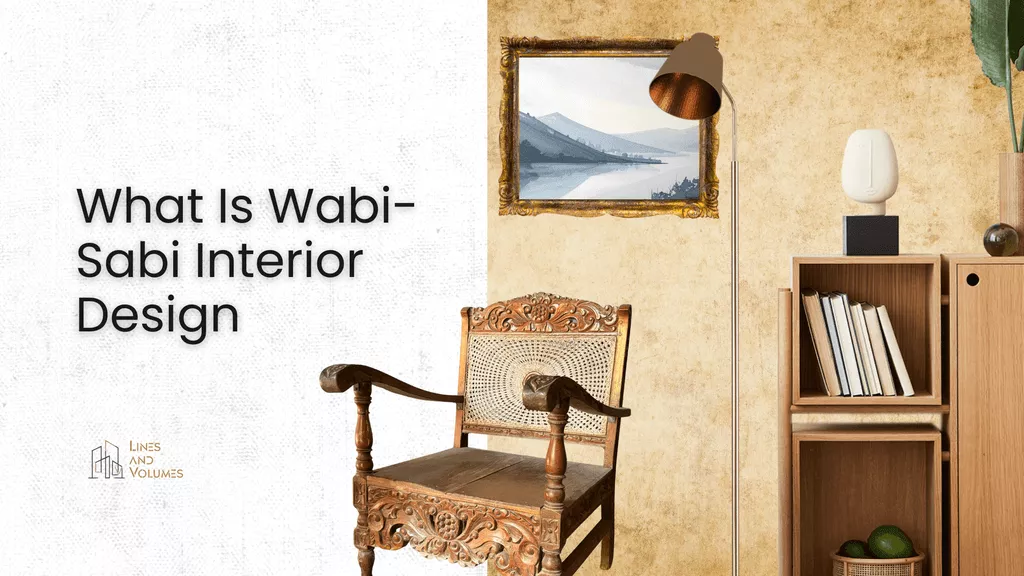
Wabi Sabi originated in Japan, known for finding beauty in the incompleteness, impermanence and imperfections of things instead of focusing on the polished and perfect. Wabi sabi decor gives importance to spaces which are more lived in, honest, and less curated.
Some distinct features of Wabi Sabi include raw textures, natural materials, and non polished objects. Wabi Sabi uses earth tones grounded aesthetic rather than minimal one.
The design is based on Zen Buddhism, which values simplicity and the fleeting nature of things. Wabi Sabi decor is about being real and appreciating simple beauty instead of trying to be perfect. This is in line with the ideas of zen home decor in everyday life.
What Sets Wabi-Sabi Homes Apart
Color Palette
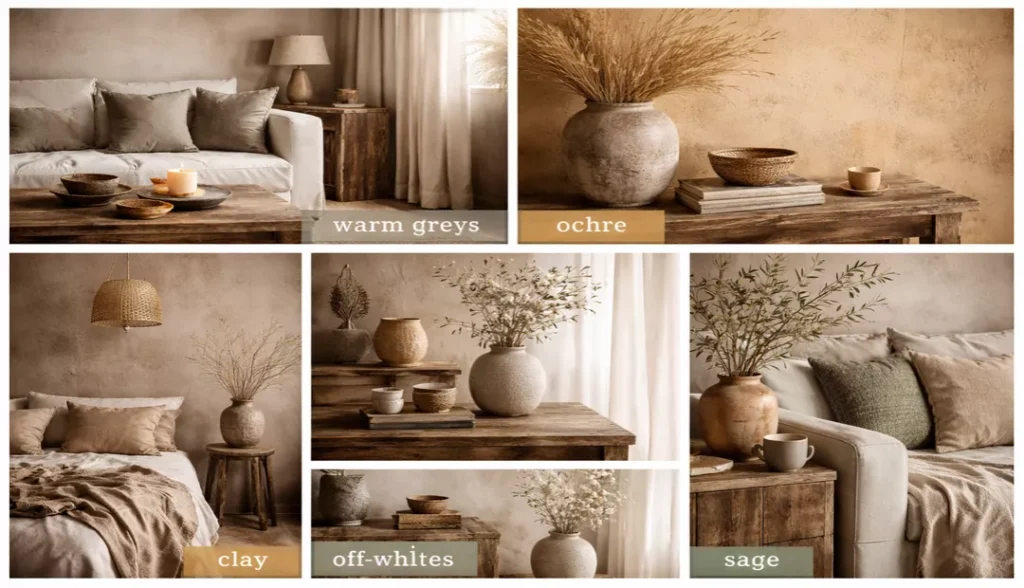
Wabi Sabi is known for natural color palettes. Warm greys, ochre, clay, sage, and off-whites are the norm to help create a space that feels warm. These tones are more about the materials and textures than standing out.
Wabi Sabi is all about creating depth and warmth instead of relying on stark contrasts.
Texture
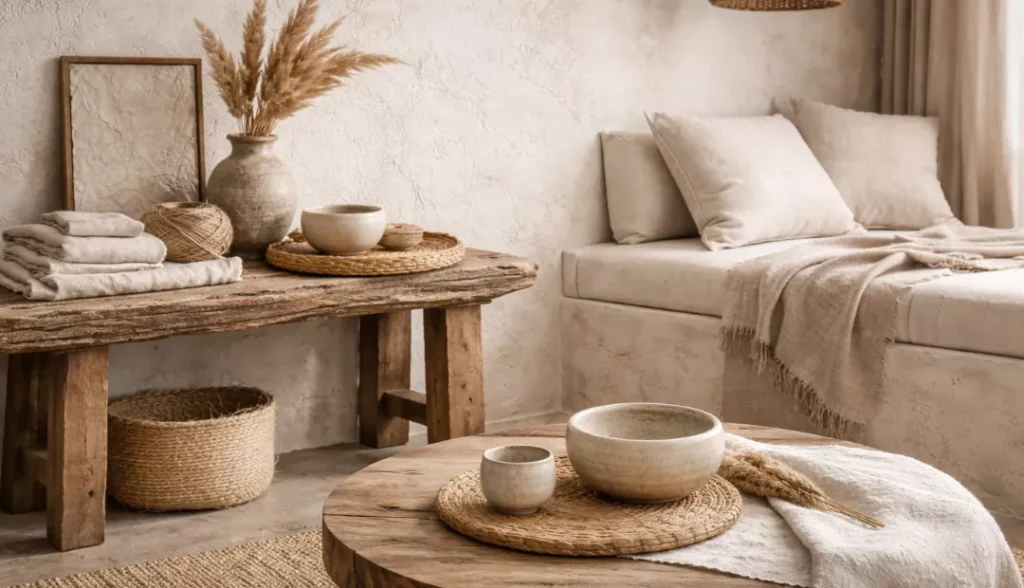
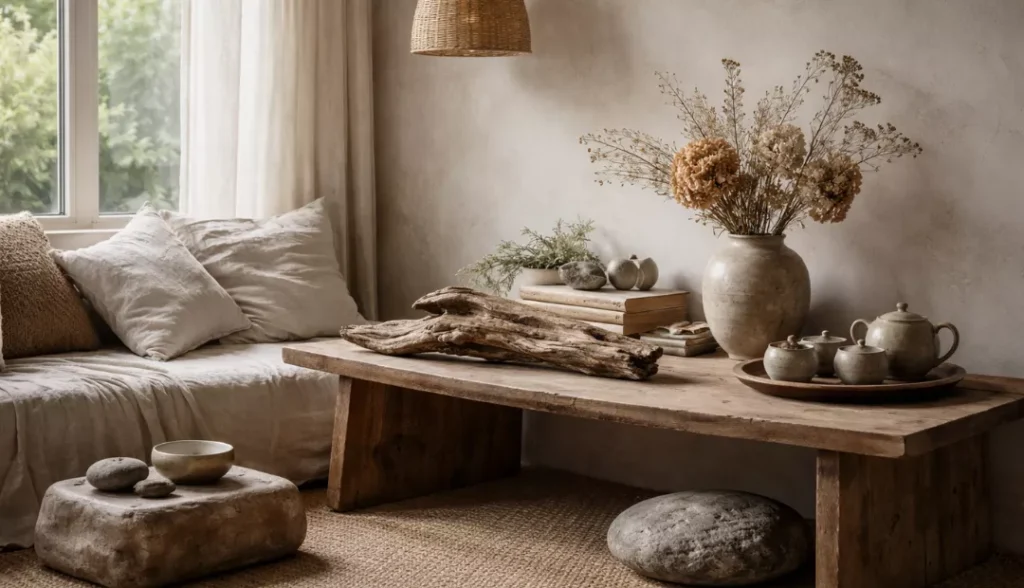
Linen, raw wood, unglazed ceramics, rattan, jute, plaster, and washi paper all warm up a space and make it feel tactile. These materials all look good and serve a purpose over time as they age.
Imperfection as Design
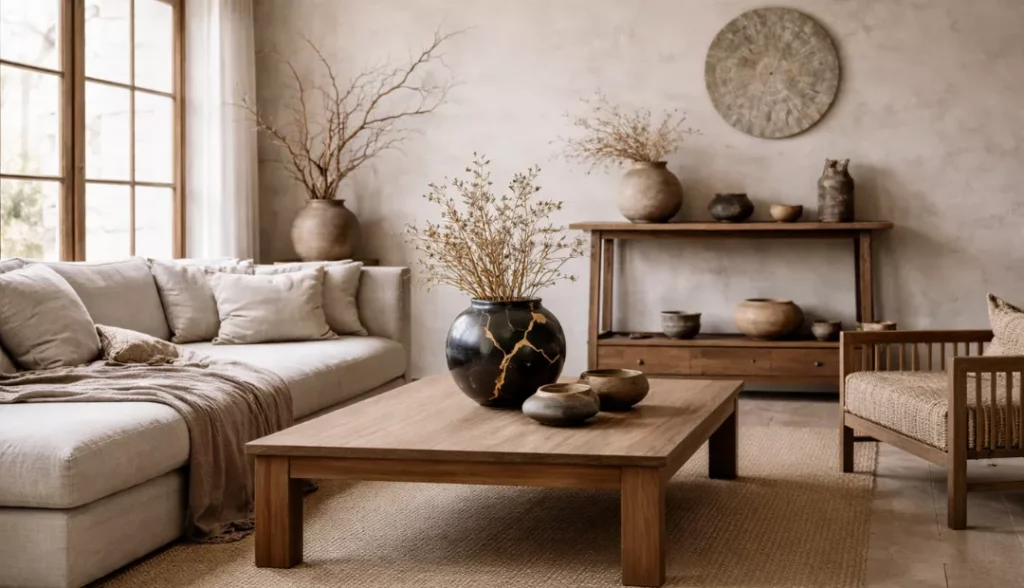
Stop focusing on fixing the imperfect. Instead, focus on the opposite side. You can see this in handmade pottery, natural soils, and artifacts that people repair using kintsugi, as well as in visible fastenings for ceramics and worn, imperfect finishes.
Negative Space
More space works better than cluttered excess. This doesn’t mean removing everything. Remove less and let each object serve a purpose; place it with intention.
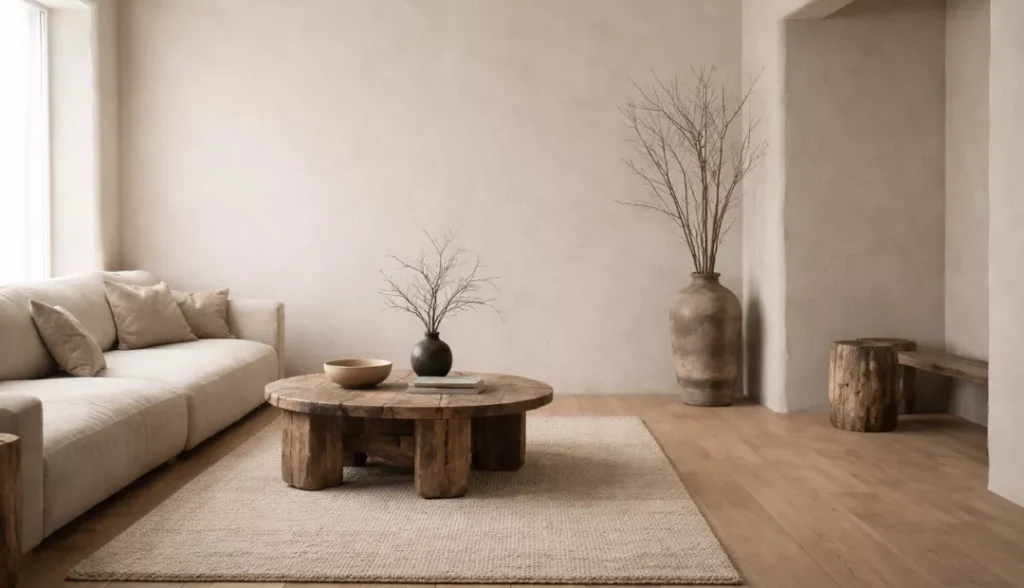
Natural Light
Keep light soft and natural, not harsh or overly bright, and maintain a balanced scale. Place lamps with intention and aim for a calm, lived-in feel that reflects Wabi-Sabi rather than something overly polished or unused.
Natural elements that include driftwood, stones, dried flowers, and antique or handmade pieces, connect to nature and not deliberately put to perfection. They remain as they are, with minimal intervention, allowing their form to take center stage.
Conclusion
Wabi Sabi is based on three simple facts: nothing lasts, nothing is finished, and nothing is perfect. Instead of resisting them, it builds an entire design philosophy around these ideas. These subtle changes transform a space over time. They shift the focus away from a final look and give a home an evolving character that reflects life as it is rather than how it is expected to be.
Explore more insights from expert-backed ideas on Lines And Volumes.
Discover More:
- Popular Types of Tile for Modern Home Interiors
- How to Decorate Cape Cod Style House
- How Can a Focal Point Transform Your Room

Navdeep is a PHP programmer by profession, & rider by passion with a strong interest in writing, reflection, and travel. His writing draws from daily experiences across online and real-world settings, often influenced by an interest in interior design and how spaces affect mood and function.