
Architecture shapes culture by designing how society interacts socially and how people feel with the various elements of society. To understand how does architecture impact society, it is important to recognize that the most fine-tuned design of architecture improves the roots of social community and culturally preserves all people involved, while poor design can destroy the community by isolating people and negatively influencing the environment and the quality of life for its inhabitants.
This design is especially imperative and important during this era. Currently, more than half of the global population resides in urban areas and that number is expected to continue growing in the coming years. As cities become more densely populated and climate challenges intensify, architecture will play an important role in creating healthier, more resilient, and more livable communities.
Within the architectural community, there is a growing emphasis on high-quality, high-standard designs that integrate functionality and aesthetics while being environmentally friendly and promoting healthy living.
The goal of this guide is to provide an understanding of how architecture influences society and to explain the major ways in which architecture influences our everyday lives.
What Is the Relationship Between Architecture and Society?
Architecture and society have a two-way relationship. Culture, the economy, technology, environmental factors, and values shape inputs from society to architecture. From building design, society organizes how individuals and groups act and how they perceive and navigate the world. Each generation constructs values, and future generations perceive and are influenced by them.
“Form follows function” is a principle introduced by architect Louis Sullivan, who stated that a building’s design should reflect its intended purpose. A popular quote that describes architecture’s impact on society later came from former British Prime Minister William Churchill. He said, “We shape our buildings; thereafter they shape us.” Together, these principles explain how does architecture impact society by demonstrating that buildings do not simply exist; they influence behavior, well-being, productivity, how people interact within society, and the activities they engage in.
7 Key Ways Architecture Impacts Society
1. Architecture Shapes Human Behavior and Social Interaction
The spaces we live in are designed in a way which influences people to move, communicate, and build relationships. Architectural elements such as layout, visibility, circulation, and shared spaces can either encourage togetherness or create separation.
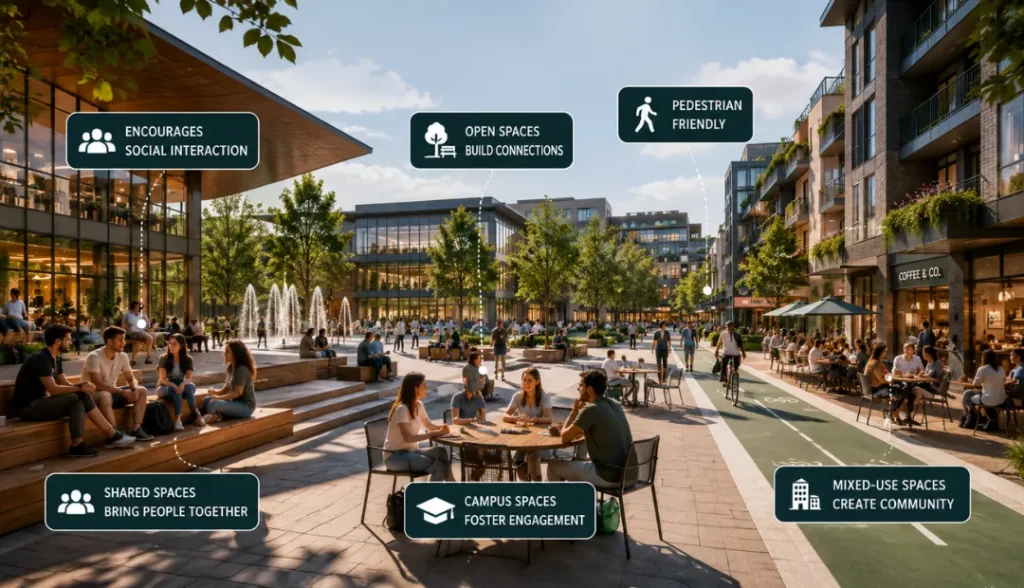
Open public plazas, pedestrian-friendly streets, and mixed-use neighborhoods naturally invite conversation, community events, and social engagement.
For example educational campuses, universities that incorporate courtyards, collaborative study areas, and inviting outdoor spaces encourage students to meet and participate in campus life.
2. Architecture Influences Mental and Physical Health
Architecture directly influences both psychological and physical well-being. Poor quality of indoor impact stress, focus, sleep, and health.
A pleasant location with natural daylight, fresh air, comfortable temperatures, and proximity to green spaces contribute to a healthier environment. Biophilic design is a design approach that incorporates natural elements in buildings. The goal is to highlight the relationship people have with the natural world.
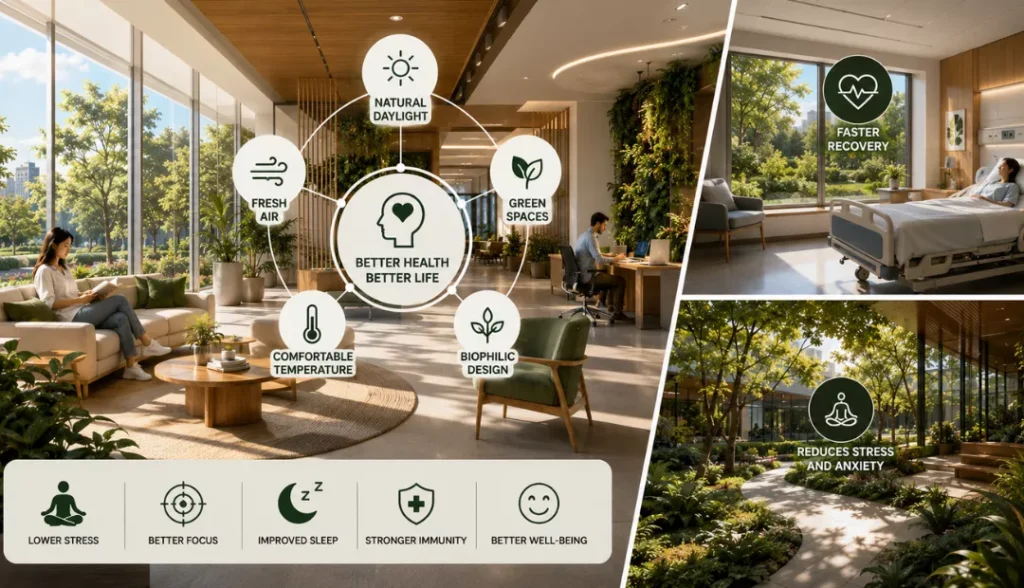
Healthcare architecture understood this principle particularly well. Many modern hospitals incorporate healing gardens, large windows, calming materials, and intuitive layouts because research shows that patients surrounded by natural elements tend to heal faster.
3. Architecture Reflects and Preserves Cultural Identity
Architecture records history through physical structures that endure long after written records have faded away. Different architecture like religious structures, government buildings, traditional homes, museums, and monuments reveal how communities lived, valued and what they adapted.
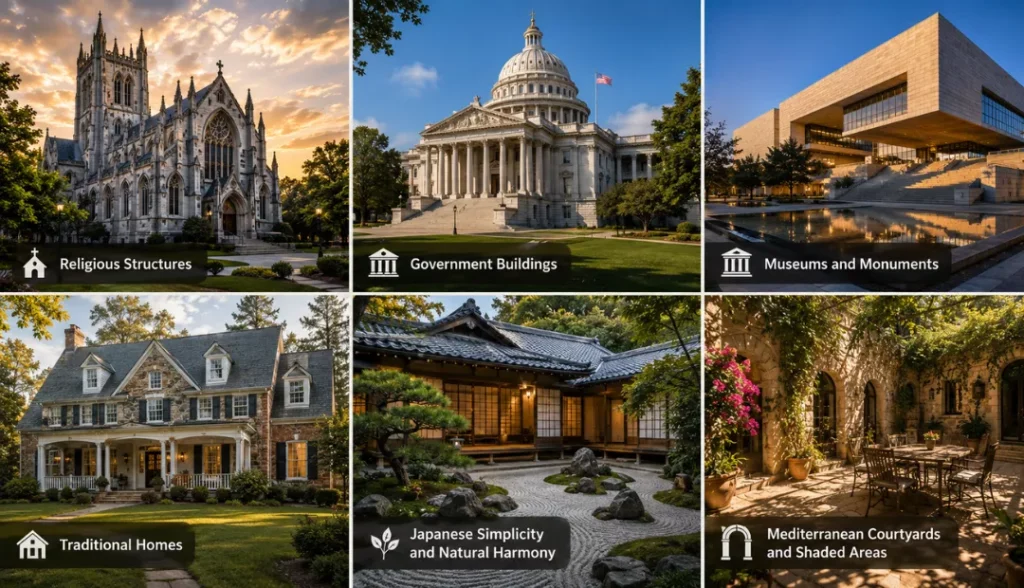
Japanese houses have incorporated the Japanese ideals of simplicity and natural harmony. The architecture of the Mediterranean has thick stone walls that house courtyards and shaded areas.
4. Architecture Affects Economic Activity and Opportunity
Architecture also plays a vital role in shaping the local and regional economy. This is another example of how does architecture impact society, as thoughtfully designed buildings and neighborhoods attract businesses, residents, investors, and tourists, resulting in improved economic growth and a higher quality of life in surrounding communities.
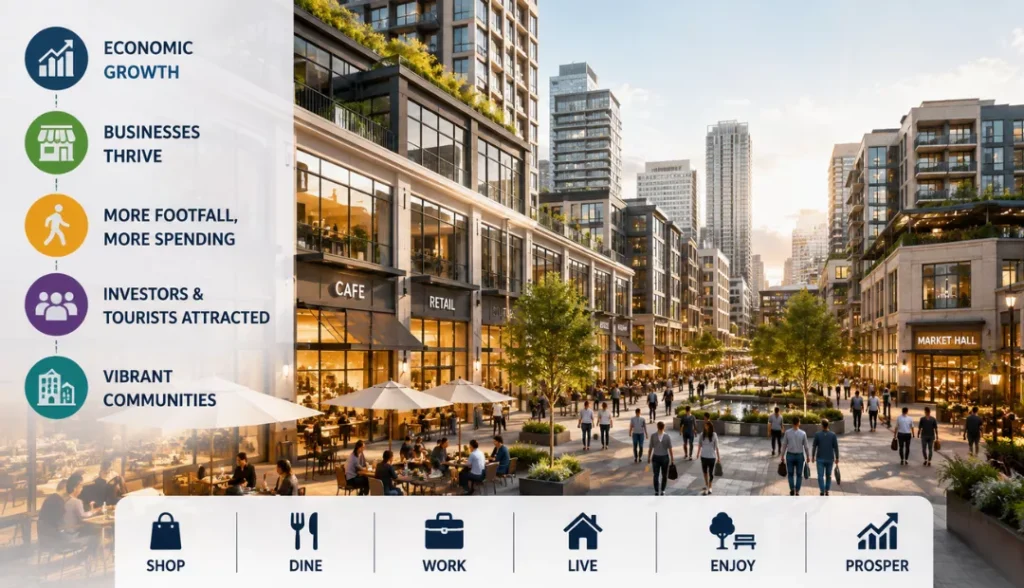
Walkable commercial districts encourage people to spend more time shopping, dining, and participating in local activities. Mixed-use developments that combine housing, retail, offices, and public spaces create vibrant neighborhoods where economic activity continues throughout the day.
5. Architecture Determines Accessibility and Social Equity
Inclusive architecture ensures that the structure and public areas offer a comfortable user experience by people of all ages and abilities.
True accessibility goes beyond, not only a legal obligation in many countries but also a fundamental principle of fare design.
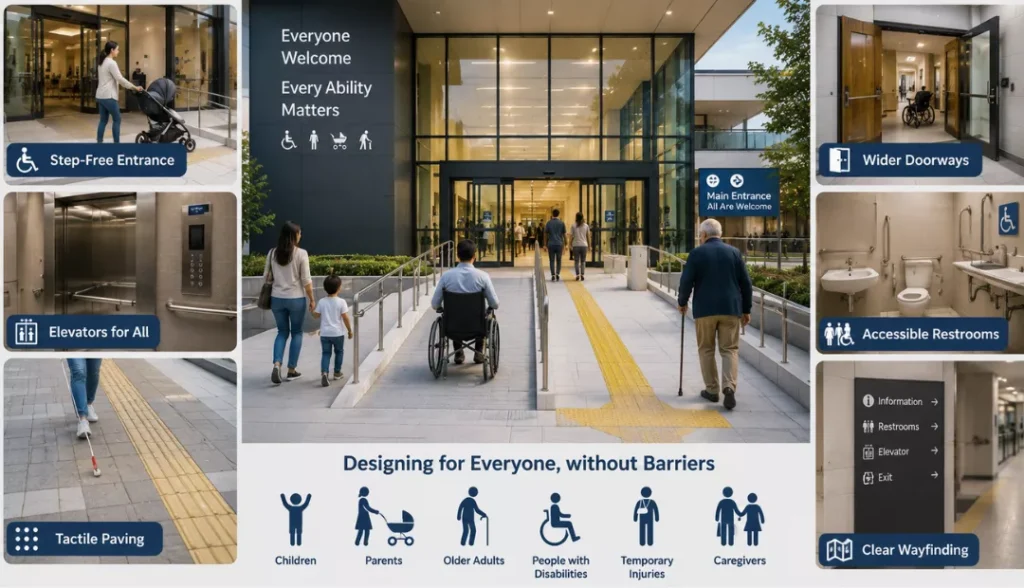
Universal design seeks to eliminate physical barriers before they arise instead of relying on later modifications. Features such as step-free entrances, elevators, tactile paving, wider doorways, accessible restrooms, and intuitive wayfinding systems make buildings more usable for everyone, including older adults, parents with strollers, and individuals with temporary or permanent disabilities.
6. Architecture Impacts Environmental Sustainability
The construction and operation of buildings make up a significant share of global energy consumption and greenhouse gas emissions, making architecture central to addressing climate change.
Sustainable architecture focuses on reducing environmental impact throughout a building’s life cycle while improving occupant comfort and long-term efficiency. Architects accomplish this through strategies such as passive solar design, high-performance insulation, natural ventilation, renewable energy integration, water conservation systems, and low-impact building materials.
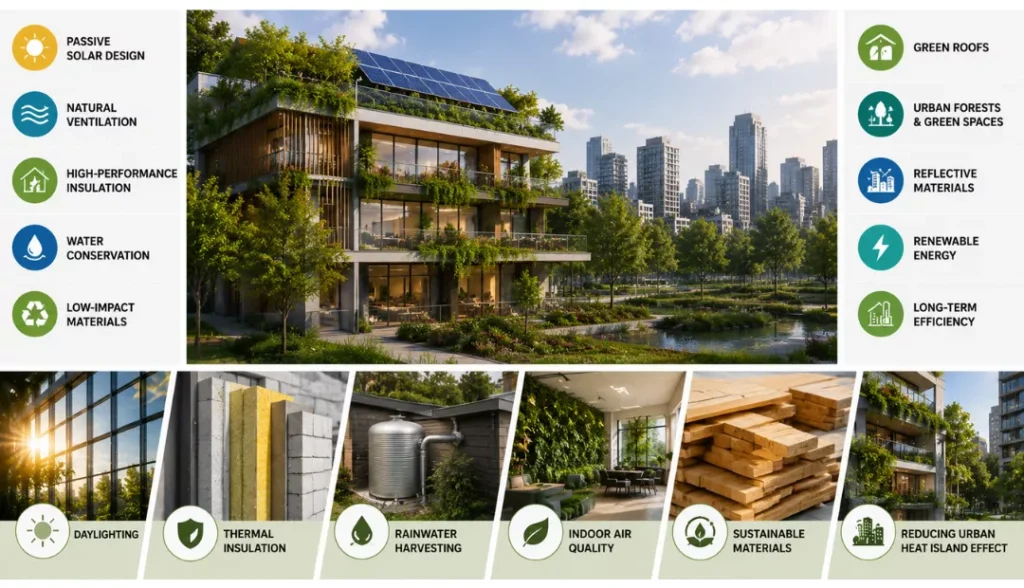
Green roofs, urban forests, reflective building materials, and thoughtful landscape design also help keep cities cooler, and reduce urban heat island effect.
7. Architecture Shapes Civic Identity and Public Trust
Public architecture communicates beliefs and priorities of a society. Government buildings, courthouses, libraries, museums, memorials, and civic plazas often become symbols of national identity and public life.
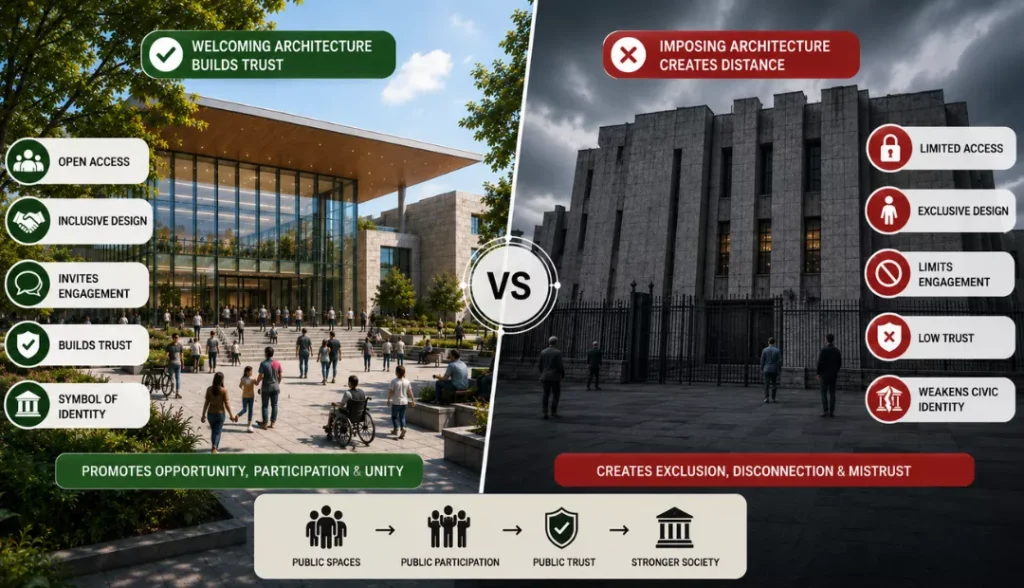
Their design influences how citizens perceive institutions and engage with civic spaces. Transparent, welcoming buildings with easy-to-access public areas promote openness, participation, and trust. On the other hand, imposing structures that appear inaccessible or disconnected from the public may shape perceptions of authority or exclusion.
Conclusion
Architecture contributes to society by shaping the environments in which people live, learn, work, and socialize. If you have ever wondered how does architecture impact society, the answer lies in its ability to influence behavior, support physical and mental well-being, preserve cultural heritage, drive economic development, improve accessibility, promote sustainability, and strengthen civic identity. Every design decision, from the placement of a window to the layout of an entire city, contributes to the experiences and opportunities available to individuals and communities.
More Architecture Insights:

Navdeep is a PHP programmer by profession, & rider by passion with a strong interest in writing, reflection, and travel. His writing draws from daily experiences across online and real-world settings, often influenced by an interest in interior design and how spaces affect mood and function.