

Want to give your guests a spooky surprise the moment they step through the front door? Halloween is the perfect time, so why not, instead of adding random spooky decorations, start by decorating your entryway with a Halloween theme? Halloween entryway decor is moving beyond cheap plastic spooky props toward natural textures, dark florals, dried branches, and an elevated aesthetic. In 2026, it’s all about nature-focused vintage accents and thoughtful styling.
Whether you prefer a modern black-and-white look or something moody to playful and family-friendly, these Halloween entryway decor themes will help you create something intentional rather than just spooky.
Theme 1: Create a Haunted Gothic Manor
If you prefer the eerie charm of a forgotten old Victorian mansion, go for a Gothic Halloween entryway decor.
Make the entire room feel aged, mysterious, and slightly unsettling through dark colors, vintage details, and atmospheric lighting. Your goal is to tell a story, not make everything overly scary; just let the pieces come together.
Step 1: Darken the palette
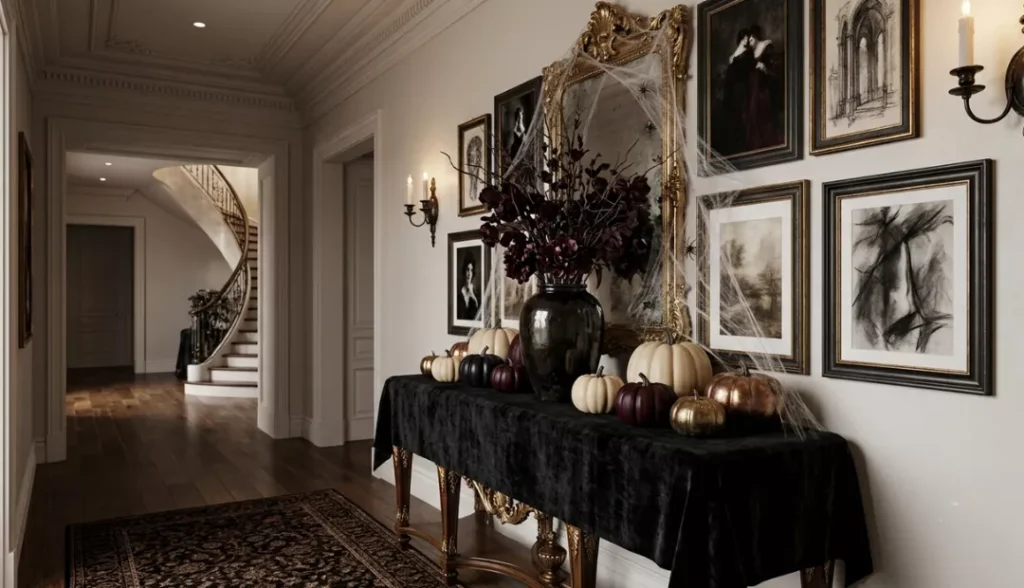
For a Gothic entryway, start by bringing in plenty of dark charcoal and deep burgundy, with small touches of aged brass or gold.
Don’t worry if your walls are white, beige, or off-white; let’s bring in darker tones. Use a black console cloth, oversized vase, and some artwork like digital prints. You can find these prints on the internet, download them, print them, frame them, and hang them on the hallway wall.
Keep the bright orange pumpkin aside for now, instead, choose pale, black, burgundy, or metallic ones, which feel like a Gothic setting.

Step 2: Turn the mirror into the focal point
A large mirror in the entryway makes an ideal focal point for this theme as reflections naturally add depth and mystery.
For an aged, haunted look, add loosely stretched faux cobwebs around the frame. Avoid covering the entire mirror; keep it imperfect so it feels natural.
If you don’t have a mirror, substitute an antique-looking portrait, faded landscape, or dark botanical print.
Step 3: Build the console in layers
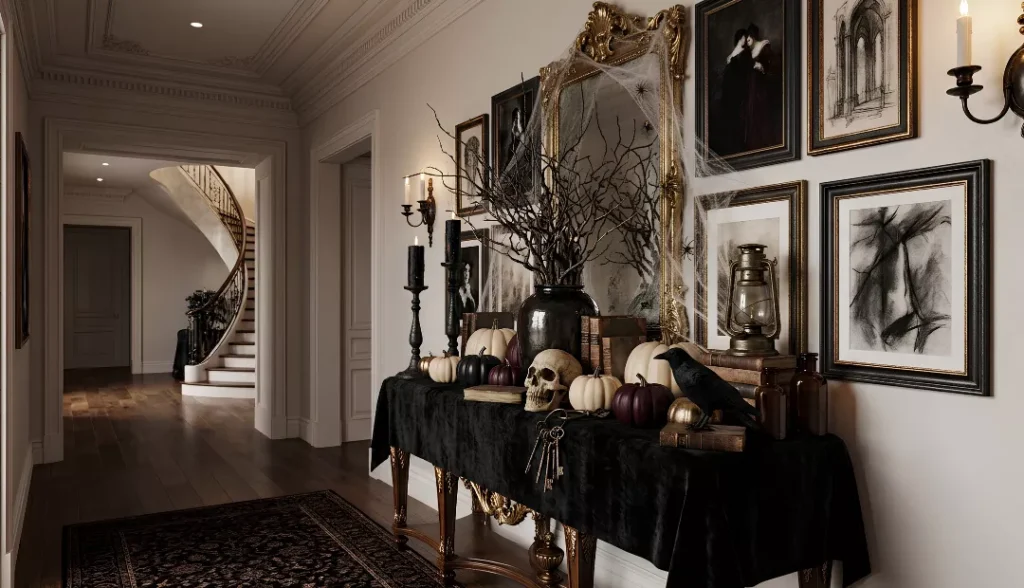
Start with the tallest pieces, perhaps black candlesticks paired with a vase of bare branches. Around them, add stacks of vintage-looking books, an old lantern, and amber bottles.
Closer to the surface, introduce a skull, dark pumpkin, antique key, raven, or similarly small detail to give the space a Gothic character.
Step 4: Let the lighting do some of the decorating
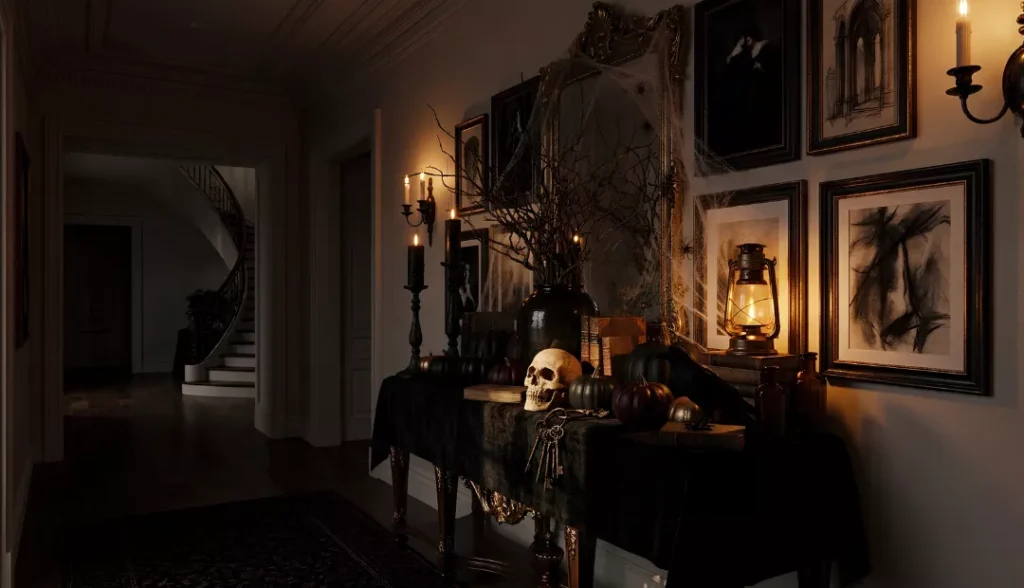
Turn off harsh overhead lighting if practical and let battery-operated candles or a warm table lamp illuminate the display. Don’t try to eliminate every shadow. The shadows are part of the look.
Finish by stepping back and removing anything that feels too colorful or playful. A Gothic entryway works best when it feels collected over time rather than assembled from a single Halloween aisle.
Theme 2: Build a Witch’s Entryway
Create a witch-themed entryway in such a convincing way that it actually feels like an actual witch’s home.
Think potion bottles waiting on the console, a casually placed broom and a spooky sign — enough to send a little chill down your guests’ spines.
Step 1: Establish signs of the witch
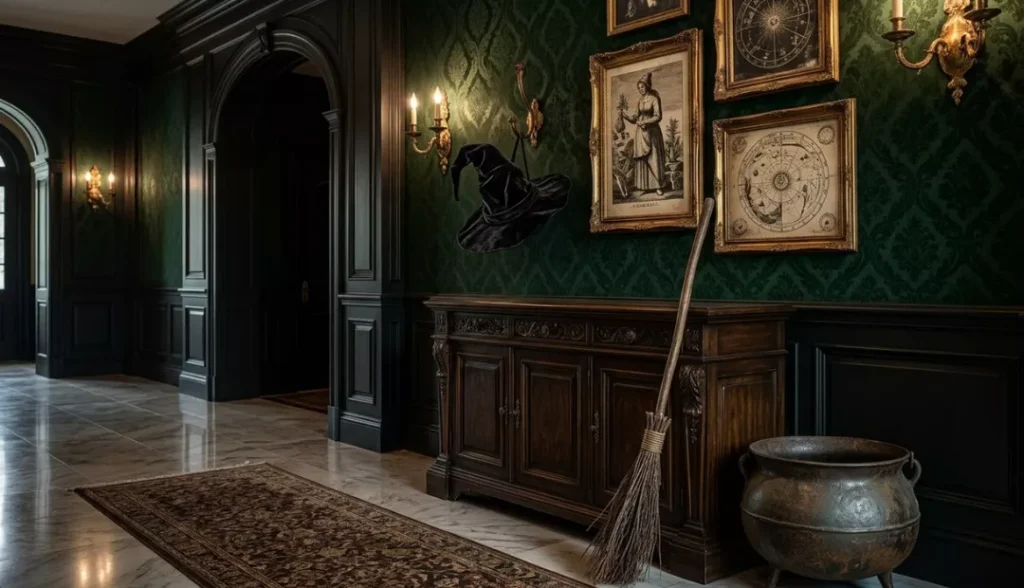
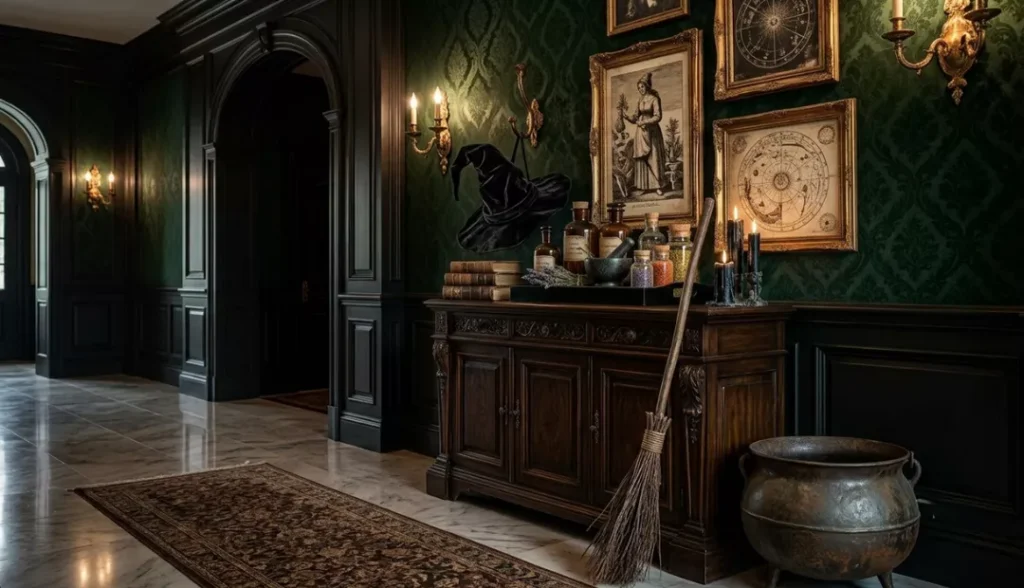
First, fill in the larger elements that immediately tell the story. Hang a crooked witch hat, lean a broom, and place a cauldron near the console or bench.
Additionally, add a few witch-themed artworks to bring the story onto the walls and overhead space.
Avoid unnecessary accessories like stiff plastic capes, flashing LED novelties, or low-end animatronics; it ruins the overall architecture.
Step 2: Turn the console into an apothecary
Now give your witch somewhere to work.
Group amber and clear glass bottles together, preferably in different heights and shapes. Add a few old books, a mortar-and-pestle-style prop, dried herbs, candles, or jars filled with harmless decorative ingredients. A black tray can contain the smaller objects and stop the arrangement from looking messy.
Step 3: Connect the surface to the wall
This is where the scene starts becoming immersive.
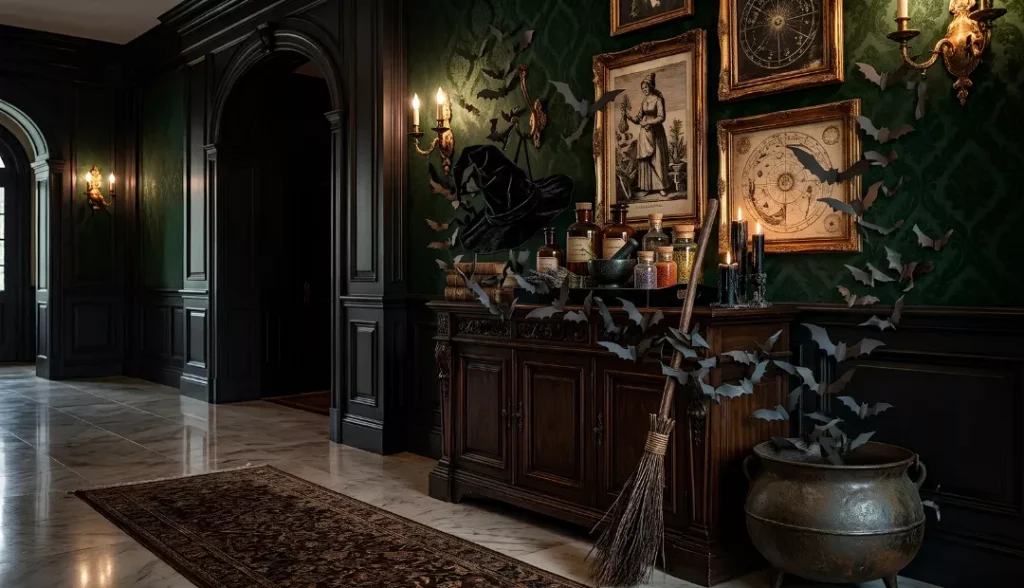
Let a trail of bats move from behind the bottles toward the mirror and upward across the wall. Alternatively, use small stars, moons, or hanging battery candles if you want a more magical and less creepy interpretation.
Varying the sizes of bats and changing their direction creates much more natural movement than arranging identical shapes in a straight line.
Step 4: Finish the story at floor level
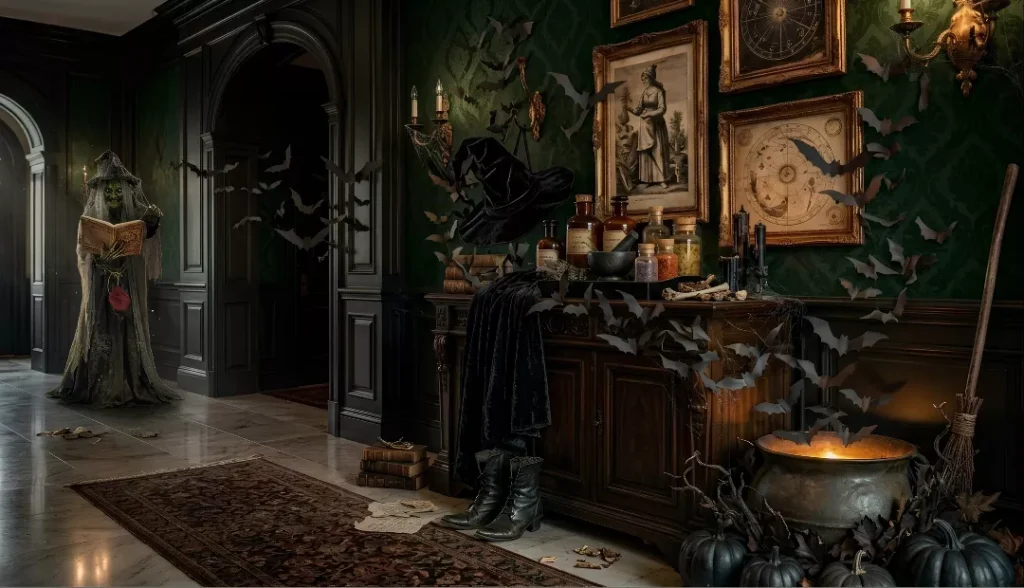
Place a cauldron beside the console, surround it with a few dark pumpkins, twisted branches, or dried foliage.
You could even position a pair of shoes beneath a hanging cloak, suggesting that the witch herself has disappeared.
At this point, resist adding another generic Halloween prop simply because there’s an empty spot. Ask whether it contributes to the story. If it doesn’t, leave the space empty.
Theme 3: Make the Entryway Feel Like an Abandoned House
Let’s take a quieter approach this Halloween, make it appear as if the house itself has been forgotten.
Forget the usual filling the entryway with monsters and Halloween characters, the goal is to create a feeling of a quiet and untouched house.
Step 1: Remove some of the everyday polish
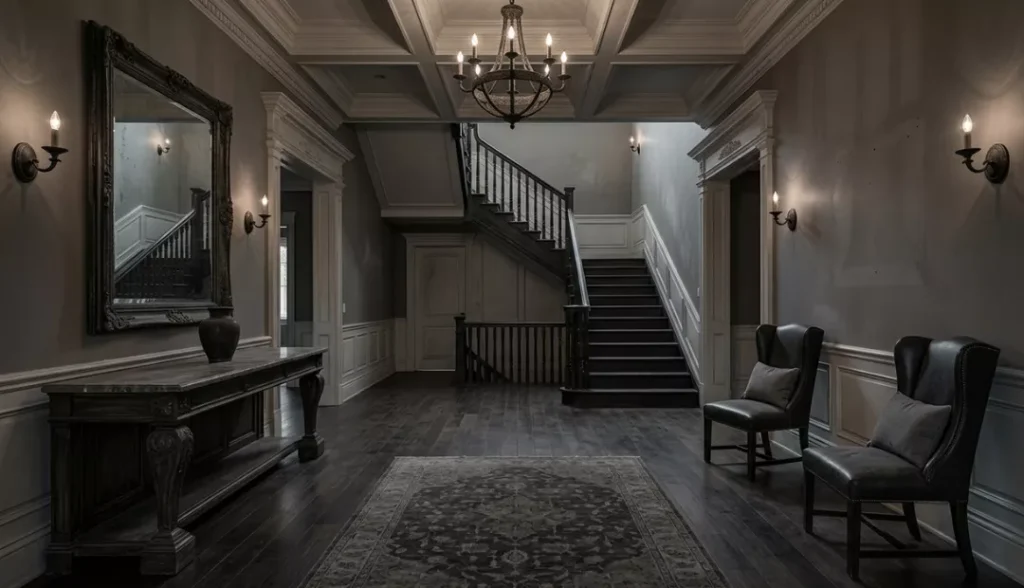
Take off-season any bright colors, flower arrangements and pictures in your entryway and put them somewhere else for the time being. You now have a simplified foundation.
Introduce shades of gray, brown, dusty white and black to further dull your palette.
Step 2: Age the main surfaces
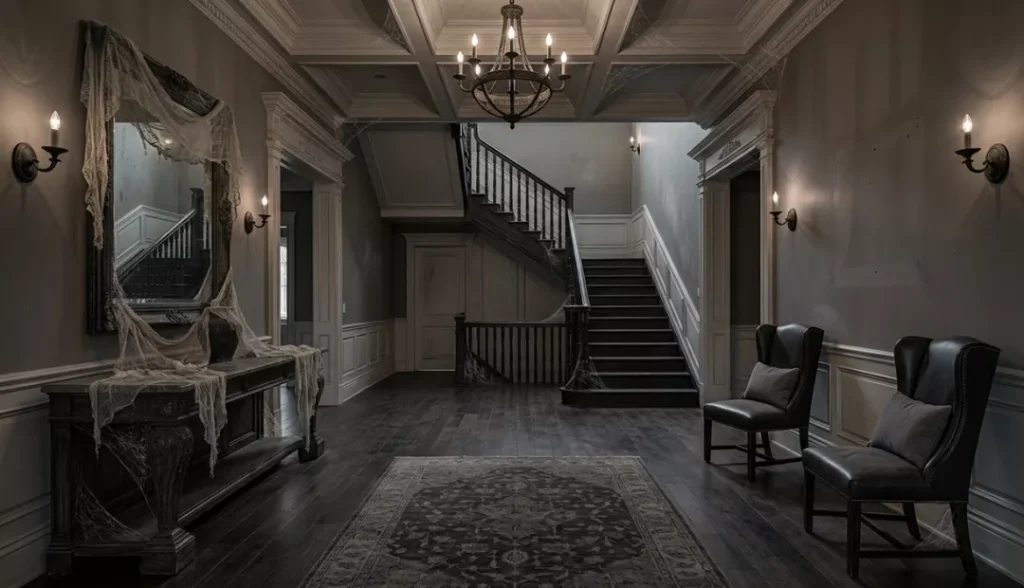
Loosely drape gauze or thin, aged-looking fabric over portions of mirrors and consoles. Don’t go overboard. Cobwebs should be placed strategically.
The key word is sparingly. Too much artificial webbing can hide the scene rather than age it.
Step 3: Add evidence of a forgotten life
Place a few old-looking books, a faded photograph or portrait, or other miscellaneous items on the console.
Loose fabric can be used to cover old books or other items to make the items appear as though they’ve not been disturbed in a long time.

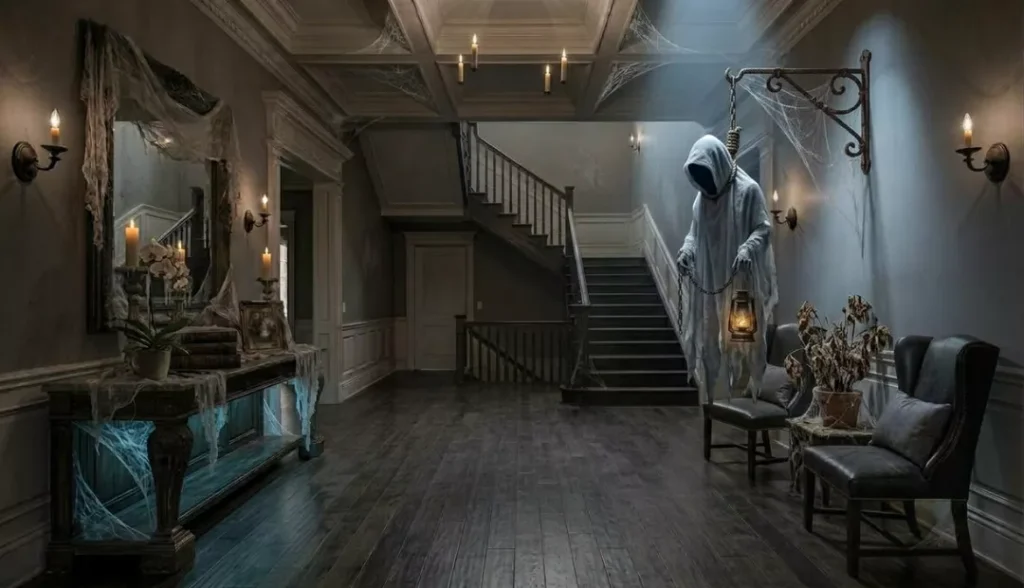
Step 4: Introduce one ghostly presence
Add a few ghosts or other supernatural elements. You should limit the number of items you put up so that one item can be the focal point of your display.
A single well-placed ghost can be more effective than a haphazard collection of items. Keep normal objects, like houseplants, to give contrast to your supernatural items. To create some drama, use directional USB-powered spotlights, taper candles, or small under-shelf puck lights to cast focused light.
Let the Theme Do the Scaring
Often the best Halloween entryway decor are the most creative. Abandoned houses are the easiest to decorate for Halloween. Whatever your theme may be, be sure to place the decorations in a way that people can see them when they walk into the room. The key is to come up with the feeling you want to convey, come up with a color scheme to complement it and then figure out a good focal point for your decorations. The decorations should accomplish the feeling to the point that when the door opens, people should instantly understand they have entered a different world.
Keep Decorating With a Spooky Twist:

Mansi is a creative designer with three years of professional experience, specializing in clean, balanced, and purpose-driven visuals. She is also a passionate writer whose work shows a strong sense of layout, composition, and visual hierarchy. Outside work, she enjoys sketching, experimenting with color, and spending time around plants and outdoor spaces. Connect with her on LinkedIn.