
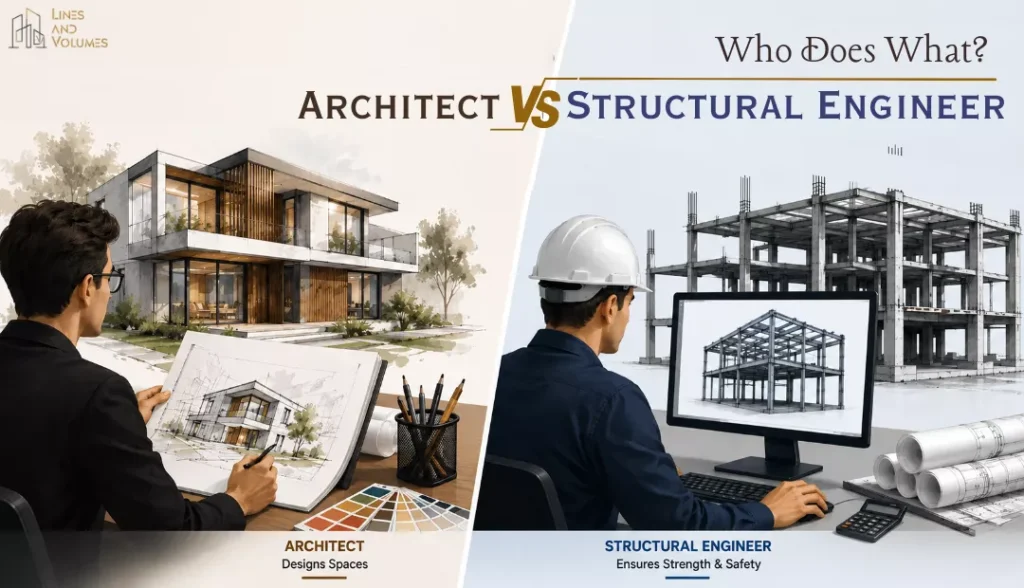
An architect is responsible for a building’s appearance, space planning, and functionality, ensuring it meets the needs of the people who use it. A structural engineer designs building structural systems, ensuring foundation, beams, columns and load paths safely support the structure. Though there are differences in the day-to-day tasks of an architect and a structural engineer, the work of both is integral and necessary to almost every residential and commercial building construction project.
Whether you’re building a custom home, remodelling an existing property, or constructing a commercial building, knowing the difference between architects and structural engineers can help you avoid mistakes. Keeping in mind that both architects and structural engineers will most likely collaborate at multiple points during the construction process, take note of the fact that their jobs are different. While an architect handles the functional and aesthetic components of a design, a structural engineer ensures the safety of the design.
What Is An Architect?
People usually think of an architect as just a designer but there is more to it. Their work begins long before any construction starts. They meet with clients, understand their goals, budget, lifestyle, as well as site conditions. The next step is to put together a layout and a construction document, which provides information and guidelines for the builders.
Design and Functionality are of course very important, but so is the balance of the two. Accessibility, sustainability, local planning regulations, zoning requirements, and building codes all play an equally important role.
Architects have to work with a team, they have to work with structural engineers, mechanical engineers, electricians and all the other consultants, in order to fit the project together.

How To Become an Architect?
To become an architect, individuals usually need to obtain a degree in architecture from an accredited institution, complete an architectural internship or training program, and then take and pass the Architect Registration Examination (ARE) or a comparable licensing exam. Many countries require additional steps for the practice of architecture. In most locations, architects are required to renew their professional registration through continuing education.
What Does A Structural Engineer Do?
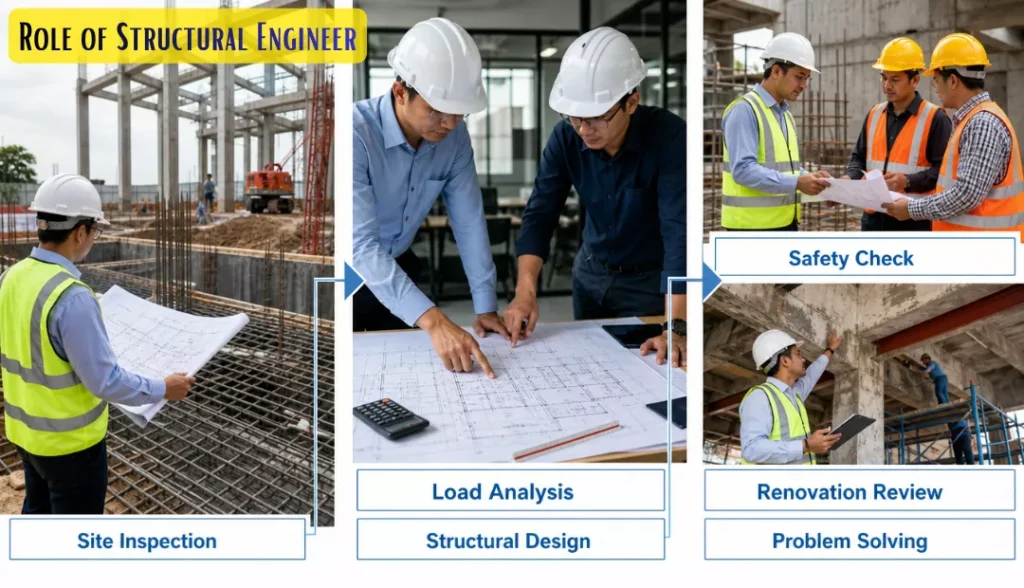
A structural engineer examines the components of a building before and during construction to ensure loads are met safely and effectively. The structural engineer calculates how foundations, beams, columns, slabs, and roof systems should be designed to support those architectural decisions safely.
Their area of work heavily relies on engineering principles, mathematics, and material science. Every support incorporated in the design should withstand loads from occupants, building components and environmental forces.
Structural engineers make sure renovations do not compromise the safety of existing buildings structural integrity. They also identify structural problems and suggest ways to fix and strengthen them.
How To Become a Structural Engineer?
Structural engineers begin with a bachelor’s degree in civil engineering or structural engineering. After that they work as a trainee under licensed engineers while completing engineering experience requirements. Many jurisdictions require engineers to pass the Fundamentals of Engineering (FE) examination, become an Engineer in Training (EIT), and later obtain a Professional Engineer (PE) license. Depending on the projects to be undertaken and the jurisdiction, additional structural engineering certification may be necessary.
Key Differences Explained
Design vs. Safety
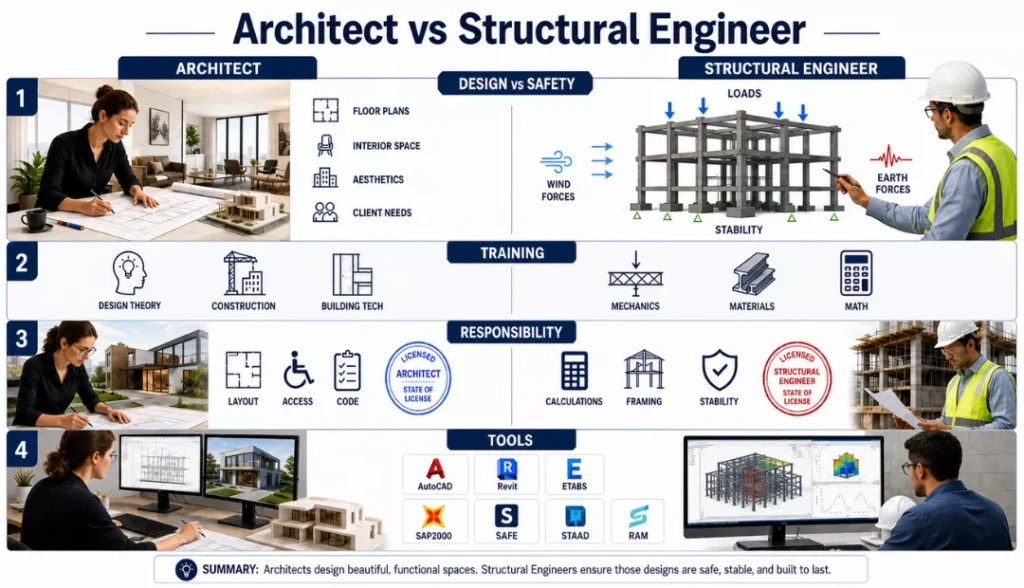
Architects create spaces that are comfortable, convenient, and pleasing to the eye ensuring the building meets the client’s needs. Structural engineers decide if a design will be able to support itself and withstand outside forces throughout the design’s lifespan.
Education and Training
An architect and structural engineer will undergo similar amounts of schooling and will receive numerous professional certifications. However, they will learn different things.
An architect will learn design and construction theory as well as building technologies while a structural engineer will learn mechanics, behaviors of different building materials, and math.
Legal Liability and Stamping Requirements
Architects are generally responsible for the architectural design, building layout, accessibility, and code compliance within their scope. Structural engineers assume responsibility for the structural system, including calculations, framing design, and the overall stability of the building.
Software and Design Tools
Structural engineers use AutoCAD and Revit, for drafting and modelling, alongside they also use structural analysis softwares like ETABS, SAP2000, SAFE, STAAD.Pro, and RAM Structural System to analyze loads and design structural members.
Do You Need Both an Architect and a Structural Engineer?
In many construction projects, the answer is yes.
A new home, multi-story building or a commercial development, or major addition usually requires both professionals because good design alone is not enough. Every architectural concept must also satisfy structural requirements before the construction starts.
However, not every project requires the involvement of both.
For a house undergoing interior improvements such as remodeling a kitchen, replacing finishes or updating cabinetry, you may only need an architect, interior designer, or design professional depending on the project’s requirements.
Conclusion
Architects and structural engineers work differently but work together to build a strong partnership on every construction project. Rather than choosing one profession over the other, most projects benefit from both the expertise. When architects and structural engineers collaborate from the earliest design stages, the result is a building that not only looks exceptional but also meets structural, safety, and regulatory requirements with fewer delays.
Dive Into More:

Dipanjan is a digital marketing professional with five years of hands-on experience across strategy building, content, and performance-driven campaigns. He has worked on building structured marketing systems that focus on reach, engagement, and measurable growth. Known for his analytical thinking and consistency, he brings a practical approach to digital execution. Outside of work, he loves cooking, painting and enjoys exploring interior setups. Connect with him on LinkedIn.