
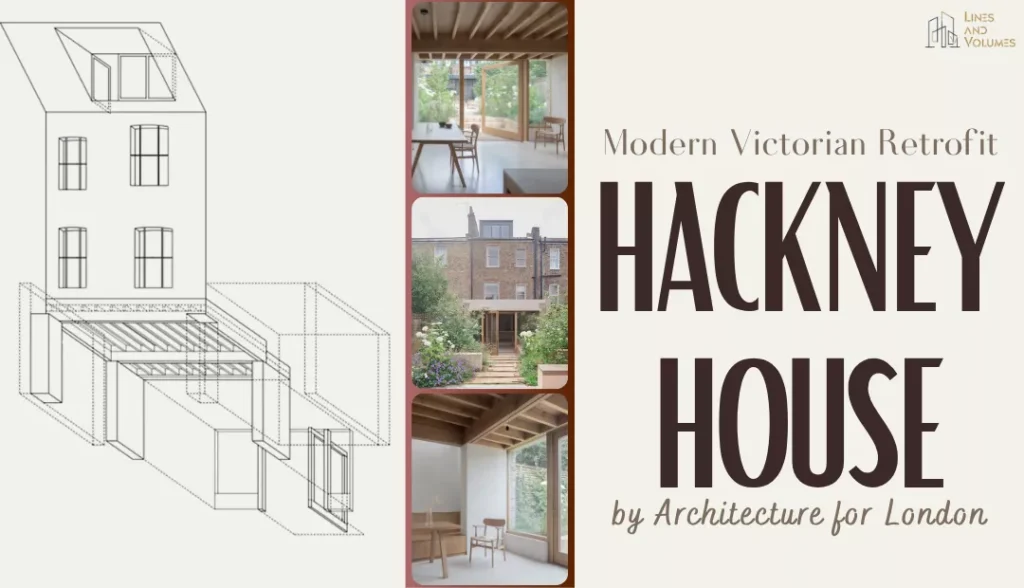
An early Victorian residence on a Hackney E8 street, known as Hackney House London, was converted into a sustainable retrofitting prototype for family living. Hackney House, designed by Architecture for London and led by architect Titas Grikevičius, combines low-carbon construction with modern family living while preserving and restoring a historic structure with exceptional care. This project is located on Parkholme Road in East London and involved the retrofit, restoration, and extension of an existing Victorian house.
The project took two years to build and finally completed in June 2024, showcases a 182-square-meter house that serves as a model for meeting the modern environmental needs of society within an older building.
This was done through the use of passive design, fossil fuel-free technologies, the use of natural insulating materials, and the implementation of thoughtful spatial interventions. The final product of the design team comes with a structure that embraces the elegance of the Victorian era while housing twenty-first century comfort and efficiency.
Key Design Features
Rear Extension
The largest addition made to the property was the new, modern extension that enhances the connection between the house and garden.
In creating a new extension the aim was to provide a space where family members would able to gather, prepare food, dine and interact throughout the day. The design also creates physical and visual connections to the garden and allows natural light to reach deeper into the interior spaces. The rear extension helps to create a stronger relationship between indoor and outdoor spaces.
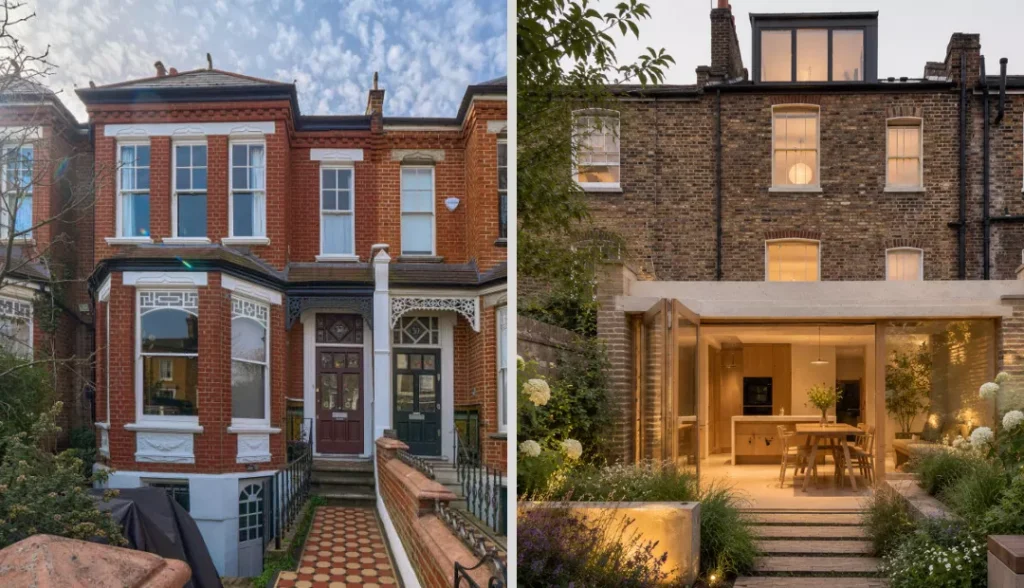
Choosing the right materials played an important role in achieving the extension’s sustainability goals. The project team selected Marshmoor brick for the extension because of its durability and compatibility with the adjacent Victorian structure. The extension also incorporates concrete lintels containing 50% ground granulated blast furnace slag (GGBS), which helps reduce the carbon footprint associated with traditional concrete construction.
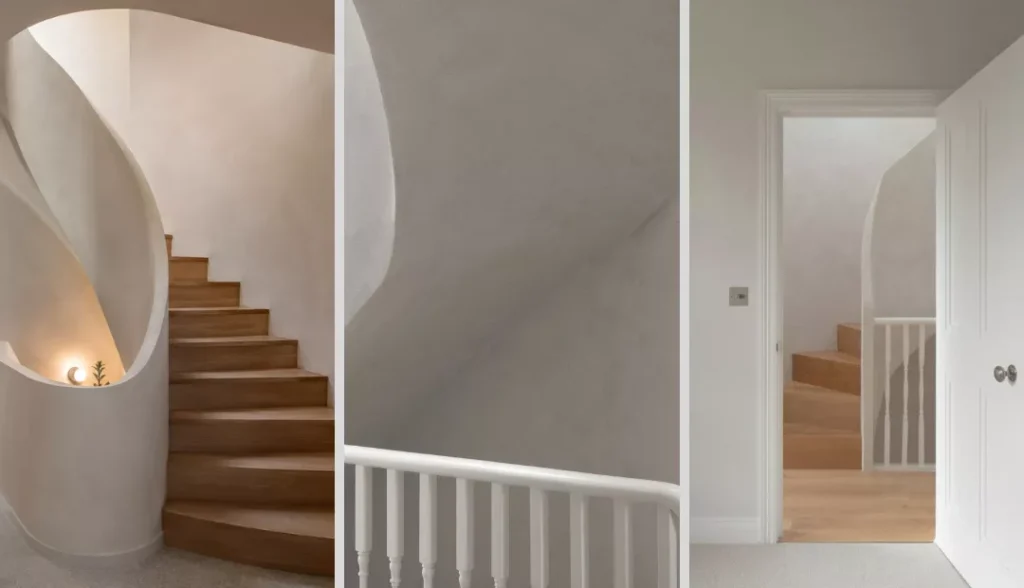
Curved Lime Plaster Staircase
The renovation centers on a sculptural curved staircase that serves as a focal point in every space it connects.
The staircase introduces a new geometry to the Victorian home that contrasts with the linear spaces and is a key element of the new design for the converted loft.
Loft Conversion
To increase usable living space without expanding the building’s footprint, the project includes a carefully designed loft conversion.
The new design of upper-level accommodation offers an extra bedroom as part of a well-designed loft in house arrangement to meet extra needs of the modern family. A generously sized dormer window introduces abundant daylight into the space while enhancing views and improving natural ventilation.
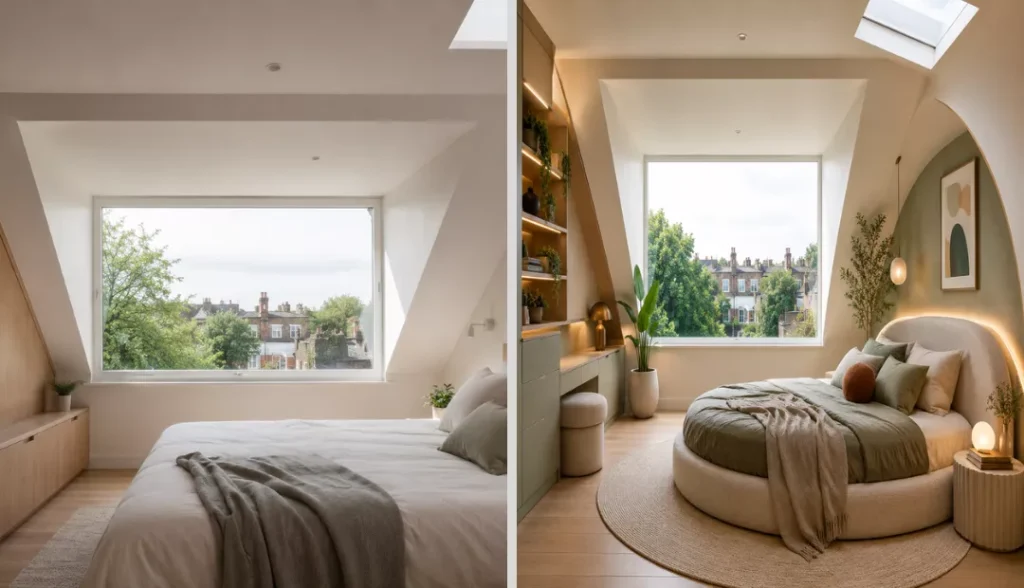
The conversion transforms previously underutilized roof space into bright and comfortable living space. The loft addition demonstrates how a well-designed intervention can transform the use of space without affecting the building’s overall structure.
Sustainable Strategies Used in the House
Fossil Fuel Free System
A key achievement of this project shows complete elimination of fossil fuels.
Hackney House is fully fossil fuel free, thanks to the innovative replacement of gas based heating with two air source heat pumps located in the rear garden.
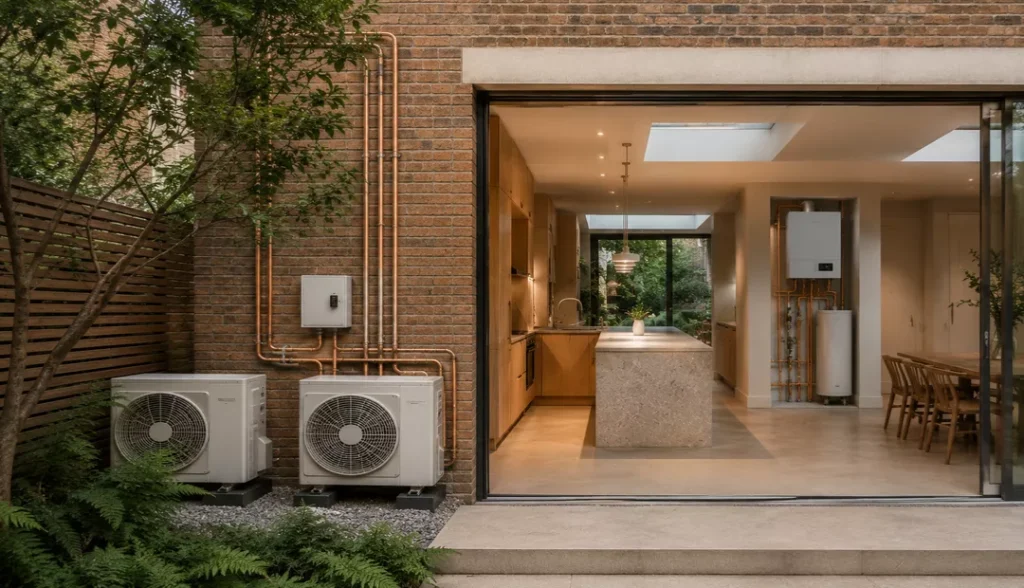
The heat pumps provide heating via an underfloor heating system, which helps to improve the comfort of the occupants and provides a significant reduction in carbon emissions.
The project helps the transformation of a Victorian housing stock to a low carbon operating system by the introduction of innovative and renewable heating technologies.
Ventilation System
A careful balance is needed between improving insulation and airtightness levels and maintaining good indoor air quality.
To meet this requirement, the design team used a Mechanical Ventilation with Heat Recovery (MVHR) system in the Hackney House London. The MVHR unit supplies fresh and filtered air into the building while recovering heat from outdoor air.
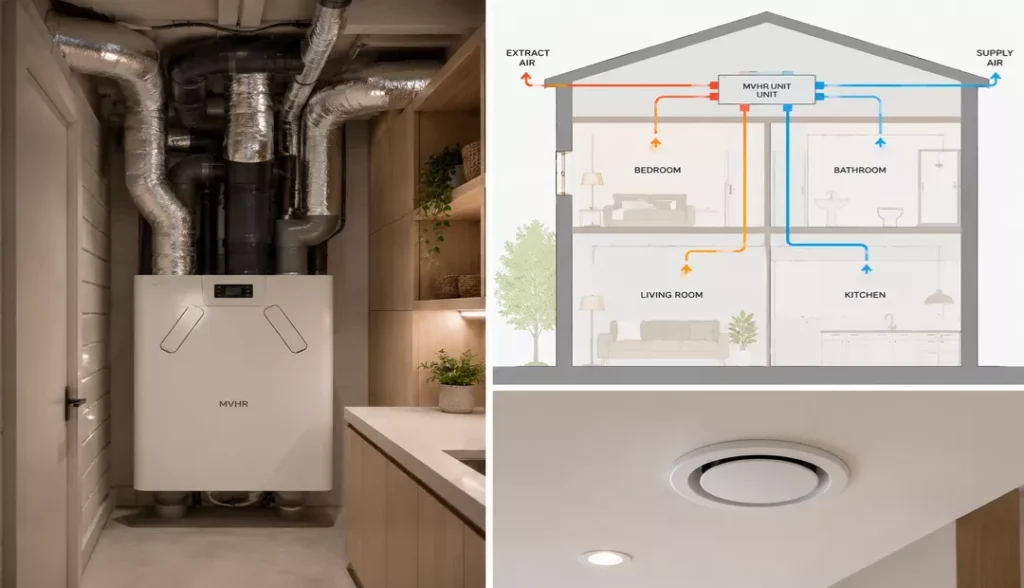
This approach offers multiple advantages and adds value to the investment:
- Consistent air quality indoors throughout the house.
- Reduced energy loss
- Improvement in the thermal comfort
- Humidity in the air evenly distributed
- Less of a chance of condensation and mold
Insulation Strategy
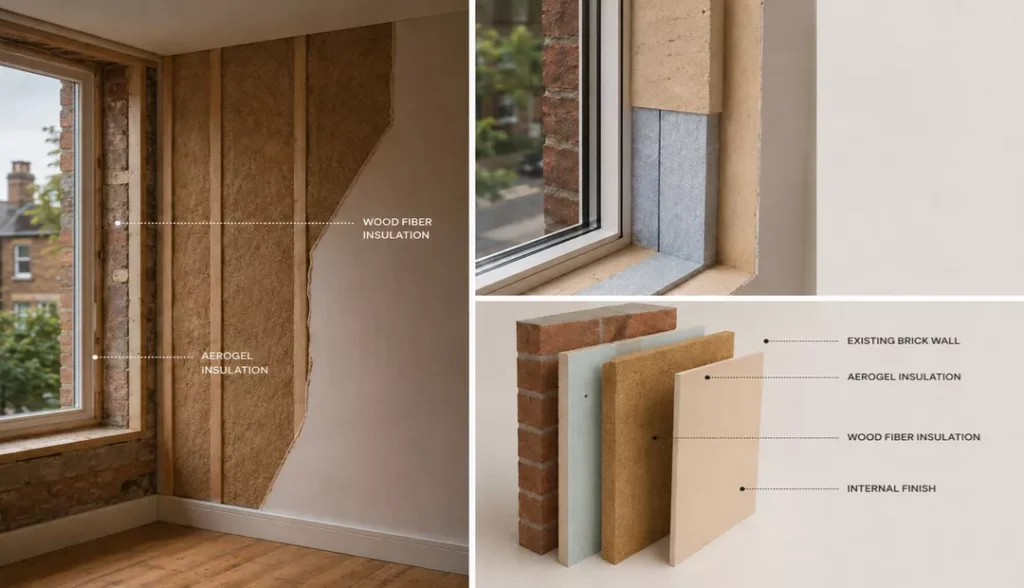
Another design element to help achieve the performance requirements is a high performing building envelope.
Natural wood fiber insulation used to insulate the internal walls of the house. This insulation increases the building’s thermal performance while maintaining breathability of the building fabric, supporting the long-term preservation of the historic structure.
A special care taken to insulate the window reveals where aerogel insulation is used. Despite its thickness, aerogel is lightweight and provides outstanding insulation.
This is useful for applications where maintaining the building’s architectural integrity is a concern.
The use of wood fiber insulation coupled with aerogel substantially reduces thermal bridging in a building. Moreover it enhances energy performance and moisture condensation within the insulation.
Embodied Energy Reduction
Composite steel and timber flitch beams chosen for the primary structural elements of the project. Compared to alternative options with higher embodied energy and carbon, this hybrid structural system offers the same level of performance, including the structural requirements.
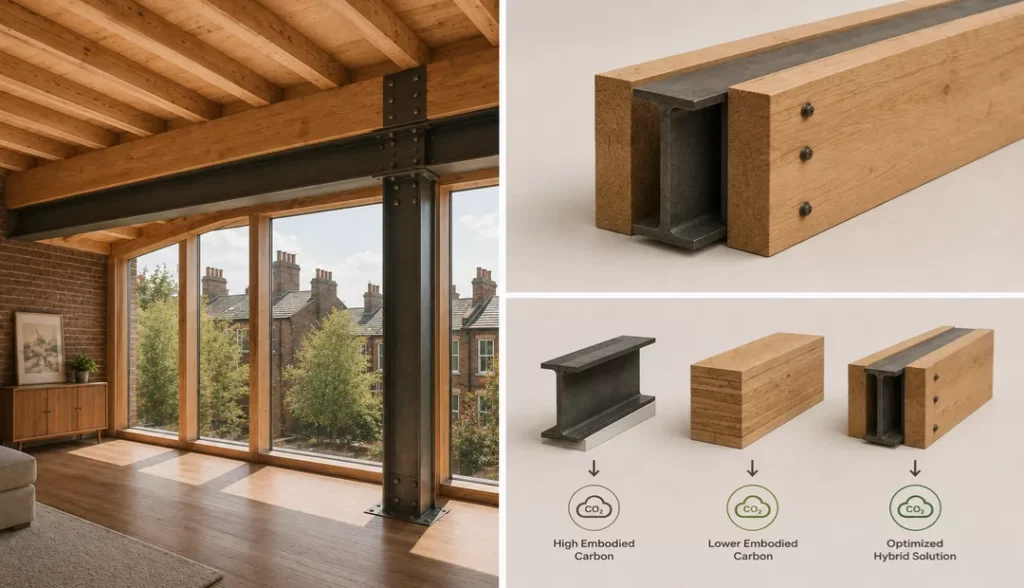
Hackney House demonstrates that by making thoughtful material decisions, the impact on the environment is minimized.
Conclusion
Hackney House shows how the character of historic buildings achieved successfully while meeting modern environmental demands. Through restoration, reuse of the existing building fabric and infrastructure and low-carbon building methods Architecture for London has built a home that looks to the future; while honoring the past.
As cities strive to achieve sustainability by reducing carbon emissions while maintaining their architectural character, Hackney House provides the perfect example of a sustainable residential retrofit.
More to explore:
- Colonial Architecture: History, Characteristics, and Examples
- El Nido de Quetzalcoatl: Serpent-Shaped Architectural Wonder
- Contemporary Victorian Interior Design Ideas By-Room

Dipanjan is a digital marketing professional with five years of hands-on experience across strategy building, content, and performance-driven campaigns. He has worked on building structured marketing systems that focus on reach, engagement, and measurable growth. Known for his analytical thinking and consistency, he brings a practical approach to digital execution. Outside of work, he loves cooking, painting and enjoys exploring interior setups. Connect with him on LinkedIn.