
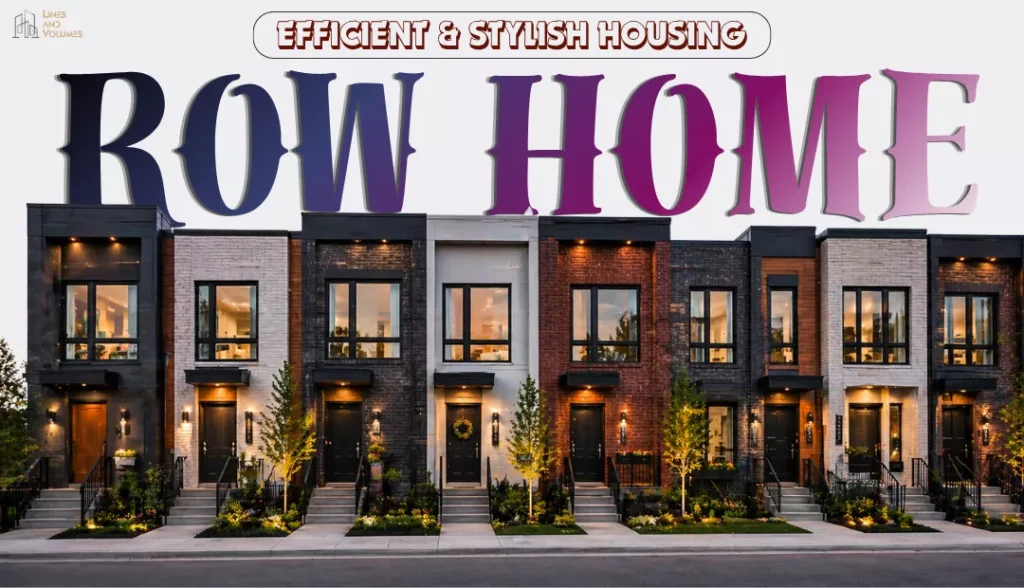
A row home or townhouse is a single-family house that shares side walls with other houses in a continuous row and features smaller, more urban-friendly home designs. Its blend of house-like autonomy with the economies of shared construction explains its continued attractiveness in congested urban locations.
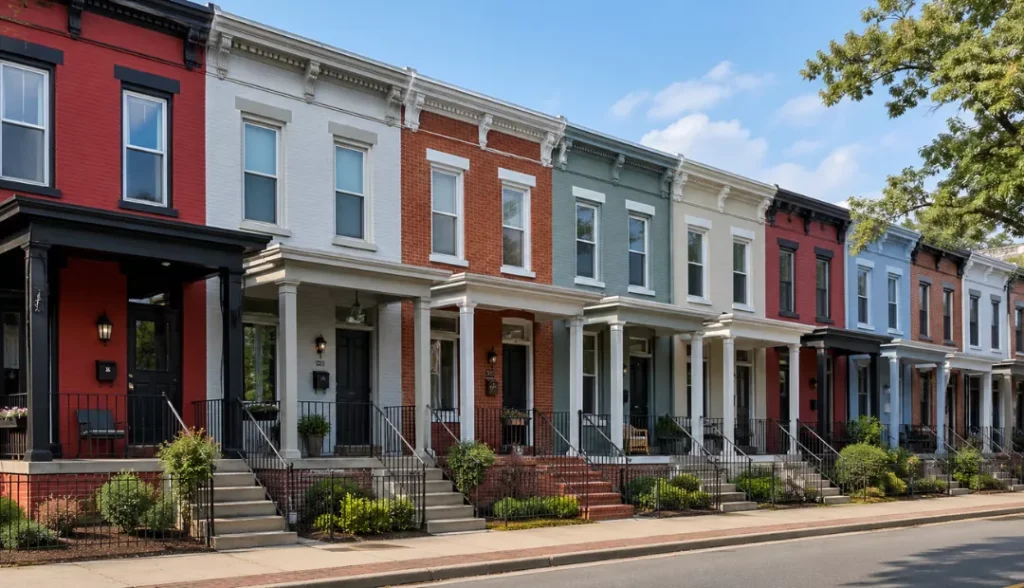
A row house has one or both side walls on the property line, with open space in the front and/or rear. Each unit has a separate entrance and usually consists of two or three floors. In cities like Baltimore, Philly, and Washington D.C., where land is much more valuable than out in the countryside of the state — row homes are pretty common since they make great use of space while maximizing walkable areas.
Historical Background
Row homes originate from Britain in the 17th and 18th centuries, notably popularised by Georgian terraced housing in London that dictated urban dense living. The model transported into the American cities during industrialisation, providing housing cheaply near jobs and infrastructure. The classic Baltimore rowhouse (or townhouse) is one of the most iconic versions of this archetype.
Key Features of a Row Home
Shared Party Walls
A row home shares one or two walls with neighboring units. This makes the layout structurally efficient and helps reduce heat loss but also means sound travels from house to house depending on quality of construction and insulation.
Narrow, Vertical Layout
Row homes are narrow houses that typically range between 12 to 20 feet wide and rise 2 to 4 storeys. Instead of spreading space out, living spaces stack on top of one another. Common sizes vary from approximately 800 to 2,200 square feet, depending on the age of the property and city.
Individual Street-Level Entrance
Each house has its own front door at street level, which separates them as any kind of apartment or condo. Most are set a few steps above street level, where small stoops combine the porch and stairway.
Small Outdoor Space
Outdoor areas are reasonably modest. Typically you get a small back yard, alley access or in the case of renovated these days, a deck on the roof.
Uniform Architectural Facade
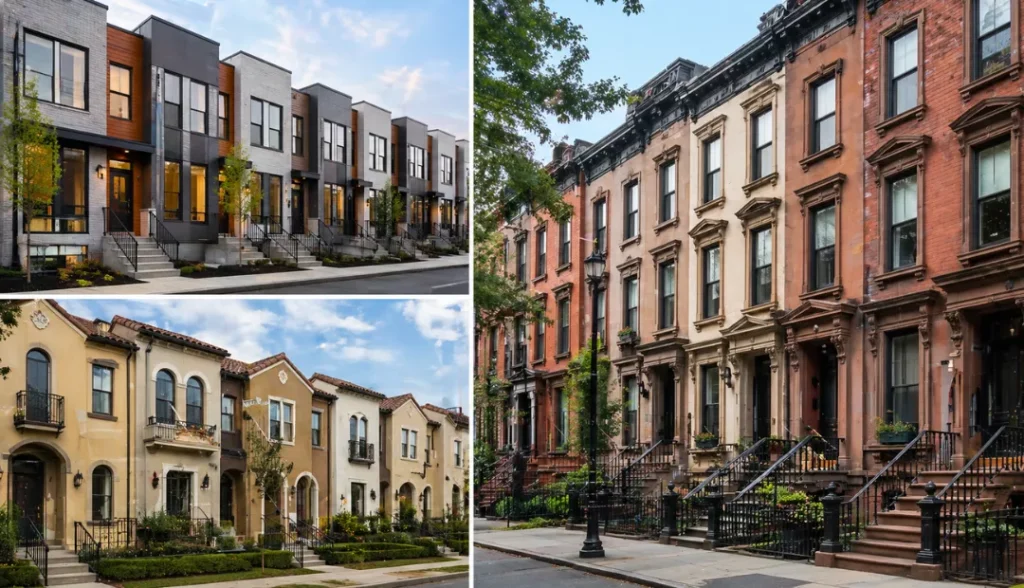
Typically neighboring homes are built in identical external materials and with repetitive design details forming a visually identical streetscape. Typical styles are Federal, Victorian and Colonial Revival, especially in older neighborhoods.
Basement / Lower Level
Most older row homes have a basement, occasionally partially below ground. They use these spaces as storage, laundry or sometimes convert them to rental units for extra cash.
Pros of Living in a Row Home
Affordability in Urban Locations
- More affordable than detached houses across the road
- Shared walls reduce construction and utility costs
Walkability & City Access
- Located in dense, pedestrian-friendly neighborhoods
- Convenience to public transport, shopping and basic daily services
No HOA (Usually)
- Traditional row homes are typically freehold properties
- Less recurring fees, fewer restrictions than condo
Energy Efficiency
- Heat retention and energy loss are reduced by the presence of shared walls, etc.
- Middle units benefit from insulation on both sides.
Community Feel
- Living near neighbors invites engagement
- For cities like Baltimore, creates a strong sense of neighborhood identity
Rental Income Potential
- Owners can turn basements or upper storeys into rental units
Cons of Living in a Row Home
Limited Natural Light
Light usually comes from front and rear surfaces with walls flanking. Interior spaces may feel darker because of this, builders likely add skylights and light wells.
Noise from Neighbours
In older homes, individual wall surface materials may not insulate sound well but vary from one home to home. At this point the quality of renovation comes into play.
Narrow Floor Plan
Narrow width hinders the flexibility of the layout. Having multiple floors means more stairs and that may not be ideal for some families.
Minimal Outdoor Space
Buyers who commercially seek gardens, spacious terraces or open areas do not find this configuration suitable for their needs.
Parking Challenges
Many of the more traditional row homes do not contain garages or driveways. It demands street parking in highly populated urban centers.
It increases demand for street parking in highly populated urban centers.
Maintenance Complexity
Properties built before 1950 need updates to plumbing, electrical systems or structural elements that increase in longer-term expenses.
Row House vs Other Housing Types
Row Home vs. Townhouse
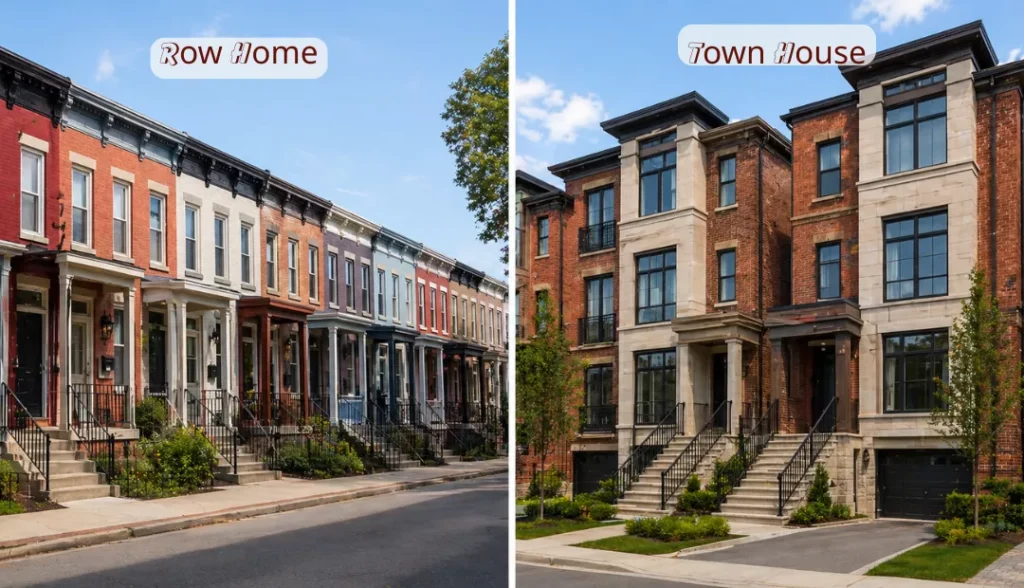
Generally, row homes pertain to older, uniform housing in historic urban areas and townhouses are more often associated with newer developments. Townhouses may include different layouts, amenities, and sometimes HOA fees, while row houses typically do not.
Row Home vs. Semi-Detached House
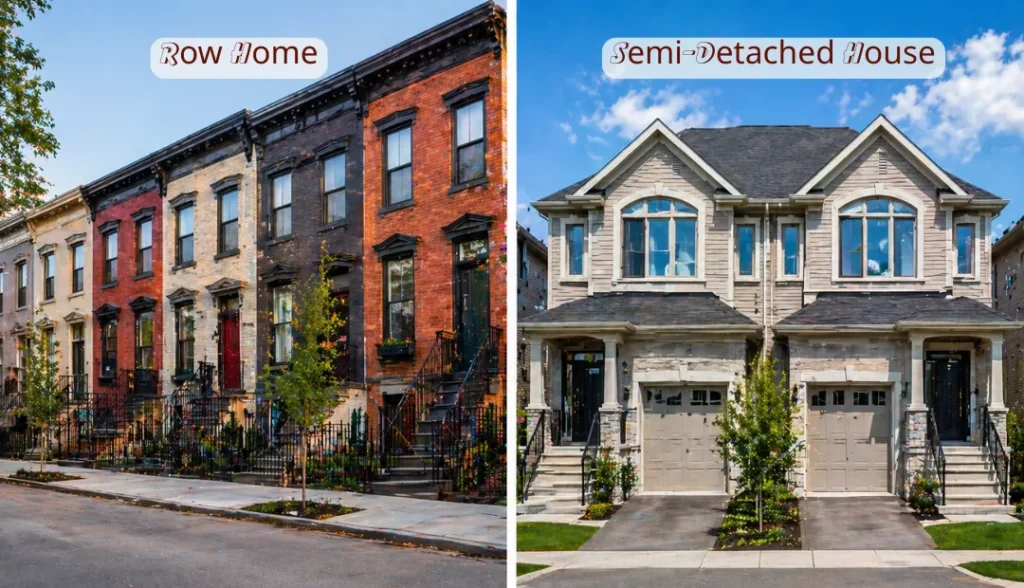
A semi-detached home is a single structure that shares only one wall with the next unit. In contrast, row homes form an uninterrupted line of three or more houses, while semi-detached homes include only two adjoining units. This impacts width, sun exposure and typically pricing whereby semi-detached homes usually provide additional space.
Row Home vs. Condo
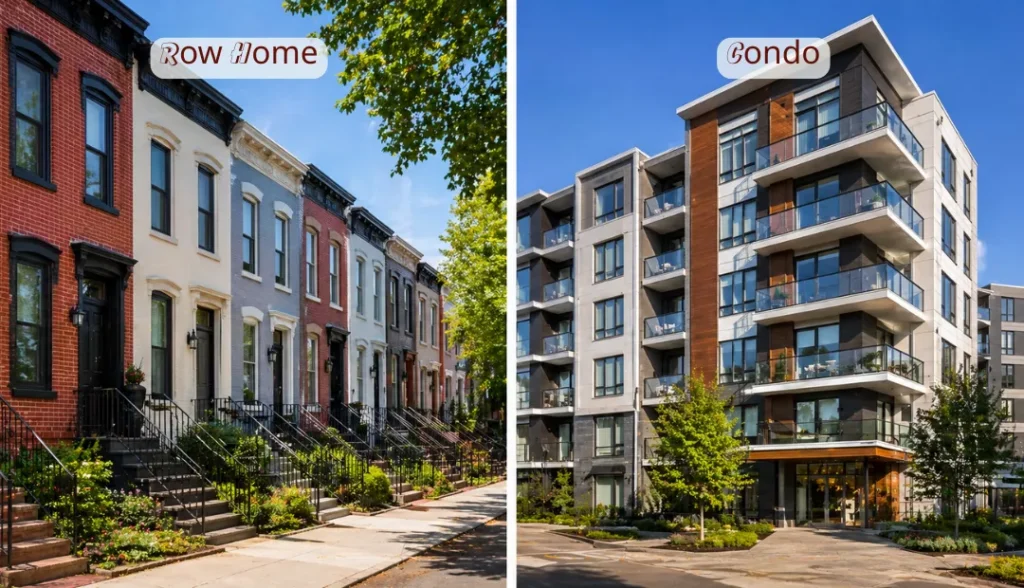
A condo is basically a house where you own just the inside part, which means all the structural parts outside are shared like buildings and common areas. With row homes, you own the building and your land.
FAQs:
Row homes are ideal for those looking for a middle ground. You have more freedom than when you live in an apartment but also cheaper than a single-detached home.
Although the terms are sometimes used interchangeably, a row home implies an older type of urban housing that typically features unique historic design and architecture; townhouse is often used to describe newer developments.
Just to name a few, row homes are mostly found in cities like Baltimore, Philadelphia, Washington D.C., Boston and Brooklyn.
Generally they have a small rear yard or patio, typically 100 to 600 square feet.
You May Also Like:

Navdeep is a PHP programmer by profession, & rider by passion with a strong interest in writing, reflection, and travel. His writing draws from daily experiences across online and real-world settings, often influenced by an interest in interior design and how spaces affect mood and function.