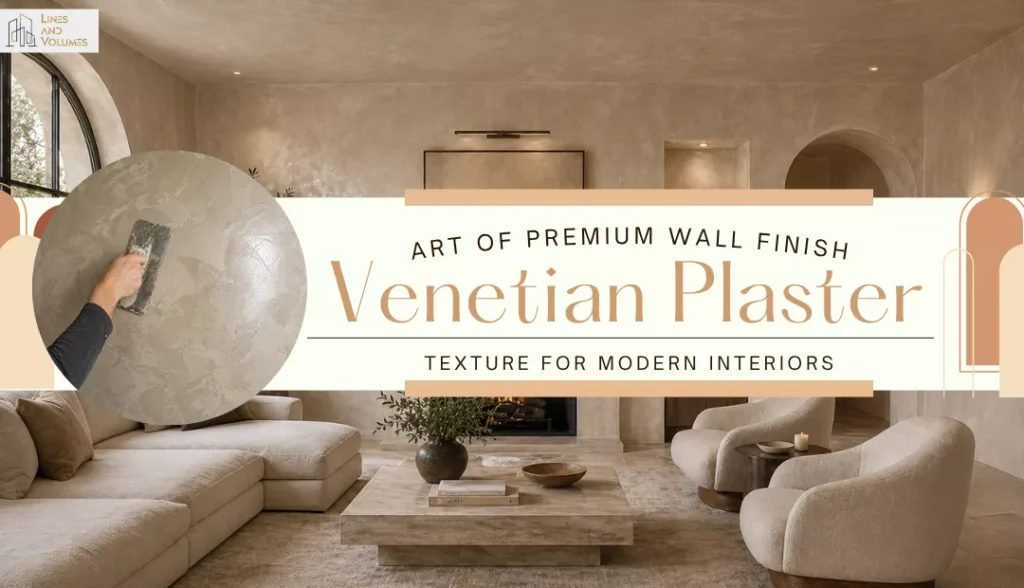
Venetian plaster, or stucco veneziano is a wall-finishing technique that consists of multiple layers of thinly applied lime putty with fine marble dust, producing a lustrous finish. The final coat can remain matte or take on a high-gloss sheen after polished.
Developed in 16th-century Venice, as a practical and less expensive alternative to solid marble, it gave artisans the ability to recreate the visual of stone without the economic burden and cost. Even today it sets apart not only by its appearance but the way it becomes part of the wall through a mineral process. Not just like paint sitting on top.
Understanding Venetian Plaster
It’s a decorative wall finish made from lime or gypsum combined with fine stone dust, applied in thin layers and compressed through burnishing to create a smooth, stone-like surface.
It is a mineral based system that builds depth, not thickness, resulting in finishes from matte and velvety to highly polished and reflective.
Composition
Typically made of lime putty or gypsum base, and crushed marble or travertine dust mixed with natural or synthetic pigments. But these days, water-based formulations have low levels of volatile organic compounds making them environmentally compatible option than many synthetic finishes while retaining essential performance characteristics.
Finish Types
Lustro finishes are highly burnished to achieve a high gloss, marble-like finish that reflects light. Matte finishes are (not really a glaze) with softer burnishing to create a lighter, more subdued and less lustrous look. Textured finishes (grassello) capture movement from the trowel, emphasizing material variation over smoothness.
How It Is Different from Traditional Plaster
Venetian plaster is applied in several thin layers and then burnished—different from regular plaster or paint which cannot be compressed. The process provides dimension, movement and luster from within the material instead of a surface finish.
Venetian Plaster Finish Styles and Effects
High-Gloss Polished (Lustro)
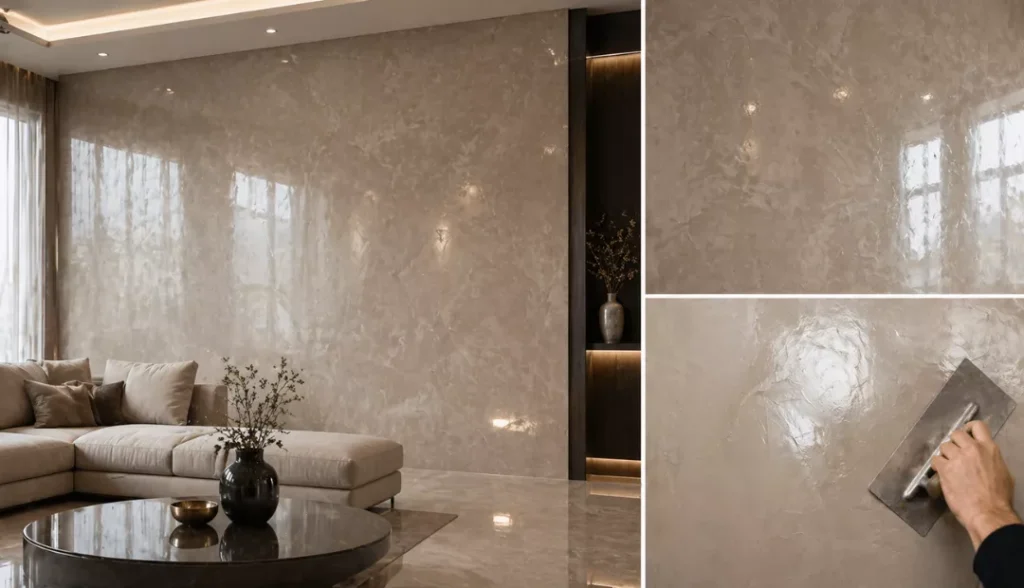
The most sophisticated is high-gloss polished Venetian plaster. The applicator burnishes intensively three or more closely interconnected layers. This process results in a smooth, reflective surface that is very similar to polished marble – perfect for contemporary or premium interiors where the interaction of light is important.
Matte / Velvet (Velato)
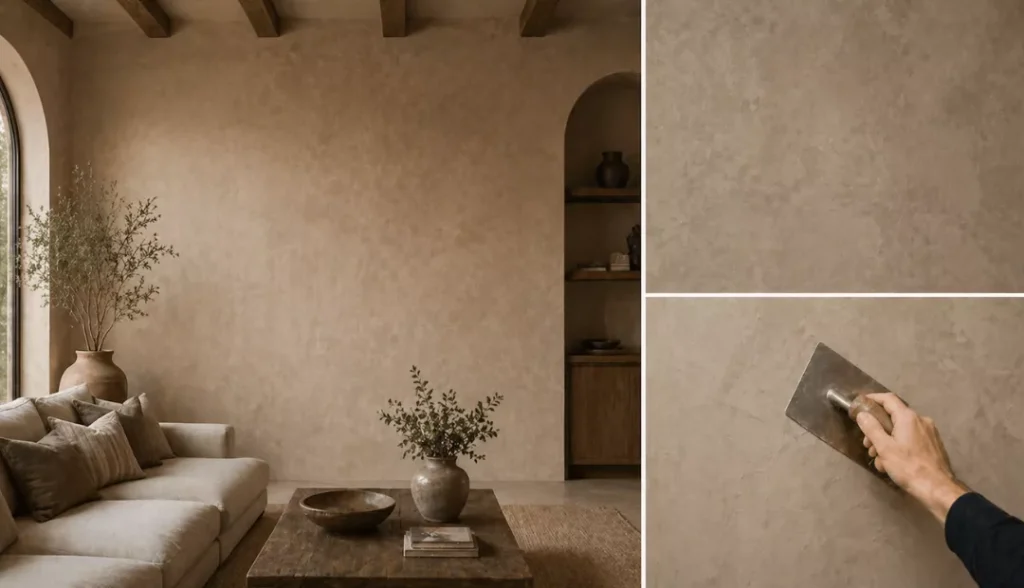
Velato finishes rely on a simple burnish for minimal surface manipulation, letting the patina and tone of the wood shine through muted depth without gloss. The effect feels warm, more muted, and ideal for rustic, Mediterranean, or Tuscan-inspired spaces where subtlety trumps shine.
Textured (Grassello / Marmorino)
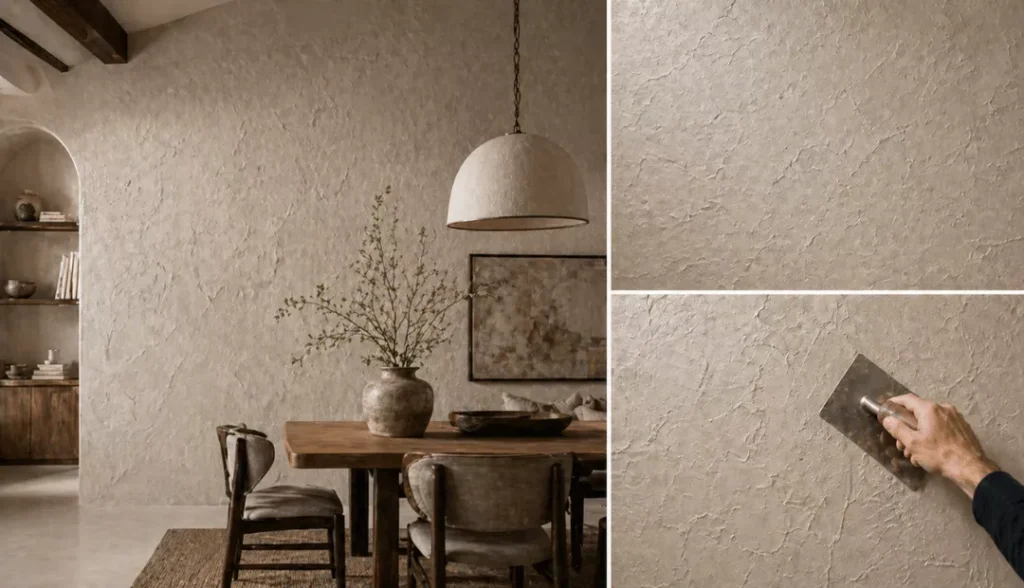
In textured finishes, applicators generally leave the top coat with trailing trowel marks or bumps. This creates a true stone-like, tactile surface and gives more wiggle room during application, which is why beginners often prefer this technique.
Travertine Effect
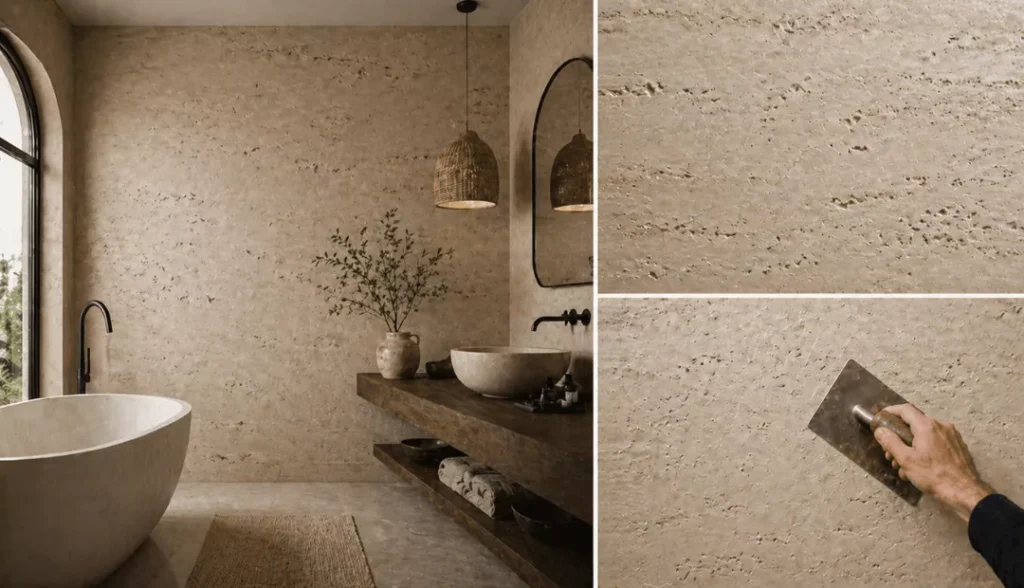
This is done by scraping (or rearranging) the very last applied layer with a tool back into shape in a circular movement. This process replicates the natural pitting and variance of travertine stone— lending a more architectural, more organic quality to the wall.
Color Guidance
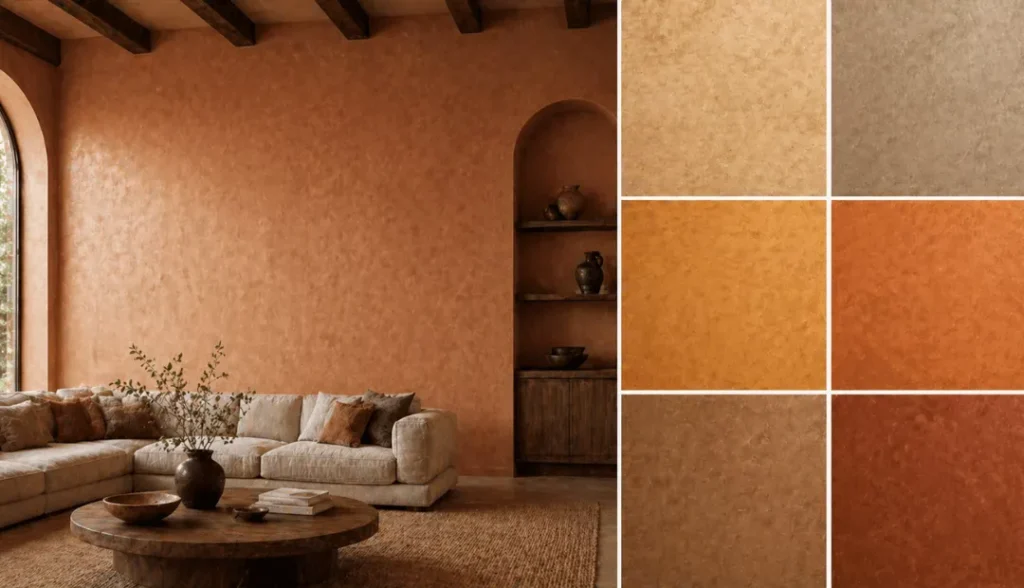
Unlike paint that sits on top, this plaster introduces color through pigments mixed into the base. Designers have long preferred warm tones like ochre, terracotta, and raw umber. An important detail is that burnishing tends to darken the color somewhat, so the mix may appear slightly brighter than the final result.
Conclusion
Venetian plaster occupies a completely autonomous realm, as it calls for an intersection of material science and artistry. It is more than merely wrapping a wall, it is about how that wall interacts with light, air and time.
When executed correctly, it does something most finishes cannot. Instead of feeling like a layered surface, it starts to feel more like substance.
Don’t Miss This:
- Can You Paint Vinyl Cladding Exterior Like A Pro
- What is Grouting in Construction?
- Popular Types of Tile for Modern Home Interiors

Navdeep is a PHP programmer by profession, & rider by passion with a strong interest in writing, reflection, and travel. His writing draws from daily experiences across online and real-world settings, often influenced by an interest in interior design and how spaces affect mood and function.