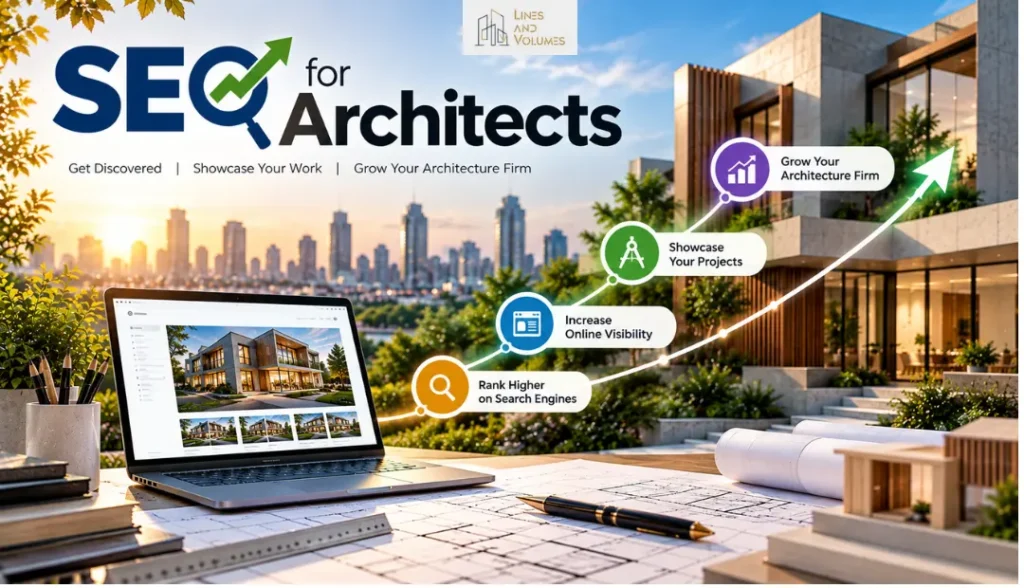
SEO means getting your brand found online when someone is searching for a product or service. SEO for architects helps improve your firm’s visibility in Google Search, Google Maps, image results, and AI-generated answers. When someone searches for an architect to build a new home or renovate an existing property, SEO helps your firm appear in relevant search results. In this guide, we discuss how to attract the right visitors and turn website traffic into client inquiries.
SEO helps people find your brand online when they search for a product or service. For architects, it improves your firm’s visibility in Google Search, Google Maps, image results, and AI-generated answers. When someone searches for an architect to build a new home or renovate a property, SEO increases your chances of appearing on the first page of Google.
What is SEO for Architects?
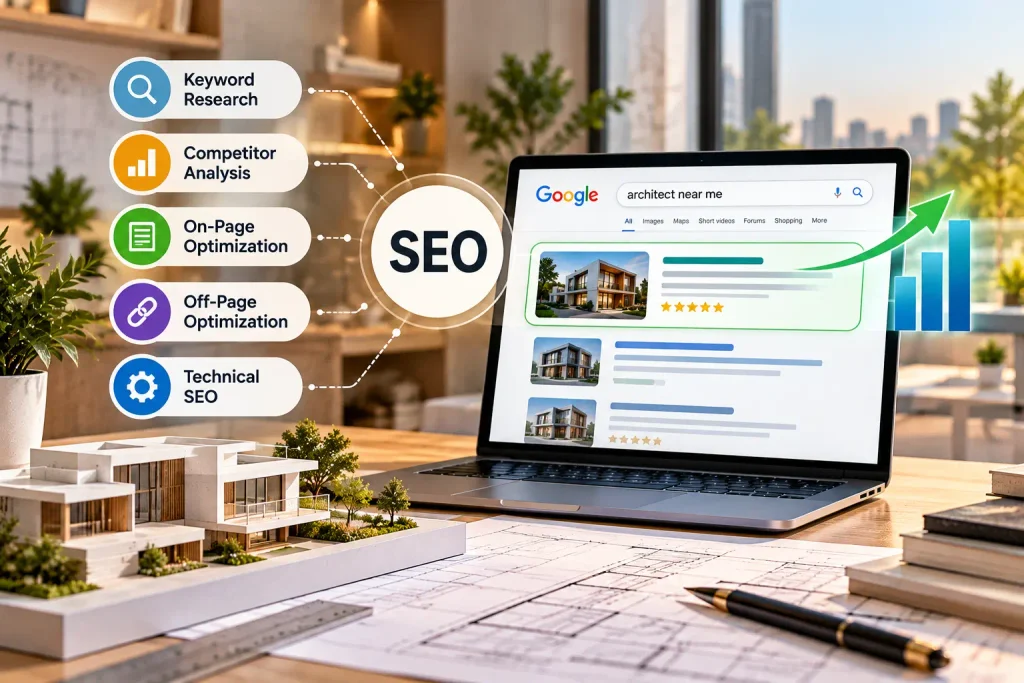
It is the process of optimizing an architecture firm’s website to improve its search engine rankings and attract more clients organically. The SEO process includes keyword research, competitor analysis, on-page, off-page and technical fixes. Performing SEO on your site helps clients find your business online; for example, if someone searches the keyword “architect near me,” and proper SEO work has been done, your site will show up at the top of the SERP results. This makes you stand one step ahead of your competitors.
What to Focus on
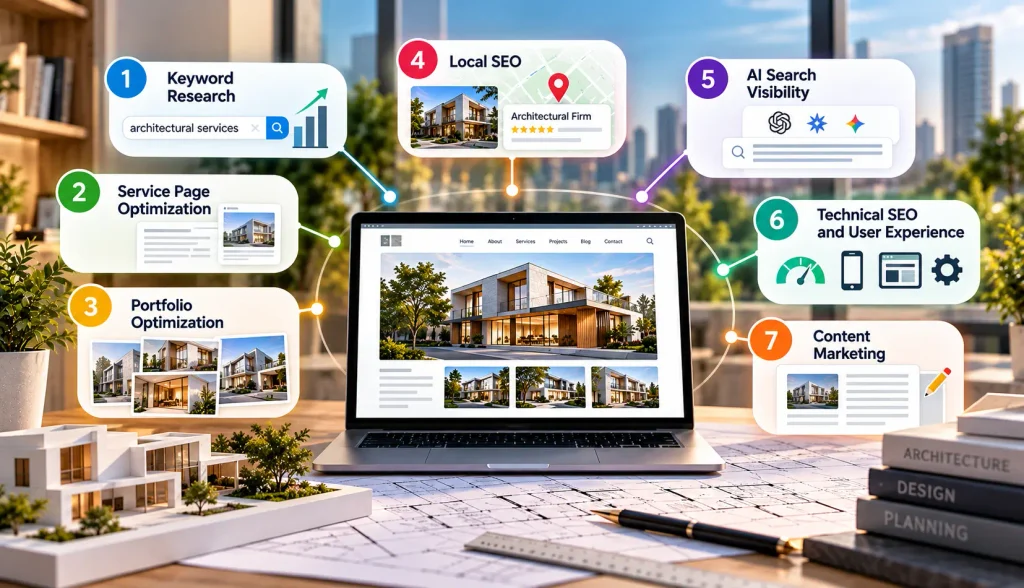
Keyword research: Find and decide on which search terms your firm should appear for when people are looking for architectural services. It could be residential, custom-made, or renovation projects.
Service page optimization: Create dedicated pages for your main services and the locations you serve.
Portfolio optimization: Showcase completed projects with high-quality images, descriptive captions, and details about your design approach. This helps potential clients evaluate your experience and gives search engines useful context.
Local SEO: Keep your business information accurate and always keep your Google Business Profile optimized to show users the latest updates. Keep uploading new images and videos of new projects made by your firm.
AI search visibility: Make your services, project details, professional experience, and service areas easy to understand. Clear, credible information can help search engines and AI tools interpret your firm’s expertise.
Technical SEO and user experience: Improve page loading speed, mobile usability, website navigation, and indexing so visitors and search engines can access your content easily.
Content marketing: Publish helpful articles that answer common questions about architectural services, project costs, design processes, and building planning.
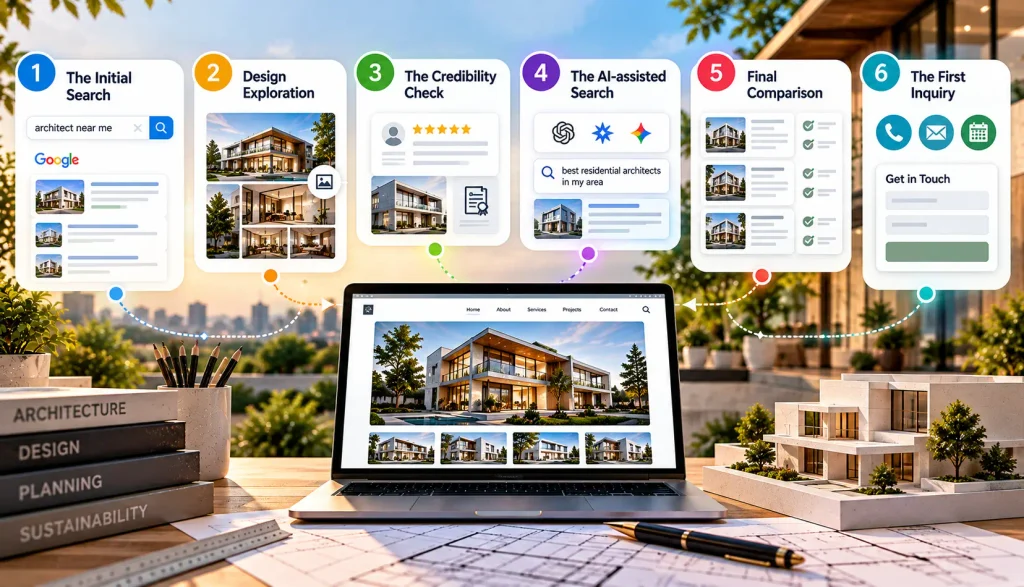
Six Moments a Potential Client Searches for Your Architecture Firm
A lot depends on how your architecture firm is positioned in the industry, including its location, service type, and specialization.
1. The Initial Search
Let’s suppose someone wants a custom-built house or to extend their property, so they usually search for an architect who handles that type of project in their locality. If your firm handles such a service, a dedicated page for that service increases your chances of getting leads.
2. Design Exploration
Before contacting an architect, potential clients often browse completed projects to see which styles, layouts, and design approaches appeal to them. Detailed project pages, testimonials, descriptive image names, and relevant project information make a first impression on clients’ decision-making when choosing you. It also helps your work appear in search results, including Google Images.
3. The Credibility Check
A recommendation from a friend or colleague often leads to a Google search. People want to verify your experience, explore your portfolio, and learn more about your firm. An up-to-date website with clear information about your practice helps build that confidence.
4. The AI-assisted Search
Due to AI advancements, some clients now ask ChatGPT or Google’s AI-powered search tools to recommend residential architects in their area. This makes your website visibility in AI search worth considering alongside traditional ways like SEO. Use clear service descriptions, location-specific content, detailed project pages, and credible information about your firm to help search engines and AI tools understand your expertise and the areas you serve.
5. Final Comparison
Once clients shortlist a few firms, they start comparing project experience, design processes, fees, timelines, and client reviews. Your website should answer these common questions upfront so potential clients understand what working with you involves before making contact.
6. The First Inquiry
A potential client is ready to discuss their project. Make the next step simple with a visible phone number, an easy-to-find contact form, and clear instructions on how to arrange an initial consultation. A strong search presence brings people to your website, but a straightforward contact process helps turn that visibility into inquiries.
Final Thoughts
From an SEO point of view, it’s about helping the right people discover your work and the services you provide. From service pages and project portfolios to local SEO and AI-assisted search, every part of your online presence can help potential clients learn more about what you offer.
Start with the basics, identify relevant keywords, improve your main service pages, add useful information to your portfolio, and make your contact details easy to find. The goal is to make sure that when someone searches for an architect with the skills and experience, they have a better chance of finding your firm.
Read More:
- How To Use AI in Property Valuation & Lead Generation
- How Architects Present Design Concepts
- How to Set Up Google Ads for Architecture Firms

Dipanjan is a digital marketing professional with five years of hands-on experience across strategy building, content, and performance-driven campaigns. He has worked on building structured marketing systems that focus on reach, engagement, and measurable growth. Known for his analytical thinking and consistency, he brings a practical approach to digital execution. Outside of work, he loves cooking, painting and enjoys exploring interior setups. Connect with him on LinkedIn.