
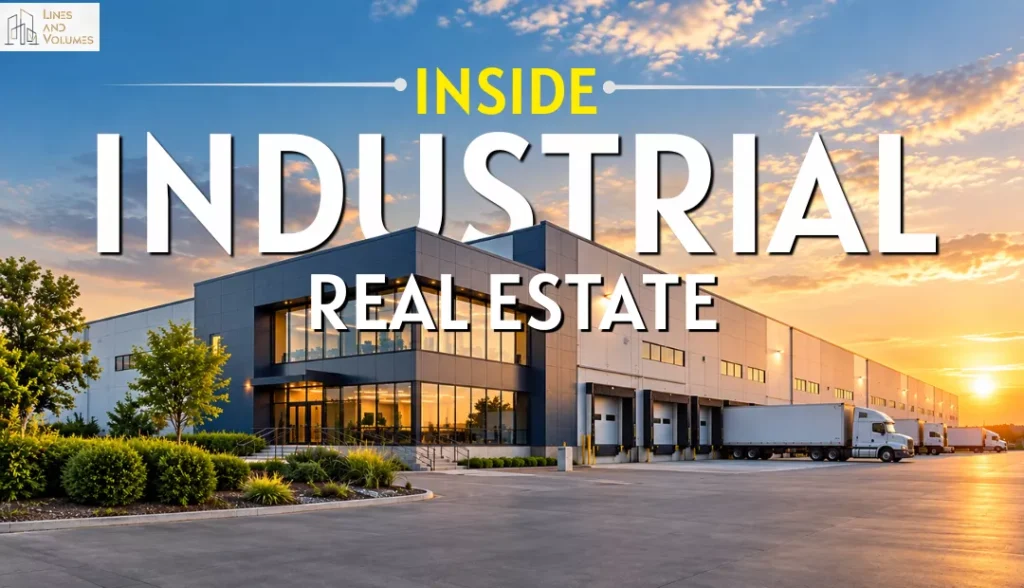
Industrial real estate encompasses properties used for manufacturing, distribution, research, production, logistics, and storage facilities. From manufacturing to storage and distribution, industrial facilities play a role in bringing many everyday products to you.
Industrial real estate is a key part of the economy. It generally falls into three main groups: warehouse and distribution, manufacturing and flex industrial properties.
Main Takeaways at a Glance:
- Warehouse and distribution facilities use high clear heights, wide column spacing and multiple loading docks to support inventory storage and the efficient loading and unloading of goods.
- Manufacturing units emphasize production requirements, with features such as reinforced floors, sufficient power capacity and specialized spaces for equipment and operations.
- Flex industrial spaces offer a combination of warehouse or light manufacturing areas and finished office space, making them suitable for companies that need multiple functions within a single property.
- Unlike retail and office properties, which often prioritize access to customers and employees, industrial properties typically favor locations near transportation infrastructure such as highways, railways, airports and seaports.
What Drives Demand for Industrial Real Estate?
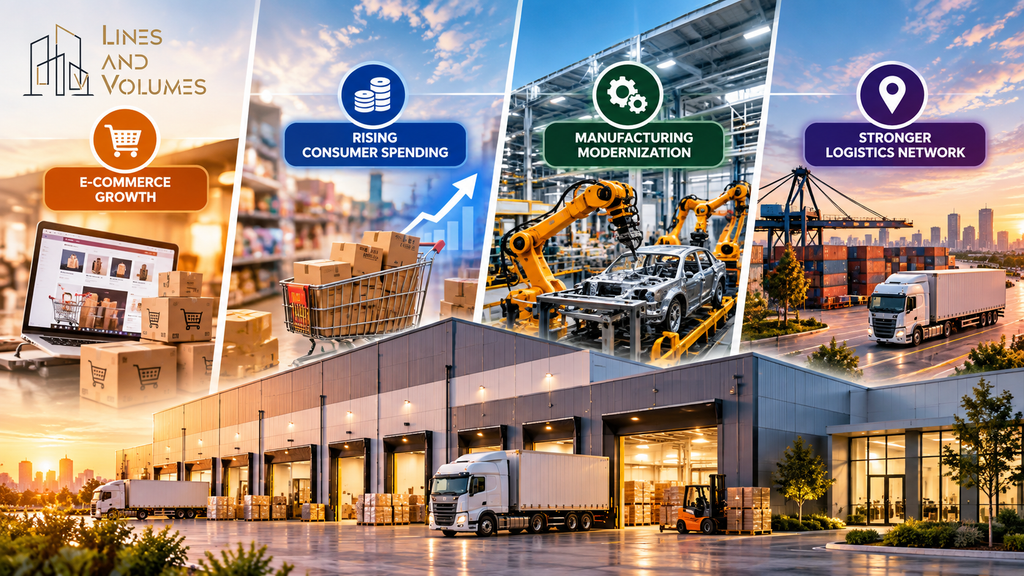
The global industrial real estate market continues to experience demand, with the market projected to grow from $294.13 billion in 2026 to $359.69 billion by 2030.
E-Commerce and Last-Mile Logistics
The rise in e-commerce growth drives demand for industrial properties. Online retailers need warehouses and fulfillment spaces to store inventory, process orders and prepare shipments. As consumers’ increasing expectations for same-day delivery, businesses also require storage facilities closer to the population.
As a result, the importance of last-mile logistics has increased, as goods make their way through the final stage of the supply chain before reaching the customer.
Consumer Spending and Consumption
Consumer spending creates a direct connection between economic activity and industrial property demand. As consumers and businesses purchase more goods, companies need additional space to manufacture, store, distribute, and replenish those products. More goods moving requires a strong supply chain to address warehouse, distribution, and manufacturing capacity.
Manufacturing Modernization and Technology
Demand for industrial real estate is growing due to advancements in manufacturing. New production technology and equipment often require more from a facility in terms of power, floor strength, clear height, and layout.
This has led to the integration of various functions of the supply chain and other activities within a single, unified development. Manufacturing and related activities are integrated with research and development, distribution and logistics, and other services.
How the Supply Chain Works
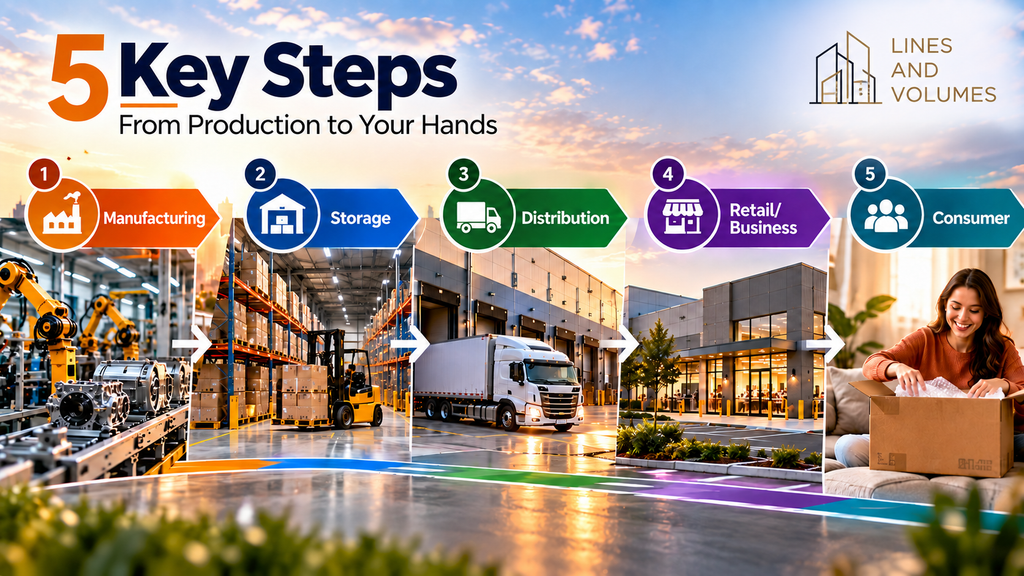
You can think of the process like this:
Manufacturing → Storage → Distribution → Retail/Business → Consumer
Industrial real estate supports different stages of the supply chain. Manufacturing facilities produce goods, warehouses store them, distribution centers organize and move them, and last-mile facilities position products closer to the final customer.
For example, imagine a company manufactures refrigerators.
- Manufacturing: The refrigerators are produced at a manufacturing facility.
- Storage: Finished refrigerators may move to a warehouse where they remain until they’re needed.
- Distribution: A distribution center receives the products, organizes them, and sends them to different markets.
- Retail/Business: The refrigerators move to a retailer or directly to another business.
- Consumer: The final product reaches the person who bought it.
Frequently Asked Questions
What is industrial real estate?
Industrial real estate represents commercial properties designed for activities such as manufacturing, warehousing, distribution, storage, and logistics.
What are the main types of industrial real estate?
The main types include warehouse and distribution facilities, manufacturing properties, and flex industrial spaces.
What is the difference between industrial and commercial real estate?
Industrial real estate is a type of commercial real estate. While commercial real estate covers properties used for business activities more broadly, industrial properties focus primarily on manufacturing, storage, distribution, and logistics.
What are industrial properties used for?
Industrial properties support many stages of the supply chain. Businesses use them to manufacture products, store raw materials and inventory, process and fulfill orders, distribute goods, and manage logistics operations.
Read More:
- Architect Marketing Plan for Online Presence
- Real Estate Lead Generation for Agents Who Want Results
- How Architects Present Design Concepts

Dipanjan is a digital marketing professional with five years of hands-on experience across strategy building, content, and performance-driven campaigns. He has worked on building structured marketing systems that focus on reach, engagement, and measurable growth. Known for his analytical thinking and consistency, he brings a practical approach to digital execution. Outside of work, he loves cooking, painting and enjoys exploring interior setups. Connect with him on LinkedIn.