
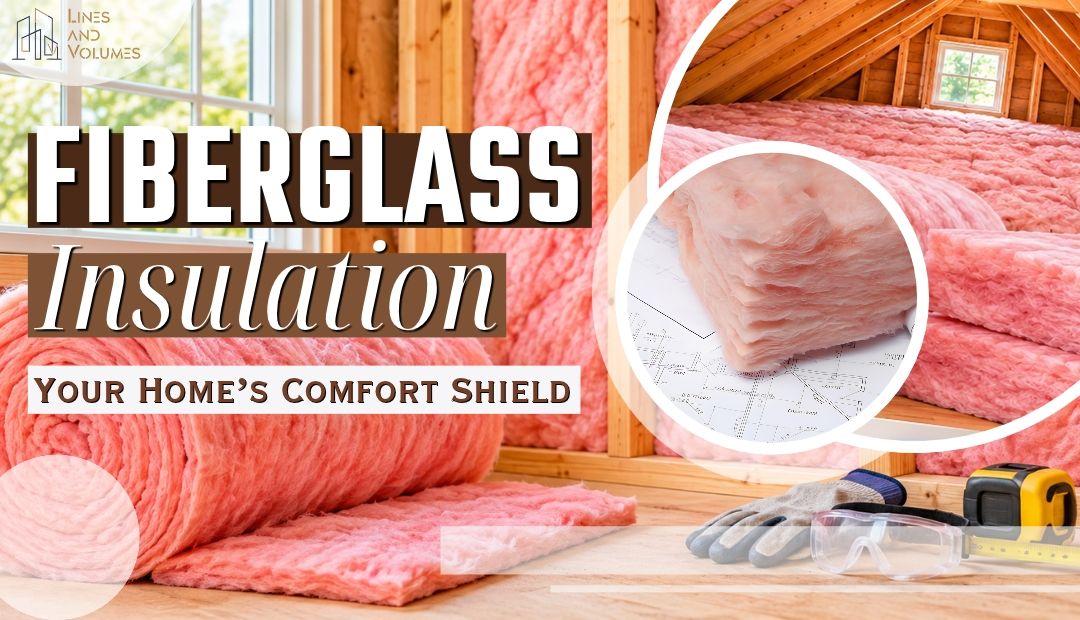
Fiberglass insulation is commonly used in homes to minimize heat transfer through walls, attics, floors, and ceilings. It is made from fine glass fibers, which help to maintain indoor temperatures and improve energy efficiency when installed correctly. It comes in several forms, making it suitable for different spaces and construction.
Understanding how fiberglass insulation works, where it performs well, and the factors that influence its effectiveness can help you to choose a suitable product.
What Is Fiberglass Insulation?
Fiberglass insulation is manufactured by melting glass and spinning it into fine fibers. The fibers create a structure that traps air pockets and slows the transfer of heat. Some products use recycled glass and binding materials.
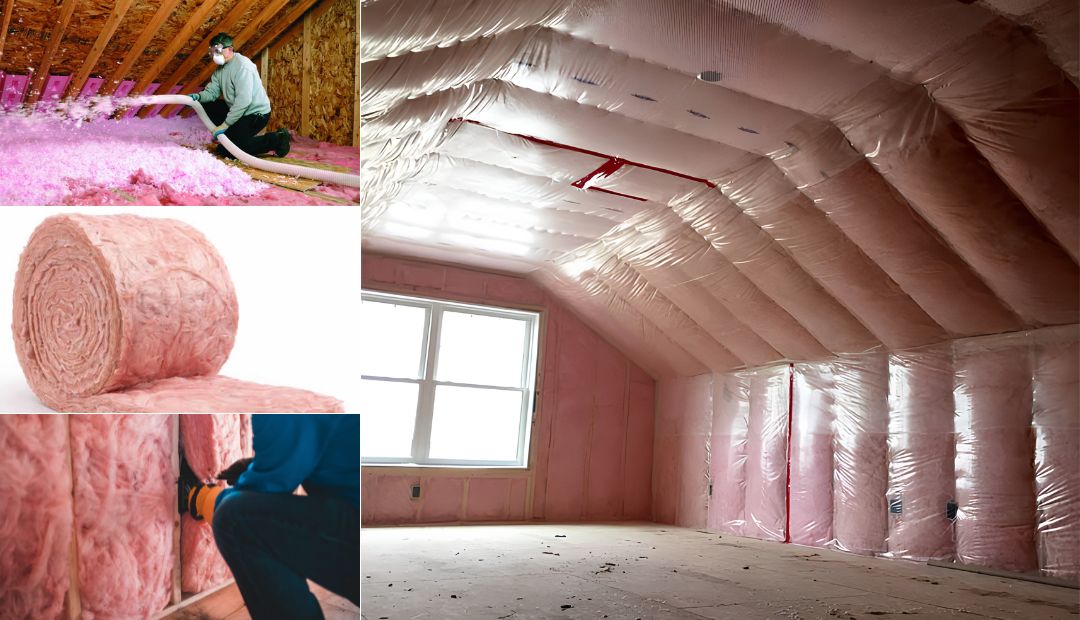
The material helps to limit the flow of heat through an insulated area. It can reduce heat loss in winter and slow heat entering from the outside in summer. Performance depends on product quality, thermal resistance, insulation thickness used and installation quality.
Common Types of Fiberglass Insulation
Fiberglass insulation is available in several forms. The right choice depends on the space, its accessibility, and the building’s insulation requirements.
Fiberglass Batts and Rolls
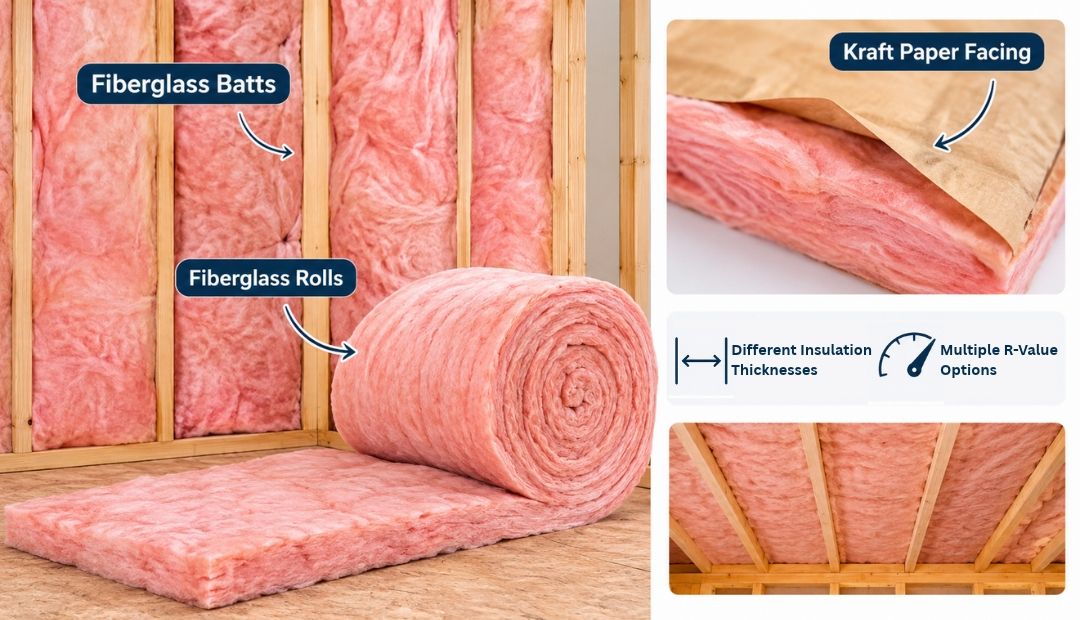
Batts and rolls are versatile products that installers often place between wall studs, ceiling joists, and floor timbers. Manufacturers precut batts, while installers can cut long rolls to the required length. Both are available in various thicknesses and R-values.
Some products have a thin paper sheet on the facing side, such as kraft paper. A facing sheet acts as a vapor retarder and slows water vapor movement through the assembly. Make sure it is appropriately placed, as placing an unsuitable vapor retarder may contribute to dampness and other moisture problems.
Blown-In Fiberglass Insulation
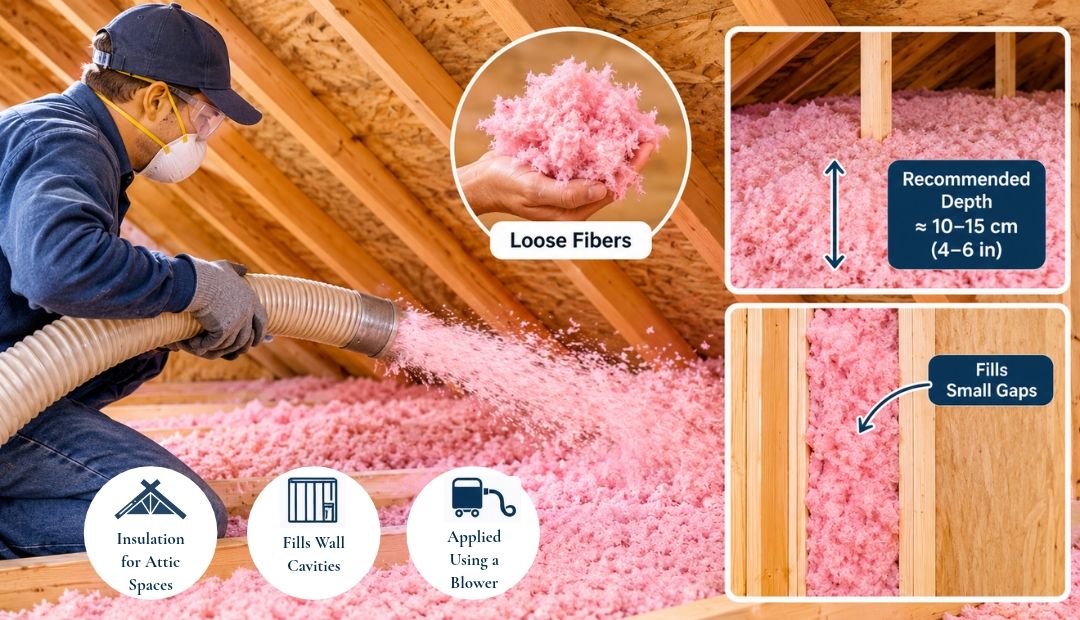
Blown-in fiberglass includes loose fibers installed with specialized blowing equipment. It is commonly used in attics and suitable to fill enclosed wall cavities. The loose material is easy to install and can fill spaces around framing and reach small gaps, making it useful where pre-cut batts and rolls are difficult to fit.
For the desired thermal performance, installers must distribute it according to the manufacturer’s specified depth and density.
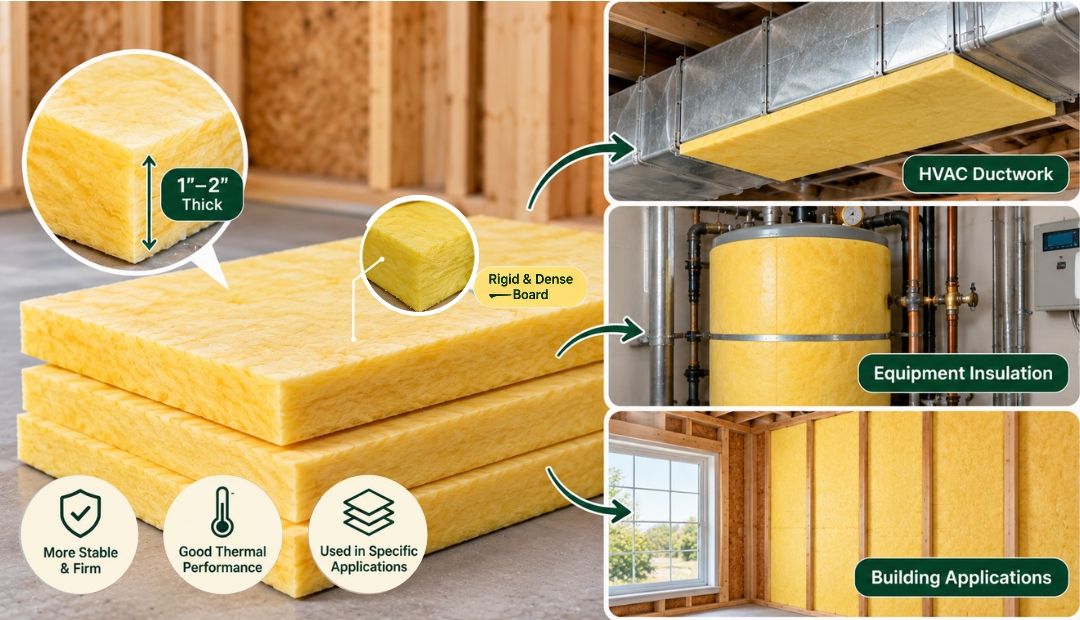
Rigid Fiberglass Insulation
Unlike batts and rolls, rigid fiberglass boards are firmer and denser products that provide a more stable form for specific applications. Depending on their intended use and product specifications, contractors commonly use them for HVAC ductwork, equipment insulation, and selected building applications.
Understanding the R-Value
The R-value of glass fiber insulation indicates how well it resists the transfer of heat. A higher R-value means better insulation and less heat passing through the material. The R-value can be affected by the density of the product, the thickness and the type of insulation.
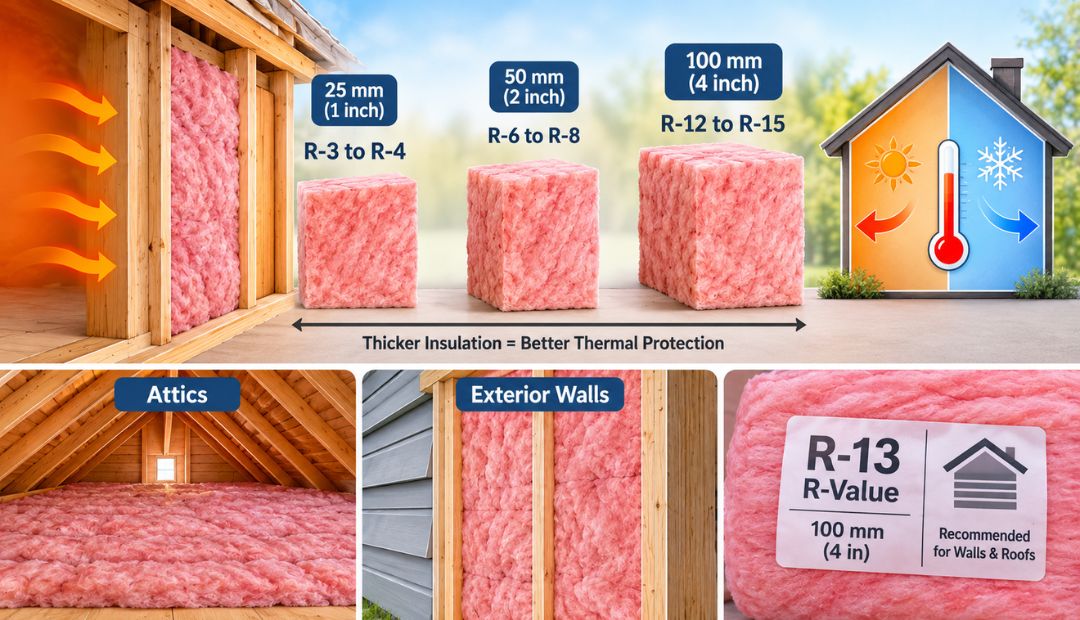
Typically, Glass Fiber batt or roll insulation will provide an R-value of around R-3 to R-4 per inch (25mm). If you have 50 mm thickness, it will give around R-6 to R-8 and 100mm will give you R-12 to R-15. The thicker the glass fibre insulation, the less heat will be able to enter through the walls, roof or ceiling, helping reduce heat transfer through the building envelope.
Attics (the space under the roof) and exterior walls may need different levels of thermal resistance. Check product labels to compare insulation options. Compression, poor fitting, and uneven installation can reduce the product’s actual thermal performance.
Benefits of Fiberglass Insulation
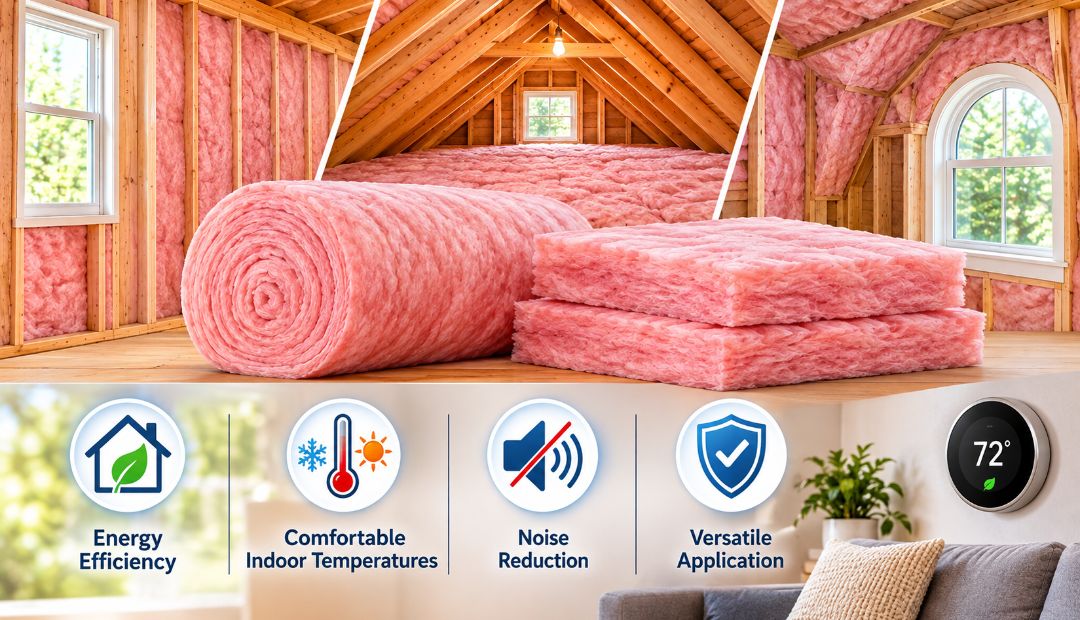
Fiberglass is a versatile material and available in different forms that can be suitable for spaces ranging from accessible wall cavities to attics with irregular areas. It is often used in new construction and renovation projects.
Fiberglass can also help with energy efficiency and maintaining comfortable indoor temperatures by reducing heat transfer through a home’s building envelope. Results will vary depending on climate, the home’s condition, existing insulation, air leakage and how much heating and cooling is used.
Installation Considerations
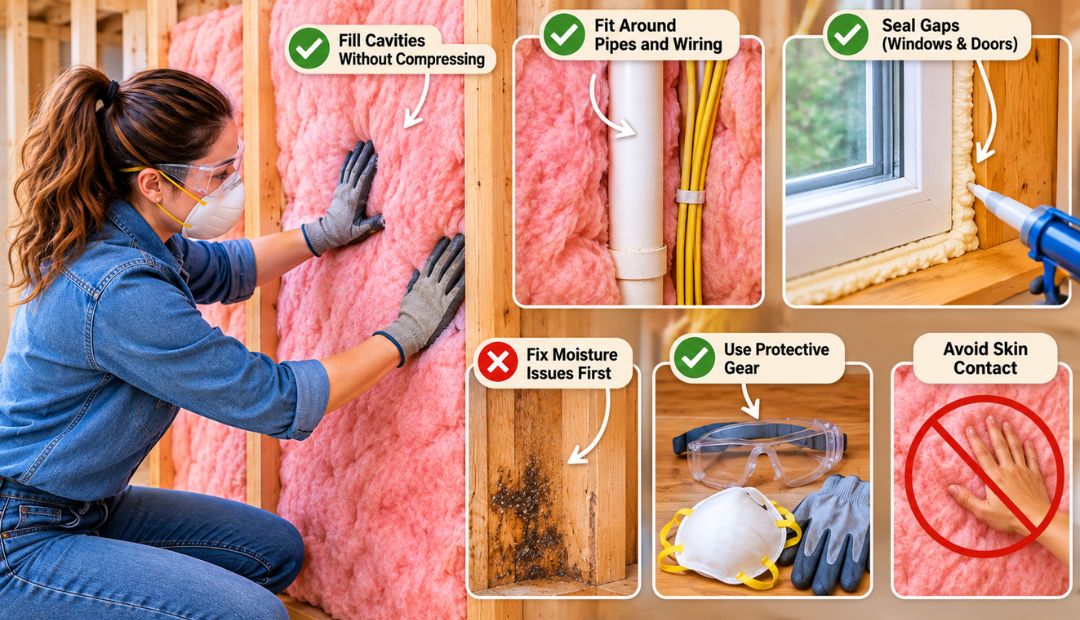
Proper installation is essential. Installers should fill the cavity with batts without compressing or folding them or leaving gaps. They should also fit the insulation carefully around pipes and wiring to maintain continuous coverage.
Fiberglass itself is not an air barrier. Homeowners should seal gaps around windows, doors, plumbing penetrations, and other openings as part of a complete insulation strategy. They should also fix any existing moisture problems before installing insulation.
Installing fiberglass insulation may irritate the skin, eyes and respiratory tract. Use of protective clothing and gloves, eye protection and appropriate respiratory protection at the time of installation may reduce exposure. Follow the product label and safety guidance for the safe use of the material.
Final Thoughts
Fiberglass is a practical choice when homeowners select the right type and R-value for their home or building. Batts and rolls fit well in open framing cavities, while blown-in products work well in attics and certain enclosed areas. Manufacturers develop rigid products for more specialized applications.
First, identify the location requiring insulation, the R-value needed, the moisture conditions and whether air sealing is necessary. Manufacturer instructions or advice from a qualified insulation professional may be needed for difficult areas.
Fiberglass is best when part of a complete building-envelope approach. Its thermal performance depends on appropriate product selection, continuous coverage, air sealing and moisture management.
More Ideas to Explore:
- How to Maximize Ventilation in Homes
- Loft vs Attic: What’s The Difference Between Them
- What is Grouting in Construction?

Navdeep is a PHP programmer by profession, & rider by passion with a strong interest in writing, reflection, and travel. His writing draws from daily experiences across online and real-world settings, often influenced by an interest in interior design and how spaces affect mood and function.