

Quartz vs. quartzite may sound identical, but they’re actually quite different. Both contain quartz makeup, yet one is shaped by nature, while the other is engineered.
When it comes to countertops, they take different paths to your kitchen. Now, the questions that can come up for someone who’s deciding for the first time are: Which one is better for my kitchen? Which one is more scratch-resistant? Which one is easier to maintain and clean? How often do they need maintenance? And lots of other questions as well.
With so many things to consider, let’s break down their differences in durability, appearance, maintenance, cost, and overall suitability for your space.
1. Durability and Hardness Comparison
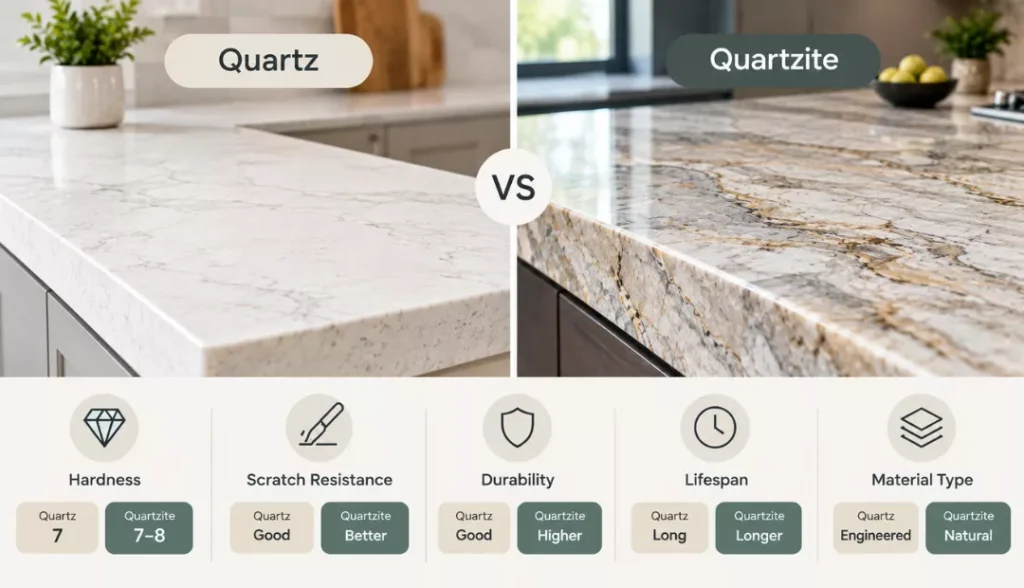
They both handle regular kitchen use in terms of everyday durability. Quartzite typically ranks around 7 to 8 on the Mohs hardness scale, generally harder than engineered quartz. Quartz countertops rank around 7. As a result, quartzite is particularly resistant to scratches and everyday wear.
Though quartz is still a highly durable countertop material, as it’s engineered from the same quartz crystals with resins, the combined beauty gives it good resistance against everyday scratches, chips and cracks. The resin provides flexibility to the countertop to reduce chipping around the edges.
Another difference is the life, how long each material lasts. So far, we know that one is natural, while the other is made by compressing a mixture to mimic natural marble, granite, or even quartzite.
While quartz combines strong everyday durability, Quartzite has the edge in hardness and scratch resistance; both can provide long-lasting performance if properly cared for.
2. Heat Resistance
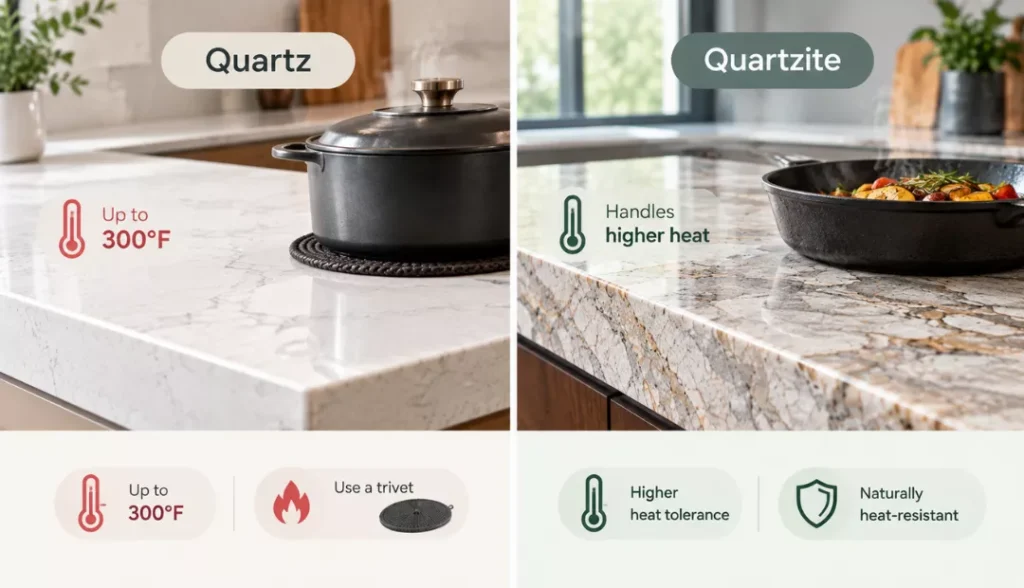
There are differences between quartz and quartzite countertops when it comes to handling heat. As Quartzite is naturally heat-resistant, its countertops withstand higher temperatures without risking damage from heat.
Although quartz is a noncombustible mineral, quartz countertops can reach a damaging softening point at around 300°F because of the resin binders used in the engineered material. Anything above 300°F, including pans taken directly from a stove burner or oven that can easily exceed 400°F, can cause permanent damage such as scorching, yellowing, or cracking. It is best to always use a hot pad or trivet to protect the quartz countertop when cooking.
3. Appearance and Texture
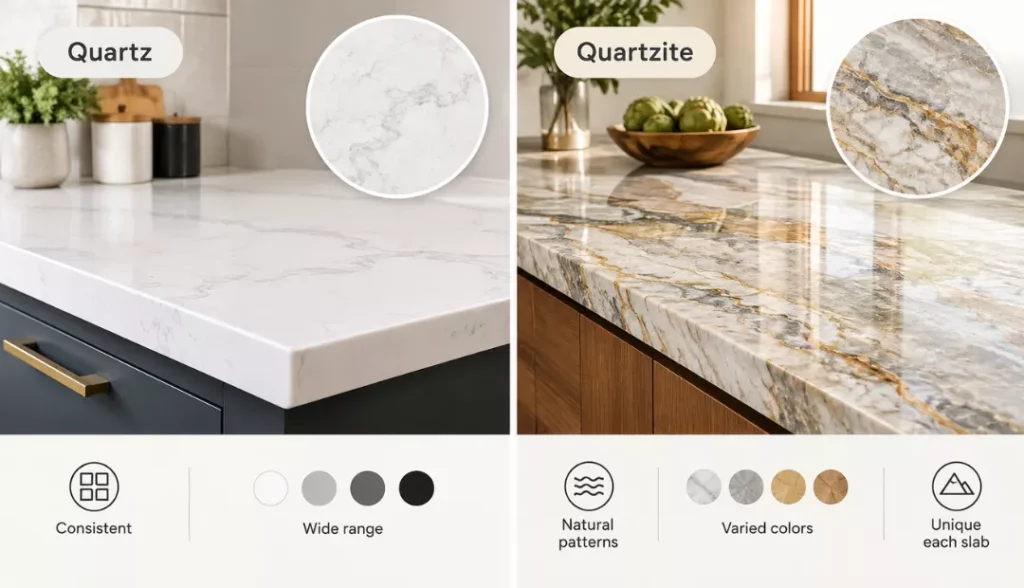
If appearance is all that matters to you, then the difference between quartz vs. quartzite becomes much easier to notice. Quartz brings a more controlled and consistent look, while quartzite has a natural, organic appearance as each slab forms differently underground.
Quartz is made from crushed quartz, resins and pigments, which gives manufacturers much more control over color and pattern. You can find quartz in everything from soft neutrals and solid whites to darker shades.
Each slab of quartzite forms differently underground; its colors can range from white and gray to beige, gold, and other subtle shades. Both materials can have a traditional polished finish, while honed finishes create a softer, matte appearance and leathered finishes add more tactile texture.
4. Maintenance and Cleaning
Quartz Maintenance
- No sealing needed: Quartz has a nonporous engineered surface, so you don’t need to seal it after installation.
- Simple everyday cleaning: For routine messes, a soft cloth or sponge with warm water and mild soap, all you need.
- Spills are easier to manage: Coffee, wine, oils, and other common kitchen spills are less likely to soak into quartz.
- Protect the surface: Place hot cookware on a trivet instead of directly on the countertop. Skip abrasive cleaners, harsh chemicals, and bleach.
Quartzite Maintenance
- Sealing: Unlike quartz, quartzite is a natural stone and it needs sealing every 1 to 3 years, depending on the particular slab and sealer.
- Keep daily cleaning gentle: Warm water and mild dish soap work well for everyday cleaning. You can also use a pH-neutral cleaner specifically formulated for natural stone.
- Don’t let spills sit: Wipe up coffee, wine, oils, citrus, vinegar, and other potentially staining or acidic substances.
- Be selective with cleaning products: Avoid acidic cleaners, vinegar, bleach, and abrasive scrubbers.
5. Cost and Installation
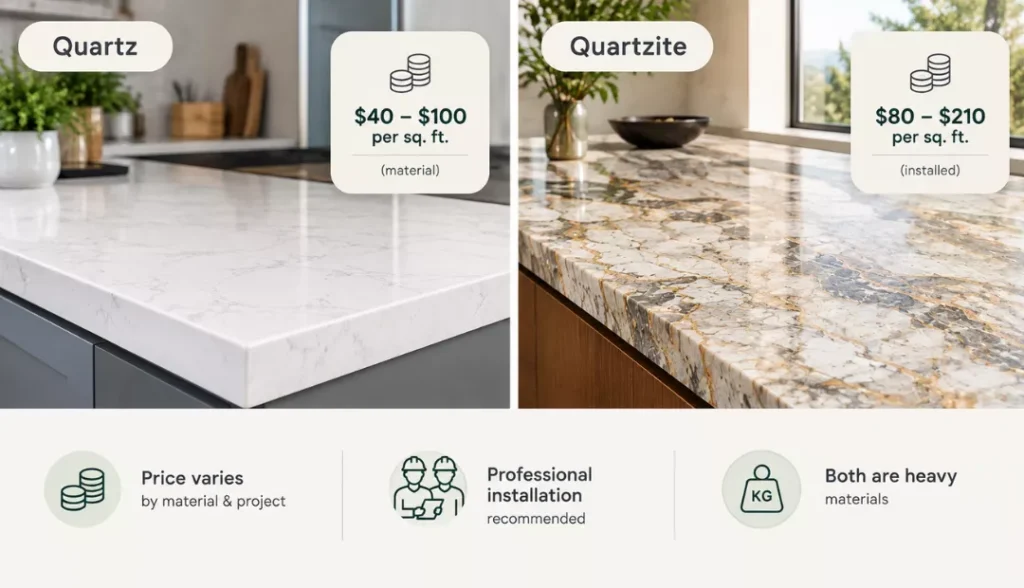
Quartz generally offers a more predictable price range, a range of about $40 to $100 per square foot for quartz while quartzite generally carries a higher price because it is a natural stone. Approximate installed costs are around $80–$210 per square foot for quartzite.
These price ranges may vary widely according to the material and project. Both quartz and quartzite are heavy materials, so professional installation is generally recommended for careful handling.
FAQs
What is the Main Difference Between Quartz and Quartzite?
The main difference is in their composition, quartz is a man-made surface countertop, and Quartzite is 100% natural stone, formed when quartz-rich sandstone undergoes extreme heat and pressure deep within the Earth over millions of years.
Which is better: quartzite or quartz?
The answer has many nuances, but your choice ultimately depends on your lifestyle. If you want a natural stone that feels closer to nature, choose quartzite. If you prefer a low-maintenance lifestyle, quartz may be the better fit.
Which is Better for Heat Resistance: Quartz or Quartzite?
Quartzite has a clear advantage when it comes to heat resistance. It can withstand the heat from hot cookware, while quartz may scorch or suffer damage when exposed to temperatures above 300°F.
Explore Further:
- Smart Kitchen Island Decor Ideas for Modern Homes
- 7 White Kitchen Blue Island Ideas
- How To Clean Quartz Countertops Daily

Navdeep is a PHP programmer by profession, & rider by passion with a strong interest in writing, reflection, and travel. His writing draws from daily experiences across online and real-world settings, often influenced by an interest in interior design and how spaces affect mood and function.