
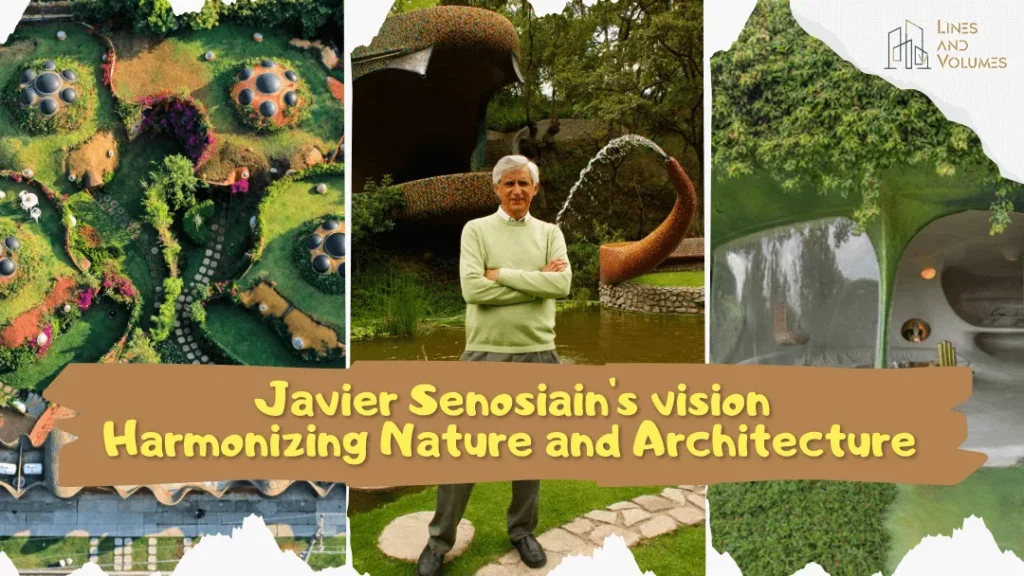
When you think of organic architecture that seems more alive than static, Javier Senosiain’s architecture automatically comes to mind. He’s not just known for building structures, he’s stretching and bending space itself away from the unnatural, away from the human, and simultaneously very much to it, with great organic intimacy with the surroundings.
Senosiain is considered Mexico’s most important figure in organic architecture. His architecture pieces appear to sprout from the earth rather than placed upon. His work defies boxy, orthodox forms while embracing curves, movement, and a visceral engagement with nature.
Who Is Javier Senosiain?
Senosiain was born in Mexico on May 5, 1948, and graduated from the National Autonomous University of Mexico (UNAM) in 1972. In early years he practiced, taught and researched architecture before establishing the firm Arquitectura Organica in Mexico City.
Senonian also outlines his philosophy by designing environments that echo natural shapes and honor human forms. After being inspired by thinkers like Frank Lloyd Wright, Antoni Gaudí and Friedensreich Hundertwasser, Senosiain took an architectural direction that prioritizes curves over straight lines, flowing forms over rigid shapes.
What is Organic Architecture?
Organic architecture is not just a stylistic trick; it promotes the relationship between humans and nature. It’s something of a guiding philosophy around space, form and human experience. It challenges designers to consider how people live, breathe, move and feel in an environment.
Unlike rigid modernism and postmodernism, it is based on flowing forms rooted in the environment. The fundamental of organic architecture is harmony with nature, not to dominate over it.
One of the early proponents of this philosophy, Frank Lloyd Wright described buildings as ‘living structures,’ not inert objects. Senosiain’s work goes a step further, combining human needs with biological forms and sculpting the space around them.
Organic Architecture of Javier Senosiain
Casa Organica (Organic House)
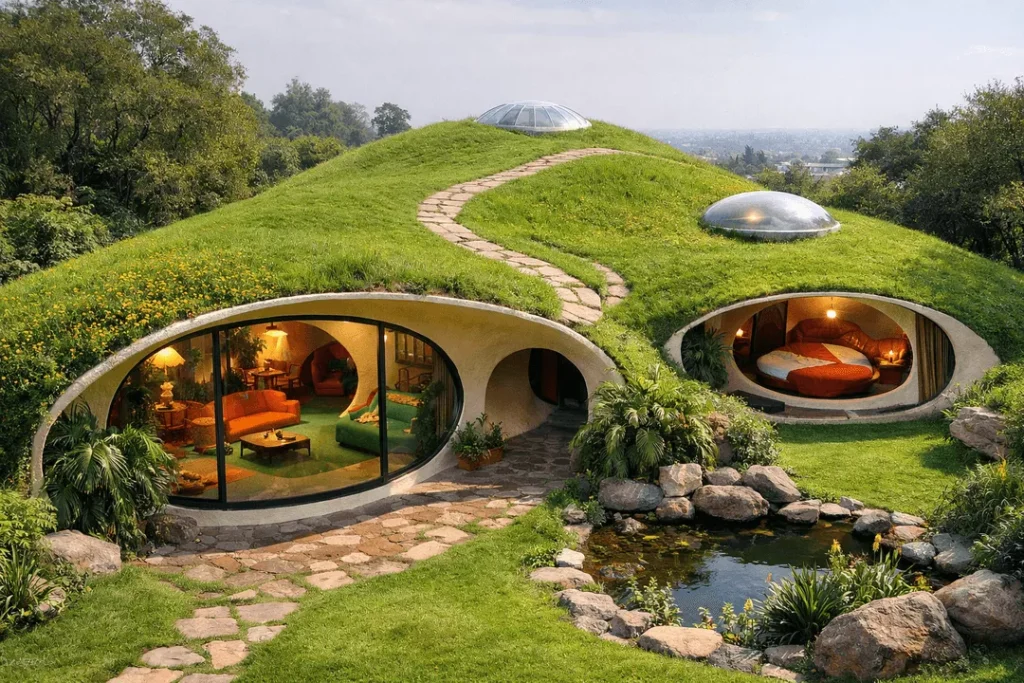
The Casa Organica, completed in 1984 in Naucalpan de Juarez just outside Mexico City, is perhaps Senosiain’s most well-known project. It began as his family home and now also symbolizes architectural possibility.
Instead of a typical house, it’s more like a landscape you enter. The building is mostly semi-buried in a grassy melting mound, so crossing its garden literally means walking across the roof. The layout is imagined as two main oval rooms, one for “day” functions like living, eating and kitchen, the other for “night” activities like sleeping and bathing, joined by a low, winding passage.
This house is all about curves, no straight walls exist, and windows resemble doorways to gardens. Sunlight comes streaming through domes and carefully placed openings. The house maintains stable temperature through-out the year thanks to its earth-covered exterior.
Nautilus House
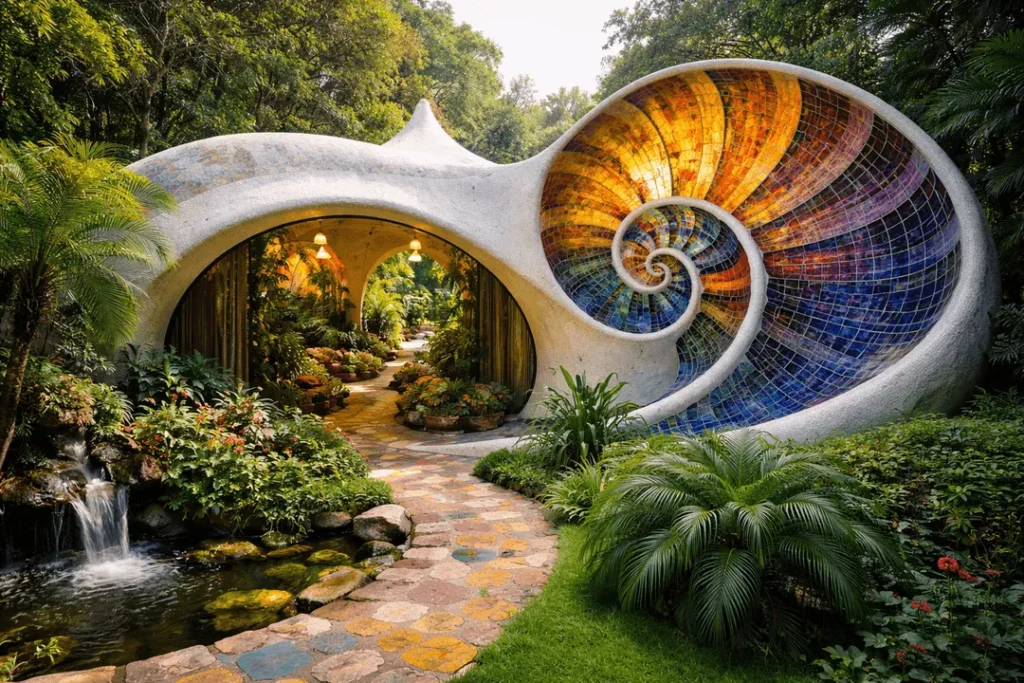
Another noteworthy example is the Nautilus House in Mexico City, which plays off the spiral of a seashell. Like Casa Organica, it does not embrace right angles at all. Its interior spaces unfold like waves, and the entire structure resonates with harmony between architecture and natural morphology.
The spiral shape isn’t purely for decorative purposes, it provides visual continuity and allows movement to flow smoothly from one space to the next. It shows how Senosiain’s work is influenced as much by living organisms as it is by the geologic and marine forms that define our world.
Satellite House Complex
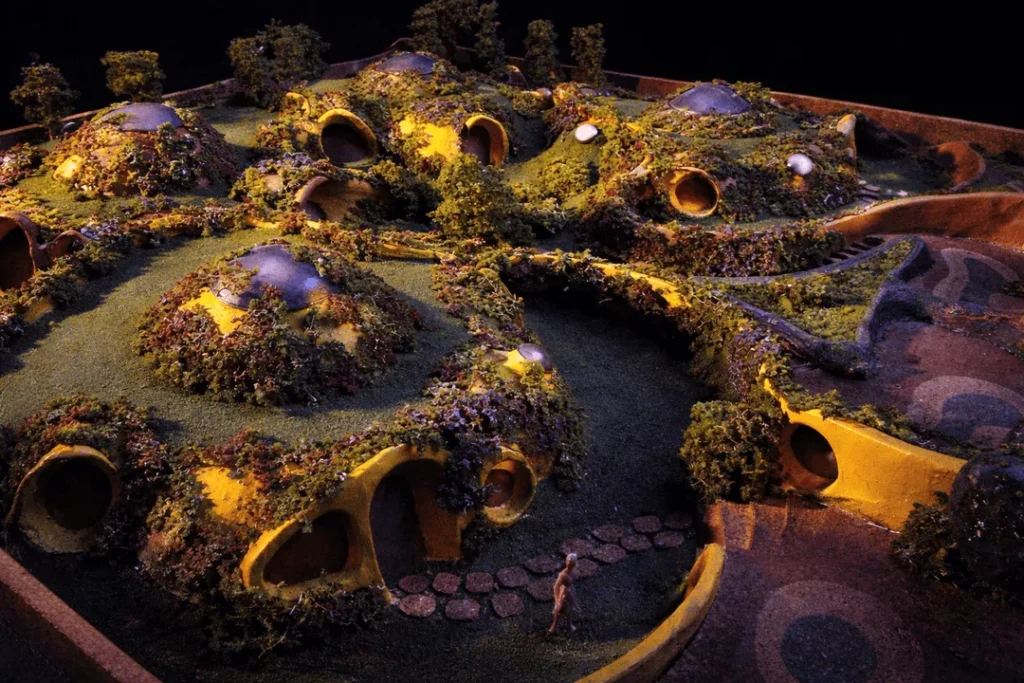
Its construction completed around 1995, the house is a collection of residences that demonstrates Senosiain’s mastery of scale. This project is not one building but several units that comprise a homogeneous organic set.
Situated on a gently sloped site, with cave-like curved walls and green roofs, the shapes integrate with the terrain instead of overpowering it. Materials such as wood, clay and stone used, together with strategies for natural light and ventilation, to reinforce that sense of melding with the environment.
Senosiain himself has noted that architecture should be “fun” and not merely efficient or engineered. The Satellite House Complex embraces that playful, imaginative side of his design ethos.
Other Notable Projects
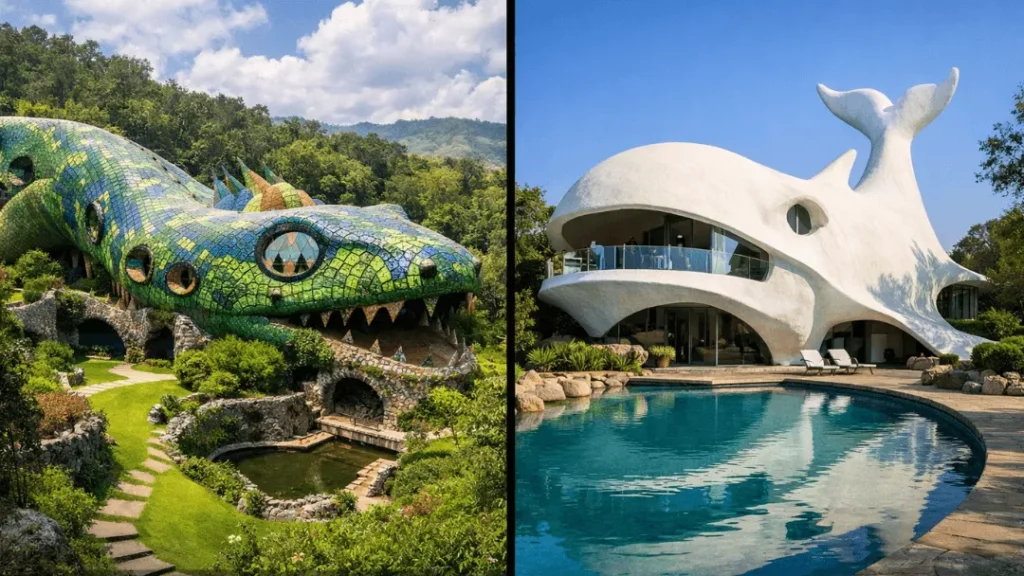
Senosiain’s portfolio goes well beyond private homes. His other acclaimed works include El Nido de Quetzalcoatl (The Nest of Quetzalcoatl), a serpentine housing complex inspired by the mythic feathered serpent, and Ballena Mexicana, a house that evokes the curves in motion of a whale.
Final Words
Javier Senosiain’s work offers a reminder that architecture can be life itself, swaying, breathing, and responding to the needs of people. Senosiain redefined what it means to live in balance with nature, from the underground elegance of Casa Orgánica to the spiraled playfulness of Nautilus House and the shared inventiveness of the Satellite House Complex.
Keep Exploring:

Dipanjan is a digital marketing professional with five years of hands-on experience across strategy building, content, and performance-driven campaigns. He has worked on building structured marketing systems that focus on reach, engagement, and measurable growth. Known for his analytical thinking and consistency, he brings a practical approach to digital execution. Outside of work, he loves cooking, painting and enjoys exploring interior setups. Connect with him on LinkedIn.