Scroll any property portal and most likely you’ll notice almost all the listings look the same. Same phrases, same photos and same promises, and that’s the reason real estate ads still work. It’s not because people like seeing ads all the time in their social media feeds, but because buyers are actively looking for homes.
This guide breaks down what makes people respond to, and how to write ads that result in real conversions.
What Real Estate Ads Really Do?
Running a property ad doesn’t only sell the house. Most importantly it needs to earn the next step. That next step might be a call, a WhatsApp message, a site visit or saving the listing.
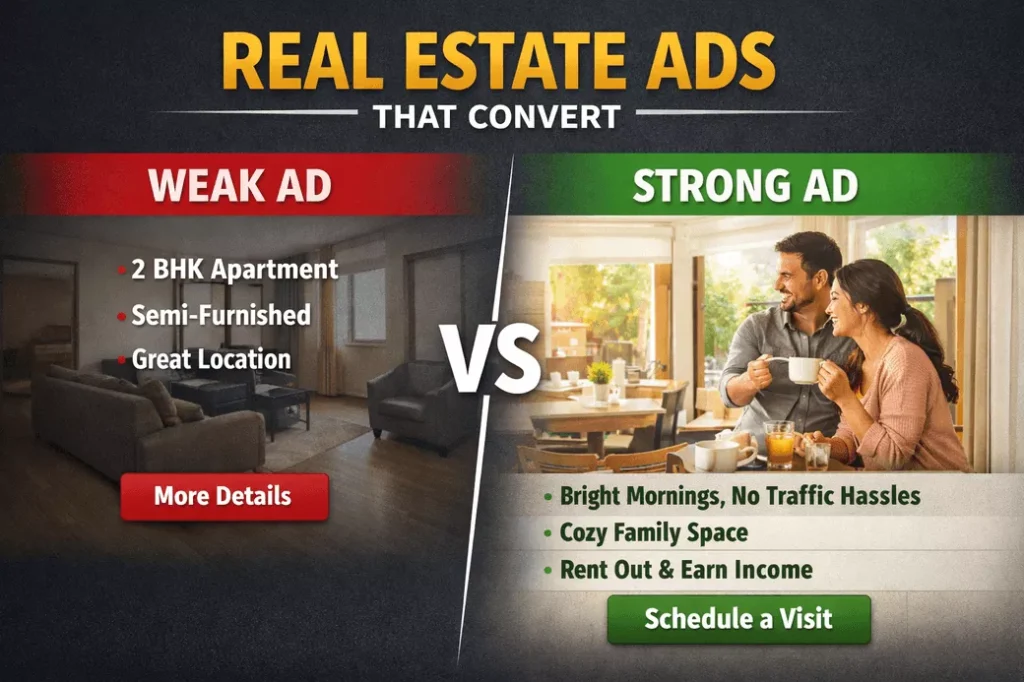
Many agents run ads with features like luxury apartments, 2 bathrooms, modular kitchen, near market…and so on. But think from the buyer’s perspective, not features, they mean the outcomes. People search for easy commute, status upgrade, rental income and family comfort.
Here most ads fail because they describe the building not the surroundings and life inside it. Strong ads translate property features into lived benefits.
5 Core Types of Ads in Real Estate
Understanding formats to write ads differently for each social platform.
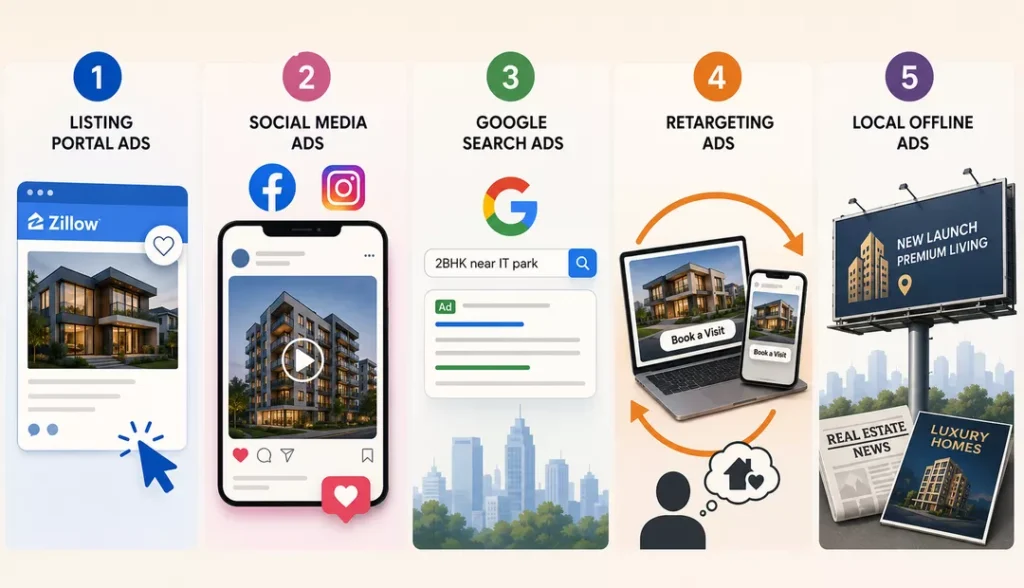
1. Listing Portal Ads
Zillow-style platforms and property portals
Goal: Get clicks and saves
Focus: clarity + standout headline
Works best when:
- Title highlights lifestyle or problem solved
2. Social Media Ads
(Facebook, Instagram)
Goal: Stop scrolling
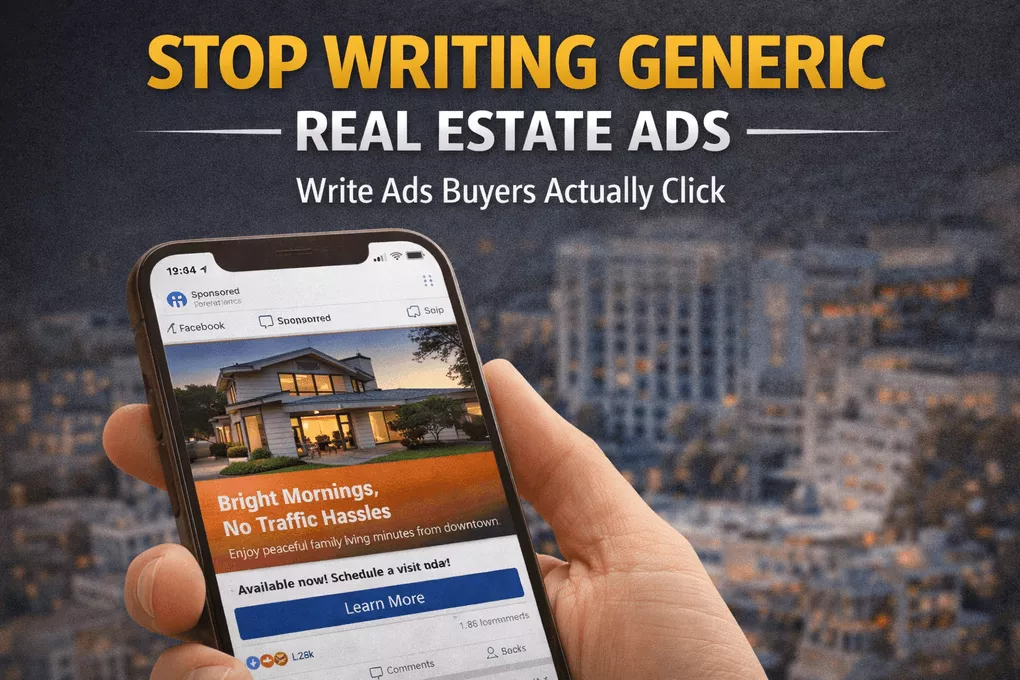
Here emotion matters more than specs. Visuals outperform text and short copy wins.
Seller-focused ads often perform strongly because homeowners respond to market positioning messages.
3. Google Search Ads
Goal: Capture intent
These are problem-solution driven:
- “2BHK near IT park”
- “Ready to move apartments”
Clarity beats creativity here.
4. Retargeting Ads
Goal: remind undecided buyers
It’s a powerful tactic to work with buyers who need multiple exposures before acting.
You’re not convincing them, you’re reassuring them.
5. Local Offline Ads (Traditional way)
Hoardings, flyers, and newspapers are some older methods of getting exposure.
Best for:
- New projects
- Locality authority
- Brand credibility
Offline ads succeed when they focus only on one promise, not many.
How to Write Ads That Feel Human
The ad text should feel like talking during a showing.
How not to describe:
- Premium vastu compliant east facing luxurious property
How to describe:
- Morning sunlight fills the living room. No artificial lights needed till noon.
Translate Features → Meaning
| Feature | What Buyer Hears |
| East facing | Bright mornings |
| Corner flat | Privacy |
| Near metro | Life without traffic |
| New building | Fewer repair |
| Top floor | Quiet evenings |
Architecture won’t describe itself but a great ad can describe daily life.
Real Estate Ad Examples
Weak ads rewritten in strong words.
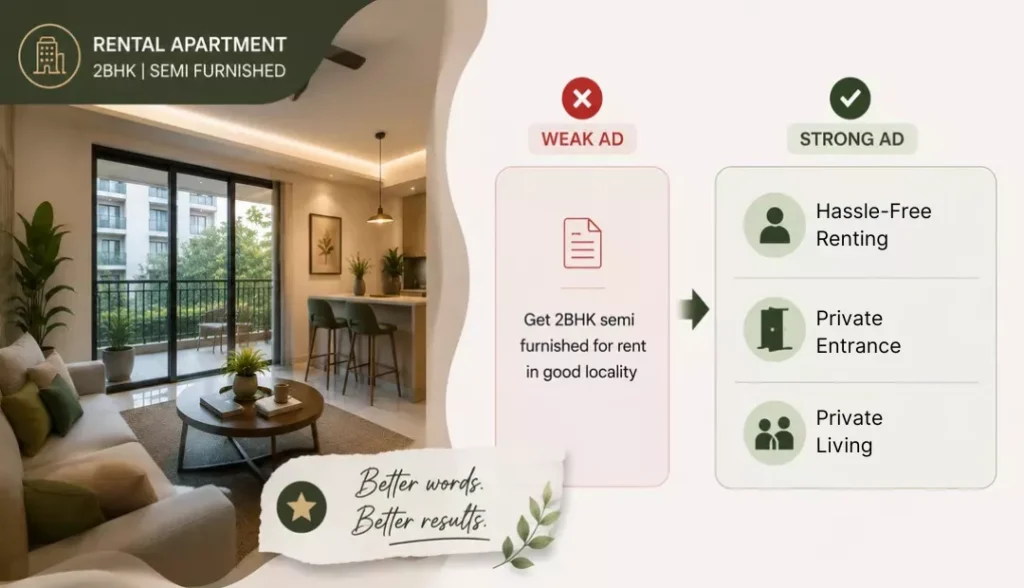
1. Rental Apartment
Weak: Get 2BHK semi furnished for rent in good locality
Strong:
- Your landlord won’t call every week.
- Independent floor, separate entry with parking slot.
- Ideal for working couples who need privacy.
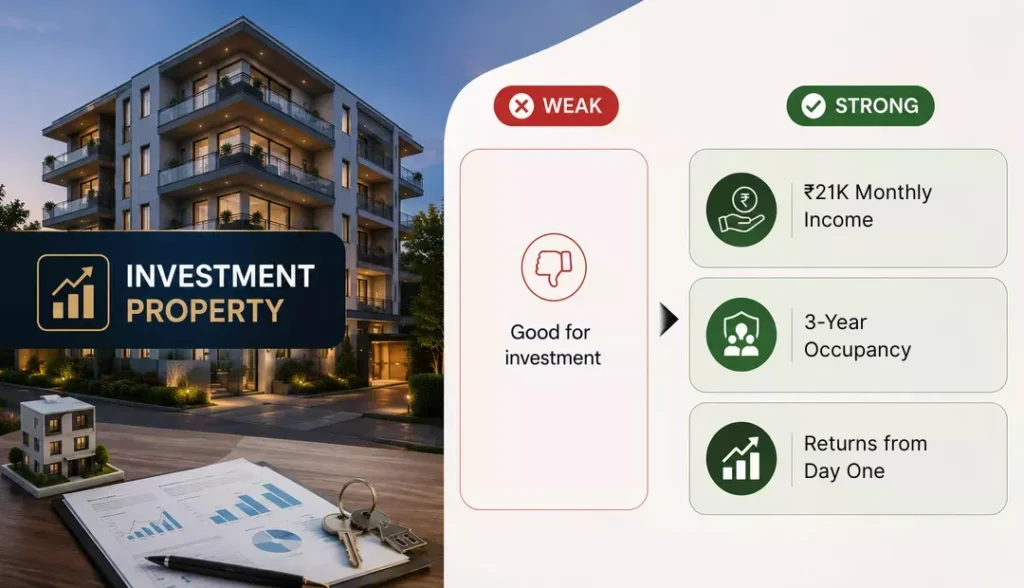
2. Investment Property
Weak: Good for investment
Strong:
- Currently rented at ₹21,000/month
- Same tenant for 3 years
- ROI starts from day one
3. Family Home
Weak: Close to school and market
Strong:
- Kids walk to school without crossing the main road
- Grocery store 120 meters away
- Evenings stay quiet after 9pm

Final Thought
People don’t respond to property ads because homes are rare. They respond because clarity is rare. Most listings describe space and about the building but great listings describe life.
FAQs:
1. How to write ads in real estate?
Start simple. A good real estate ad answers three things quickly:
Who is this for → What problem it solves → What to do next
2. How long should a real estate ad be?
It depends on the platform.
- Social media ads should be short and scroll-stopping.
- Portal listings can be moderately detailed but still easy to scan.
- Google ads must be concise and keyword-focused.
The goal is not length, it’s about clarity.
3. Are paid ads better than organic listings?
Paid ads give reach and specific targeting control. Organic listings help you to build long-term visibility and credibility.
Recommended Reads:

Dipanjan is a digital marketing professional with five years of hands-on experience across strategy building, content, and performance-driven campaigns. He has worked on building structured marketing systems that focus on reach, engagement, and measurable growth. Known for his analytical thinking and consistency, he brings a practical approach to digital execution. Outside of work, he loves cooking, painting and enjoys exploring interior setups. Connect with him on LinkedIn.