
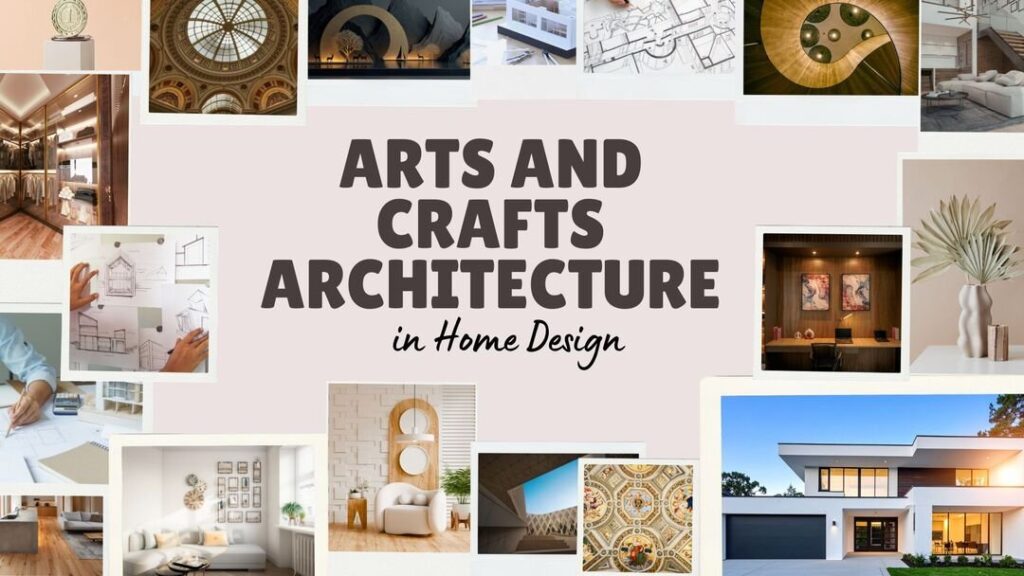
Arts and Crafts architecture is a movement that prioritizes handcrafted design, natural materials, and functional simplicity as a response to industrial mass production. It started in a late 19th–early 20th century style, based on hand-crafted natural materials and a rejection of industrial mass production. This guide explores its roots, defining characteristics, and lasting influence.
What Is Arts and Crafts Architecture?
Arts and Crafts architecture is a design movement that developed approximately from 1880 to 1920 in Britain and the United States. It rose in direct response to the Industrial Revolution and, to the proliferation of mass-produced Victorian ornament that many found ostentatious and impersonal.
The movement’s foundation rests on ideas proposed by John Ruskin and William Morris, who argued that architecture should embody honesty of materials and the dignity of skilled labor. Rather than masking construction behind decoration, Arts and Crafts buildings celebrate authentic textures, visible craftsmanship and a deep connection to the surrounding landscape.
Key Characteristics of Arts and Crafts Architecture
The style is more of a design philosophy than a set of rules. Rather than a single signature characteristic, it integrates material, structure and organization in a manner that reads as intentional and handmade.
Natural Materials
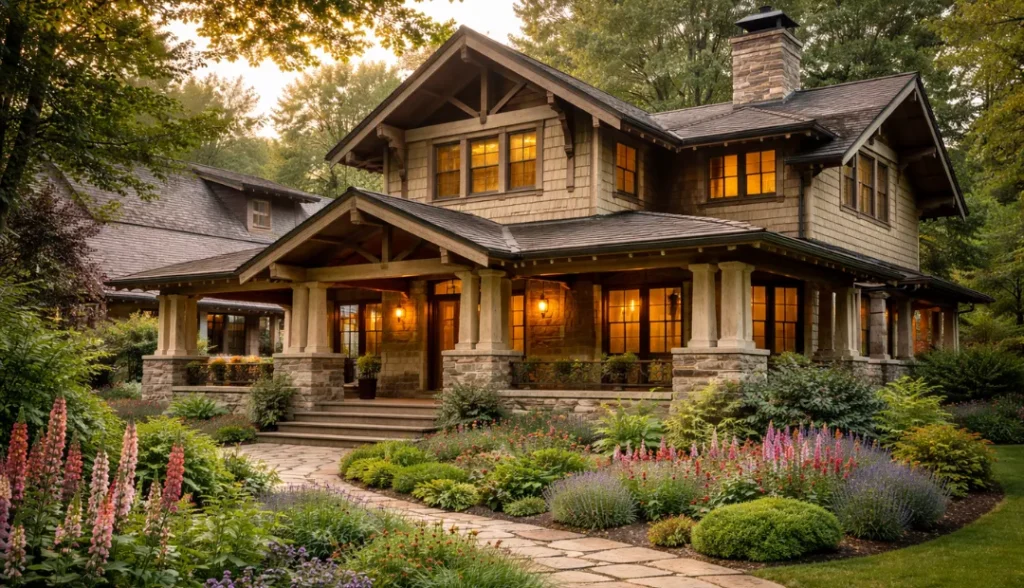
Arts and crafts buildings use exposed brick, rough-hewn stone, wood, and clay tile, and they often leave these materials in their natural states to show off their texture and authenticity.
Handcrafted Details
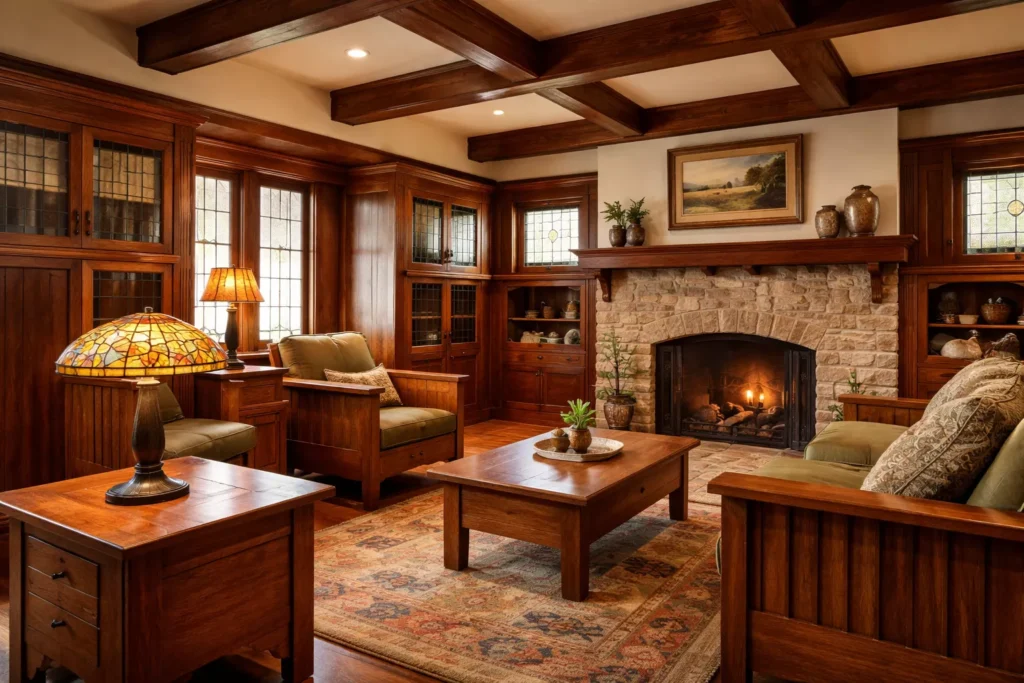
Exposed joinery, hand-hewn beams and decorative ironwork signal skilled craftsmanship and artisanal one-of-a-kind artistry.
Low-Pitched Rooflines
Roofs tend to be low pitched, with wide overhanging eaves and pronounced gables that impart a grounded, horizontal impression to the structure.
Integrated Interiors
Interiors typically feature built-in furniture, inglenook fireplaces and a wealth of wood panelling that makes the building and living space feel seamless.
Organic Forms
Layouts are often irregular and asymmetrical, oriented around function rather than strict geometric balance.
Connection to Landscape
Bushes and patterned cement help to transition indoor with outdoor spaces with the porches, verandahs and garden-facing elements.
Earthy Colour Palette
Muted greens, browns, rusts and terracottas are often used to emphasize a very visual relationship with nature.
Frequently Asked Questions (FAQ)
Arts and Crafts architecture is typically traced to 1859, with Philip Webb’s construction of the Red House. But the greatest influence came in 1880 to 1920.
Local materials like brick, stone, timber, clay tile and slate. In contrast, builders usually leave these materials exposed to emphasize their texture and authenticity rather than covering them.
Not exactly. The Craftsman style is the American version of the larger Arts and Crafts movement. Although they share the same tenets, Craftsman homes tend to be more uniform and often relate to bungalow-style housing.
Final Thoughts
This movement rewards craftsmanship, material honesty and considered design. That’s why it remains relevant for such a long period of time. In this age when sustainability and authenticity are coming back into focus, the ideals of this movement sound less like history and more like a blueprint for the future.
Explore More:

Dipanjan is a digital marketing professional with five years of hands-on experience across strategy building, content, and performance-driven campaigns. He has worked on building structured marketing systems that focus on reach, engagement, and measurable growth. Known for his analytical thinking and consistency, he brings a practical approach to digital execution. Outside of work, he loves cooking, painting and enjoys exploring interior setups. Connect with him on LinkedIn.