
Managing a property takes more than just responding to tenant requests, complaints and equipment repairs. Property managers must keep the HVAC system, plumbing, electrical equipment, elevators and other building assets functional. Failure of any of these can result in costly unplanned repairs, loss of equipment use, and tenant dissatisfaction. AI predictive maintenance solutions for property management try to resolve this by recognizing possible equipment issues that can lead to an unplanned equipment failure.
What Is AI Predictive Maintenance in Property Management?
AI-powered predictive maintenance uses a combination of AI and machine learning along with real-time equipment data to determine any signs of equipment failure. Predictive maintenance, as opposed to preventive maintenance or reactive maintenance, utilizes the conditions of the equipment in order to determine when maintenance would be appropriate.
The approach helps property managers to make maintenance decisions based on equipment performance rather than just rely on routine inspection checks.
How Do AI Predictive Maintenance Solutions Work?
These solutions use real-time sensor data and machine learning to tell you exactly when a machine is going to fail.
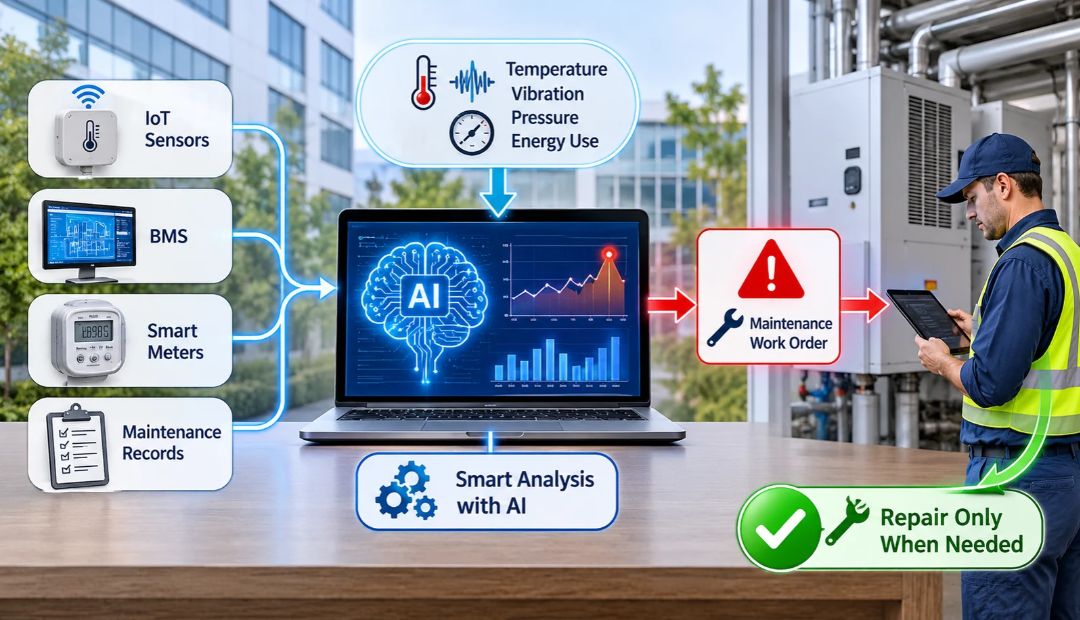
They aggregate data from IoT sensors, Building Management Systems (BMS), smart meters and historical maintenance records. They analyze equipment performance by considering temperature, vibration, pressure and energy consumption.
Unlike traditional preventative maintenance practices, which rely on rigid schedules or arbitrary timelines, AI predictive maintenance solutions use algorithms that look for abnormal changes from the historical norm. If the algorithm observes an abnormal change, it will automatically create a maintenance work order and send a signal to a technician to perform necessary repairs.
AI predictive maintenance solutions enable you to perform repairs only when it is really necessary.
Building Systems That Benefit From AI
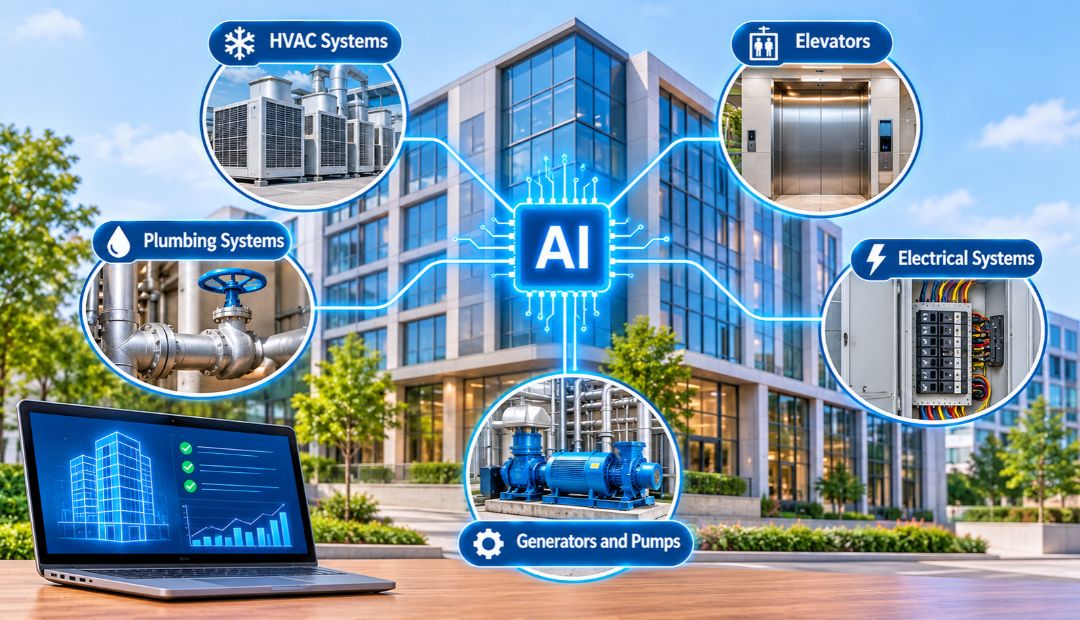
Predictive maintenance can allow property managers to track and identify potential issues across building systems.
HVAC Systems: Analyze temperature and airflow to determine declining performance and potential compressor issues.
Elevators: Analyze vibration and door movements to determine unusual equipment behavior.
Plumbing Systems: Determine blockages and potential equipment problems by analyzing water flow and pressure.
Electrical Systems: Determine potential equipment overheating by analyzing consumption and loads.
Generators and pumps: Analyze performance and determine required maintenance by analyzing pressure, performance, and operating hours.
Benefits of AI for Property Management
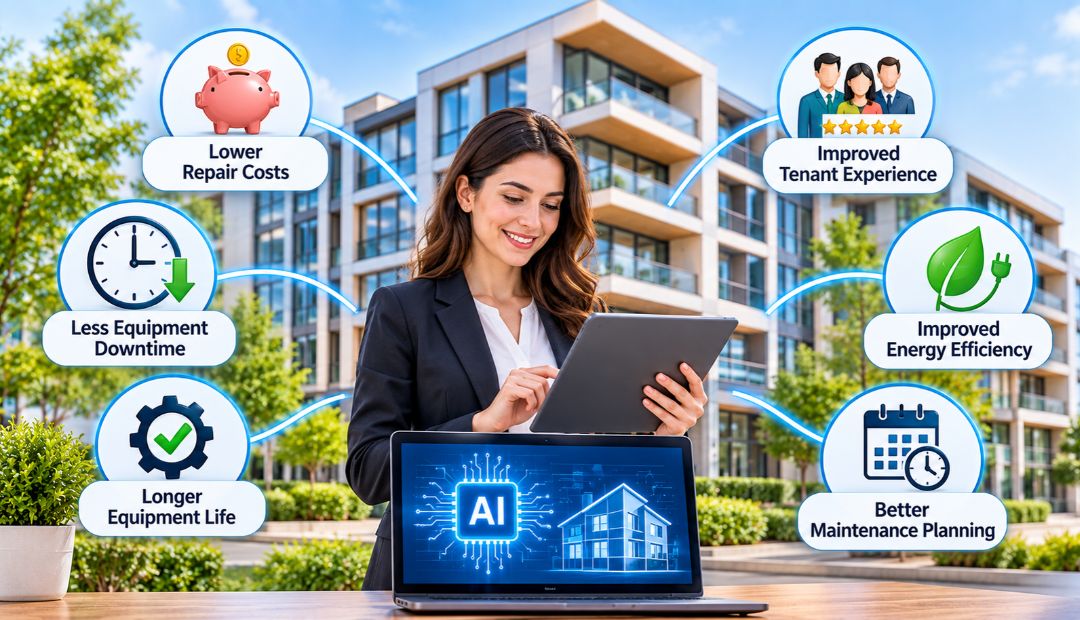
AI predictive maintenance will provide a range of operational and financial benefits, including:
- Lower repair costs: Early warning of equipment issues allows property managers to avoid expensive emergency repairs and unexpected maintenance.
- Less equipment downtime: Maintenance teams can eliminate many unplanned equipment failures, allowing teams to address equipment issues before services are disrupted.
- Longer equipment life: Timely inspections and repairs help prevent minor equipment problems from developing into serious damage.
- Improved tenant experience: Fewer unexpected equipment failures improve tenant experience and help keep building services, like elevators and HVAC systems, operating to maintain comfortable conditions.
- Improved energy efficiency: Identification of equipment issues helps eliminate equipment that reduces building efficiency.
- Better maintenance planning: Equipment performance data provides property managers a basis to better plan and prioritize repairs and help develop a more accurate maintenance budget.
Practical Applications in Property Management
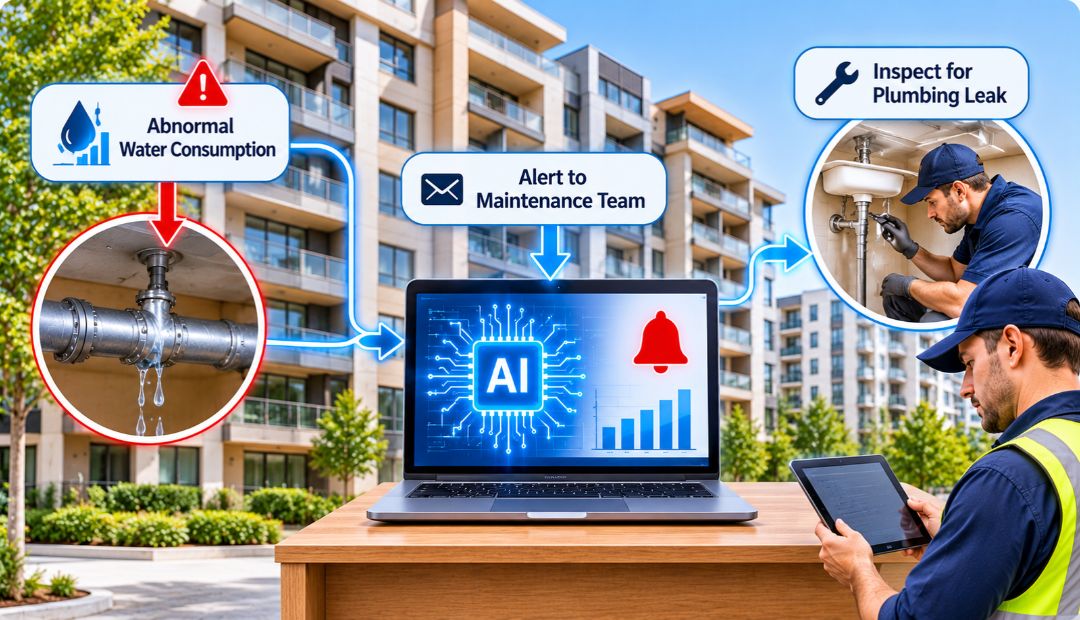
Case 1:
Take the example of a residential apartment complex. Imagine an AI system detects abnormal water consumption in one of the buildings. The maintenance team is notified and can investigate a potential plumbing leak before it results in water damage.
Case 2:
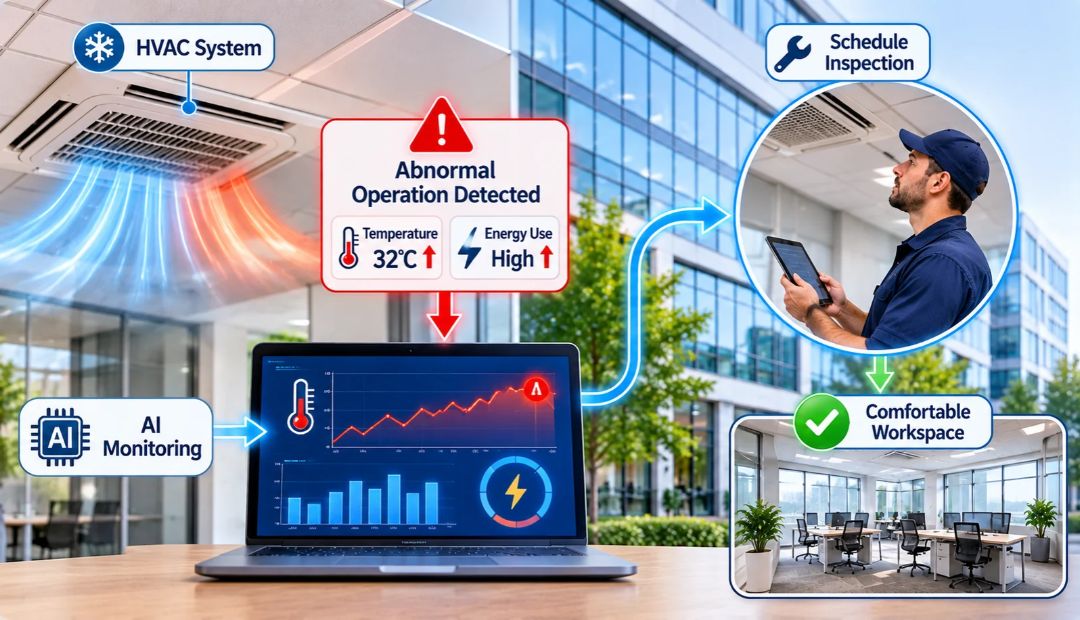
In a commercial office building, AI may detect abnormal HVAC operation, for instance, variations in temperature and energy consumption. Property managers can then arrange for an inspection before occupants begin to suffer from lack of indoor comfort.
Case 3:
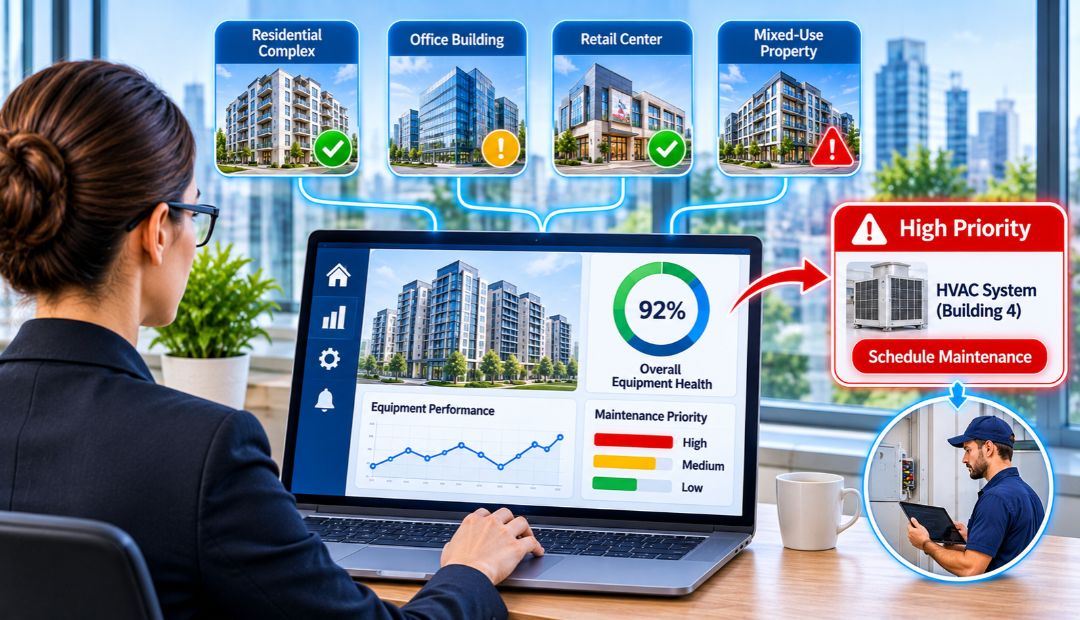
Companies managing multiple properties have the ability to use centralized dashboards to remotely monitor equipment health across all of the buildings and prioritize building maintenance based on the condition of the equipment and risk of failure.
Conclusion
AI predictive maintenance helps property managers to predict beyond scheduled inspections and unexpected repairs to prevent unforeseen scenarios. When everything combines — reliable equipment data to suitable software, and trained maintenance teams — it helps property managers improve building efficiency and gain better control over operating expenses.
What’s Next to Explore?

Dipanjan is a digital marketing professional with five years of hands-on experience across strategy building, content, and performance-driven campaigns. He has worked on building structured marketing systems that focus on reach, engagement, and measurable growth. Known for his analytical thinking and consistency, he brings a practical approach to digital execution. Outside of work, he loves cooking, painting and enjoys exploring interior setups. Connect with him on LinkedIn.