
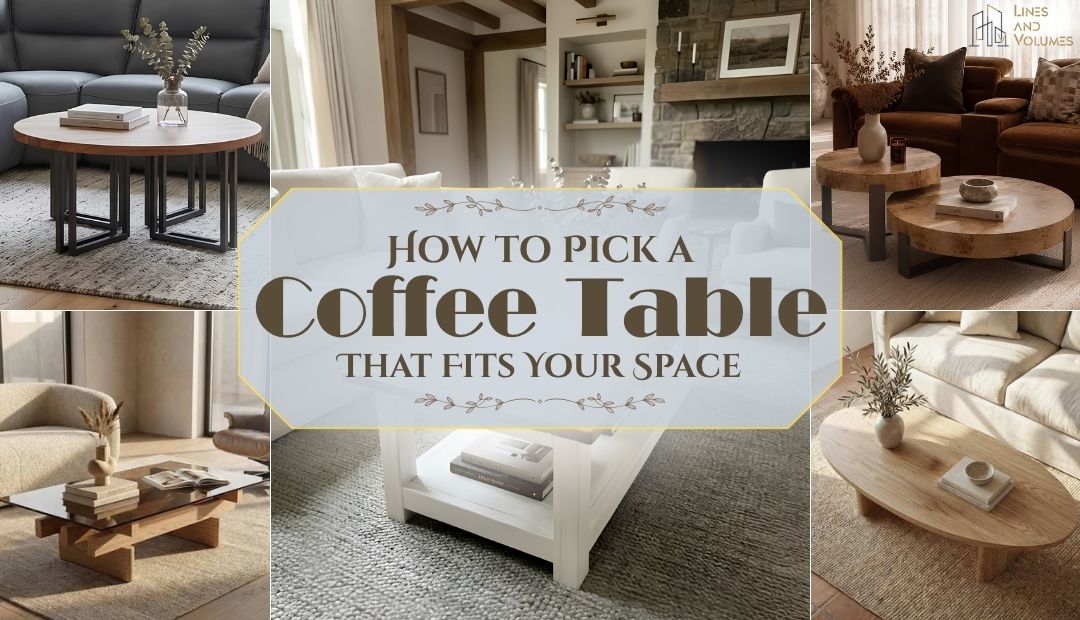
The right coffee table can improve the living room’s appearance and functionality. The coffee table’s size, height, shape, and material influence the room’s decor. Knowing how to pick a coffee table helps you avoid choosing a table that looks attractive online but turns out to be too large for a narrow living room or too low for a high-backed sofa.
The practical approach is to consider measurements, everyday needs, materials and style. This order creates a more accessible path through the options without compromising on comfort or the general appeal of the room.
Measure the Space and Sofa First
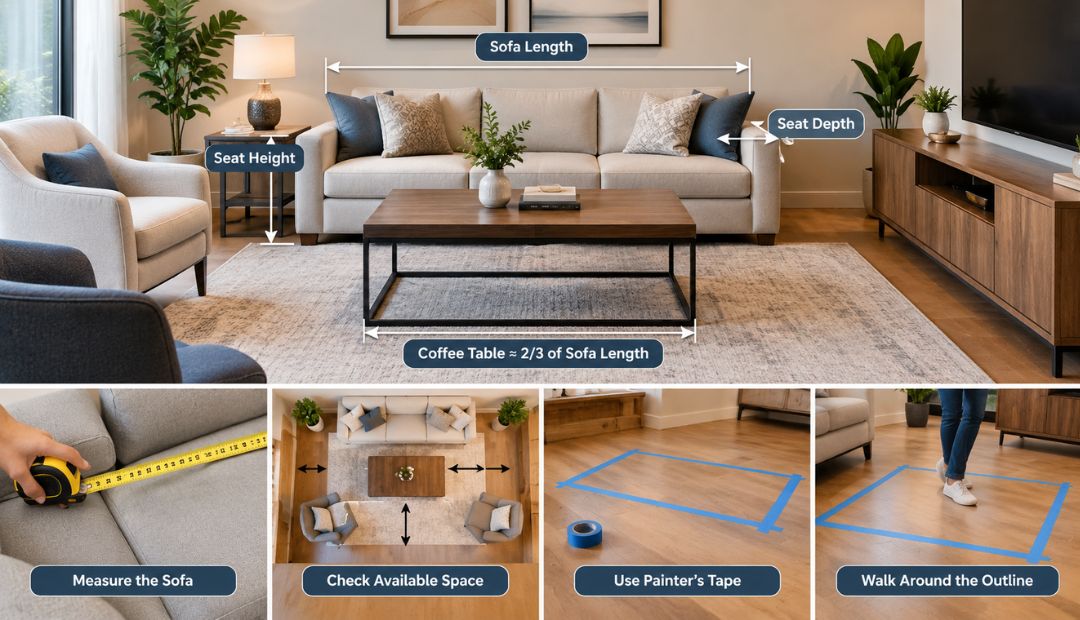
Before buying, measure the sofa length, seat height and depth. Check the available space, including the distance to adjacent chairs, cabinets, and walkways. It is recommended that the coffee table be about two-thirds of the length of the sofa. An unusual seating arrangement may require a different size.
A wide table placed between the seating area and a TV console can restrict movement. To test the footprint of a table, lay painter’s tape on the floor to outline the proposed dimensions. Walk around the outlined area as if the table were in place.
Choose a Comfortable Height
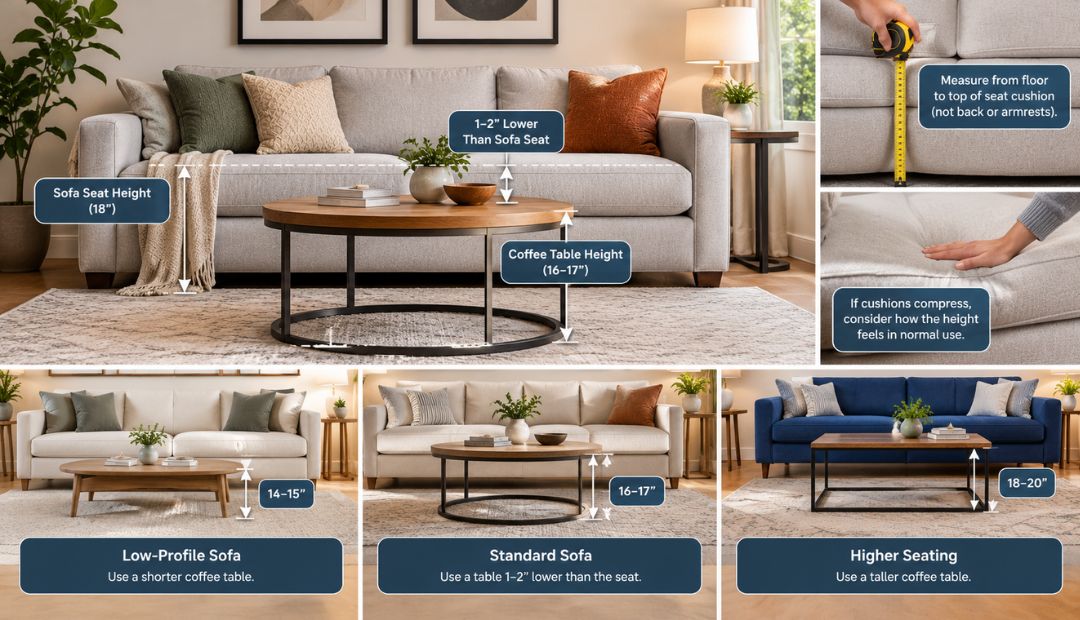
The tabletop works well when it is 1 to 2 inches lower than the sofa seat. That makes it easy to reach drinks, books, and remotes without the awkward stretch. Measure from the floor to the top of the seat cushion, not the back or armrests of the sofa. If the cushions compress noticeably when someone sits, think about how the height feels in normal use.
If the sofa seat is 18 inches high, a table about 16 to 17 inches tall is a suitable option. A taller coffee table works well for a higher seating arrangement, while for a low-profile sofa, a short-height coffee table is a suitable option.
Select a Shape That Suits the Layout
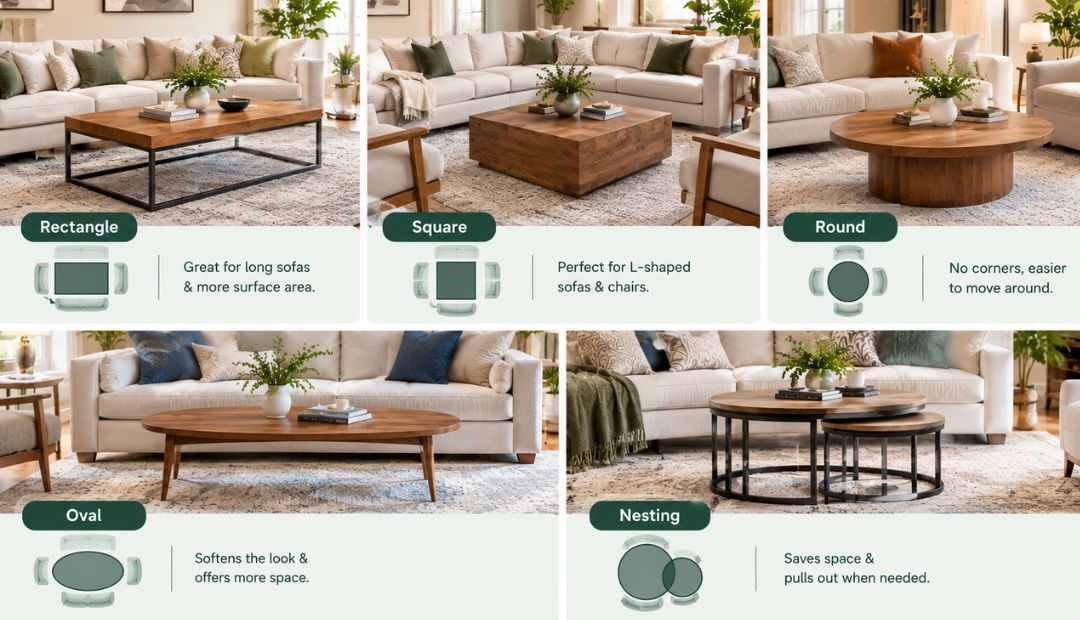
The proportion of a table will affect the seating area, sofa layout, walkways and the overall appearance of the living room. Rectangular coffee tables naturally blend with long sofas, giving ample space for serving, books and decorative objects. Square tables suit L-shaped sofa arrangements with chairs on several sides. However, a large design of the table may feel bulky in a compact room.
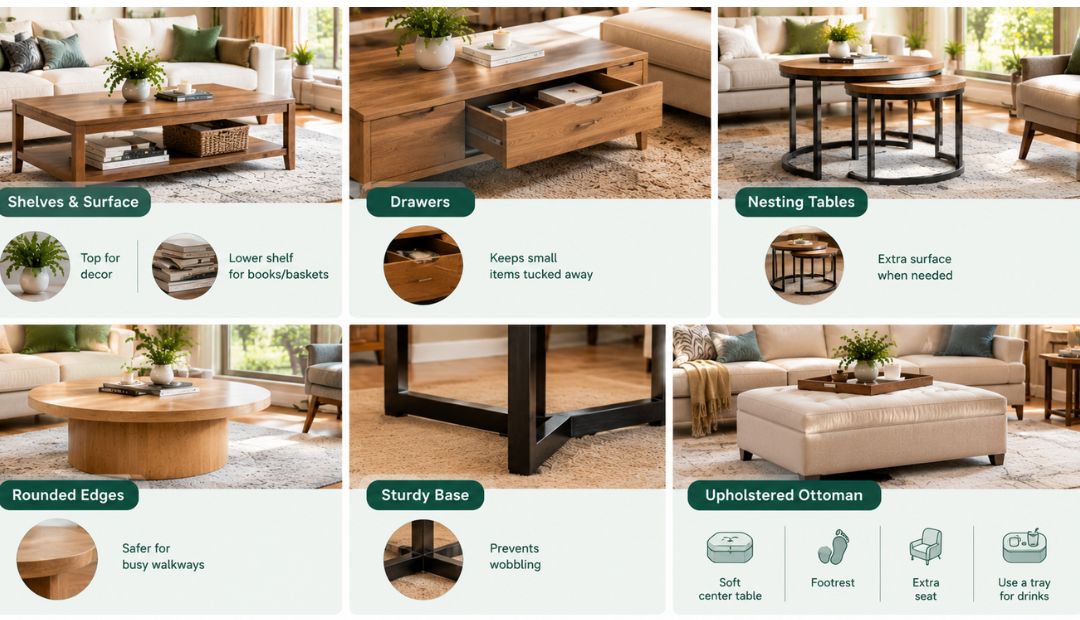
Round tables have no corners, making them easier to move around in compact layouts. Their curved shape can soften a room of straight furniture lines. Oval tables have a similar effect, but provide more surface area. Nesting tables are handy when floor space is restricted. The smaller tables fit under the main table and can be pulled out when more surface area is required.
Consider Material and Maintenance
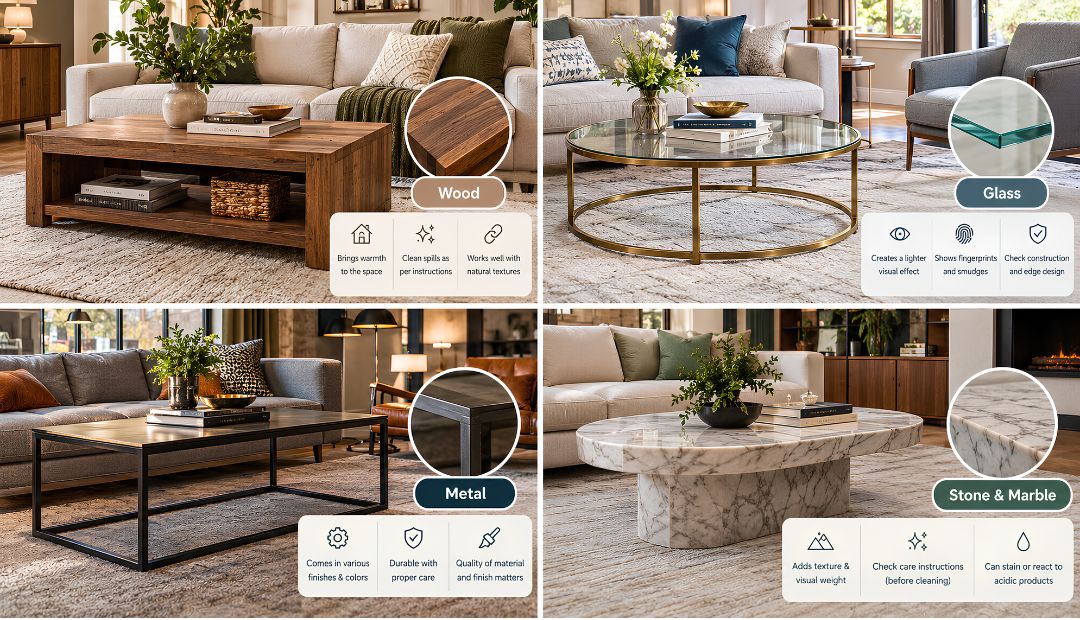
The material affects the look of the table, maintenance and durability for everyday use. Choose the material that matches the furniture, wall colour and flooring of the area.
Wood adds warmth and is suitable for almost every modern and contemporary interior. Its design depends on material, color, and finish. Clean up spills as per the manufacturer’s instructions; some finishes may be sensitive to moisture or heat. A wood table can work well with natural textures, and a metal frame can contrast neatly with upholstered seating.
Glass gives a lighter visual effect as the floor and surrounding furniture are still visible. However, fingerprints and smudges can be more noticeable. Before picking one for a busy family room, make sure to check the glass construction and edge design.
Metal coffee tables come in a variety of finishes and tabletop materials, including wood, glass, and stone. Metal frames are great for modern or industrial rooms, but the quality of material and finish will dictate maintenance.
Stone and marble add texture and visual heft. Before cleaning, check the care instructions, as natural stone surfaces can stain or react to acidic products.
Think About Storage and Everyday Use
The coffee table should fit into everyday life, but also keep the living room tidy. Shelves and a surface add space for decorative plants and other essentials. The lower shelf can be used to store books, magazines or baskets and keep the tabletop clear. Drawers are a great place to store small items.
Nesting tables are more functional because they offer additional surfaces for guests without permanently occupying more space. Rounded edges work well for busy walkways, and a sturdy base prevents wobbling.
An upholstered ottoman coffee table is a padded, fabric- or leather-covered piece of furniture that acts as a soft center table, footrest, and extra seat all at once. It serves as an alternative when extra seating is useful, although a stable tray is needed for drinks.
Match the Table to the Decor
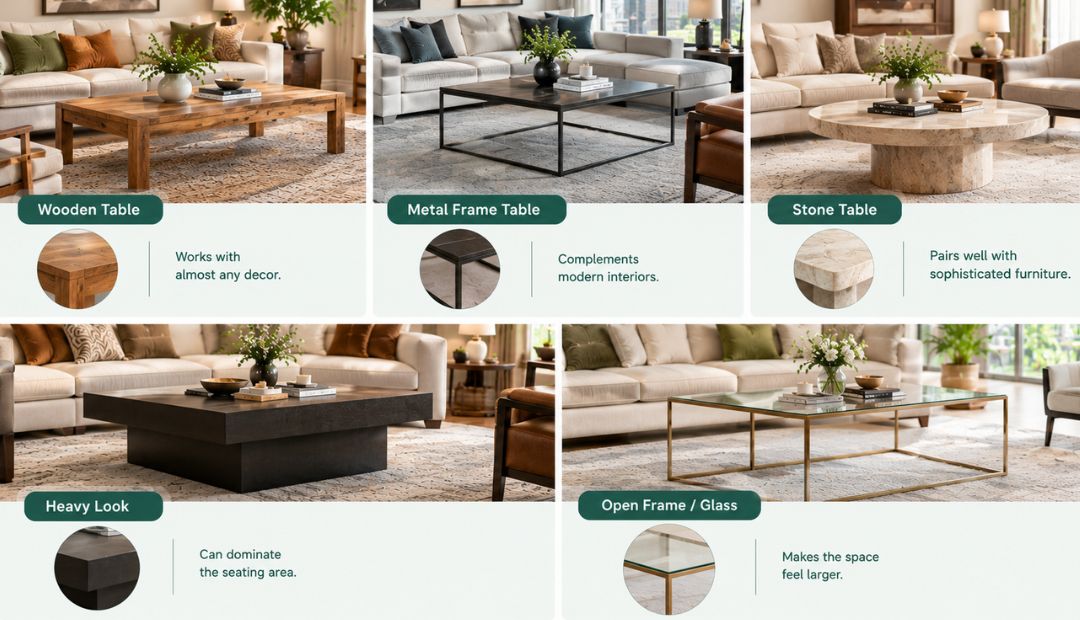
The table complements the sofa, rug, accent chairs and other furniture pieces of the living room. A simple wooden table can suit almost all types of interiors, while a metal frame body can complement a contemporary living room. A textured stone tabletop pairs effortlessly with sophisticated furniture.
A heavy-looking tabletop and thick base can dominate the seating area, while an open frame or glass leaves more floor space visible. The right choice depends on the available space and surrounding decor.
Final Thoughts
Choosing the right coffee table involves balancing size, comfort, functionality, and style. If you are wondering how to pick a coffee table, measure the living room and sofa first, select a suitable height and shape, and consider the material and storage options so that you can find a table that fits everyday needs. The best coffee table should complement the existing decor, be easy to move around, and make the living room comfortable and inviting. In the end, prioritize functionality over aesthetics to create a space that looks beautiful and suits your lifestyle.
Find Your Next Idea:
- How to Pick the Right Size Rug for Living Room
- How to Choose Laminate Thickness for Vertical Surfaces
- What Is a Coverlet? Definition, Types, and How to Use One

Navdeep is a PHP programmer by profession, & rider by passion with a strong interest in writing, reflection, and travel. His writing draws from daily experiences across online and real-world settings, often influenced by an interest in interior design and how spaces affect mood and function.