
Zoysia grass (Zoysia spp.) is a turfgrass native to Asia and pacific islands. For successful zoysia grass planting, it is important to understand that it thrives across the warm and transition climate zones of the United States, particularly in the Southeast. Zoysia turf is known for its dense, water resistant and low maintenance requirements. It forms a thick layer to the lawn that can tolerate heavy foot traffic and maintain the attractive appearance. Once fully established, zoysia grass requires less water and less frequent mowing. Proper Zoyasia grass planting preparation is essential for healthy growth and long term lawn success.
This guide covers a brief introduction about zoysia grass planting, from the best time to plant to soil preparation and aftercare.
Best Time to Plant Zoysia Grass
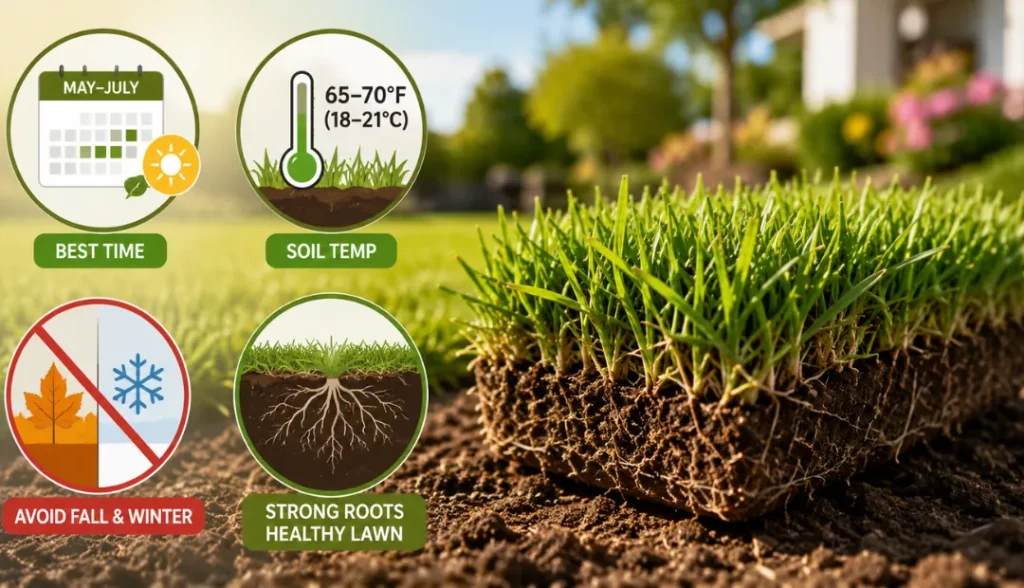
The ideal time for planting zoyasis grass is late spring to early summer. The ideal soil temperature is between 65–70°F (18–21°C). The warm season typically falls in the month of May to July. Planting in these windows provides time to establish the roots throughout the full season. A stronger root system helps to make the lawn healthy and a lush green lawn appearance.
Avoid planting in fall or winter — zoysia enters dormancy in cold temperatures and will not establish properly.
How to Plant Zoysia Grass
Three methods are commonly used to plant zoysia plants: sod, plugs, or seed.
1. Planting Zoysia Sod
This is the fastest method to establish zoysia lawn. Sod grass is pre-grown turf carpet that is harvested and rolled with the root and a thin layer of soil. This provides faster installation, instant coverage and reduces weed growth.
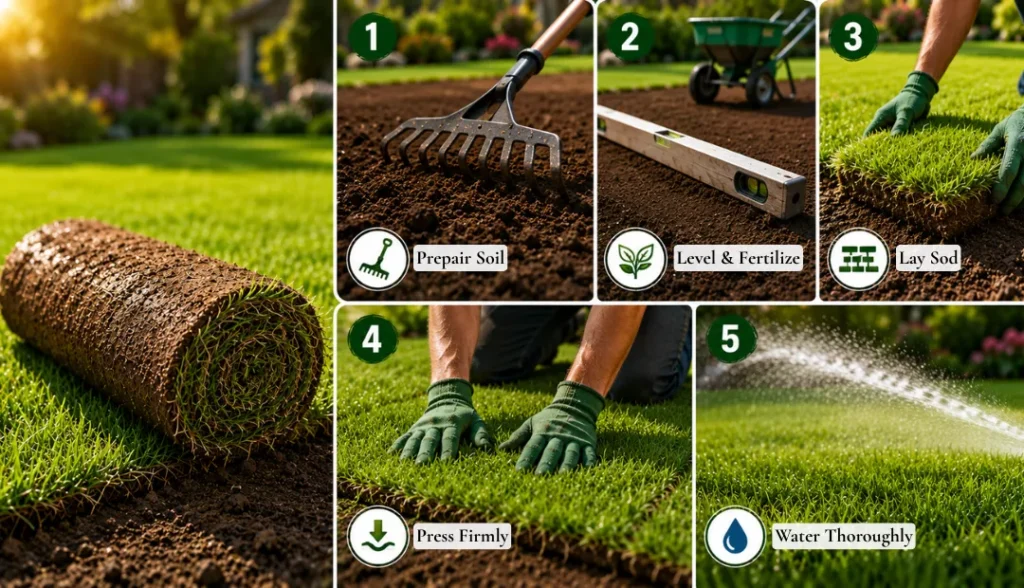
- Prepare soil by loosening around 4–6 inches deep, removing rocks, weed and debris.
- Level the soil surface and apply a fertilizer to establish healthy root growth.
- Place sod pieces in an offset brick-like pattern to create a seamless lawn.
- After installation, Press sod firmly against soil to eliminate air pockets for good root-to-soil contact.
- Water immediately and keep moist for 2–3 weeks to encourage stronger root development and help to absorb the adequate amount of nutrition from soil.
2. Planting Zoysia Plugs
Plugs are small, individual sections, typically 2–4 inches in diameter with an established root. Mainly used to repair bold patches of lawn or establish new ones.
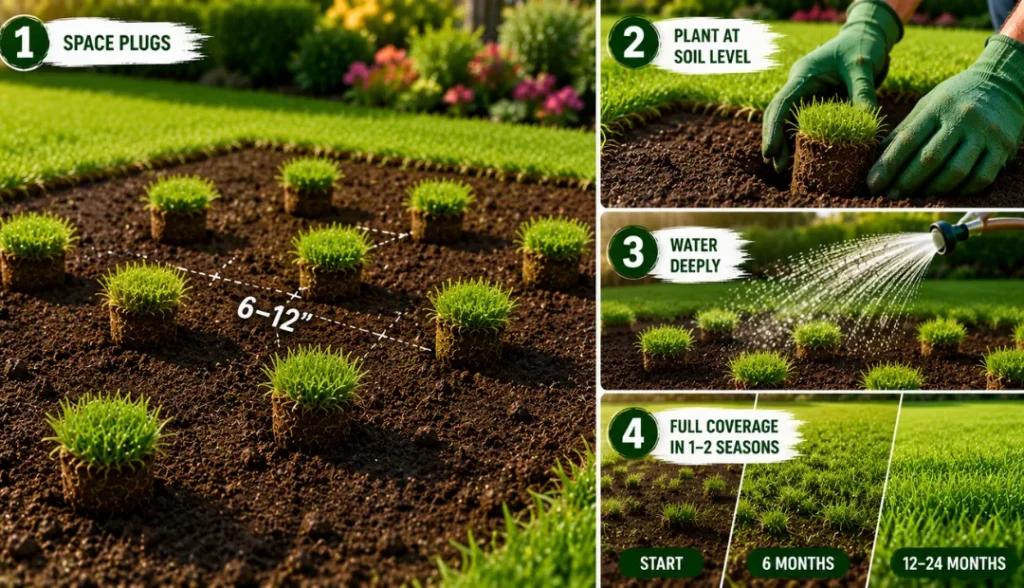
- Place plugs 6–12 inches apart, closer arrangement leads faster coverage
- Plant plugs with the soil surface, neither too high nor too deep
- Water deeply after planting that provide healthy root growth
- Zoysia turf typically takes 1–2 growing seasons to fully cover the lawn area
3. Planting Zoysia Seed
Zoysia japonica seeds are commonly used for seedling preparation. This is the most economical and slowest method for planting zoyasia grass.
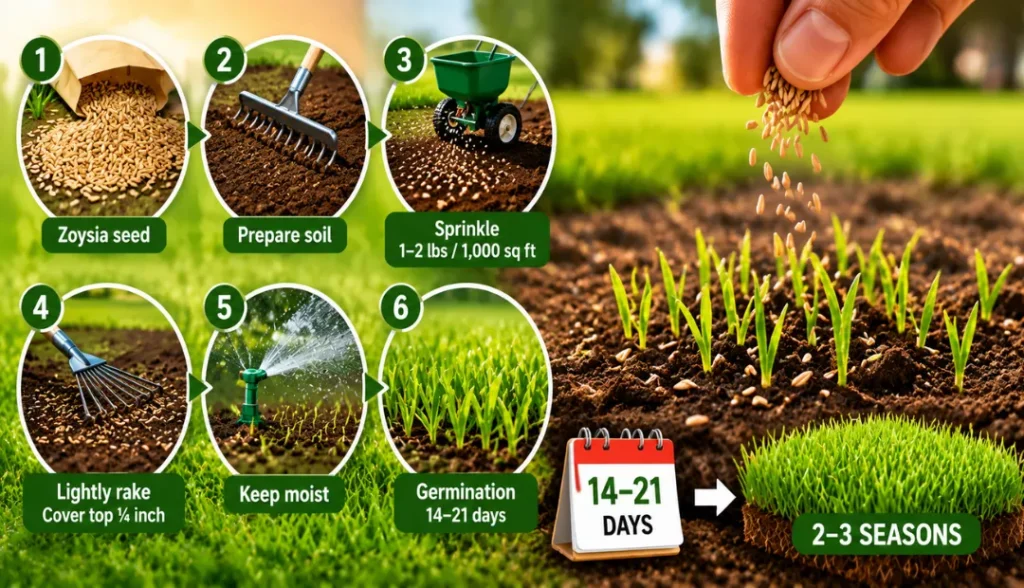
Seeds require excellent soil contact, warm temperature and consistent moisture for healthy growth.
- Prepare the soil, sprinkle seeds at a rate of 1–2 lbs per 1,000 sq ft.
- Lightly rake the area so that the seeds are covered by a thin layer of soil,top ¼ inch of soil.
- Keep the soil moist by frequent watering till seed germination(Germination typically takes place around 14–21 days).
- Planting using seeds usually takes 2-3 seasons to fully establish a dense lawn.
Watering and Fertilizing
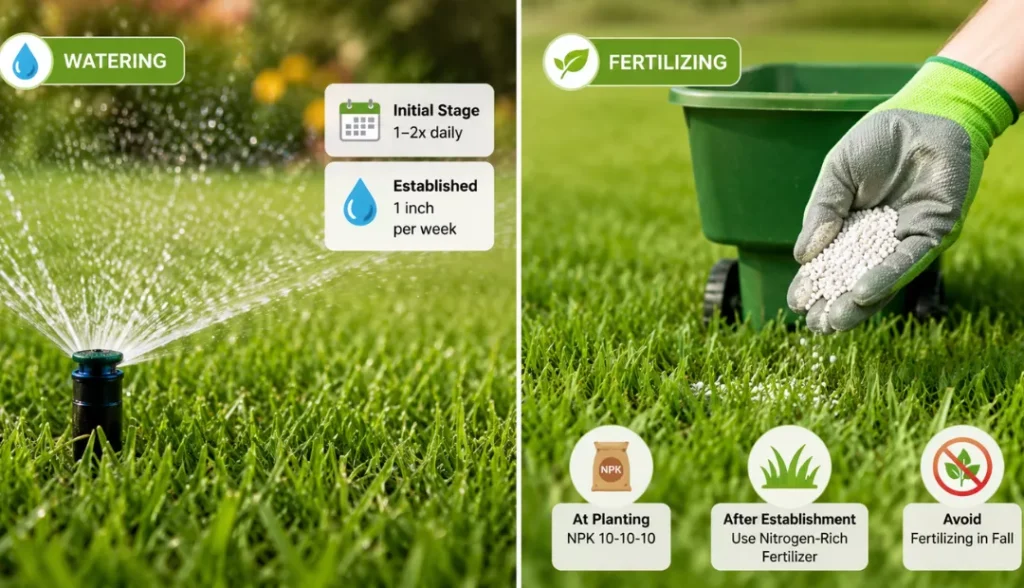
Watering: Zoysia turf requires frequent, light watering at the initial stage-typically once or twice daily. Once established, it needs only 1 inch of water per week.
Fertilizing: Apply the balance fertilizer (NPK 10-10-10) at the planting time. After the establishment, fertilize with a nitrogen-rich fertilizer for the lush green growth. Avoid fertilizing in fall, this can encourage the growth before dormancy.
Quick Review:
| Factor | Recommendation |
| Best planting time | Late spring to early summer |
| Soil pH | 6.0–6.5 |
| Sunlight requirement | minimum 4–6 hours |
| Water needs (after established) | 1 inch per week |
| Mowing height | 1–2 inches |
| Establishment time (plugs) | 1–2 seasons |
Conclusion
Zoyasia grass is an excellent choice for attractive, durable and water efficient lawn. Select the right time for planting, proper planting preparation and adequate care to provide a well established plant that stays beautiful for years. Zoysia grass planting is of a low maintenance and drought-tolerant nature, making it continues to be a top option for residential landscapes.
Don’t miss this:
- Types of Salvia That Bring Color to Any Garden
- Want a Berry Backyard? Try Growing Huckleberry Plants

Ashish is a seasoned digital marketing professional with over twelve years of experience in Facebook advertising and four years of hands-on experience in SEO. He has worked extensively on campaign strategy, audience targeting, and performance optimization. In his free time, he likes to travel, studying city layouts and natural surroundings. Connect with him on LinkedIn.