

To maintain cleanliness of quartz countertops, regularly wipe them with warm water and a few drops of mild dish washer soap using soft microfiber cloth. If you are wondering how to clean quartz countertops, this simple routine helps keep the surface shiny and free from stains without causing damage. Avoid using bleach, vinegar, abrasive cleaners, and steel wool, as they can damage the resin that binds the quartz together. For dried spills, gently use a plastic scraper to lift the residue instead of a metal one.
Many homeowners have a common misconception, while quartz countertops are known for their durability and low maintenance, they are not indestructible. Quartz resists stains and bacteria, but using the wrong cleaning products and methods can dull its finish and weaken the resin binder that holds the surface together.
This guide explains cleaning methods and preventive habits that help clean quartz countertops safely while avoiding the common mistakes that can permanently damage the surface.
What You’ll Need
To start off, you only need a few supplies to clean quartz safely.
Recommended Supplies
Keep these common items on hand:
- Soft microfiber cloth
- Mild dish soap
- Warm water
- Soft-bristle brush (for seams and edges)
- Plastic putty scraper
- Glass cleaner (optional for extra shine)
Better to avoid overcomplicating the process. Specialized products are rarely necessary for routine maintenance.
How To Care for Your Quartz Countertops: Step-by-Step
Daily cleaning takes less than five minutes and helps prevent residue buildup.
Step 1: Wipe With Warm Water
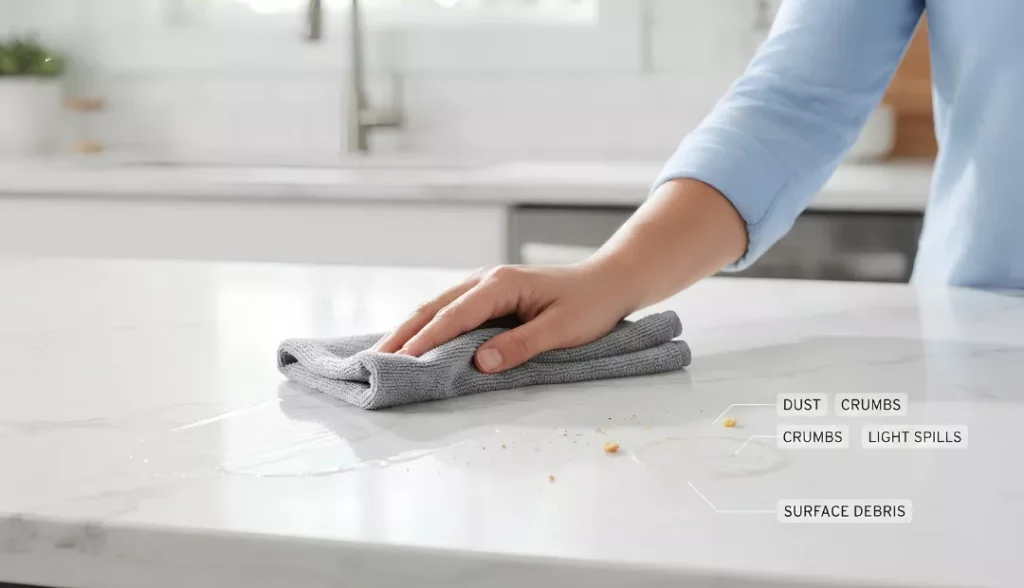
Use a damp microfiber cloth to remove:
- Dust
- Crumbs
- Light spills
- Surface debris
For daily maintenance warm water alone is enough to clean the surface.
Step 2: Apply Mild Soap for Light Residue
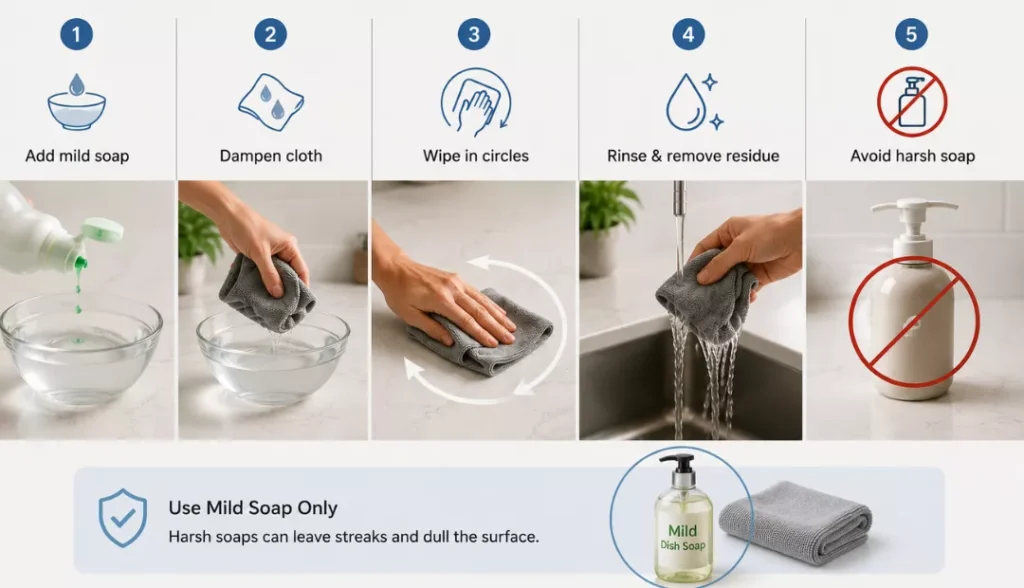
Best remedy to deal with grease or fingerprints remain:
- Add a few drops of mild dish soap to warm water.
- Dampen a microfiber cloth.
- Wipe the countertop using gentle circular motions.
- Rinse the cloth and remove any soap residue.
Do not use access soap as it may leave streaks.
Step 3: Dry With a Soft Cloth to Prevent Streaks
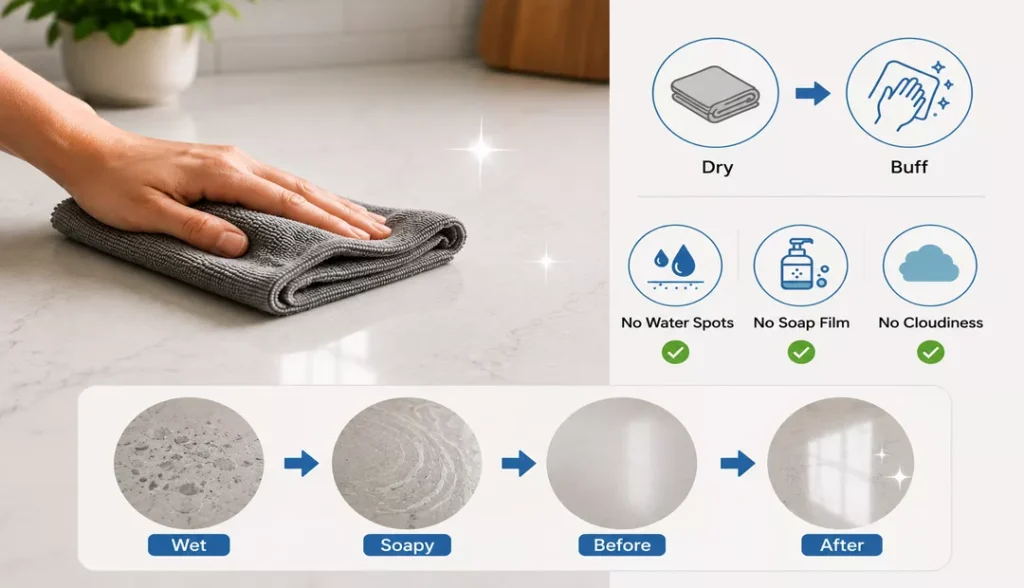
Use a dry microfiber towel to buff the surface.
Drying prevents:
- Water spots
- Soap film
- Cloudy appearance
This simple step helps preserve quartz’s natural shine.
Deep Cleaning (Weekly/Monthly)
A deeper cleaning routine is always a good idea, as daily wiping may miss invisible buildup.
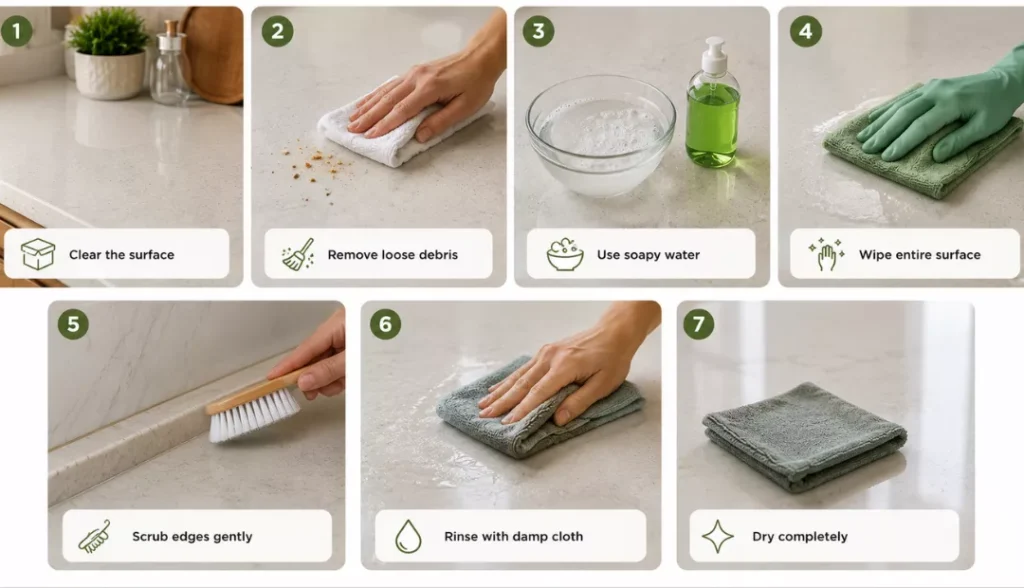
Deep Cleaning Step-by-Step:
Follow these steps once every one to four weeks.
- First, remove everything from the countertop.
- Start by wiping away loose debris.
- Mix warm water with a small amount of dish soap.
- Clean the entire surface thoroughly.
- Use a soft-bristle brush around seams and edges.
- Rinse with a damp microfiber cloth.
- Dry completely.
How to Remove Built-Up Grease or Film
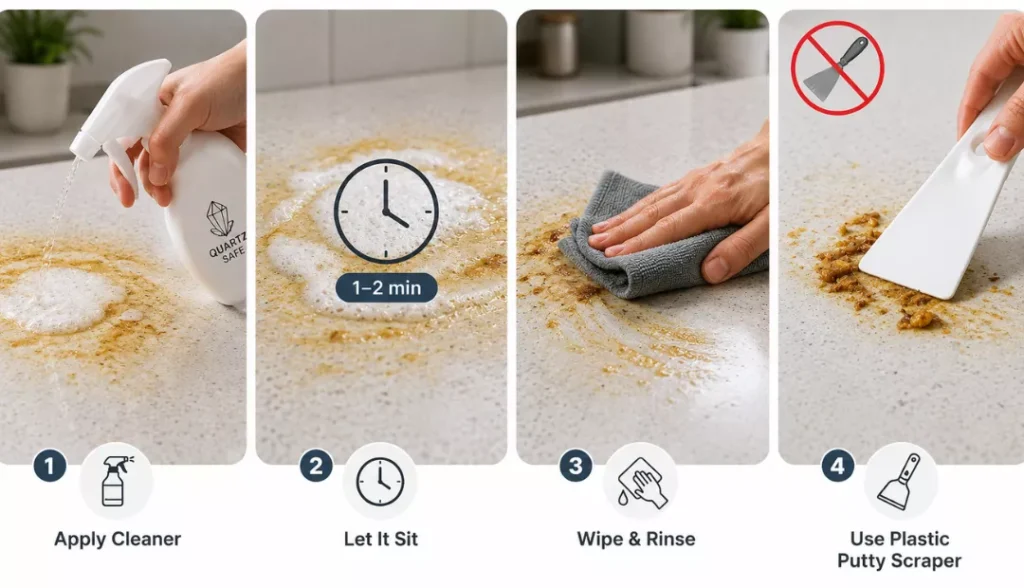
Over time, grease, oil, and residue from cleaning products can make the countertop appear dull. To remove this build-up apply a quartz-safe, non-abrasive cleaner and allow it to sit for one to two minutes. Then wipe the surface with a clean cloth and fresh water, and let it dry thoroughly to restore its shine.
For stubborn dried food residue, use a plastic putty scraper, never use a metal one as it may scratch the surface and permanently damage the countertop.
Everyday Habits That Help Quartz Last Longer
Cleaning is only one aspect of maintaining quartz countertops. Long-term care comes from building habits that help extend their lifespan.
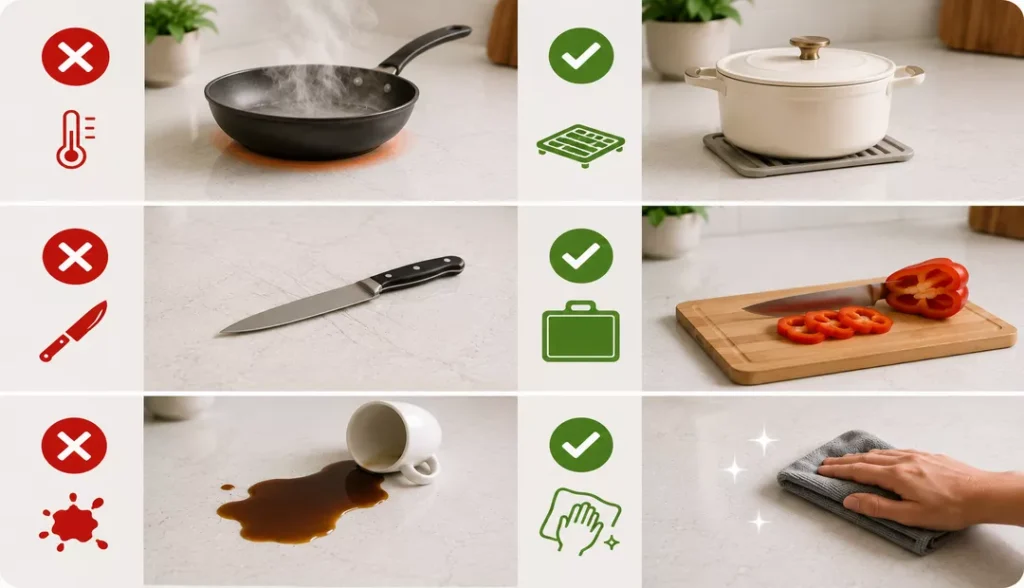
Habits to Avoid:
Never place hot pans, air fryers, slow cookers or baking trays, as direct heat can scorch or discolor the resin.
Habits to Follow:
Even if you’re in a hurry, always use cutting boards, avoid cutting directly on quartz.
While quartz is hard, repeated knives create small scratches and dull your blades.
Clean Spills Quickly
It is better to wipe up spills immediately rather than leave them unattended. Promptly cleaning coffee, tea, wine, oil splashes, and tomato sauce helps prevent residue buildup.
Key Takeaways
In most cases, spending 60 to 90 seconds each day wiping the surface is enough to prevent the buildup that eventually causes dullness and residue. If you want to understand how to clean quartz countertops properly, the key is maintaining a simple and consistent cleaning routine rather than relying on harsh products. Rather than searching for stronger cleaners when your countertop loses its shine, focus on consistency. Small daily actions are what preserve quartz over the long term, while occasional deep cleaning simply helps reset the surface.
Keep exploring further:
- How to Organize Kitchen Drawers: 5 Must-Try Storage Ideas
- Select Rich-Colored Marble Kitchen Trends 2026
- Quartz vs. Quartzite Countertops: What the Comparison Says

Navdeep is a PHP programmer by profession, & rider by passion with a strong interest in writing, reflection, and travel. His writing draws from daily experiences across online and real-world settings, often influenced by an interest in interior design and how spaces affect mood and function.