

A coverlet is a lightweight decorative bed covering that sits on top of your sheets and any blankets, typically stopping just below the edges of the mattress instead of pooling to the floor. It’s thinner than a quilt or comforter and is typically used for layering, not warmth.
Most people who search for this term do so because it’s confused between comforters vs bedspreads. They may look similar in photos, but their purpose, weight and fit are all quite different once you break them down.
Coverlet vs. Comforter vs. Bedspread
This is where things tend to jumble together, so it’s worth clarifying. So what’s the difference between a coverlet, comforter, and bedspread?
A coverlet is lightweight, understated and lays snugly on top of a bed with little drop-off. A comforter is thick and filled with insulation; it’s meant mostly to keep you warm. A bedspread is bigger and hangs all the way to the floor, used for a more traditional, fully laid out look.
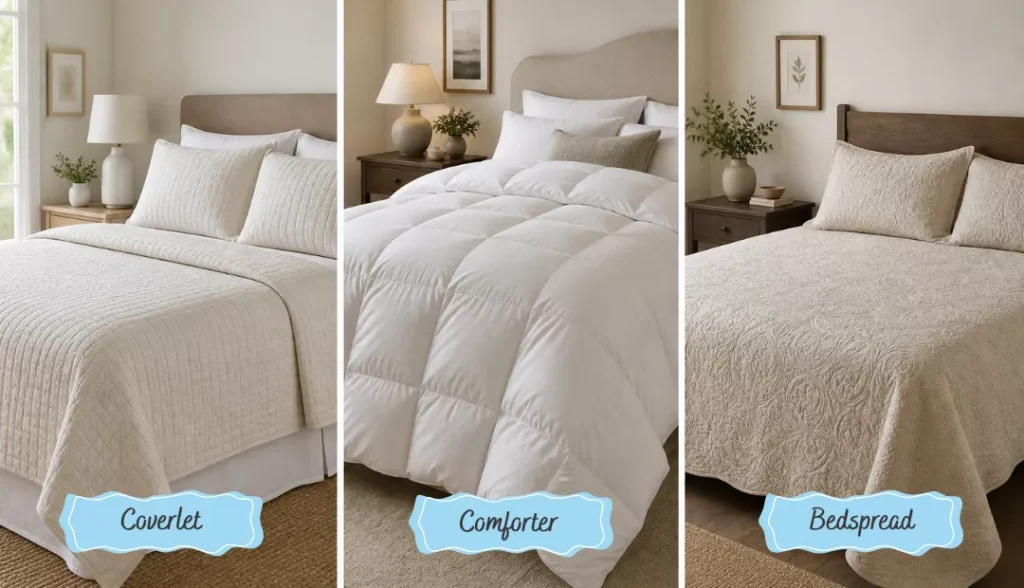
Types of Coverlets
Not every coverlet looks or feels the same. The differences between them typically come down to fabric and construction.
Matelasse coverlets are among the most popular types. They’re knitted in such a way that makes them quilted without being bulky, which means they have a slightly raised, polished finish.
Quilting coverlets may seem similar at first glance but also contain light stitching and sometimes a thin inner layer. They’re still lightweight but a little more structured.
Coverlets also come in materials like cotton, linen, and sometimes velvet. Cotton and linen are more breathable and designed for daily, practical use while velvet iterations are generally more decorative and tend to be used in cooler conditions.
What Is a Coverlet Used For?
A coverlet is a decorative layer (or two) on top of a neatly made bed, adding texture without making the entire setup feel heavy. In warmer weather or air-conditioned rooms, it takes the place of thicker blankets entirely and still feels cozy.
And outside the bedroom, it can even serve as a throw on a sofa or an easy choice for guest rooms where you want something simple and versatile.
A coverlet is frequently folded at the foot of the bed in hotel-style bedding. That little detail gives a finished effect without mussing things up too much.
How to Wash and Care for a Coverlet
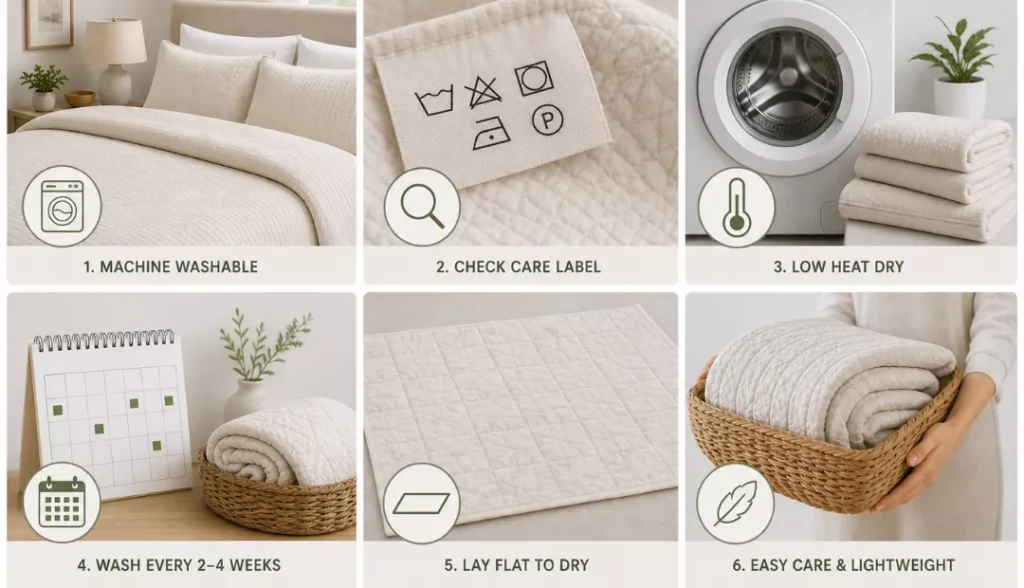
- Care varies based on the material, but most coverlets are fairly low maintenance.
- Cotton and linen coverlets are often machine washable on a cold, gentle cycle.
- Styles in matelassé or velvet may need to be dry cleaned, so check the label.
- low heat tumble drying or laying flat will prevent shrinking
- If it’s serving as a blanket, washing every two to four weeks is reasonable; if it has mostly decorative duties, once a month is generally sufficient
- Coverlets are thinner, so they wash and dry more easily than bulky bedding, making them practical for regular use.
Final Thoughts
A coverlet creates a void that heavier bedding fills. It’s lightweight, flexible and easy to style, making it helpful throughout the seasons and various room configurations.
If you want a bed that feels made up but not heavy or if you need something that works in warm as well as somewhat cool conditions (in a climate where you don’t need to sleep under a blanket year-round), then adding a coverlet is the right call.
Don’t miss this:
- How High to Hang a Picture Over a Bed
- Do Pink and Green Go Together? And How?
- What Colors Look Good with Red

Navdeep is a PHP programmer by profession, & rider by passion with a strong interest in writing, reflection, and travel. His writing draws from daily experiences across online and real-world settings, often influenced by an interest in interior design and how spaces affect mood and function.