
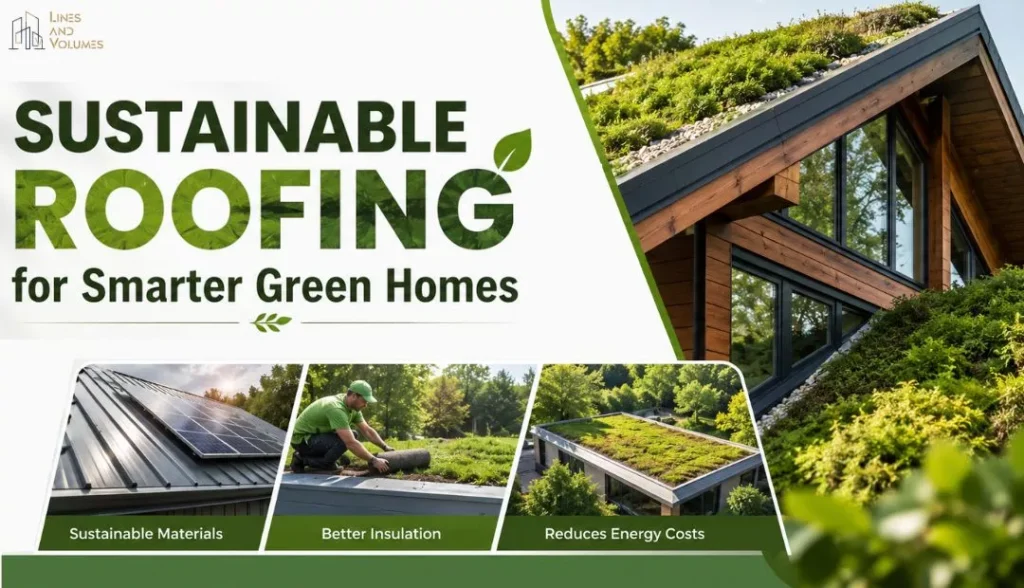
Modern roofs do much more than protect a building from the weather. They influence energy efficiency, indoor comfort, stormwater management, property value, and even urban temperatures.
Sustainable roofing systems are designed to make buildings much more energy efficient and can also extend the lifecycle of existing roof systems and lower maintenance costs for the buildings. Additionally, they have a smaller impact on the environment and can help implement renewable energy systems. Traditional roofing systems use materials that are not efficient and have shorter lifecycles. Sustainable roofing systems use much more durable and recyclable materials.
What Is Sustainable Roofing?
Many roofing materials and systems are sustainable in that they should minimize the total damage done to the environment over the whole life cycle of the product, starting with extraction of raw materials. Which involves production, installation, maintenance and energy efficiency, along with disposal or recyclability.
What Does A Sustainable Roof Usually Focus On:
- Long lifespan
- Energy efficiency
- Recyclable or recycled materials
- Reduced landfill waste
- Lower carbon footprint
- Better insulation and thermal regulation
- Weather resistance and durability
Most traditional asphalt roofs need to be replaced every 15 to 20 years, while many roofing materials may last between 40 and 100 years when properly maintained.
Benefits of Sustainable Roofing Is More Relevant Than Ever
1. Reduced Energy Bills and Improved Energy Efficiency
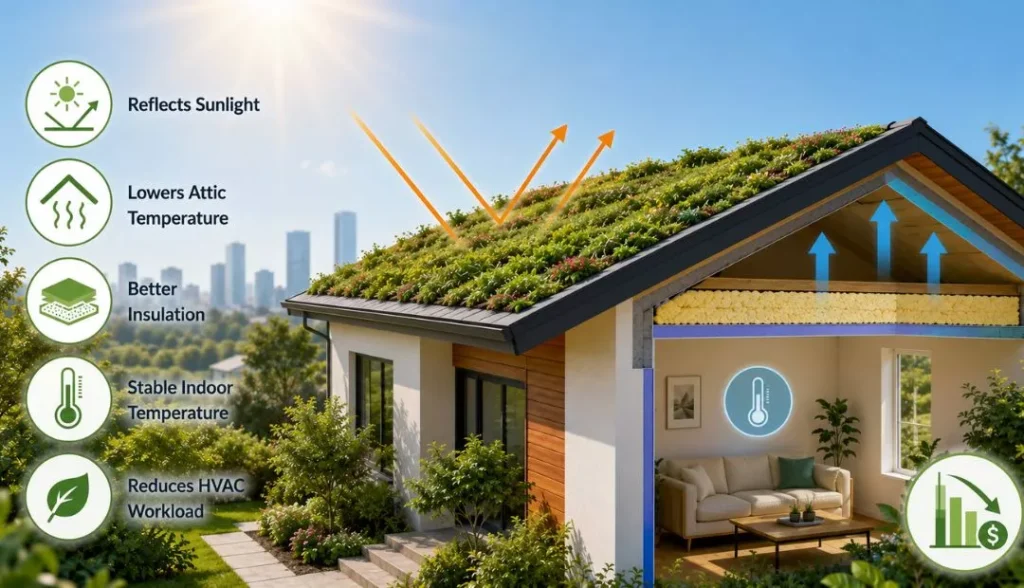
The most significant sustainable roofing benefits of a green roof is energy efficiency.
Regular dark roofs absorb large quantities of solar heat and warm interior spaces. Sustainable green roofs are usually developed having reflective coatings, improved insulation or plant layers that limit the basement warmth loss.
The cooling needs during summer can be greatly reduced by using cool roofing systems and reflective metal roofs. Some studies as well as industry estimates indicate reductions in cooling energy of 20%-40%, according to climate and roofing.
This is especially important in areas with long summers or tropical climates where air condition costs are steadily increasing. So what are the sustainable options to improve efficiency:
- Roof that reflects sunlight and not absorb heat
- Reduce attic temperatures
- Improve insulation performance
- Stabilize indoor temperatures
- Reduce HVAC workload
This results in lesser electricity utilization and a reduced monthly utility costs over the long run.
2. Exceptional Long-Term Durability
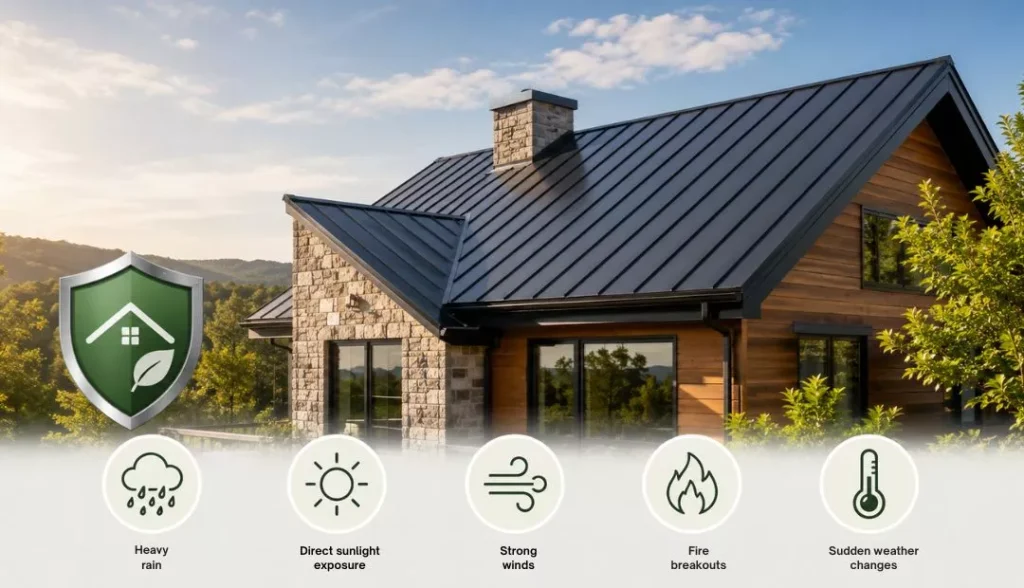
Durability is perhaps one of the biggest reasons that make homeowners go with sustainable roofing.
Many green roofing systems last decades longer than conventional materials. Most metal roofs can last 40-70 years, while a slate or clay roof can last more than 100+ in proper conditions.
Sustainable roofs are also designed to withstand:
- Heavy rainfall
- UV exposure
- Wind damage
- Fire risks
- Temperature fluctuations
3. Reduced Environmental Impact
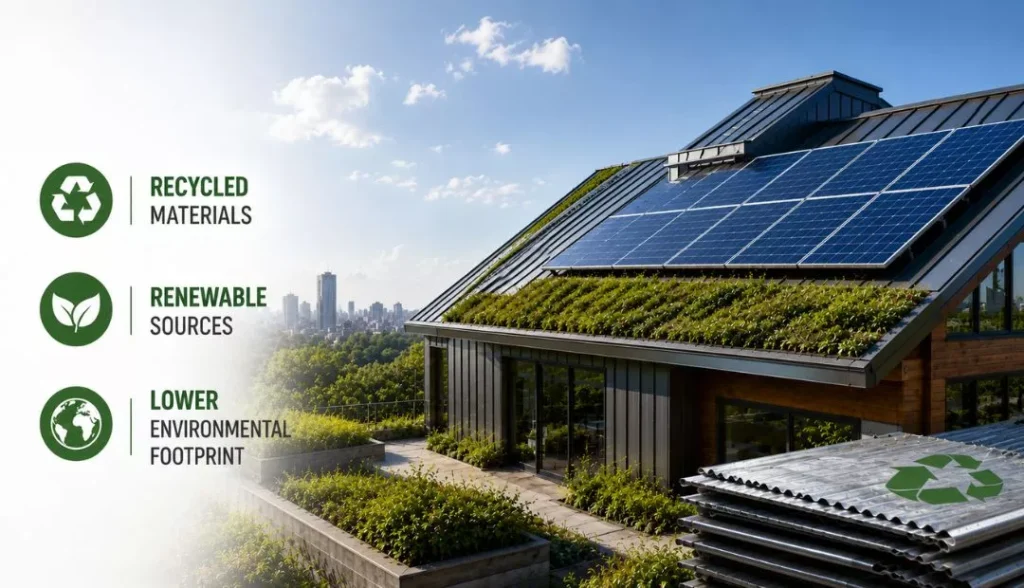
Roofing systems that are sustainable directly reduce strain on the environment to a greater extent.
Manufacturers make most eco-friendly roofing materials from recycled or renewable resources. For example, they produce metal roofing from recycled steel or aluminum, and they can recycle it again at the end of its lifespan.
4. Improved Indoor Comfort
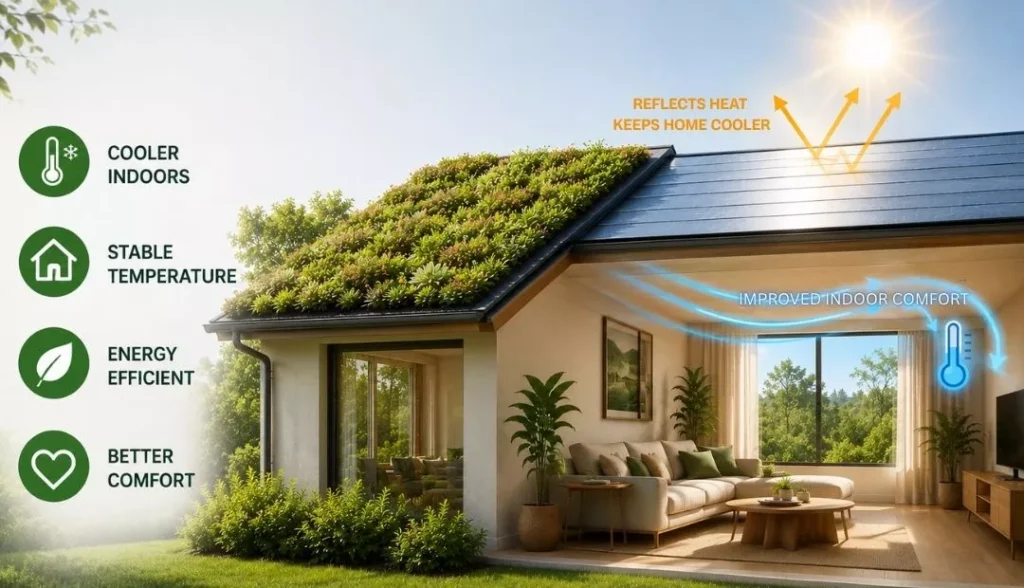
The roof contributes to the indoor comfort of a building. Sustainable roofing materials like clay tiles, green roofs, insulated roofing systems, and cool roofs help in cooling the indoor temperatures.
When rooms heat up by day and cool down by night, sustainable roofs help the room maintain a stable temperature.
This can provide a visible benefit throughout peak summer months in residential environments.
5. Green Roofs Combat Urban Heat Islands
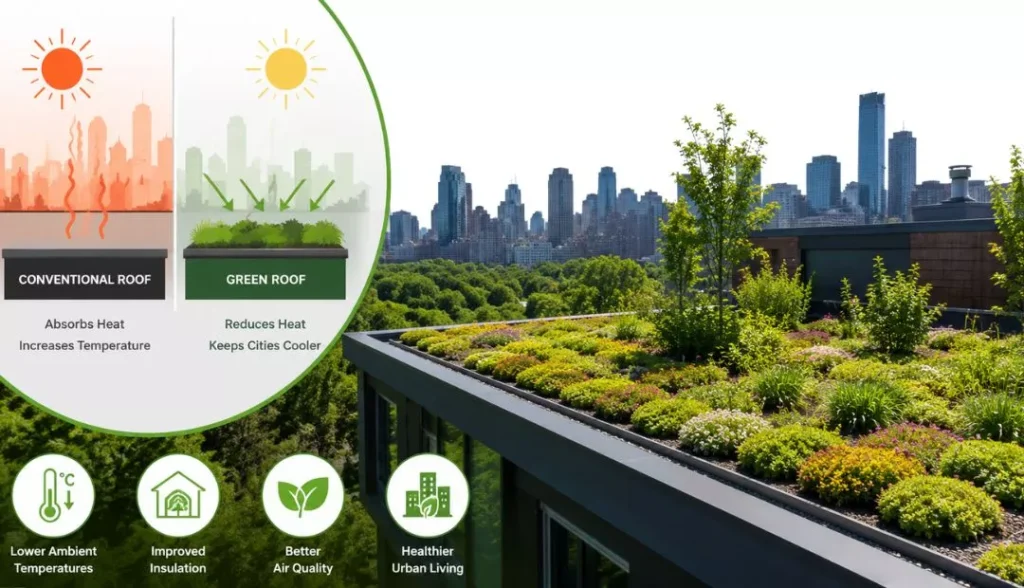
As urban areas tend to become hot, the surrounding rural areas’ temperature also rises. Asphalt, concrete and dark rooftops absorb and retain heat. The effect of accumulation of heat, referred to as an urban heat-island effect.
Green roofs (or living roofs) address this problem by replacing surface cover that absorbs heat with layers of vegetation. Indeed, research on green roofs shows they reduce ambient temperatures and improve insulation as well as air quality but that’s different from the impact of greenspace on human health.
6. Better Stormwater Management
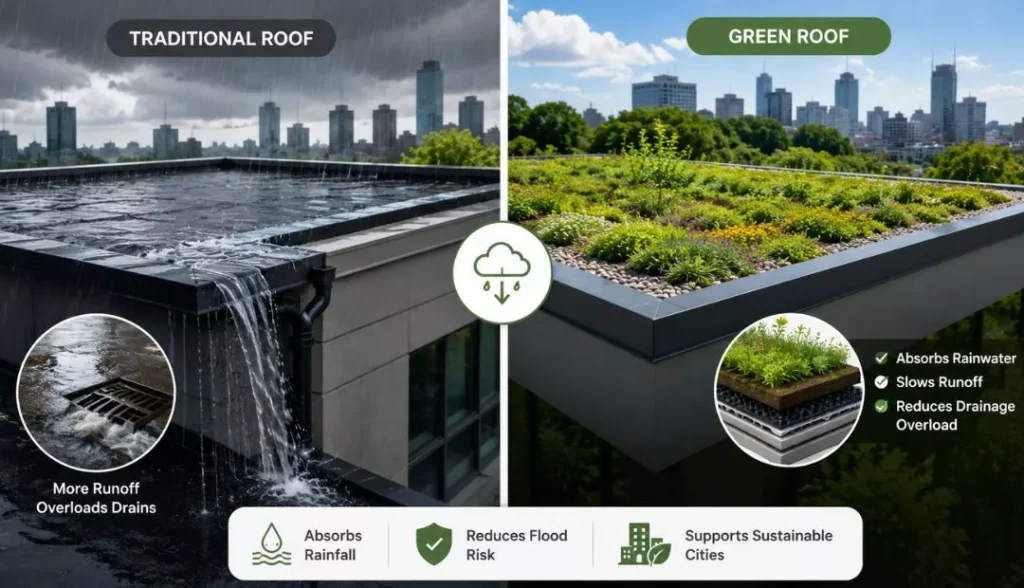
It can also enhance the management of water going down away from rooftops.
Normal roofs drain rainwater into the drainage systems and put more pressure on runoff during storms. Green roofs and permeable roofing systems absorb and slow rainfall, reducing drainage overload.
In cities excess rain causes drainage systems, it is one aspect of an overall environmental plan.
7. Lower Maintenance Costs
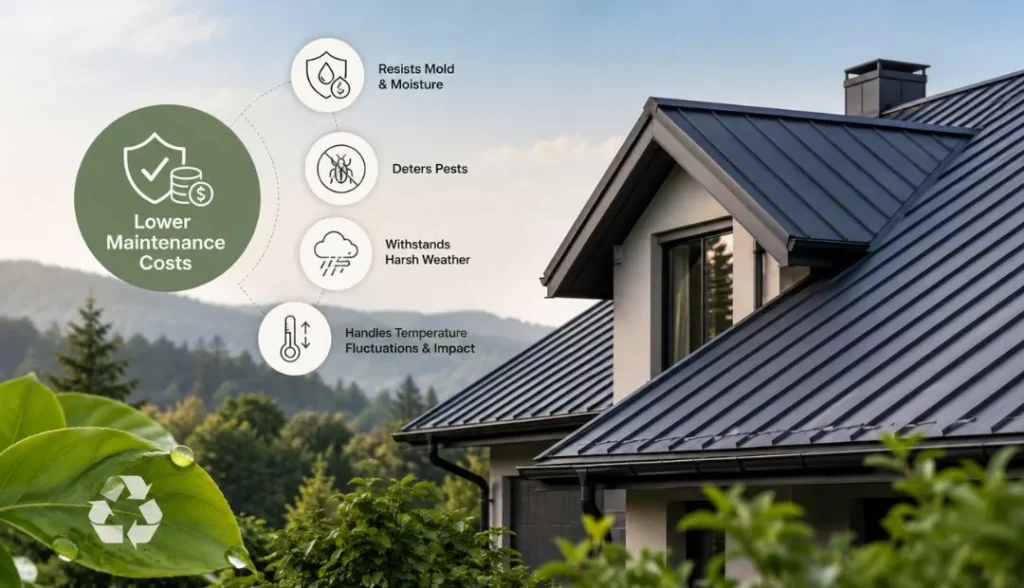
Designers create most sustainable roofing materials for longevity and resilience.
Metal roofs also handle mold damage as well as aid against pests. Slate and clay resist any damage from weather. Best composite roofing systems are designed for temperature fluctuations and impact damage.
8. Supports Solar Panel Installation
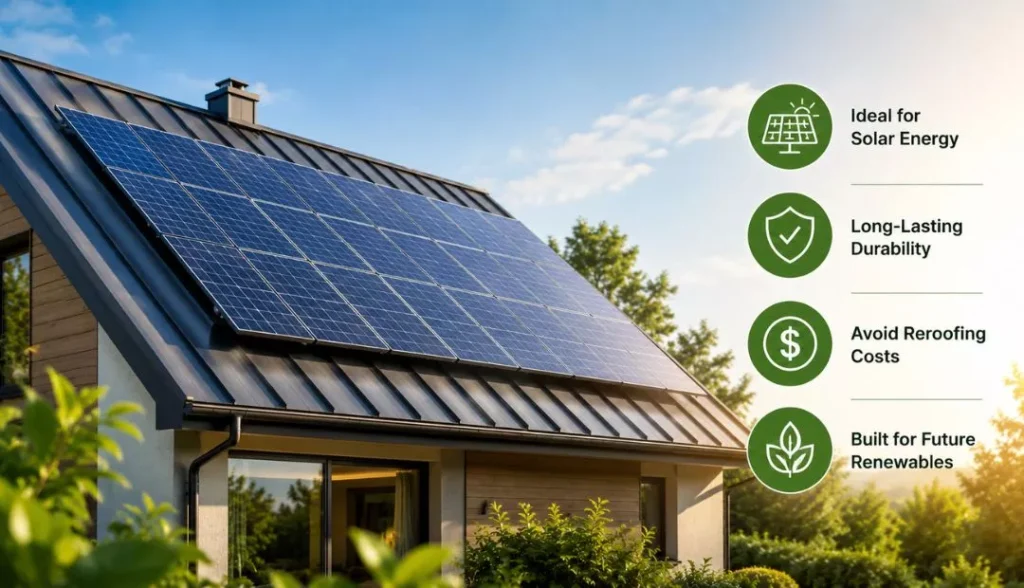
Many sustainable roofs work exceptionally well with solar energy systems.
People often pair roofing with solar panels, especially metal roofing due to its long lifespan and durability. Homeowners sidestep the cost of reroofing partway through a solar installation lifecycle, as quality metal roofs can last longer than solar systems themselves.
It is also a great foundation for near future renewables.
Final Thoughts
They go beyond simply reducing carbon emissions and deliver long-term value by lowering utility bills, improving indoor comfort levels, and extending roof lifespan with less maintenance. Over time, investing in sustainable roofing benefits such as better thermal regulation and weather resistance helps buildings perform more efficiently and withstand climate-related stress. As construction continues to shift toward energy-efficient and climate-friendly design, it is becoming a hallmark of modern building performance—not just an upgrade.
Keep exploring:

Ashish is a seasoned digital marketing professional with over twelve years of experience in Facebook advertising and four years of hands-on experience in SEO. He has worked extensively on campaign strategy, audience targeting, and performance optimization. In his free time, he likes to travel, studying city layouts and natural surroundings. Connect with him on LinkedIn.