Let’s cut the clutter. The internet is full of kitchen mirror splashback ideas and discussions about their growing popularity. But what are their practical use case? How easy are they to clean? And are they really worth the investment? Let’s explore these questions before you decide whether one is right for your kitchen.
1. How do they protect walls?
A splashback shields the wall behind from food spills while cooking. At the same time, it adds a sense of elegance and creates visually striking interiors. Moreover, the market offers a wide range of materials, colors, and personalized design options.
2. Easy to clean
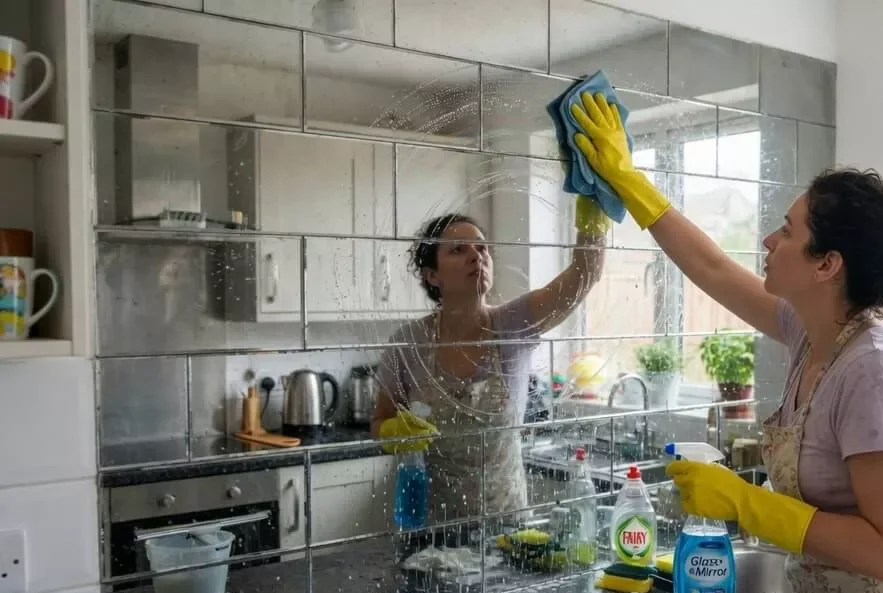
As the mirror glass is non-porous, it’s very easy to clean just one wipe removes all the dirt.
3. Space feel bigger and brighter
The mirror also reflects light around the kitchen, so even low-light corner and small kitchens feel more open and airy.
4. Better Visibility
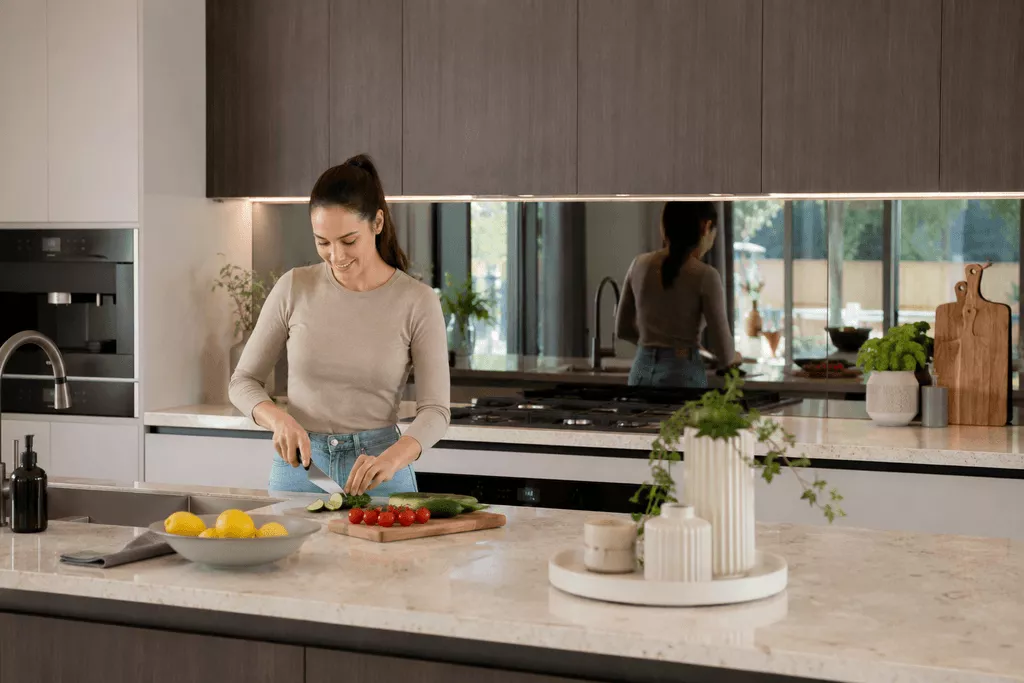
Being able to see behind you, depending on placement, adds awareness and feels a bit like having a rear-view window.
5. Customization Options
Mirrors give a contemporary, minimalist finish. You can pair them with a wide range of materials available in the market, such as wood, stone, or matte finishes.
Pros And Cons of Kitchen Splashbacks
Pros:
- Mirror glass wipes down quickly with a glass cleaner.
- Mirrors don’t age like patterned tiles, which makes them timeless.
- Tempered mirror glass can handle the heat behind a hob.
- Mirrors can be cut to size and shaped around outlets and switches, giving a neat finish.
Cons:
- Get used to fingerprints, splashes, and streaks on mirror surfaces.
- Reflections look great, but once you place appliances, the space can feel chaotic or visually noisy.
- While cleaning, scrubs and abrasive cleaners can still scratch mirror glass.
- Mirror splashbacks tend to be more expensive than simple tile.
Are They Worth the Investment?
In short, think about budget, maintenance, visual clutter, style mismatch, and make decisions accordingly. Here’s a straight look about every thing:
- Compared to tiles with grout, mirrors wipe clean fast.
- Mirrors aren’t tied to trends the way bold tiles or colors can be. They feel timeless.
- The kitchen looks bigger without structural changes.
Why it might not work for everyone
Basic mirrors start at roughly $10 to $50 per square foot and can go up to $400–$600+ per square metre. Again, the final price depends on the material you choose, along with the thickness and finish.
If upfront cost matters most, mirrors may not be ideal. The more you customize, the higher the price, and the cost is nowhere near that of traditional tiles or painted walls. So don’t be in that frame of mind.
Read more:
- Why White Kitchen Cabinets with Granite Countertops Works
- Select Rich-Colored Marble Kitchen Trends 2026

Mansi is a creative designer with three years of professional experience, specializing in clean, balanced, and purpose-driven visuals. She is also a passionate writer whose work shows a strong sense of layout, composition, and visual hierarchy. Outside work, she enjoys sketching, experimenting with color, and spending time around plants and outdoor spaces. Connect with her on LinkedIn.