
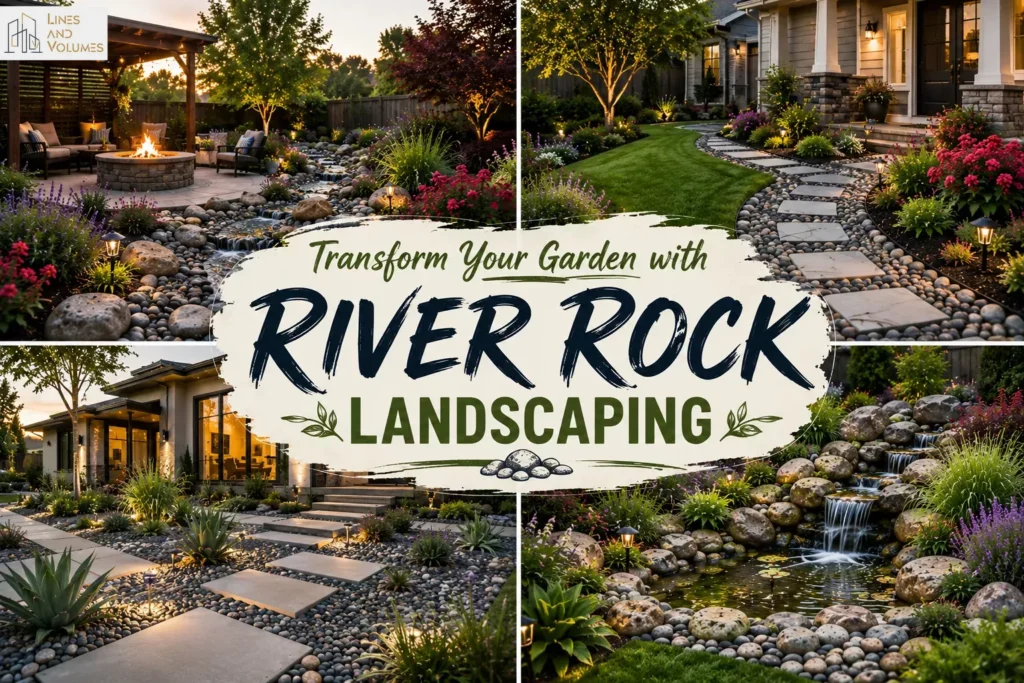
River rocks are smooth, naturally rounded stones to enhance indoor and outdoor spaces, especially in river rock landscaping projects where they create a clean and natural look. The source of the rocks is generally found in riverbeds or quarries. Sizes can range from small pebbles measuring 1–2 inches to large boulders measuring 12 inches or more. They come in different colors, including gray, tan, brown, white, and multicolor blends. It is widely used in commercial as well as residential projects.
What Is River Rock Landscaping?
This involves water-worn stones to decorate the garden, yards, pathways, and drainage areas. River stones are low-maintenance and durable compared to mulch and gravel. They are popular choices for xeriscaping, dry creek beds, garden borders, and erosion control.
Uses of River Rock in Landscaping
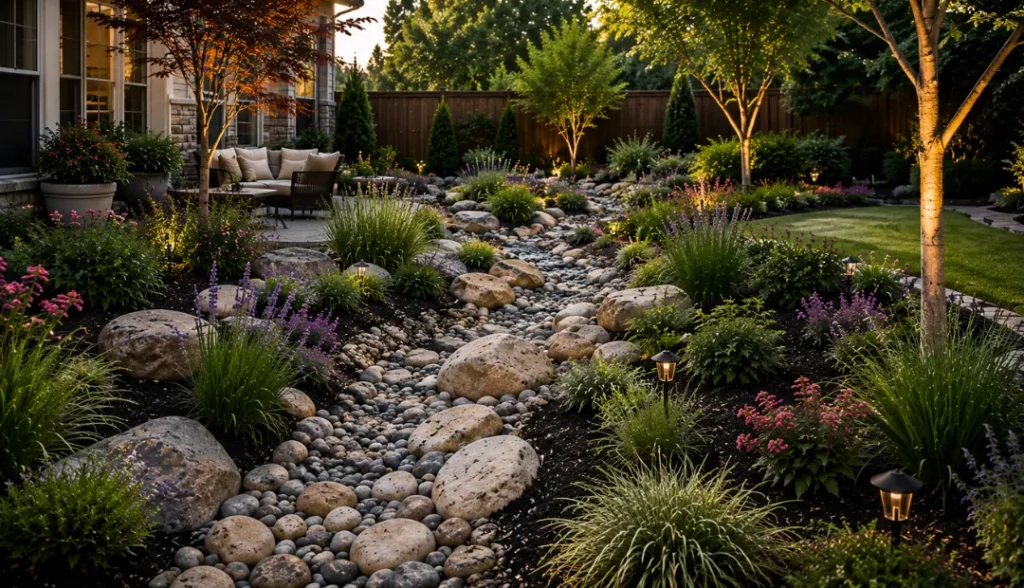
1. Dry Creek Beds
River stones are used to decorate dry creek beds that create a natural stream-like appearance in the landscape. Moreover, they guide rainwater, reduce soil erosion, and add visual interest to the area.
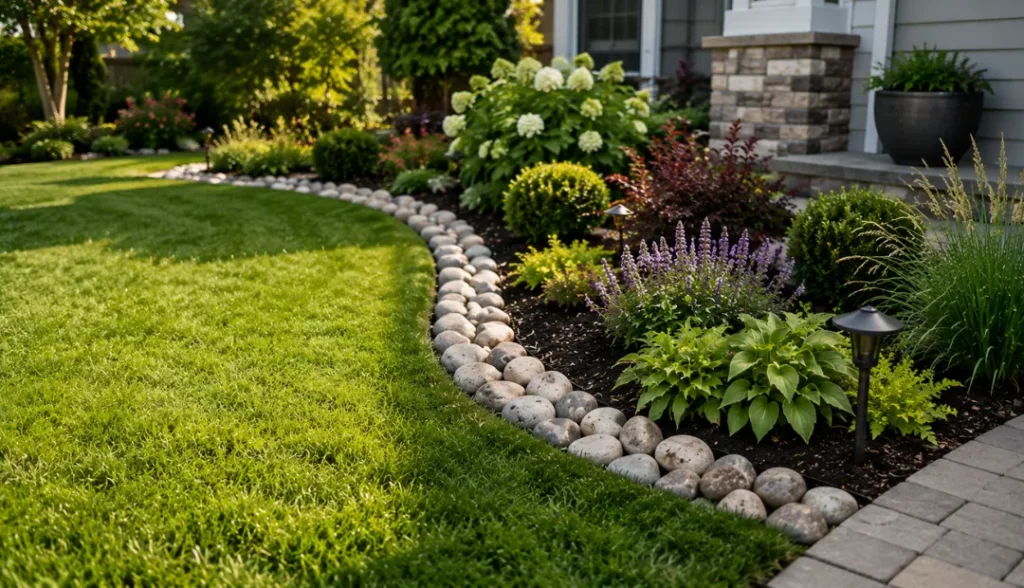
2. Garden Borders and Edging
Medium-sized rocks are used to define the edges of the lawn, flower beds, and walkways. Moreover, they settle better than plastic edging and provide a natural aesthetic look.
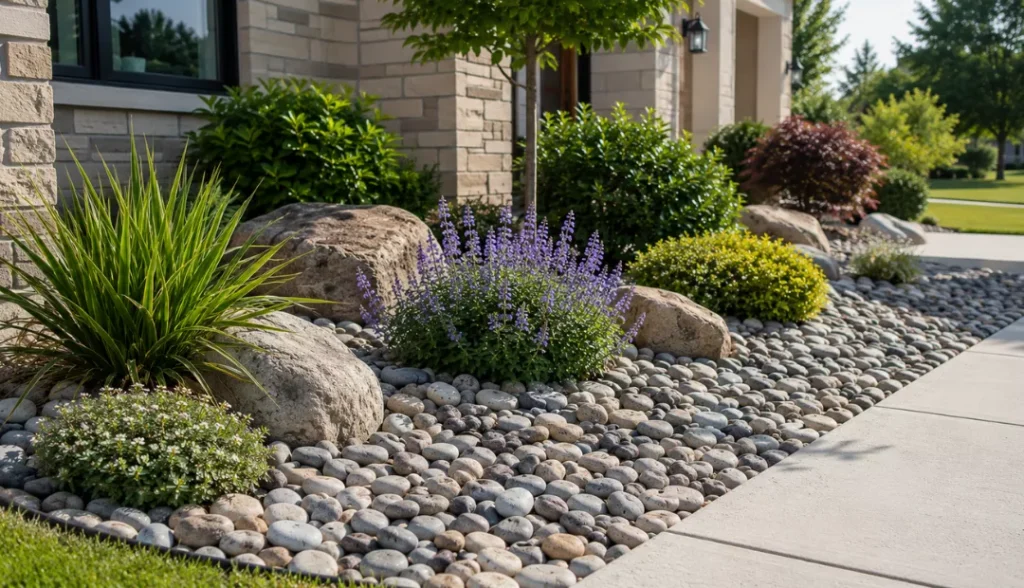
3. Ground Cover and Mulch Alternative
River rocks are a preferred option rather than organic mulch. Rocks reduce the growth of weeds and help to retain soil moisture. Unlike the mulch, river stones are low-maintenance and do not attract insects.
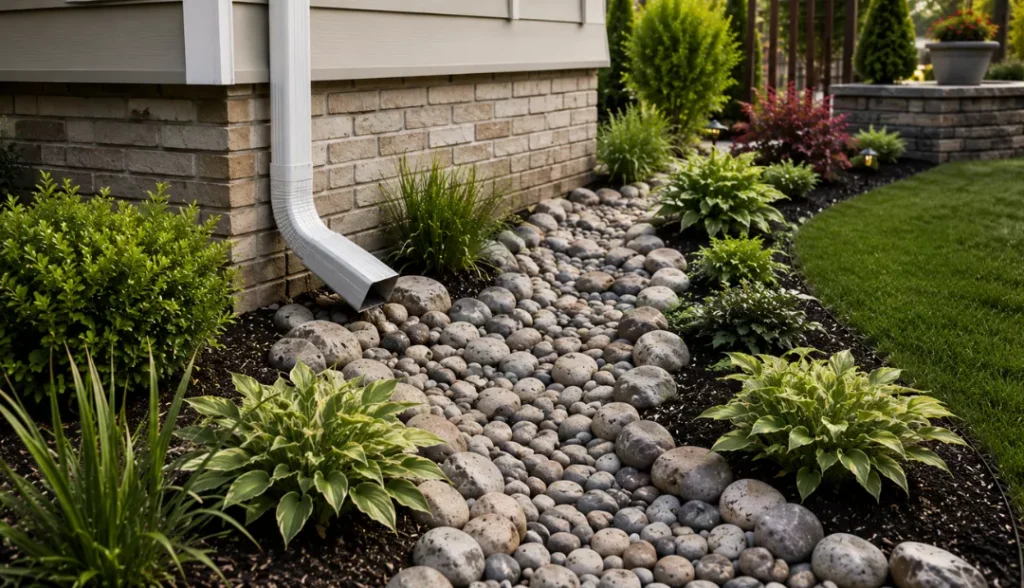
4. Drainage Solutions
River stones are used to drain the water from the French drain and downspout, where their porous arrangement allows water to flow freely and prevents soil displacement.
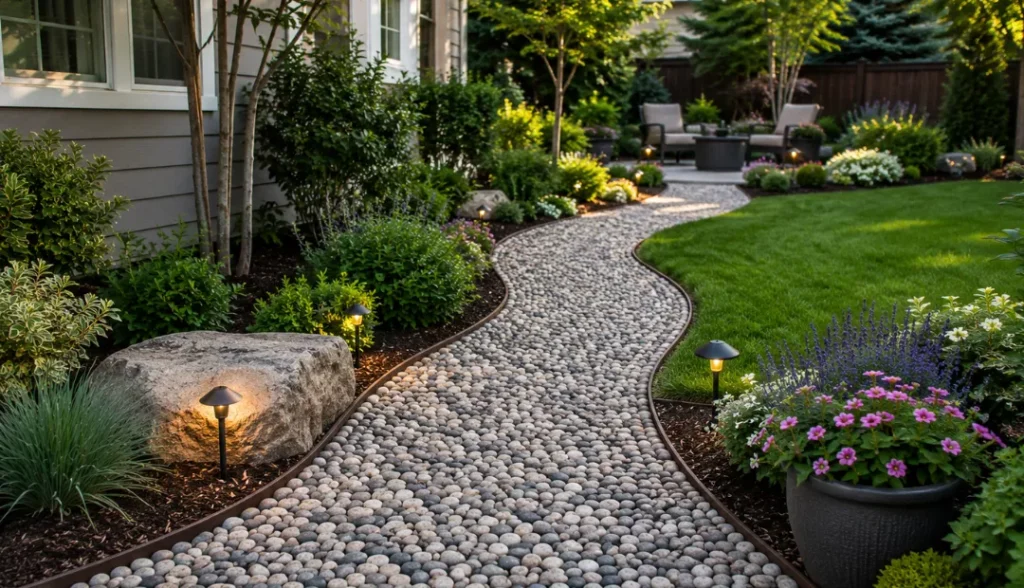
5. Pathways and Walkways
Small river pebbles create a pathway or a stable walking surface, and they are popularly used for gardening, home décor, and plant pot toppers.
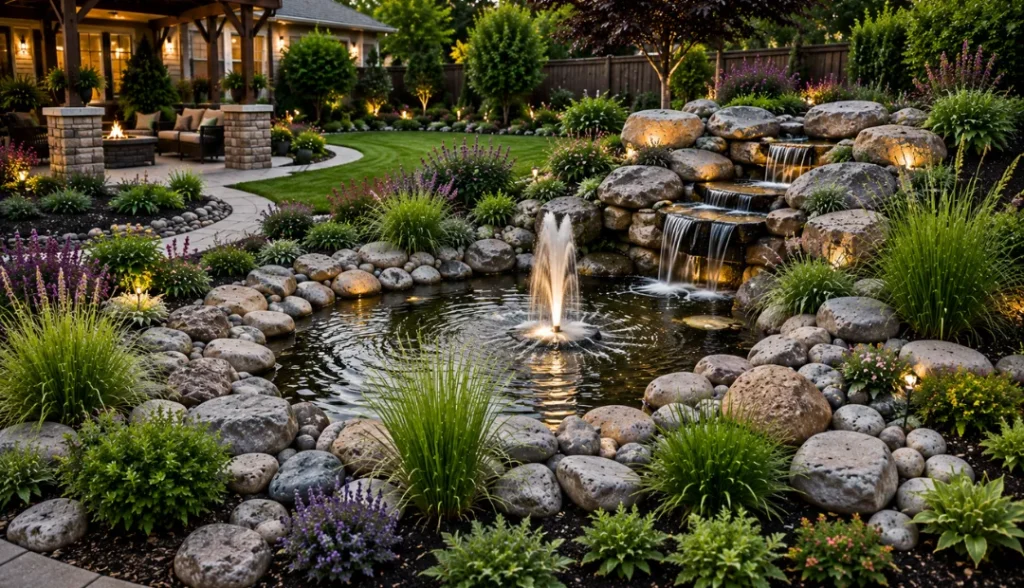
6. Water Features
River stones are used to decorate ponds, fountains, and waterfalls, helping create natural-looking edges.
Benefits of River Rock Landscaping
- Low maintenance: Rocks are sustainable and easy to maintain; no need for watering, mowing, or seasonal replacement.
- Durability: River stones maintain their appearance for many years with minimal care.
- Water conservation: Ideal for low rainfall regions; reduces the need for watering.
- Erosion control: Heavy rocks stay in place during the rainfall, protecting slopes and soil from being washed away.
- Pest resistance: Mulch traps the water for a longer period of time, often attracting insects. Unlike wood mulch, river stones are less likely to attract termites or fungus.
- Aesthetic versatility: Available in multiple sizes, colors, and shapes to match any landscape style.
How to Install River Rock: Step-by-Step
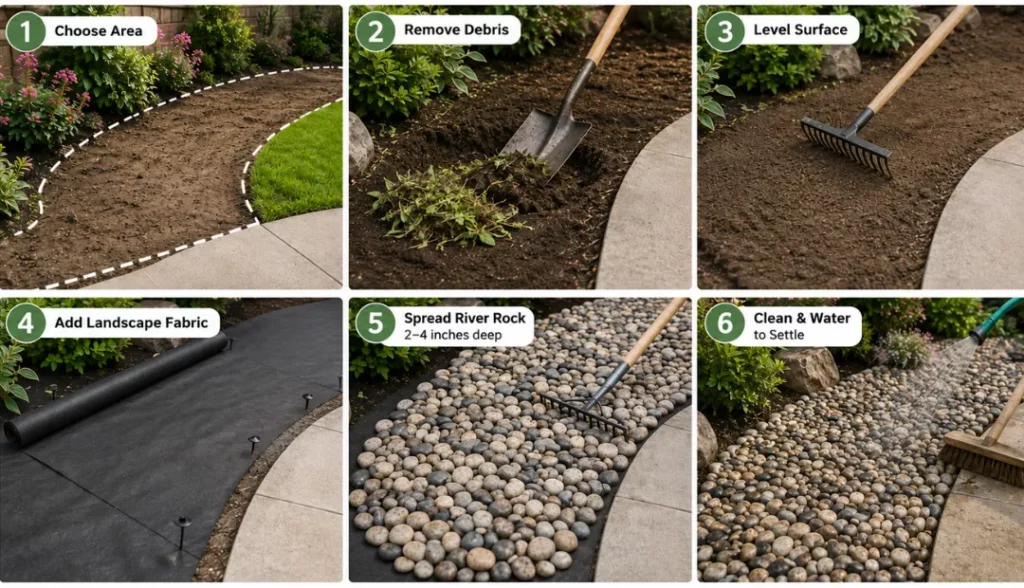
- Step 1: Choose the area such as a garden bed, pathways, drainage area, or any landscape feature. Mark the boundaries to avoid inaccurate installation
- Step 2: Remove unwanted grass, weeds, and debris. A clean surface helps create a solid foundation for the rocks
- Step 3: Loosen the soil if necessary and level the surface using a rake. Fill any low spots to create an even base to ensure proper drainage
- Step 4 Lay landscape fabric over the prepared area and secure it with landscape pins. This barrier helps suppress weeds while allowing water to pass through the soil
- Step 5: Spread rocks evenly at the surface at the depth of 2–4 inches
- Step 6: Remove excess rocks from borders or walkways. Water the area lightly to settle the rocks
Best Types of River Rock for Landscaping
| Rock Type | Size | Best Use |
| Pea gravel | 1/4–1/2 inch | Pathways, playgrounds |
| Small river rock | 1–2 inches | Ground cover, drainage |
| Medium river rock | 3–5 inches | Garden borders, dry creek beds |
| Large river rock | 6–12 inches | Focal points, water features |
| Boulders | 12+ inches | landscape walls, accent pieces |
Is River Rock Landscaping Right for You?
River rock landscaping is a practical and effective way to enhance indoor and outdoor spaces. In addition, it is a low-maintenance, water-efficient, and durable option compared to traditional mulch or grass. However, for high moisture zones, mulch is a better short-term option as it breaks down and enriches the soil.
By selecting the right size and proper installation practices, it helps create an attractive backyard landscape that requires minimal maintenance.
Check out more:
- Low Cost Fire Pit Landscape Design Ideas
- Retaining Wall Ideas: 20 Smart Designs to Upgrade Your Landscape

Ashish is a seasoned digital marketing professional with over twelve years of experience in Facebook advertising and four years of hands-on experience in SEO. He has worked extensively on campaign strategy, audience targeting, and performance optimization. In his free time, he likes to travel, studying city layouts and natural surroundings. Connect with him on LinkedIn.