
A huckleberry plant is a North American shrub that produces berries. If you are thinking about growing huckleberry plants, you will love their sweet-tart flavor and high nutritional profile. These berries are usually round and smaller, but they pack a richer flavor. They are valued for both their nutrition and their ability to grow well under different conditions.
A Huckleberry Plant Identification
A huckleberry plant belongs to the Ericaceae family. It has oval leaves and small bell-shaped flowers. These flowers are typically in white or pale pink color and bloom during spring. Each blueberry contains many small seeds that are soft and usually unnoticeable when eaten.
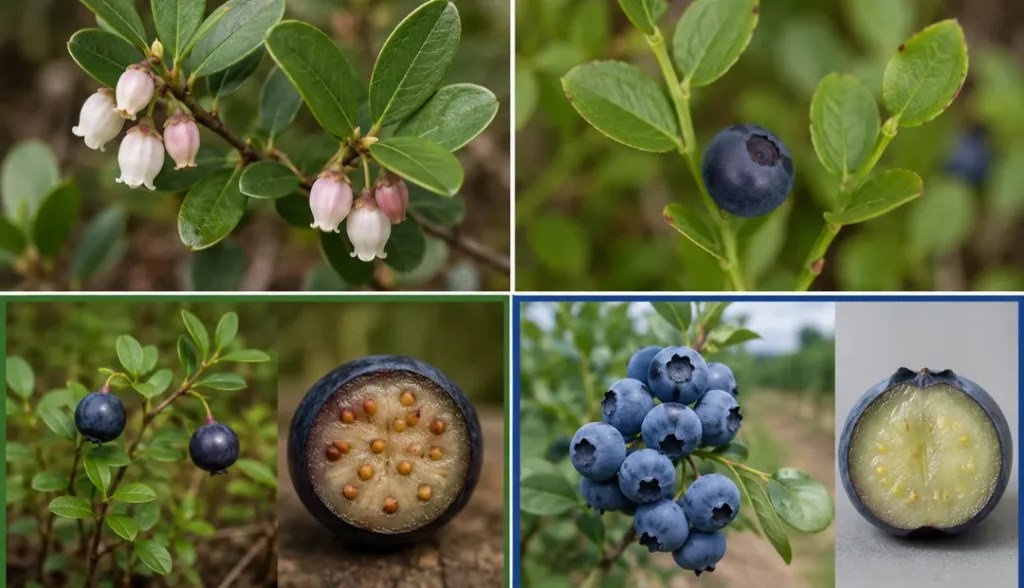
The major difference between huckleberries and blueberries lies in their growing patterns. Farmers find blueberries in big clusters and sell them in supermarkets. However, huckleberries grow alone and are often foraged in the wild, not farmed. Huckleberries have ten hard and gritty seeds where blueberries have tiny edible seeds.
Types of Huckleberries
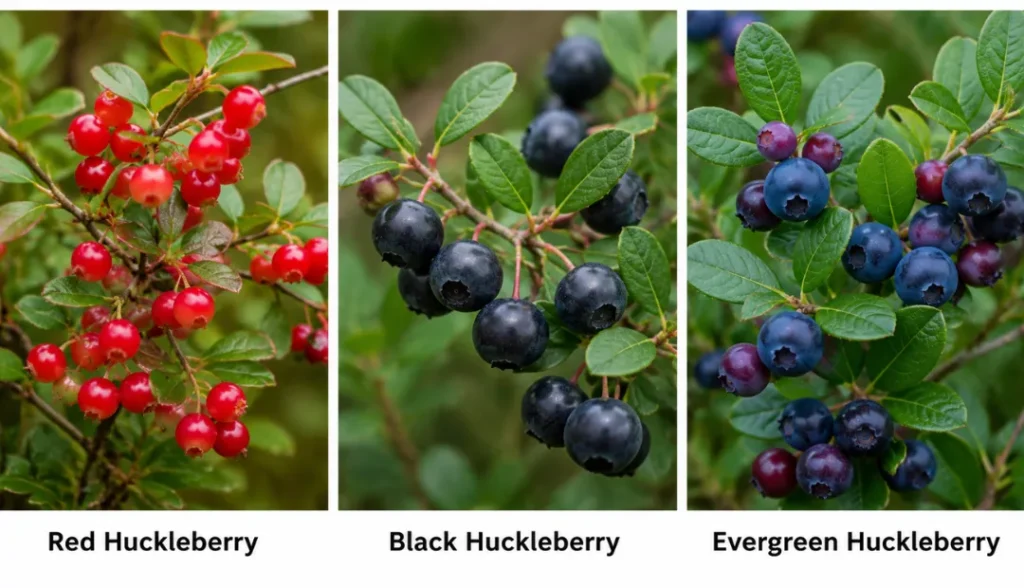
More than a dozen huckleberry species grow across North America, and many of their differences stem from the plant genera to which they belong.
- Red Huckleberry (Vaccinium parvifolium): This bright red berry is sweet-tart. It usually grows in forests and tolerates partial shade.
- Black Huckleberry (Vaccinium membranaceum): Grows in the northwestern U.S. and western Canada. The berries are dark purple-black in color when they ripe. It is the state fruit of Idaho.
- Evergreen Huckleberry (Vaccinium ovatum): This shrub grows dark blue-deep wine berries in the summer season. They are most commonly found along the Pacific Coast of North America.
Ideal Conditions for Growing Huckleberry
The huckleberry plant grows well in cool, moderate climates. It is usually hardy in USDA zones 4-7 for most varieties. For optimal growth, it requires humus-rich and well-drained soil. However, plants must have moist and a bit of acidic soil with a pH of 4.5 to 6.0. This plant is sensitive to heat, so provide partial shade in the afternoon to protect it.
How to Plant Huckleberries (Step by Step)
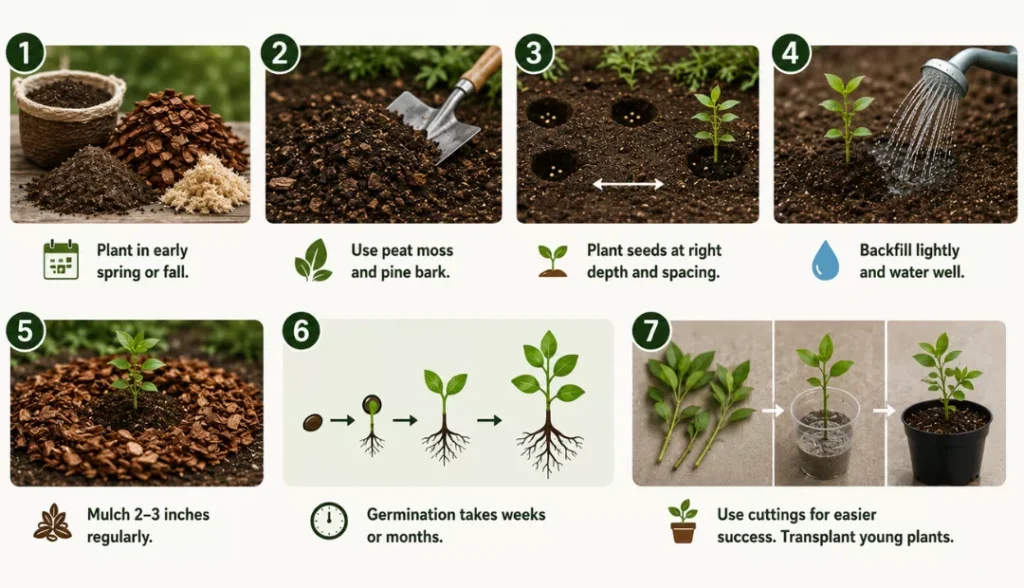
- The best time to plant huckleberry plants is early spring or fall
- Set the planting area with a mixture of peat moss and pine bark to improve drainage and acidity
- Plant seeds at the correct depth and make proper spacing to support healthy seedling growth
- Backfill the soil with a light touch and ensure it receives ample water after planting
- Apply mulching 2 to 3 inches at the regular interval for moisture retention and air circulation
- Seed germination may take a few weeks or several months; it depends on the environmental conditions
For a simpler approach, start with cuttings instead of growing huckleberries from seeds. You can transplant young plants. Using rooting hormones boosts success rates and helps strengthen root cultivation.
Watering and fertilizing Huckleberries
Consistent watering and fertilizing huckleberry plants is key for healthy growth of the plant and fruit. Keeps the soil moist and use of fertilizer in early spring is beneficial. Applying acid-loving formulas like azaleas or holly, slow-acid release fertilizers work well.
Common problems while growing huckleberries
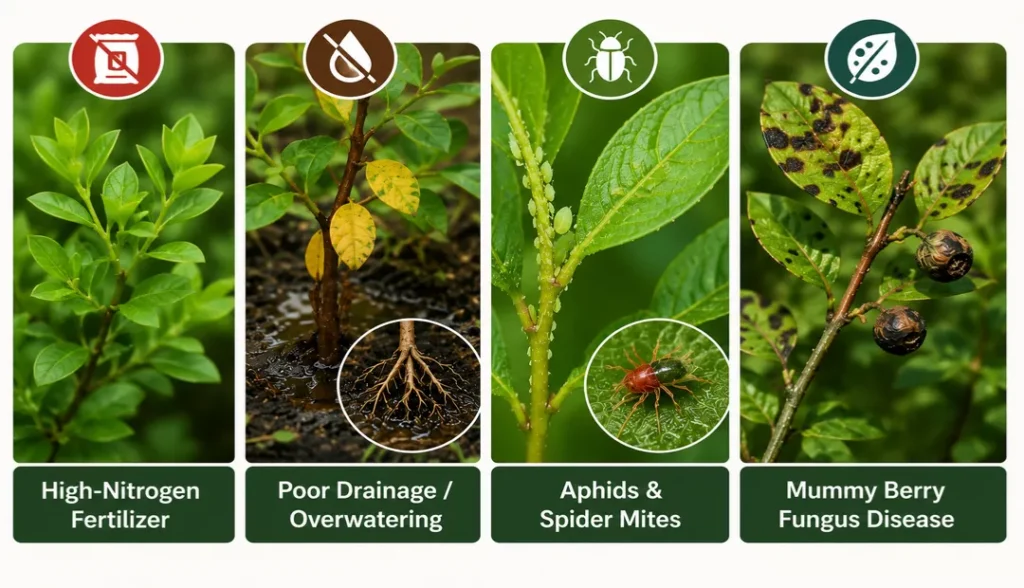
Although huckleberry plants are low-maintenance, they may face some growing challenges.
- Avoid the high-nitrogen fertilizer; as they promotes higher leaf production and less fruiting
- Poor drainage or overwatering cause root rot, lead to yellow leaves and slow growth
- Aphids and spider mites hinder plant growth; neem oil spray provides an effective treatment for them
- A fungal disease such as “mummy berry fungus disease“, causes spots on leaves. Prune the part regularly and remove affected areas to reduce further spread
Harvest Huckleberries
Most huckleberries are ready to harvest in the months of July to September. The berries change color Green to dark blue-wine color as they ripen. Once the berries are ripe, pick them with gentle pressure.
They’re full of antioxidants and vitamins C and E. People enjoy using them in jams, desserts and smoothies.
Conclusion
This adaptable shrub has both decorative and fruiting qualities. It makes a great long-term addition to any landscape. For a great harvest every year, give plants good nutrition and plenty of sunlight. Use well-drained, acidic soil to support healthy plant growth. Whether you are growing huckleberry plants for their flavorful berries or ornamental appeal, they make an excellent addition to any outdoor garden.
Explore More:
- Backyard Landscape Ideas That Wow Everyone
- Retaining Wall Ideas: 20 Smart Designs to Upgrade Your Landscape

Ashish is a seasoned digital marketing professional with over twelve years of experience in Facebook advertising and four years of hands-on experience in SEO. He has worked extensively on campaign strategy, audience targeting, and performance optimization. In his free time, he likes to travel, studying city layouts and natural surroundings. Connect with him on LinkedIn.