

Sloped backyards face unique landscaping challenges, the gravity creates natural acceleration of water runoff, soil erosion and uneven ground conditions. All these factors limit how you can use the space. The most effective backyard landscape ideas for sloped yards work with the existing terrain instead of trying to flatten it. Most effective solutions include grading, building terraces, implementing retaining walls, installing a drainage system, choosing plants wisely, and creating a multi-leveled outdoor space. When these elements are thoughtfully put together, a sloped yard offers more character, better views, and greater design flexibility.
Why Sloped Yards Need Special Landscaping Approaches
Landscaping a sloped backyard needs strategic planning because water, soil and structural stability behave differently on an incline. Choosing the right backyard landscape ideas becomes important, as improper planning can lead to heavy rainfall eroding topsoil, damaging foundations, and creating unsafe walking surfaces.
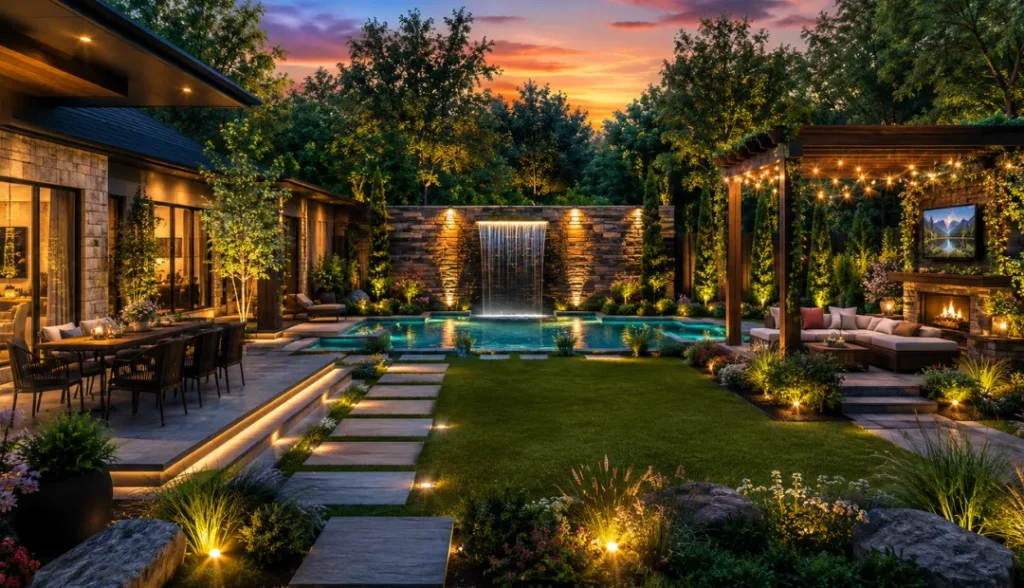
Four core challenges create sloped yards more complex to design:
- Water runoff that accelerates downhill during storms.
- Soil erosion that removes nutrients and destabilizes plants.
- Limited usable space for patios, gardens, and seating areas.
- Potential foundation risks if drainage is poorly managed.
Instead of fighting these natural forces, successful landscaping designs work alongside them by slowing water movement, stabilizing the soil, and creating level areas where people comfortably gather around.
How To Assess Your Slope Before You Start
As every sloped yard is different, it’s better to determine how steep the terrain actually is before undergoing any landscaping solution. Slope percentage is calculated using a simple formula:
How to Measure Rise and Run
To measure the slope of your yard, high tech tools are not required. Few basic tools and 15 minutes of your time are enough to measure measure the rise and run.
What you’ll need:
- Two wooden stakes
- String or mason’s line
- A spirit level
- Tape measure
Step 1: Place the stakes
To establish a level reference for measure a slope, drive one stake into the ground at the highest point of the area you want to measure and the second stake at the lowest point.
Step 2: Stretch the string
Next, tie a string loosely to the two stakes. You will want to place it at about the same height as the top stake.
Step 3: Level the string
Place a spirit level on the string and adjust it until the bubble is centered. This ensures the string is perfectly horizontal, regardless of the slope beneath it.
Step 4: Measure the rise
At the bottom stake, measure the vertical distance from the ground to the string.
Step 5: Measure the run
To measure the run, measure the horizontal ground distance between the two stakes.
Once you have both measurements, use the slope formula:
Slope (%) = Rise ÷ Run × 100
How to Calculate Your Yard’s Slope Percentage
Rise refers to the vertical height difference between two points. Run refers to the horizontal distance between those same points. Now let’s look at an example of how to calculate your backyard’s slope.
For example, if your backyard drops 4 feet over a horizontal distance of 20 feet:
4 ÷ 20 × 100 = 20%
Your yard has a 20% slope.
This number may help determine whether simple landscaping solutions are sufficient enough or structural interventions such as retaining walls, terracing are needed.
What Different Slope Percentages Mean
Now that you’ve calculated your yard’s slope percentage, the next step involves in determining the best landscaping approach for your space. Gentle slopes are typically easier to work on while the steep once often require additional measures to improve safety, stability and better drainage system.
| Slope | Difficulty | Typical Landscaping |
| 0-5% | Nearly flat | Most fire pit designs work |
| 5-15% | Gentle | Minor grading, gravel pads |
| 15-25% | Moderate | Terracing or retaining walls may help |
| 25%+ | Steep | Structural landscaping often recommended |
Mild vs. Moderate vs. Steep Slopes: What’s the Difference?
| Slope Percentage | Classification | Recommended Treatment |
| 0% to 10% | Mild | Groundcovers, mulch, pathways |
| 10% to 20% | Moderate | Tiered beds, steps, drainage improvements |
| 20% to 35% | Steep | Terracing and retaining walls |
| Above 35% | Very Steep | Professional engineering solutions |
As slopes become steeper, structural support becomes increasingly important to prevent future damage.
Best Landscaping Solutions for Sloped Backyards
1. Terracing With Retaining Walls
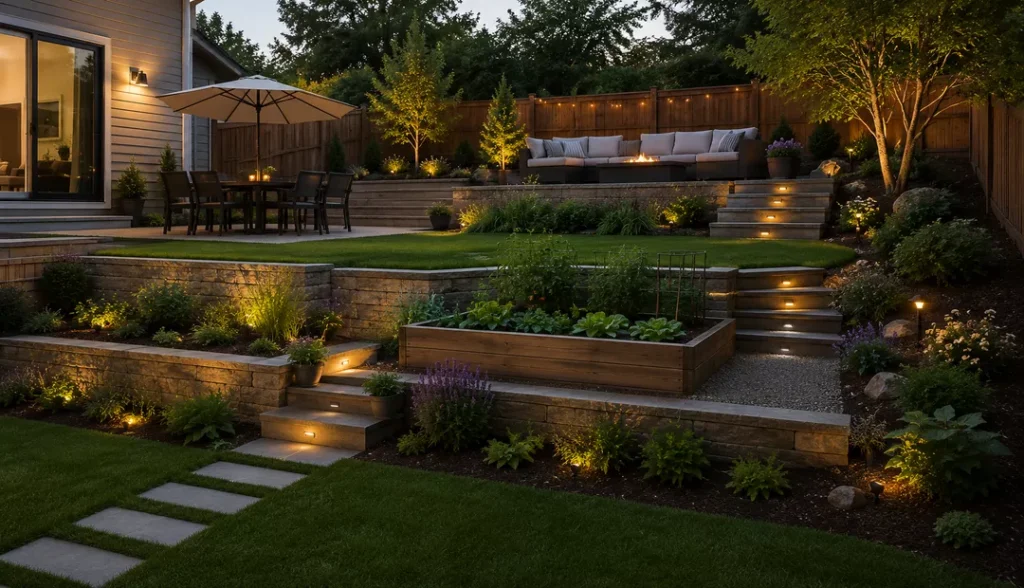
Terracing breaks a large slope into smaller, supported flat sections to improve stability and usability. Each terrace serves a different purpose, such as outdoor sitting, dining or perhaps a vegetable garden. Retaining walls are built on the edge of the flat sections, built with timber, stone, or concrete, best used when the slope is between a 15 and 35 percent grade. Outside of this range, terracing may lead to harm to the slope stability and the surrounding area.
2. Tiered Garden Beds
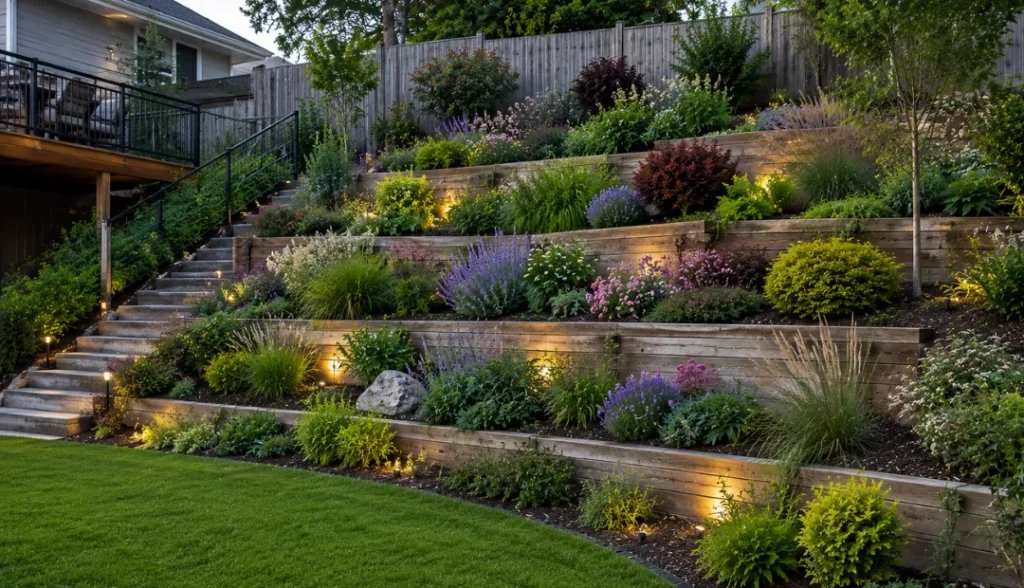
Working with the curvature of the slope, a tiered garden is a great way to break up the large, uncontrolled planting area. By creating smaller sections and planting in each of the smaller sections, it becomes easy to manage the total area as well as add more climbing depth to the slope. It also makes a great place to incorporate a collection of ornamental grasses and shrubs.
3. Dry Creek Beds
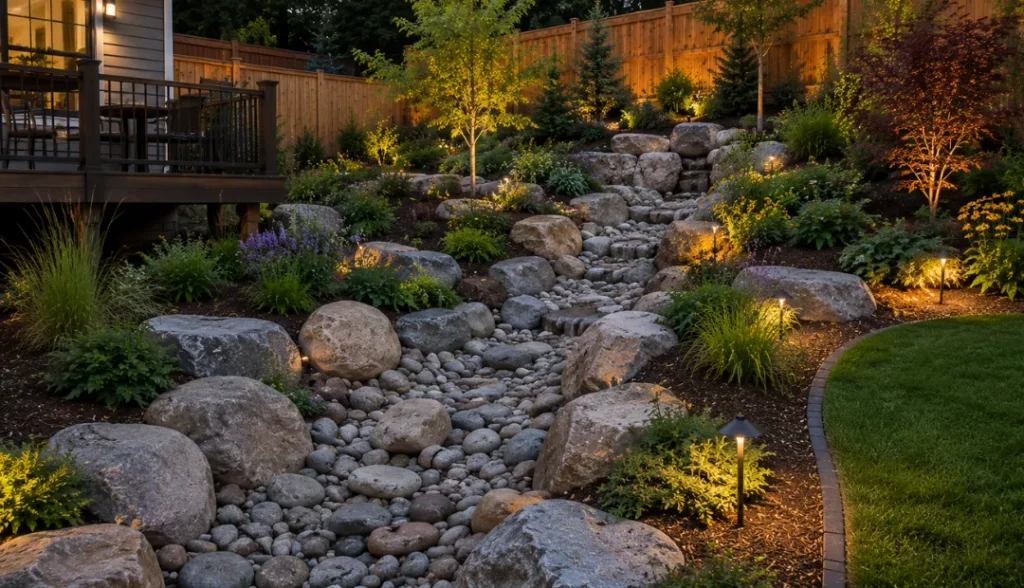
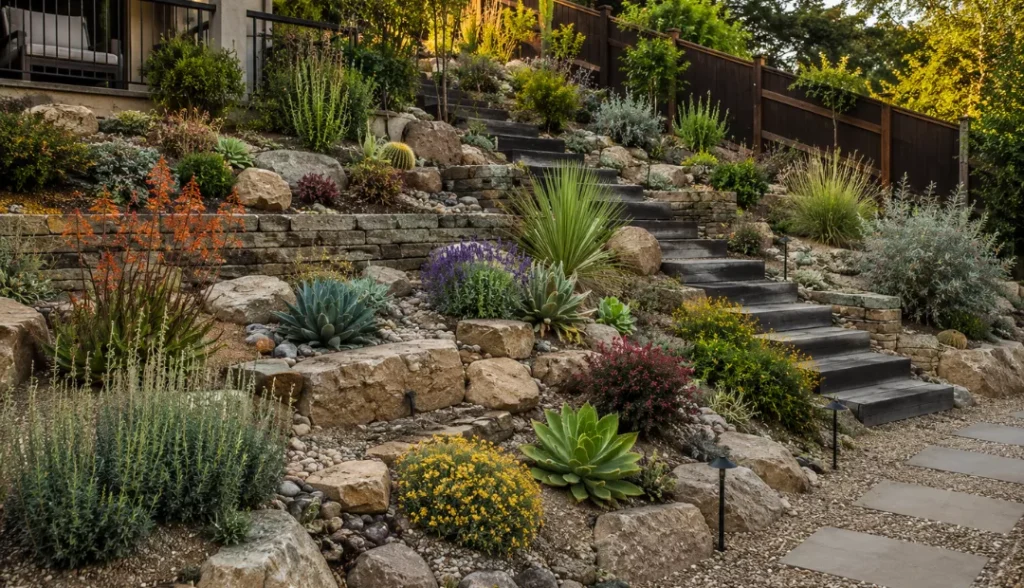
Using a mix of strategically placed boulders, gravel, and river rocks, dry creek beds combine form and function. Dry creek beds redirect excess rainwater and help prevent erosion in surrounding areas.
4. Rock Gardens and Xeriscaping
For steep, sunny slopes rock gardens make excellent solutions where traditional lawns struggle to survive. Xeriscaping focuses on drought-tolerant plants that require minimal irrigation after establishment.
Creating a rock and hardy plant combination can establish a unique texture to the environment while ensuring greater ease of maintenance.
This method is especially advantageous for an area that may experience dry and arid weather.
5. Built-In Stairs and Pathways
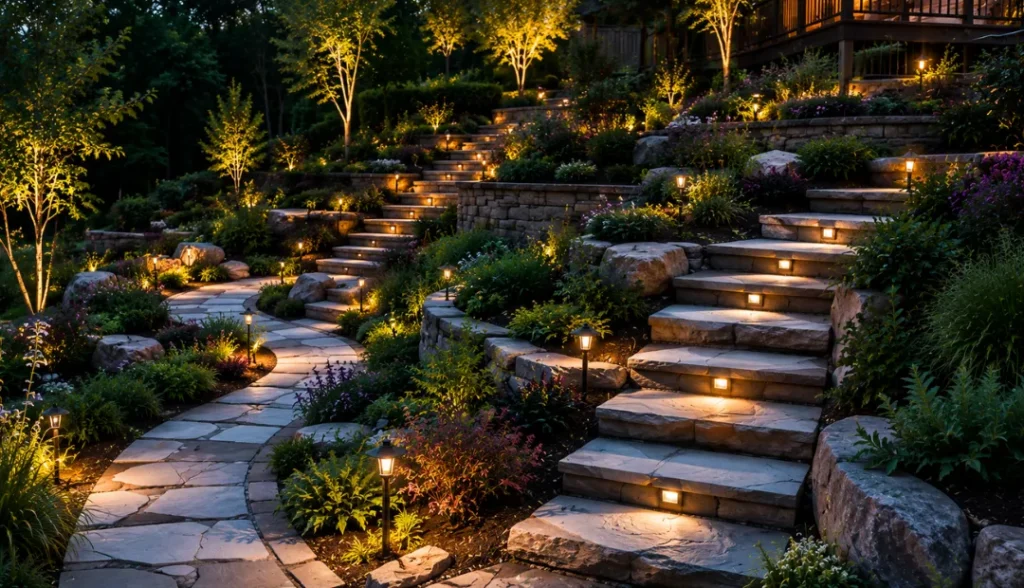
A slope becomes much more functional when you make movement between different levels easier. Curved pathways help with this more than straight ones as they minimize the steepness of your hill.
Flagstone, railroad ties, pavers, gravel, and natural stone are all popular materials for a hill like this.
If you want to make your hill especially safe at night, consider adding low-voltage lights to your pathways.
6. Retaining Wall Seating Areas
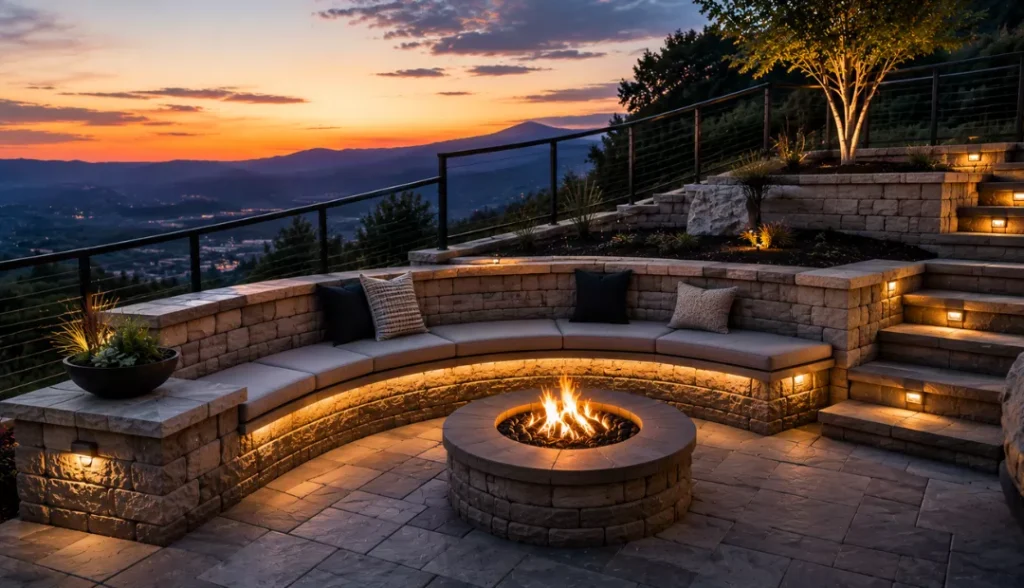
Consider turning retaining walls into built-in seating to create social gathering spaces while maximizing available square footage.
This type of seating creates a great viewpoint, especially when built around a fire pit or overlooking a garden.
This approach covers structural support with practical outdoor living space.
7. Ground Cover and Erosion-Control Plants
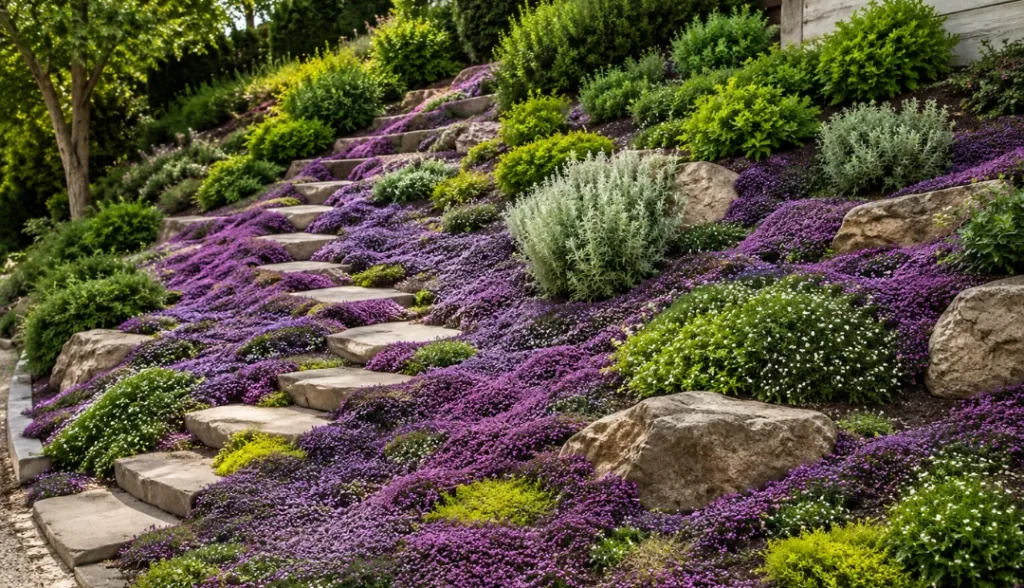
To prevent soil erosion, plant roots create nature’s best defense. Many plants perform well particularly on sloped landscapes because of their rooting systems.
Recommended plant varieties include:
- Creeping juniper
- Creeping thyme
- White clover
- Ornamental grasses
- Sedum
- Creeping phlox
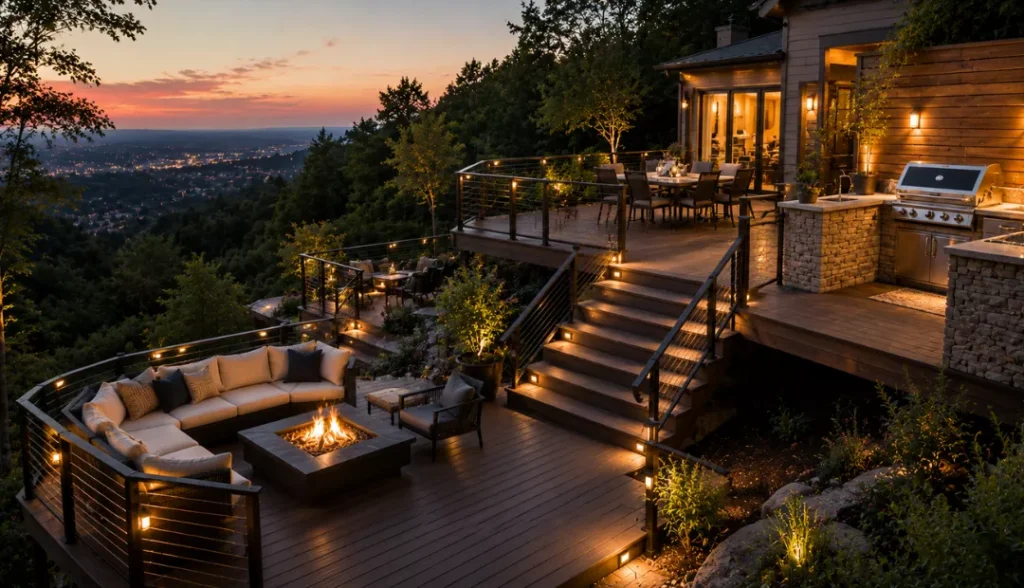
8. Multi-Level Decking
In some cases, slopes are too steep for grading, and the required solutions are not economically practical.
Multi-level decks are a good alternative in these cases. Instead of excavating large portions of the yard, elevated platforms create functional spaces that follow the existing terrain. For example, one designated for a dining area and another for an outdoor kitchen.
9. French Drains and Grading Solutions
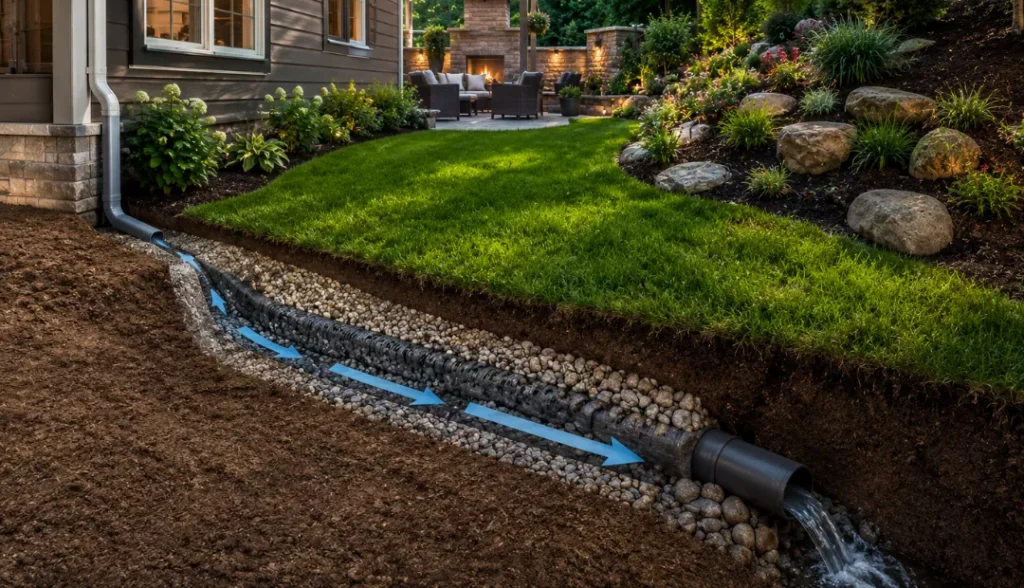
Drainage issues should always be solved before installing patios or planting gardens. If you do not manage water issues properly, drainage problems can become significantly more expensive to fix in the long run, especially after construction. That is why thoughtful backyard landscape ideas are important from the very beginning.
French drains are a great option to mitigate these issues. As they collect and redirect groundwater away from foundations and planting areas.
These engineering solutions sit beneath the decorative landscaping, combining functionality and beauty.
10. Fire Pit or Patio on a Leveled Terrace
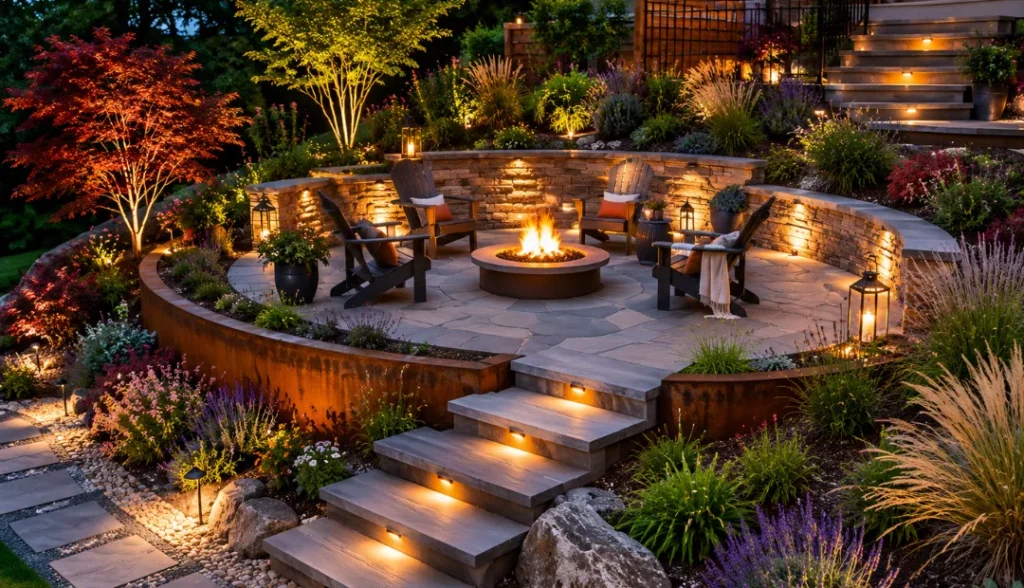
All areas of the backyard do not need to be flattered. Sometimes creating a single flat focal point is often enough.
Leveled terraces become dedicated outdoor living spaces for activities like entertainment, relaxing or dining.
Considering diy fire pits work particularly well as they surround retaining walls naturally, creating a sense of enclosure and intimacy.
Make sure to check local regulations, as retaining walls taller than 4 feet often require engineering approval in many municipalities.
Frequently Asked Questions
How to transform a sloped backyard landscape on a budget?
By using mulch, native plants, groundcovers, gravel pathways and simple rock gardens, typically the most affordable option.
What plants stop erosion on a hill best?
Plants like creeping juniper, creeping thyme, sedum, ornamental grasses, white clover, and creeping phlox help prevent soil erosion.
Can I add a flat patio to a sloped yard?
Yes. A leveled terrace supported by retaining walls is one of the most common ways to add a patio to a sloped backyard.
Final Thoughts
The biggest mistake homeowners make is trying to eliminate the slope entirely.
The most successful backyard landscape ideas embrace the elevation and turn it into an advantage. Terracing, drainage systems, retaining walls, layered gardens, and multi-level outdoor spaces can transform an uneven hillside into a functional retreat that feels intentional and inviting.
Explore what’s next:
- River Rock Landscaping Ideas to Transform Your Yard
- What’s the Difference Between Concrete Pavers Vs Brick Paver?

Ashish is a seasoned digital marketing professional with over twelve years of experience in Facebook advertising and four years of hands-on experience in SEO. He has worked extensively on campaign strategy, audience targeting, and performance optimization. In his free time, he likes to travel, studying city layouts and natural surroundings. Connect with him on LinkedIn.