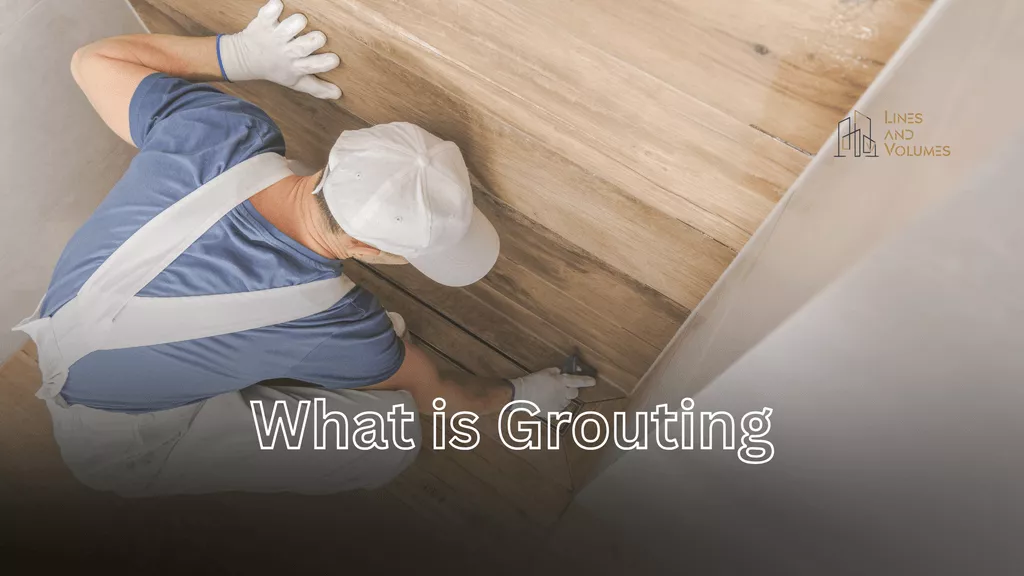
Grouting serves as injecting fluid used to fill gaps, cracks, joints and to stabilize the soil. At its core, grouting involves a specialized technique to fill gaps, depending on the need and the type of construction, such as ground anchors, dam construction, waterproofing, and similar applications.
In practical terms, grouting helps eliminate empty spaces those could weaken the structure. Those gaps between tiles, bricks, stone, concrete, those empty pockets don’t help anyone. Typically, it is a fluid mixture of cement and water, poured or pushed in as a thick, soupy blend, sometimes with sand added depending on the job. Once it settles, those loose parts lock in together, get tougher, steadier, and easy on the eyes.
How Does Concrete Grouting Actually Happen?
Before everything, a detailed site assessment done by engineers, they evaluate structural conditions, groundwater presence, soil characteristics and any defects if found. Based on this evaluation, they select the appropriate grout type, mix design, and injection method.
Next comes the drilling part, small, precise holes are bored into the target area, laid out in a planned pattern that looks simple but it’s not. These holes act like doorways, letting grout reach hidden voids, fractures holes, and tired pockets deep inside. Depth and spacing change from site to site, because the ground never behaves the same way twice.
The mixing part includes, if its traditional cement grout then it is straightforward, cement, water, sand, maybe additives to tweak how fast it flows or sets.
For specialized conditions, chemical grouts are also used, which rely on resins or polymers instead of cement. Different tools for different headaches.
Injection is carried out using pumps that deliver grout at controlled pressure. The injection sequence carefully managed, often starting from the lowest point and moving upward, or from the outer edges toward the center. Pressure monitoring ensures that voids carefully filled without overstressing the surrounding structure.
Related Read: Sanded Grout Vs Unsanded Grout: Understand The Difference
Types of Grouting
1. Cement Grouting
It’s commonly used in highly permeable soils where water easily penetrates. The mixture made from cement, water, and sand, with proportions adjusted as needed. It is widely applied in bridges, dams, marine structures, rock anchors, and foundation stabilization.
2. Chemical Grouting
Chemical grouting is a type of permeation grouting that uses materials such as acrylamides, polyurethanes, acrylates, epoxy, or sodium silicates. These materials react chemically after injection, making a solid or gel that binds soil particles and reduces permeability.
3. Structural Grouting
Commonly used to fill gaps between concrete and rock or between structural elements. Commonly applied in underground works, tunnels, and mined areas to fill voids, seal rock joints, and repair cracks.
4. Jet Grouting
Advanced ground improvement technique that uses high-pressure jets to break down soil and mix it with grout. This process creates soil–cement columns that improve ground strength and stability.
5. Compaction Grouting
This type of grouting involves injecting a stiff, low-flow grout into the ground. Unlike other methods, the grout does not spread easily but instead displaces and compacts surrounding soil, increasing density and load-bearing capacity.
Read more:

Rahul works in digital advertising with a focus on performance-oriented campaigns and audience targeting. His experience spans campaign planning, execution, and optimization, with an emphasis on efficiency and clarity. Outside of work, he loves playing cricket and enjoys tending to plants and taking long drives. Connect with him on LinkedIn.