
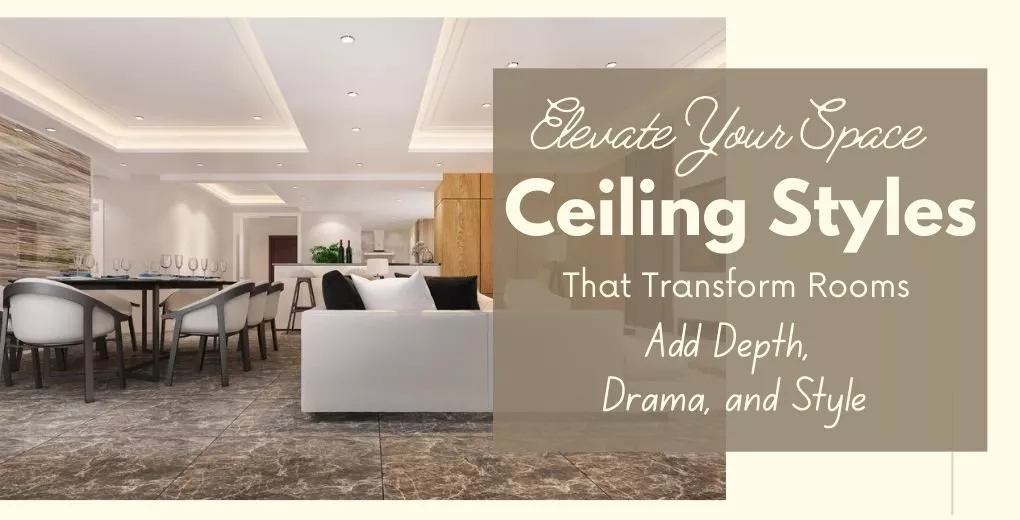
If you simply think about ceilings, then you may notice the ceiling quietly runs the show of your house. Floors get the attention, walls also get attention but also get painted and repainted. But ceilings? They sit there, shaping the whole room, whether we notice or not. If by chance you get the ceiling wrong then even a beautifully designed interior feels off.
So a question arises whether it’s just the looks or what works for your space. Here I am a little bit objective. I usually lean toward calmness, but the choice is yours. So there are options for what you choose. You might want drama, better acoustics, or simply make guests look up.
With so many ceiling options out there, choosing one is less about trends and more about fit. But be clear, there shouldn’t be any mental fog while choosing. You want a ceiling that fits for the room, fit for your lifestyle, fit for your patience and budget too, let’s be honest.
Below are some different types of ceilings used in homes. I tried to break down their strengths, quirks and a few things which most people tend to miss.
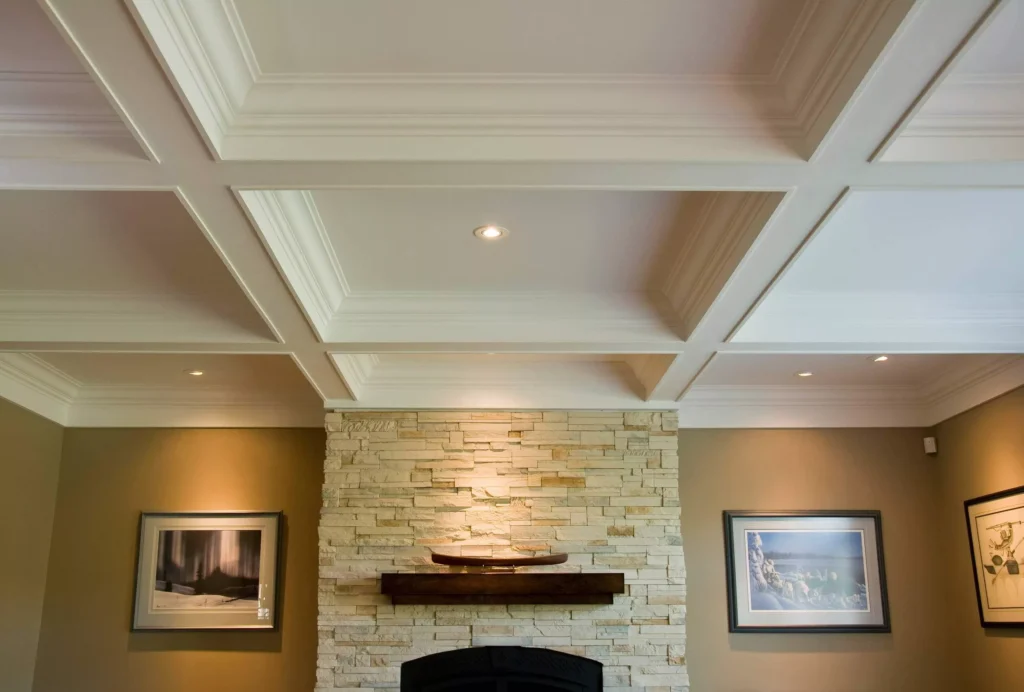
1. Coffered Ceiling and Waffle Ceiling
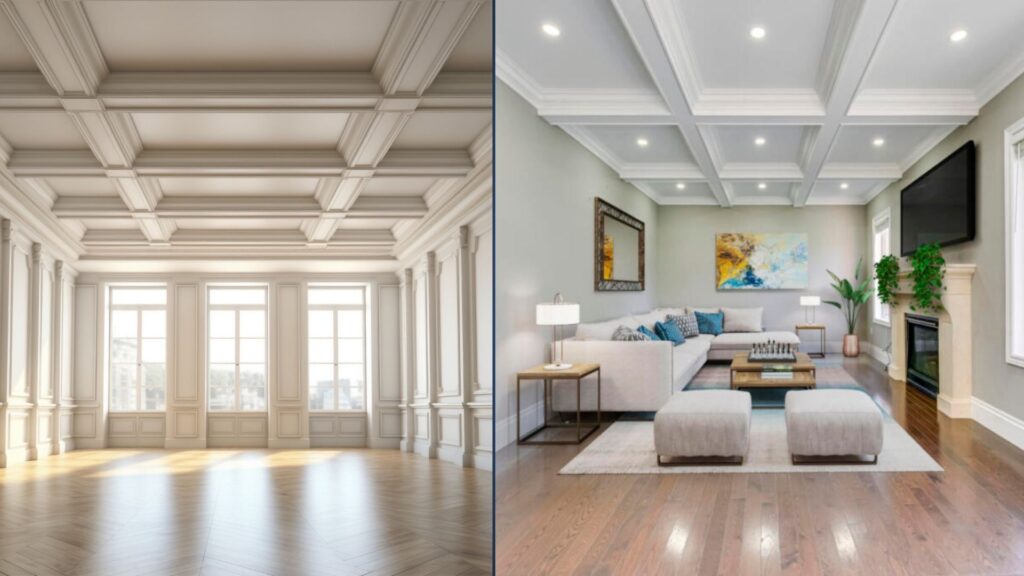
Think of a ceiling broken into a grid in squares and rectangles. This ceiling is slightly sunken, repeating across the room like a chessboard floating overhead. The general idea behind waffle ceilings to get lumped together with coffered ceilings. You can call them cousins.
Waffle ceilings rely on exposed beams which helps to create depth. The effect is strong but looks architectural.
When paired with recessed lighting and enough square footage to breathe, they bring a polish look without screaming for attention. Best suited for medium to large rooms. Small rooms? Not a good idea.
The coffered ceiling leans towards the traditional side. Think of dining rooms, or spaces where symmetry really matters. A little old-school, but in a good way. They’re not casual ceilings. They dress up for dinner.
2. Conventional Ceiling
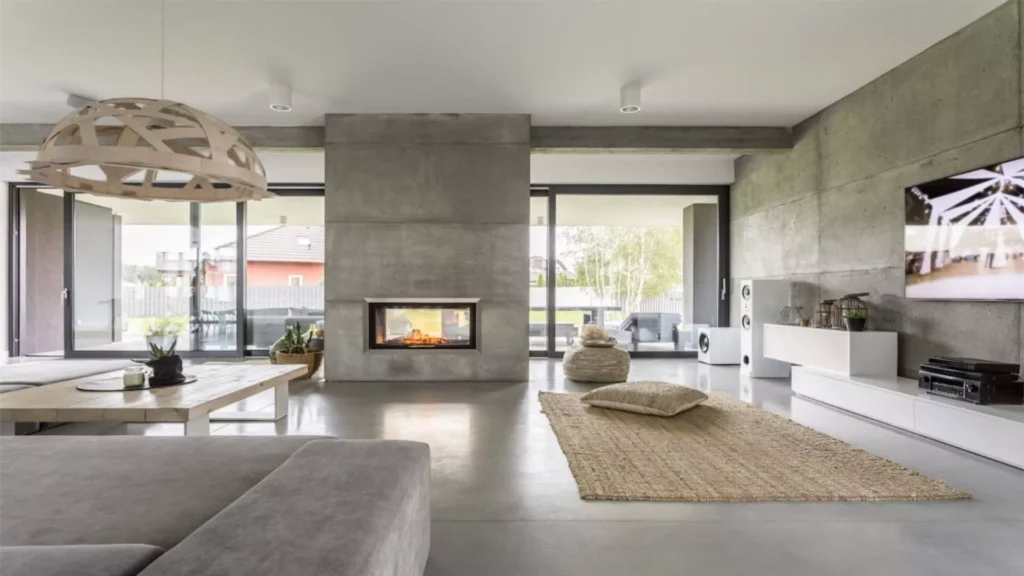
This ceiling might be known to you, flat drywall, eight or nine feet high and no drama.
Conventional ceilings do not require too much, very straight forward installation and standard materials. Contractors know them like muscle memory.
For some people, a conventional ceiling may feel claustrophobic as the ceiling sits too low. Raising it just a couple of feet can completely change the game. Also boosts resale value too.
Now the downside, once you move beyond standard heights, customization becomes costly. Here materials choices and labor costs become a balancing act between budget, aesthetics, and how much that extra breathing room matters to you.
3. Suspended Ceiling
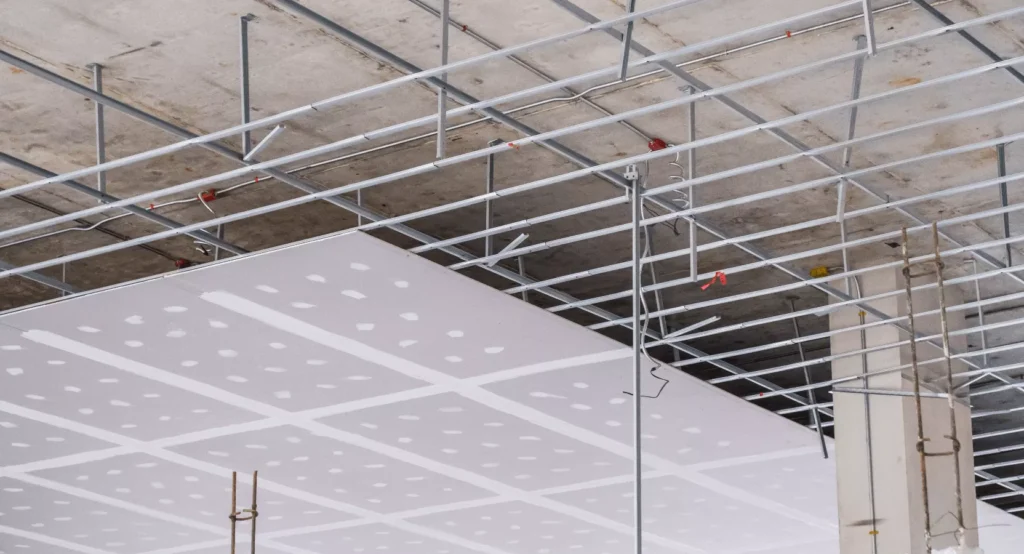
Also known as drop ceilings, these sit below the original ceiling on a metal grid. Practically very effective.
They’re great at hiding things no one wants to see. Like wires, pipes, HVAC ducts. Clean lighting arrangement and an extra layer helps with sound and control the temperature.
Best use cases in places like basements, offices and retail spaces.
DIY installation? Makes it risky. The system needs to be level, secure, and safe. Better calling a professional is usually the smart move.
4. Boxed Beam Ceiling
Need height and visual interest but not too overwhelming boxed beams is your answer.
Material choice changes everything here. Use of rough wood leans rustic and relaxed. Painted beams feel more refined. Either way, they trick the viewer’s eye into seeing a taller and more layered space. Yes, it’s also Instagramable.
5. Stretch Ceiling
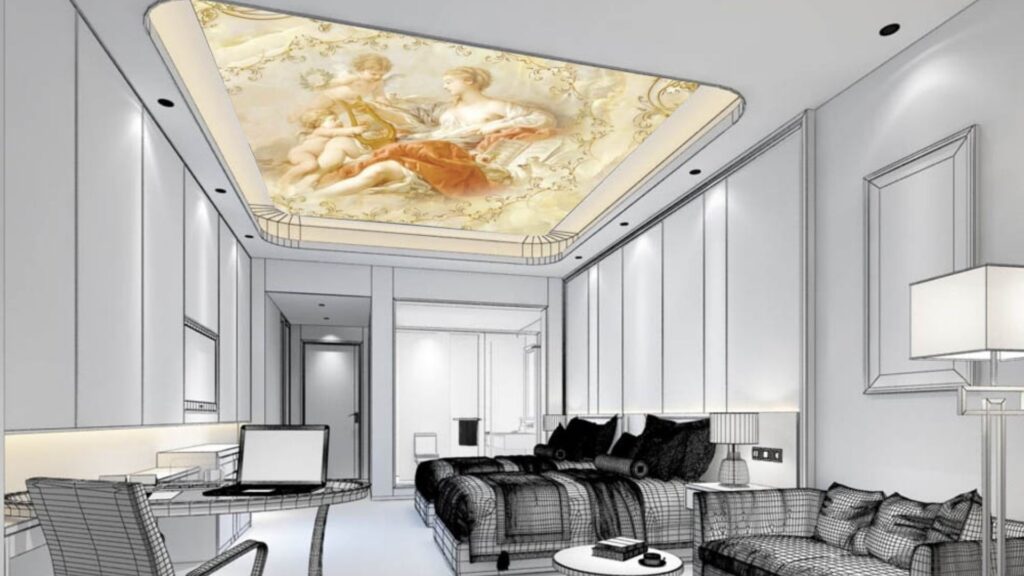
Looking for some futuristic ideas, then Stretch ceiling is here to replace the traditional drywall with a tensioned PVC membrane that clips into tracks around the room’s perimeter.
Once installed the surface looks smooth, seamless, and clean. Because it sits just below the original ceiling, it helps hide imperfections like cracks or stains. Compared to popcorn ceilings, it’s a major glow-up.
They’re modern, sleek and surprisingly very versatile.
6. Tray Ceiling
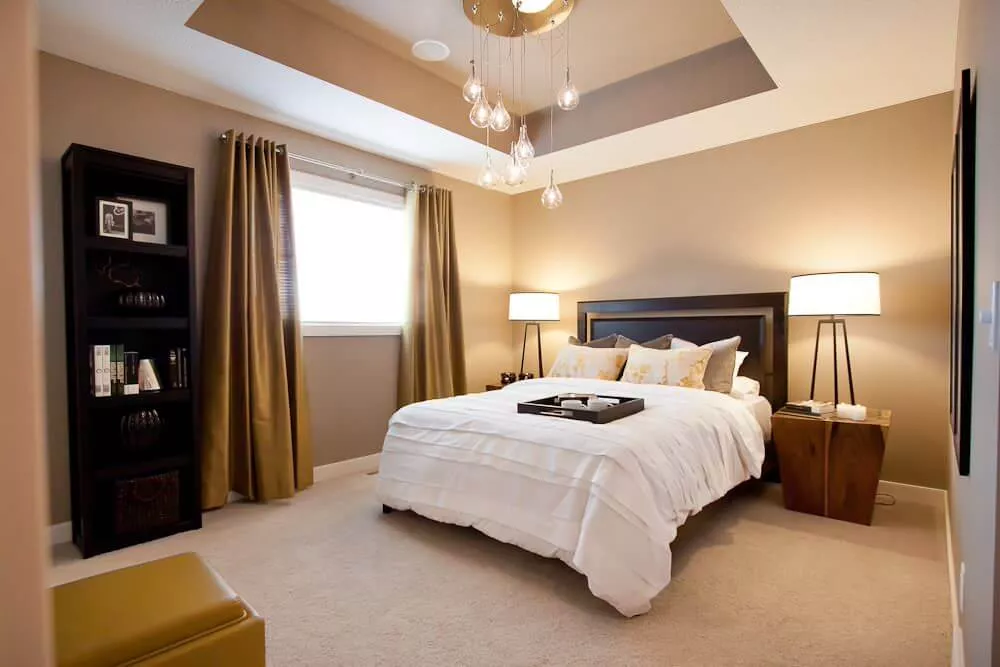
Tray ceilings step inward and upward making layer by layer, like a recessed frame around a raised center. The shape resembles a serving tray, that’s why the name.
Most tray ceilings you will find using two or three levels, each dropping a few inches. Add trim between the layers and suddenly the ceiling becomes a design feature instead of an afterthought.
They can make rooms feel taller, but only if there’s enough height to begin with. Below eight feet? Proceed carefully. Otherwise, the effect can backfire and make the space feel compressed.
7. Vaulted Ceiling
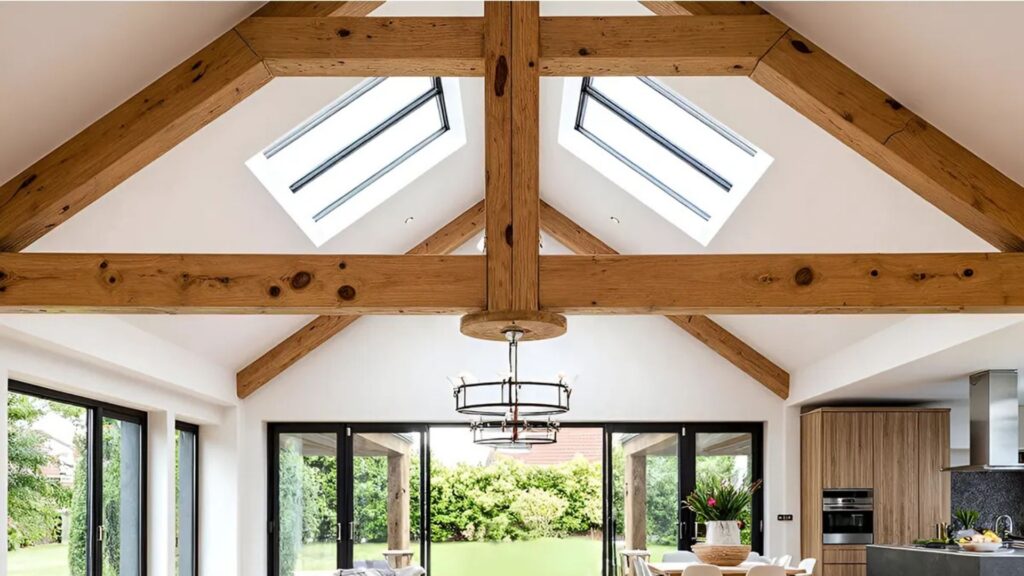
Vaulted ceilings are known for their large size. They stretch upward, opening rooms dramatically and letting light travel farther.
Cathedral vaults form a sharp V shape. Domed versions curve gently overhead. Both demand vertical space and enough attic clearance to make construction feasible.
They shine in living rooms and dining areas, especially where gatherings happen. Just make sure your structure capable of supporting it before committing. Vaulted ceilings are not forgiving of shortcuts.
8. Cove Ceiling
Cove ceilings soften everything, instead of sharp ninety-degree corners, the ceiling curves gently where it meets the walls. The transition feels smoother, calmer and comforting.
They often include layered panels that catch eye toward the center of the room, creating an airy effect that’s subtle but noticeable. Lighting tucked into the cove amplifies the experience, washing the ceiling with indirect glow.
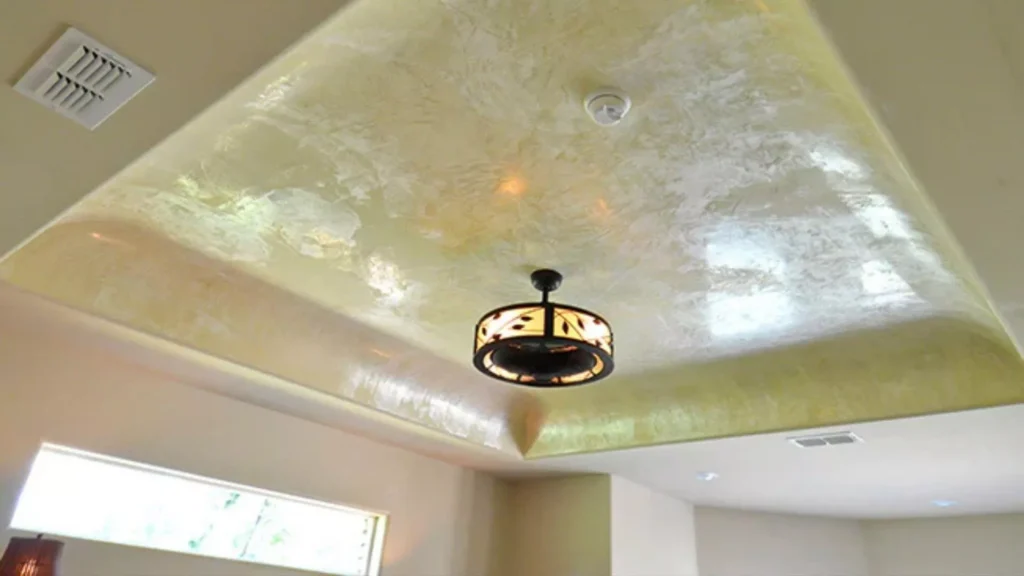
9. Shed Ceiling
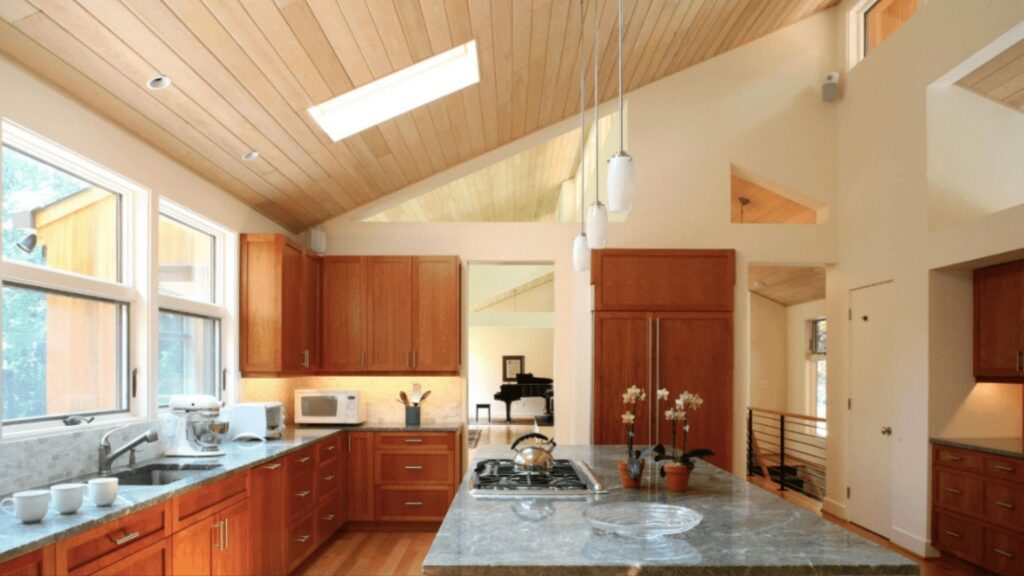
Shed ceilings slope given from one wall down to the other, usually appearing in lofts, attics, or top-floor rooms.
They look simple in concept but visually striking. The asymmetry adds character, and designers love the flexibility. Wooden panels suspended along the slope using standard grids, as long as everything aligns properly.
In commercial buildings, this style often mirrors shed roof construction. In homes, it feels modern. Slightly unconventional. And very intentional.
Ceilings don’t shout. They whisper. But when chosen well, they quietly transform how a room lives and breathes. And once you notice that? You’ll never stop looking up.
Uncover design ideas at Lines And Volumes.
More like this:

Mansi is a creative designer with three years of professional experience, specializing in clean, balanced, and purpose-driven visuals. She is also a passionate writer whose work shows a strong sense of layout, composition, and visual hierarchy. Outside work, she enjoys sketching, experimenting with color, and spending time around plants and outdoor spaces. Connect with her on LinkedIn.