
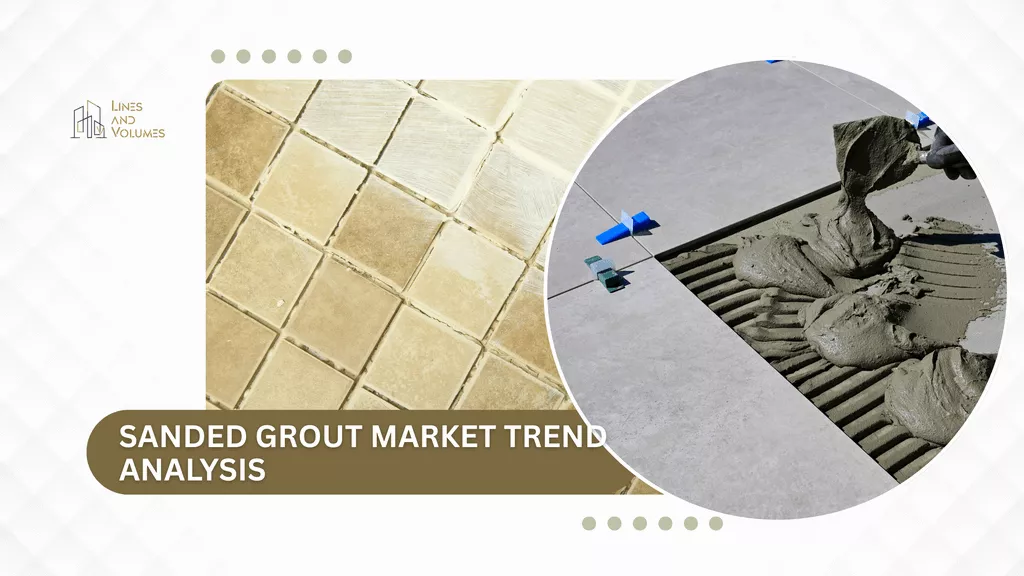
By 2035 estimated CAGR for sanded grout (2025–2035) is 4.5% to 6%. Sanded grout, also a part of a larger tile grout and grouting materials industry, represents a significant share in cementitious grout demand. Tile grout markets, including sanded grout, are globally expected to grow faster than the overall grout segment.
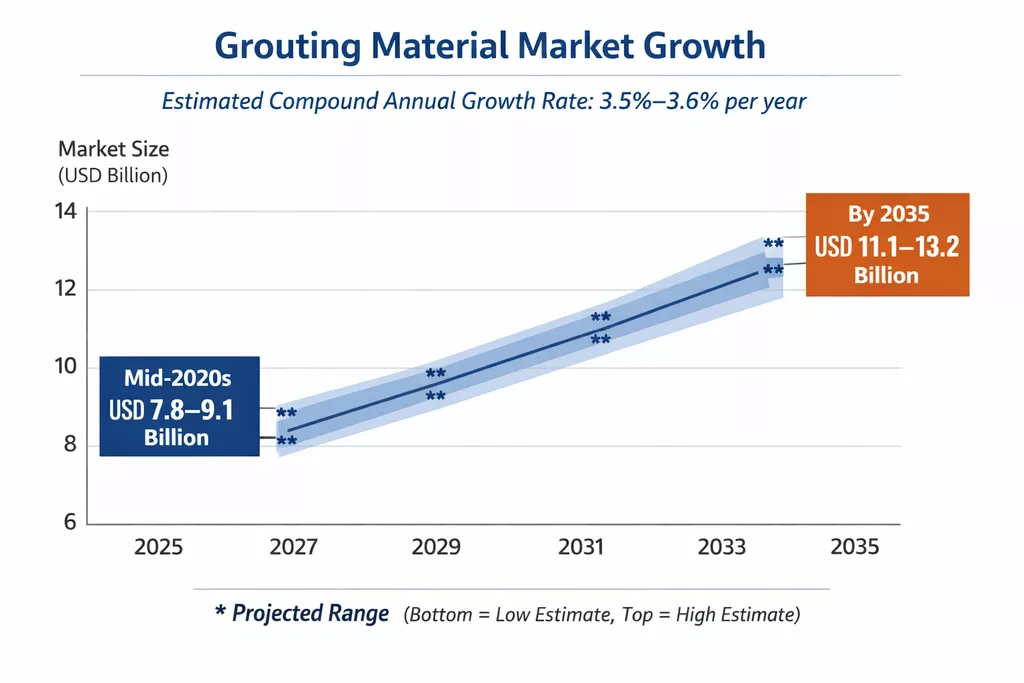
Grouting material market, valued at around USD 7.8–9.1 billion in the mid-2020s. Now it’s projected to grow to approximately USD 11.1–13.2 billion by 2035. Estimated to grow at a compounding rate of around 3.5–3.6% annually through 2035, as per Business Research Insights.
What is Sanded Grout?
Before that let’s understand what is grout? Grout is a filler made of cement or epoxy used to fill gaps between tiles. Its main job to lock tiles in places, protect the edges and give a clean, finished surface.
Sanded grout is primarily a cement-based material with sand and polymer additives, used in joints to resist wear and tear. It finds applications in floor tiles, wide grout joints, natural stone installations, patios, walkways, and so on.
Key Growth Drivers
The grout industry is completely tied to construction activities such as public infrastructure, commercial projects, and urban renewal developments.
The growth is also supported by rising DIY home improvement trends. Due to multiple online channels, increases customers base beyond contractors.
Consumers can compare products and make informed purchases, boosting overall market size.
Meanwhile, manufacturers focus on R&D in sanded grout, developing advanced formulations that enhance durability, water resistance, and workability.
What are Market Constraints for Sanded Grout?
There are options in the market like epoxy and polymer-based grouts gaining share in applications, like chemical resistance and hygienic environments. While these products cost high, they still limit the use of sanded grout in select commercial and industrial segments.
Price fluctuations in raw materials such as sand, cement, and additives impact production economics and disrupt margin stability for manufacturers.
Frequently Asked Questions (FAQs)
Is sanded grout better than unsanded grout?
Sanded preferred for wider joints and high-traffic areas while unsanded grout preferred for narrow joints and delicate spaces.
What industries use sanded grout?
Construction, residential flooring, commercial interiors, hospitality, and infrastructure projects are the largest users.
Will sanded grout be replaced by epoxy grout?
While epoxy grout remains a niche product, sanded grout continues to dominate due to its lower cost, ease of use, and broad applicability.
Related Reads:

Ashish is a seasoned digital marketing professional with over twelve years of experience in Facebook advertising and four years of hands-on experience in SEO. He has worked extensively on campaign strategy, audience targeting, and performance optimization. In his free time, he likes to travel, studying city layouts and natural surroundings. Connect with him on LinkedIn.