
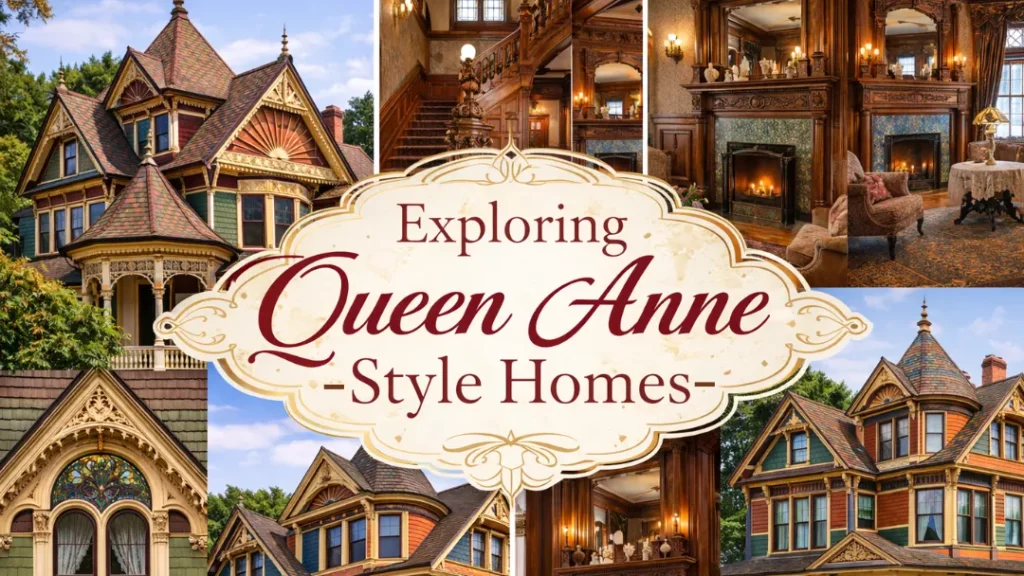
One of the most unique types of residential architecture to come out of the late Victorian era is the Queen Anne style. These homes were made to show off craftsmanship and uniqueness, not symmetry or restraint. They are well known for dramatic rooflines, ornate woodwork, towers, and richly layered facades.
Queen Anne style houses are different because the elevation varies, materials change from one surface to the next, and decorative details give the home its unique character.
Today, these homes are still some of the most famous historic homes in North America. Here in this blog, we dig into its history, characteristics, types and how to recognize one.
A Short History of Queen Anne Architecture
Richard Norman Shaw, an English architect, came up with the Queen Anne home style in the 1870s. Shaw stopped using strict classical symmetry in his designs instead made homes that were inspired by older English homes. He combined medieval, Renaissance, and rural architectural styles to create a casual and beautiful look.
When the style entered the US in the early 1880s, American builders changed it a lot. British Queen Anne architecture was usually simple and focused on stonework, while American versions were more visually appealing.
Characteristics of a Queen Anne Style House
Layered architecture is what differentiates Queen Anne homes from other styles.
Exterior Features
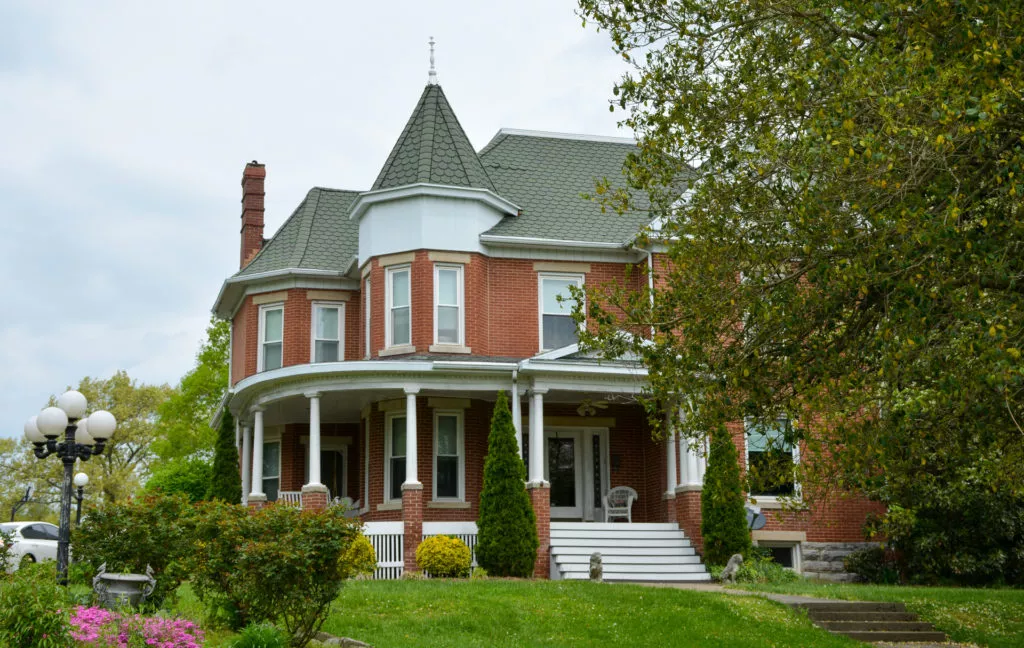
They are not symmetrical, nor meant to be balanced, unlike Colonial or Georgian homes, where both sides are the same. Entrances may not be in the middle, wings may stick out, and projecting bays may change the way you see things all the time.
The rooflines are a big part of why this looks so strange. Most houses have roofs that are very steep and have a lot of gables, dormers, and cross sections. Their overlapping shapes make the building look bigger and complicated by changing the height.
Features of the Roof
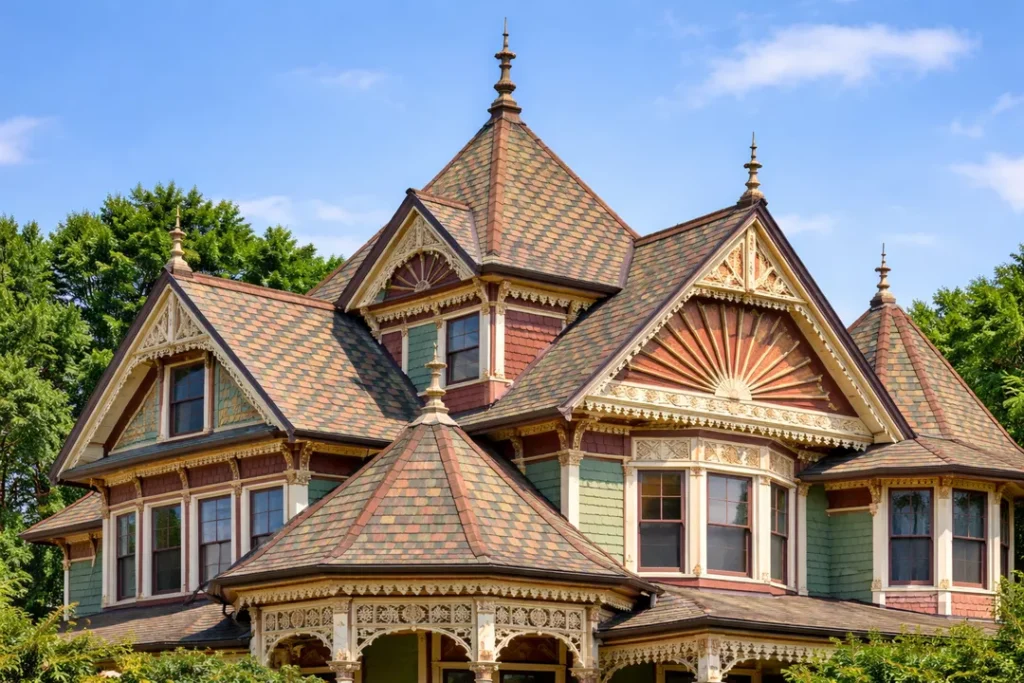
Most examples have a steep hip roof with cross gables at different angles that cross it. Gable ends often have decorative patterns on them, like sunbursts, floral carvings, or fan-shaped panels that show off the skill of the craftsman.
Dormer windows come out from the roof and are framed with decorative trim that makes the structure look better.
Windows
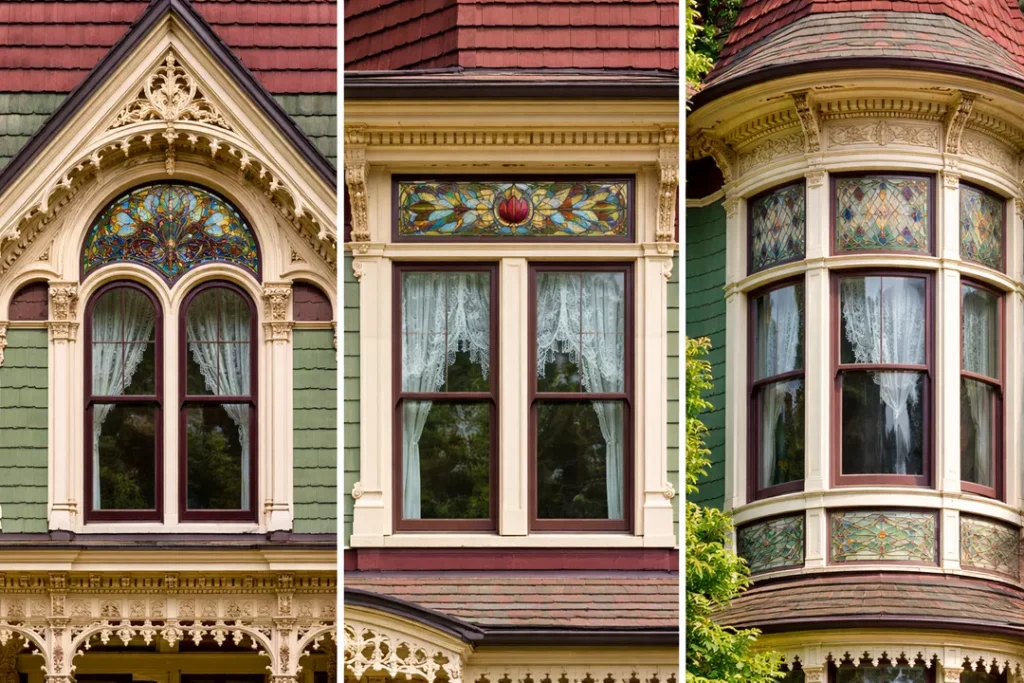
In Queen Anne homes, windows are both useful and pretty. Instead of keeping things the same, architects used a wide range of shapes and arrangements.
Double-hung sash windows with stained or leaded glass transoms were commonly found, allowing light in. Palladian windows are often found in prominent gables on many homes, giving a classical touch.
Color Scheme
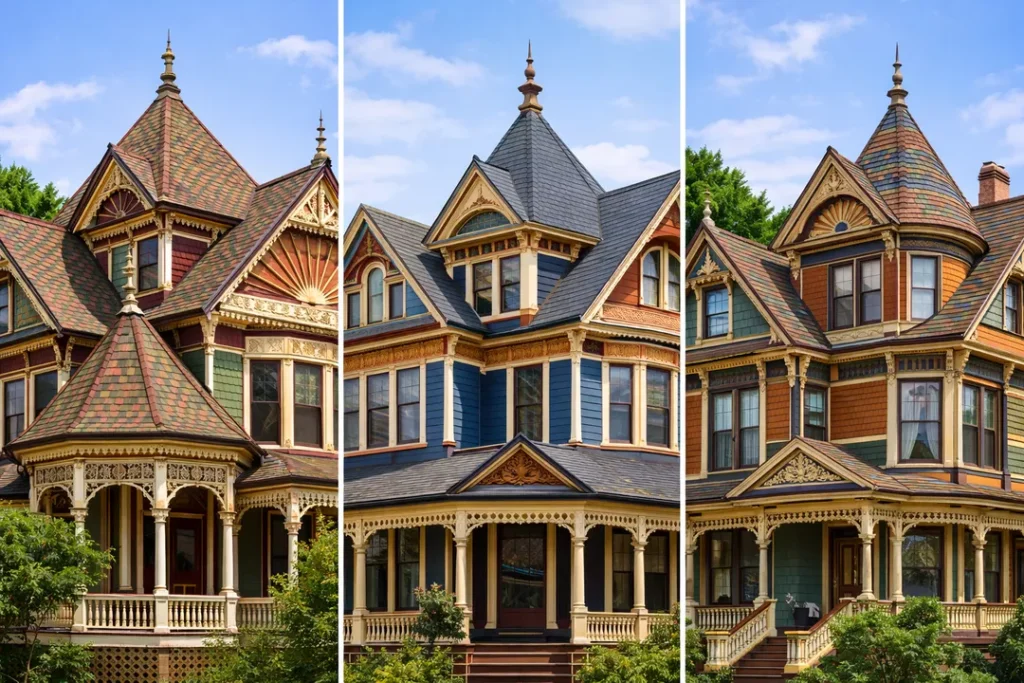
Homeowners used several different colors that stood out against each other to draw attention to architectural details instead of painting the whole house in one color.
Deep jewel tones like burgundy, forest green, navy blue, and warm earth tones were common in palettes. Often these colors were paired with lighter trim colors. These layered paint schemes made the structure stand out by highlighting carvings, moldings, and shingles.
Queen Anne House Interior
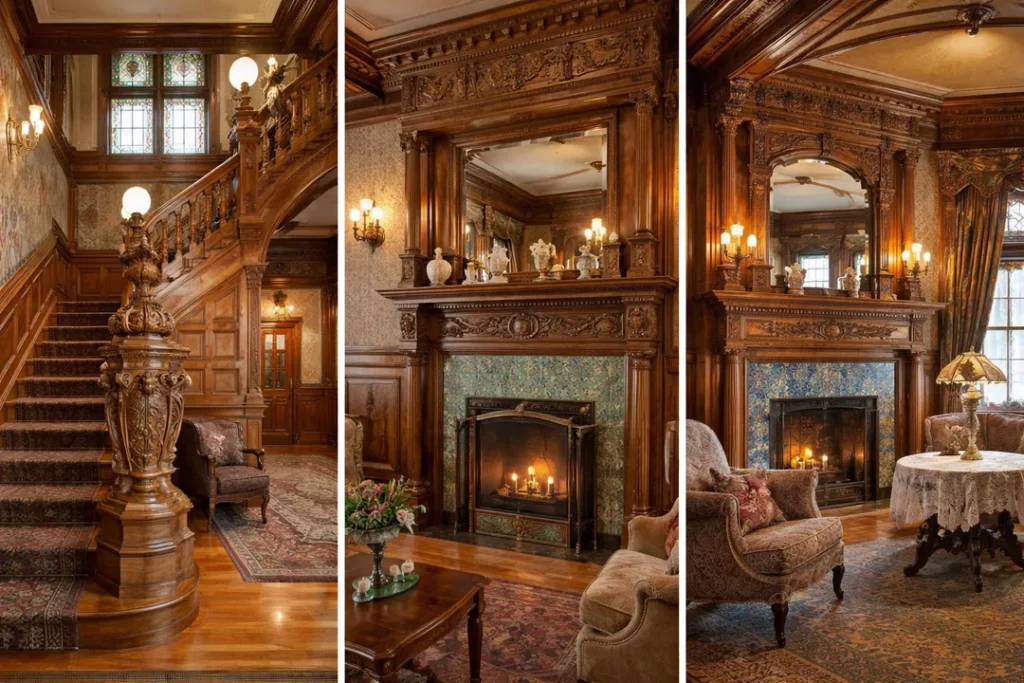
In the late 1800s, people valued the interior presentation of the house, so entry halls became important for making a good first impression on guests.
Many have beautiful carved hardwood staircases, intricate newel posts, and decorative paneling that show off the skill of the builders.
Fireplaces were the main focal points in many rooms. They had beautiful wooden mantels, decorative tile surrounds, and detailed overmantels.
Types of Queen Anne Houses
As the style changed, it became clear that there were different versions of it in different places.
Spindlework Queen Anne
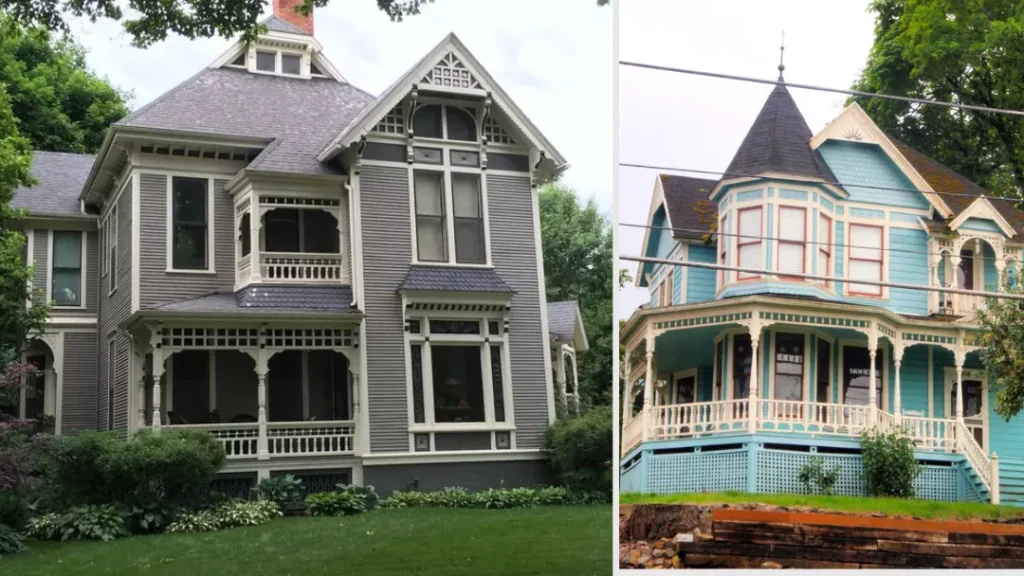
Spindlework is known as the most common American style Queen Anne homes. The house includes delicate porch decorations and turned wooden spindles.
Free Classic Queen Anne
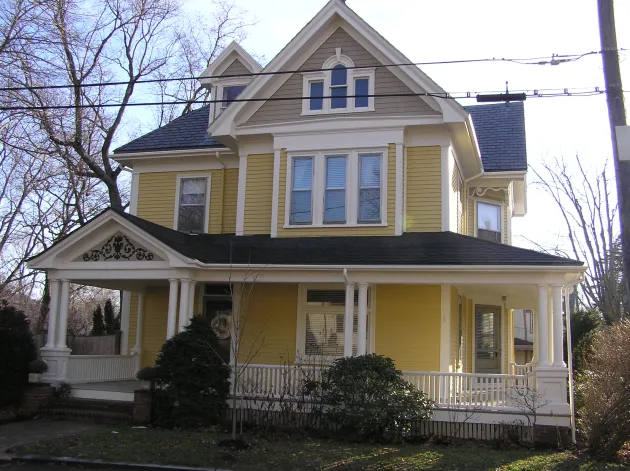
Known for its classical columns instead of fancy spindlework, which signaled a shift toward Colonial Revival style.
Half-Timbered Queen Anne
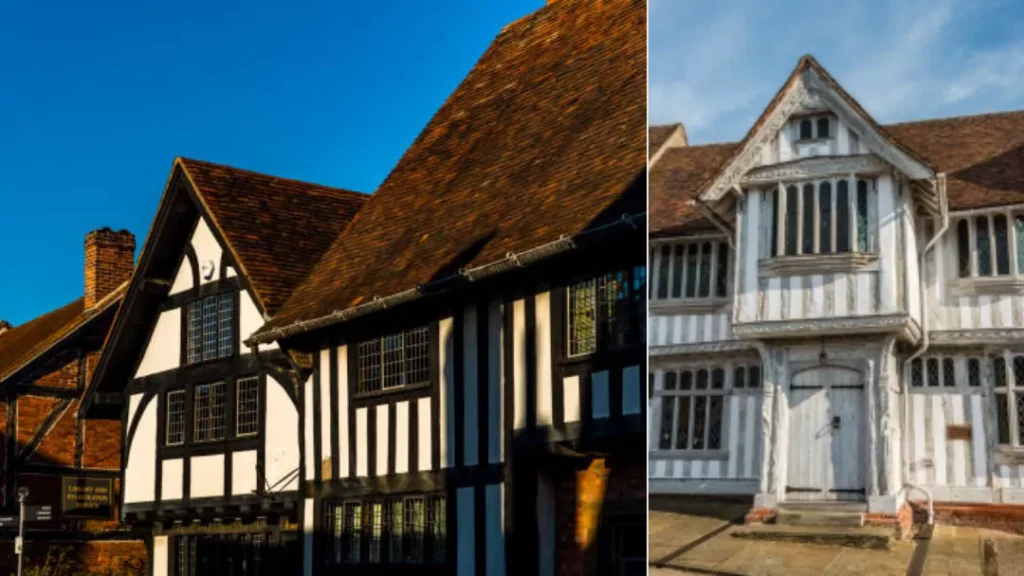
They were built decorating timber framing in gables, which made them more like English architectural styles.
Patterned Masonry Queen Anne
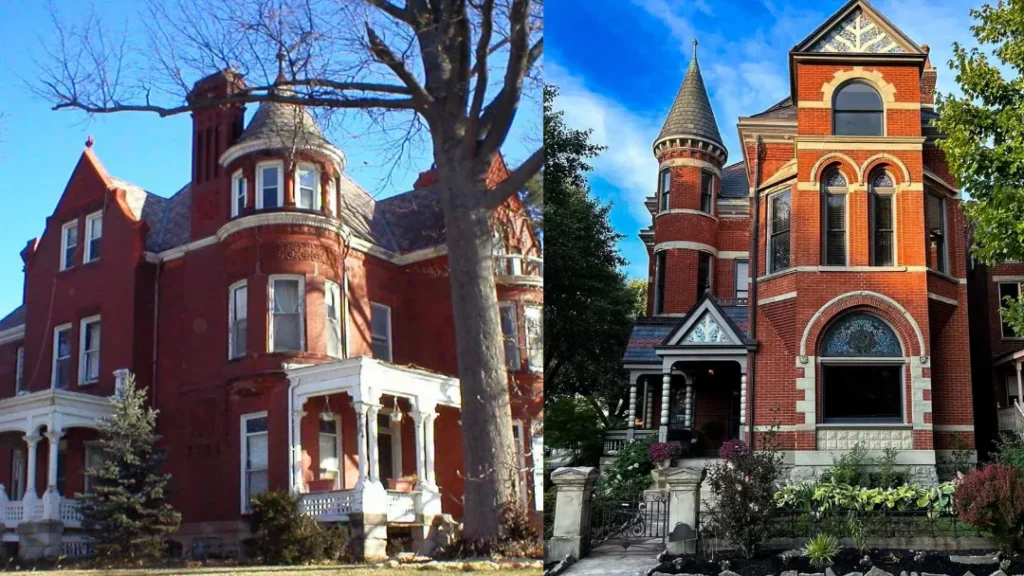
These homes were built with brick or stone and had decorative masonry patterns. These homes were especially common in cities with a lot of people.
How to Identify a Queen Anne Style House
Start by looking at the house with an uneven shape, a pretty porch, walls with different textures, a steep roofline, and sometimes a tower or turret. The style is also shown by the multi-color paint jobs and fancy woodwork along the eaves and gables.
Conclusion
Over a hundred years later, people still admire Queen Anne homes because they are from a time when architecture valued art and uniqueness. Each home tells a different story through the way it was built, the materials used, and the design choices made.
Queen Anne houses are still reminders that residential architecture can be expressive, detailed, and very personal, even though most buildings are now built to the same standards.
More like this:
- 5 Points of Modern Architecture by Le Corbusier
- How Arts and Crafts Architecture Changed Home Design

Dipanjan is a digital marketing professional with five years of hands-on experience across strategy building, content, and performance-driven campaigns. He has worked on building structured marketing systems that focus on reach, engagement, and measurable growth. Known for his analytical thinking and consistency, he brings a practical approach to digital execution. Outside of work, he loves cooking, painting and enjoys exploring interior setups. Connect with him on LinkedIn.