

People often confuse quartz and quartzite countertops because their names are nearly the same. However, when comparing quartz vs quartzite, they are actually very different materials with distinct origins, performance attributes, and maintenance needs.
Quartz is an artificial stone made of approximately 90% crushed quartz crystals bound with resin.
On other hand, Quartzite is a natural metamorphic rock that forms when sandstone is subjected to intense heat and pressure deep within the Earth and is 100% natural. However, despite their similar names, the two materials are very different in terms of composition, appearance, durability, maintenance and cost.
Whether you’re designing a kitchen reno and choosing new countertops, knowing the difference between quartz and quartzite will allow you to make an informed decision, so let’s dive in.
What Is Quartz?
Quartz countertops, however, are not natural stone slabs, but are an engineered surface. Manufactured in factories, the slabs are a mixture of crushed quartz minerals and synthetic binders. The composition consists of about 90%–95% ground quartz crystals mixed with 5%–10% polymer resins, pigments, and binding agents.
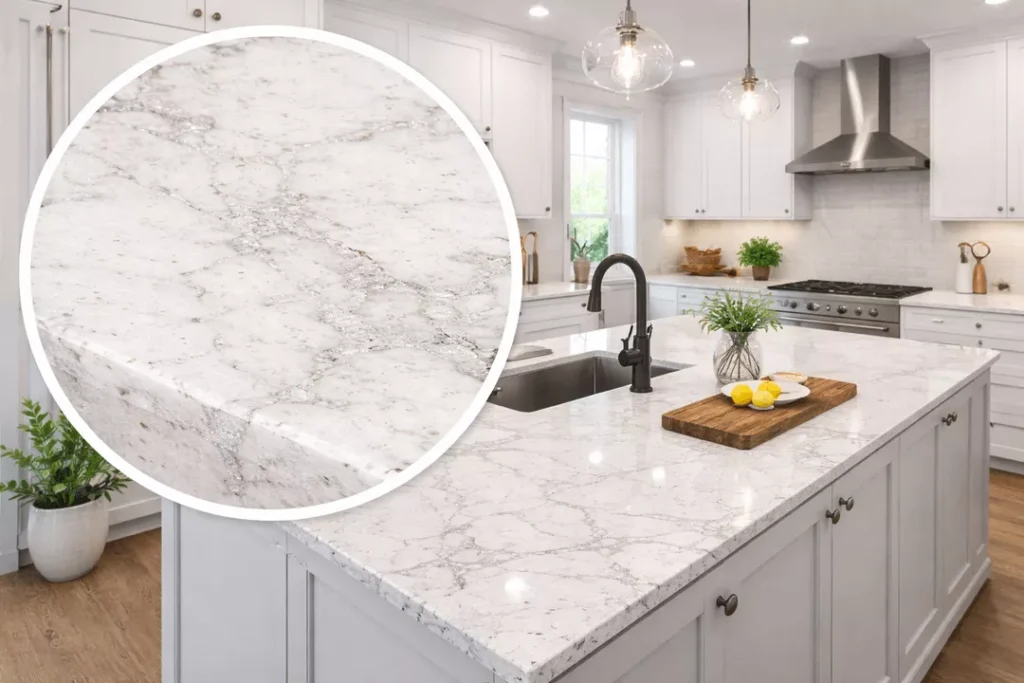
The mixture is pressed under high pressure and heat, creating dense slabs that are polished and cut into countertops. The process enables producers to shape color, pattern and texture with precision.
What Is Quartzite?
Quartzite is a metamorphic rock that forms naturally through tectonic compression over thousands of years. It starts out as sandstone, a mineral made up of quartz grains. Buried deep in the Earth’s crust, this sandstone is subjected to tremendous heat and pressure.
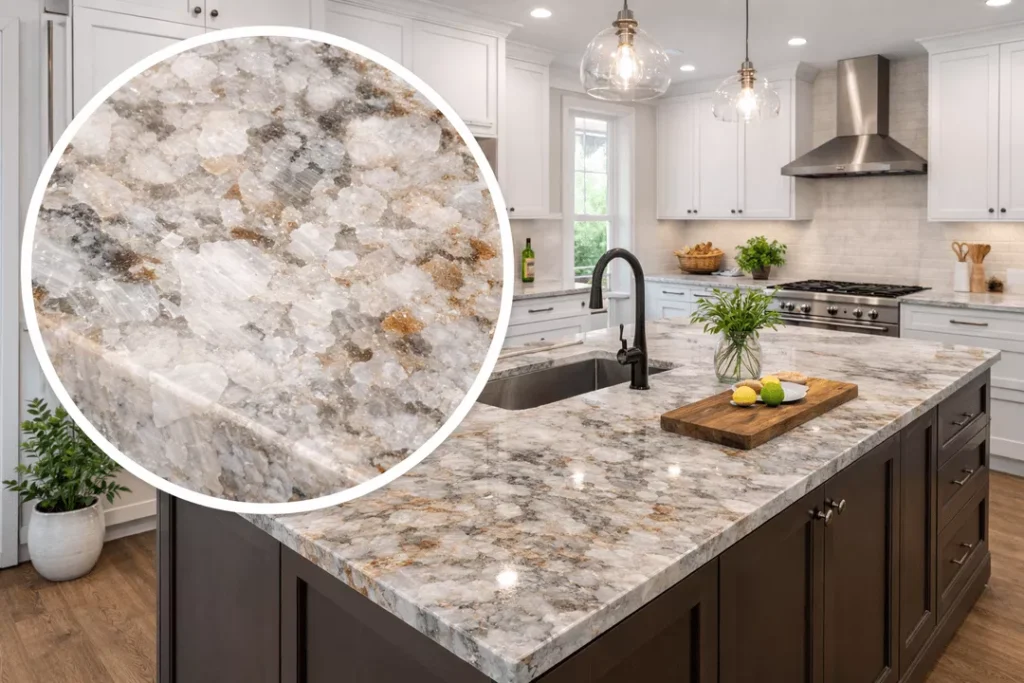
Quartz grains recrystallize and fuse together over time, producing an immensely dense stone of interlocking quartz crystals. This process forms quartzite, a substance known for its hardness and durability.
Key Differences Between: Quartz vs Quartzite
Composition and Origin
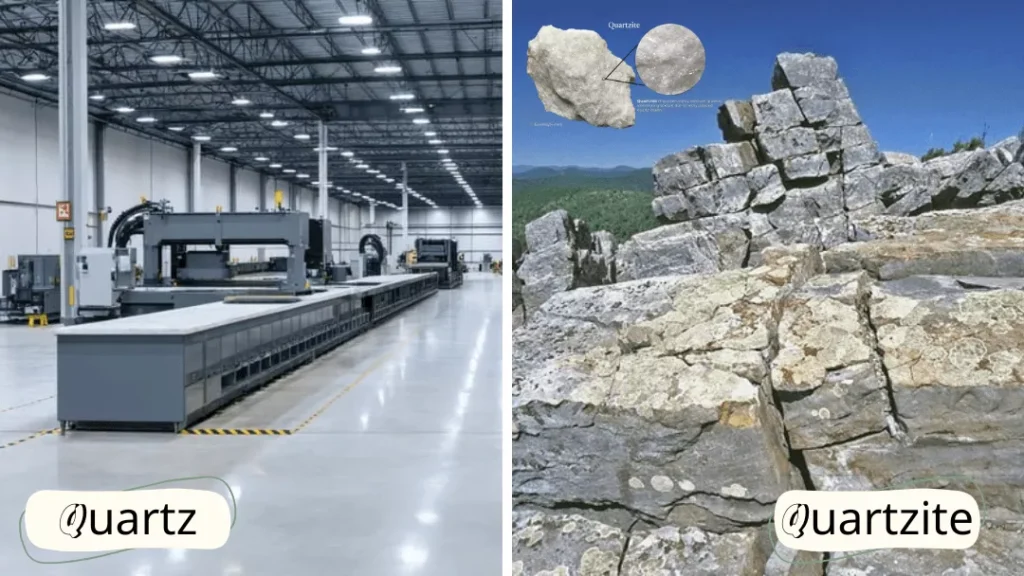
The core difference between quartz and quartzite is the way in which they are formed.
Quartz is a manufactured material created in factories. It is made by crushing quartz crystals and mixing them with resin and pigment. The end result is a managed, synthetic landscape for performance consistency.
Quartzite is a natural mineral that’s formed as sandstone changes over millions of years under intense heat and pressure in Geological Time. The natural process this formation goes through results in well-bonded quartz crystals that directly tie to the stone’s incredible hardness.
Since quartzite is made of nearly 100% mineral quartz, it’s generally a little harder than engineered quartz surfaces.
Appearance and Aesthetics
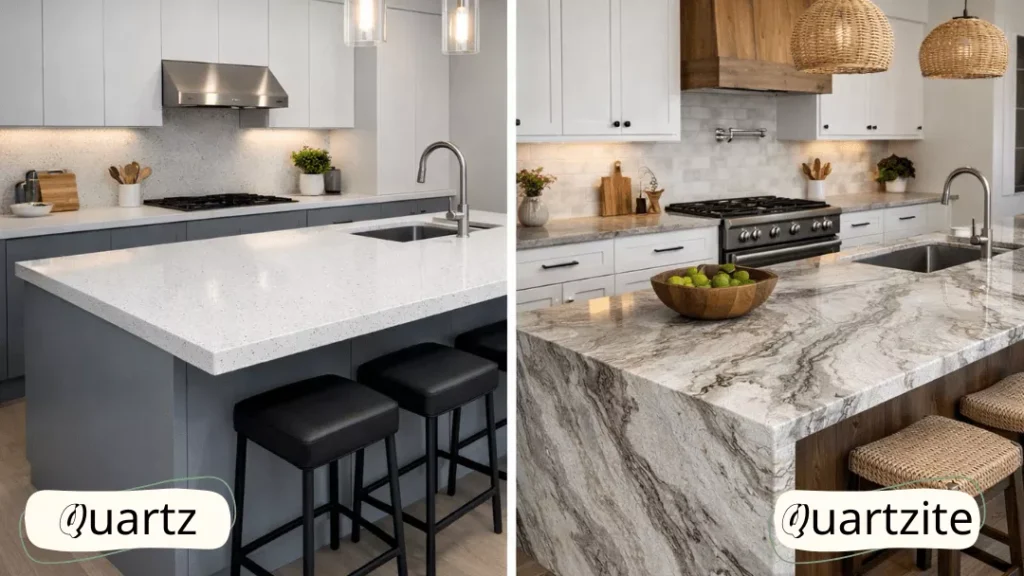
The visual appearance of quartz versus quartzite is immensely different.
Quartz has uniform and repeatable patterns, making them well-suited for modern kitchens with clean lines and uniform aesthetics. Because the material is manufactured, designers are able to create certain patterns that repeat throughout slabs.
Quartzite, on the other hand, exhibits organic movement and dramatic veining that occurs in nature. No one slab is alike, with subtle color variations and patterns that cannot be duplicated.
So for homeowners in search of natural beauty and uniqueness, quartzite typically impresses. When it comes to projects requiring predictable patterns and consistent design, quartz is the better choice.
Durability
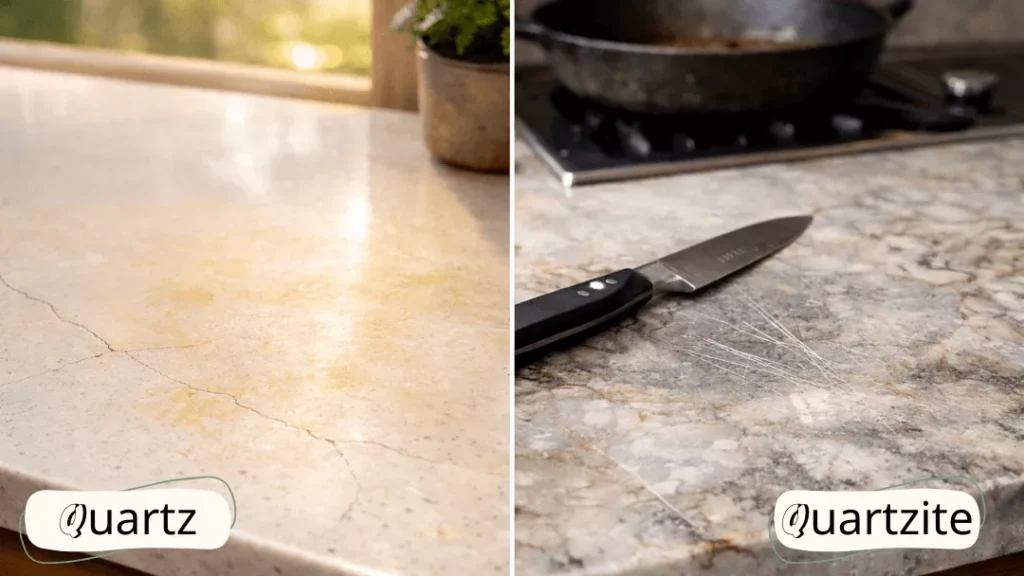
Both quartz and quartzite are considered extremely durable countertop options. On the Mohs hardness scale, both generally rate about 7, making them resistant to everyday scratches and wear.
However, Quartzite, on the other hand, tends to be more dimensionally stable and its pure mineral structure makes it perform slightly better in real-world conditions.
Quartz surfaces have their weaknesses, the resin binders used in the quartz are vulnerable to some environmental factors. For instance, prolonged exposure to strong sunlight can lead to the resin elements of quartz fading or browning over a period of time.
Heat Resistance
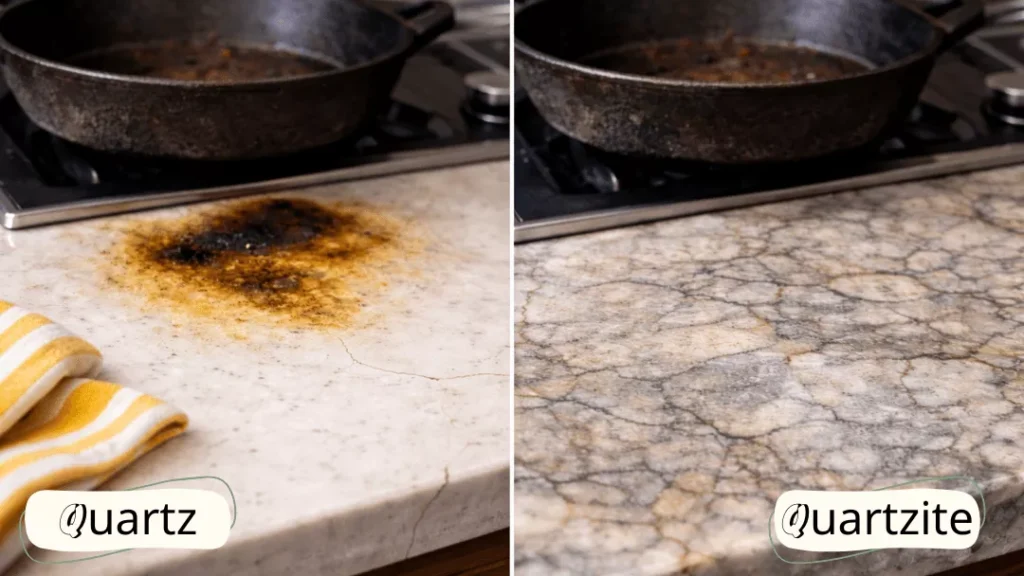
Quartz countertops aren’t completely heatproof, either, the resin binders can scorch or discolor if exposed to very high temperatures.
Quartzite, on the other hand, develops under high geological heat and so is inherently resistant to high temperatures. That makes it much better suited to deal with hot pans than quartz.
For kitchens which see heavy cooking, quartzite is generally more peaceful.
Stain Resistance
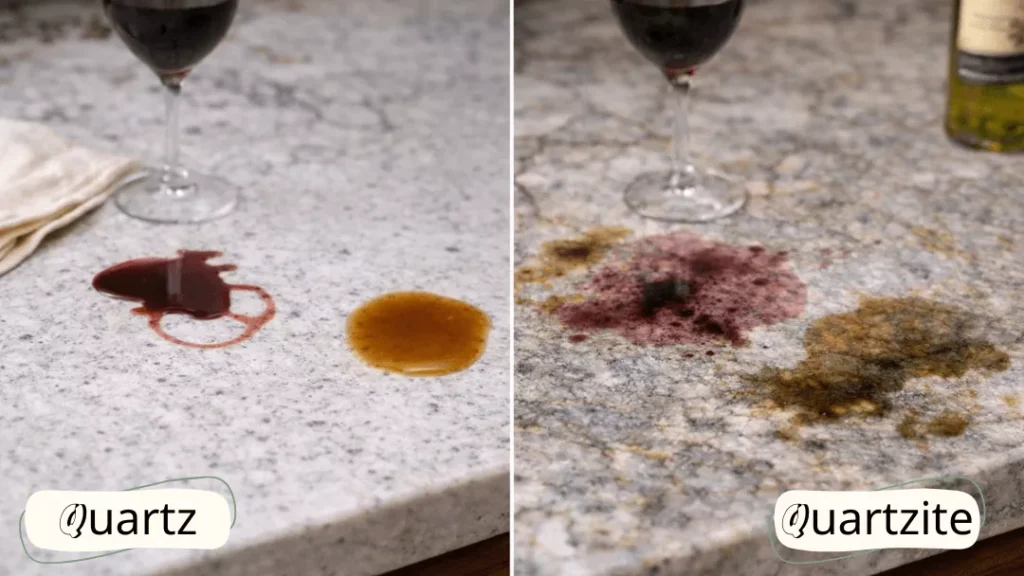
Quartz countertops win when it comes to protecting against stains. Since quartz is manufactured using resin binders, it creates a non-porous surface that does not need sealing and is resistant to liquids and food stains.
Quartzite is a natural stone, and thus porous. Without adequate sealing, things like wine, coffee or oil can sink into the surface and leave a stain.
Maintenance Requirements
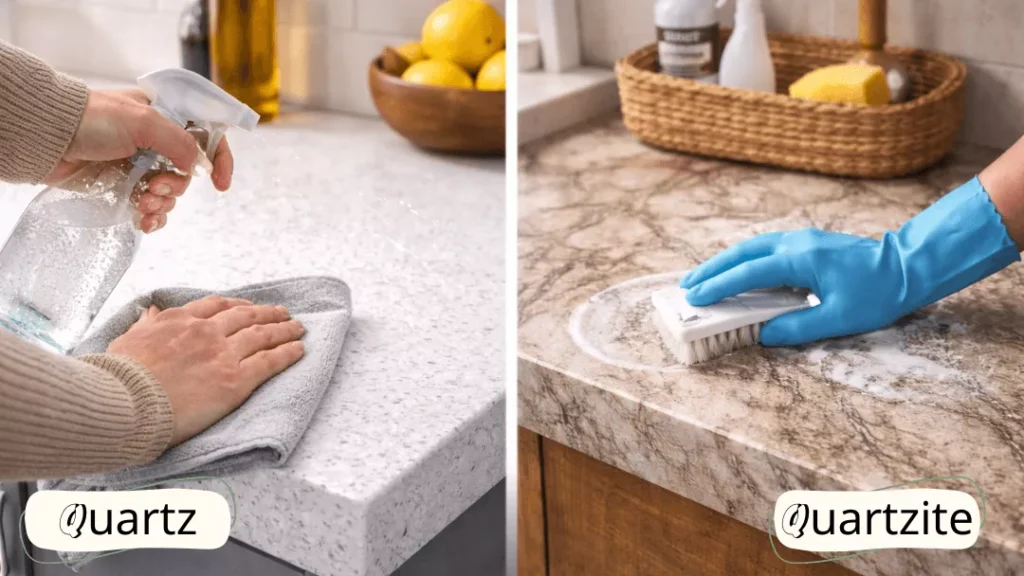
Quartz countertops require very low maintenance. Cleaning usually means wiping down the surface with mild soap and water. Because the material is non-porous, it does not need sealing or special treatments.
Quartzite is a little more needy. Homeowners are advised to use a protective sealant regularly and keep the surface from coming into contact with strong acids, such as vinegar or lemon juice, which can harm natural stone.
Final Verdict
Quartz and quartzite are both high-end countertop materials, but they fulfill somewhat different needs. However, quartz is likely the better choice for most homeowners. It has strong stain resistance, consistent design choices, and low maintenance needs. Quartzite is alluring for those in search of natural stone beauty with unparalleled heat-resistance. It is particularly effective in high-end kitchens where unusual patterns and organic textures are appreciated.
Ultimately, when comparing quartz vs quartzite, the right choice for you hinges on how you weigh lifestyle, design preference, maintenance expectations, and budget. Keeping that in mind, select the surface that’s best for your space.
Explore Further:
- Why White Kitchen Cabinets with Granite Countertops Works
- Select Rich-Colored Marble Kitchen Trends 2026

Navdeep is a PHP programmer by profession, & rider by passion with a strong interest in writing, reflection, and travel. His writing draws from daily experiences across online and real-world settings, often influenced by an interest in interior design and how spaces affect mood and function.