
A floor plan is a 2D diagram that gives a top overview of a room or a building. When learning how to read floor plans, it’s important to know that a plan set includes the building’s layout, showing the bedroom, bathroom, basements, and other spaces.
A floor plan may seem overwhelming to read, leaving you feeling daunted by the jumble of lines, symbols, and numbers. Floor plans are the language architects use to communicate space, flow and function. Once you understand, plans stop being a mystery and give a clear view of how a home will work in real life.
What Is a Floor Plan and Why Does It Matters?
A floor plan is a scaled, two-dimensional drawing showing a building from above. It maps relations between furniture, walls, doors, windows, stairs and rooms. Think of a top-down blueprint that lets you see a layout before laying the first brick.
Whatever your project, whether it’s:
- Buying a new home
- Designing or renovating a space
- Planning furniture placement
- Communicating ideas with builders or interior designers
Understanding how to read them makes you aware of potential issues early on.
Before You Dive In: Some Basic Concepts
Scale and Measurements
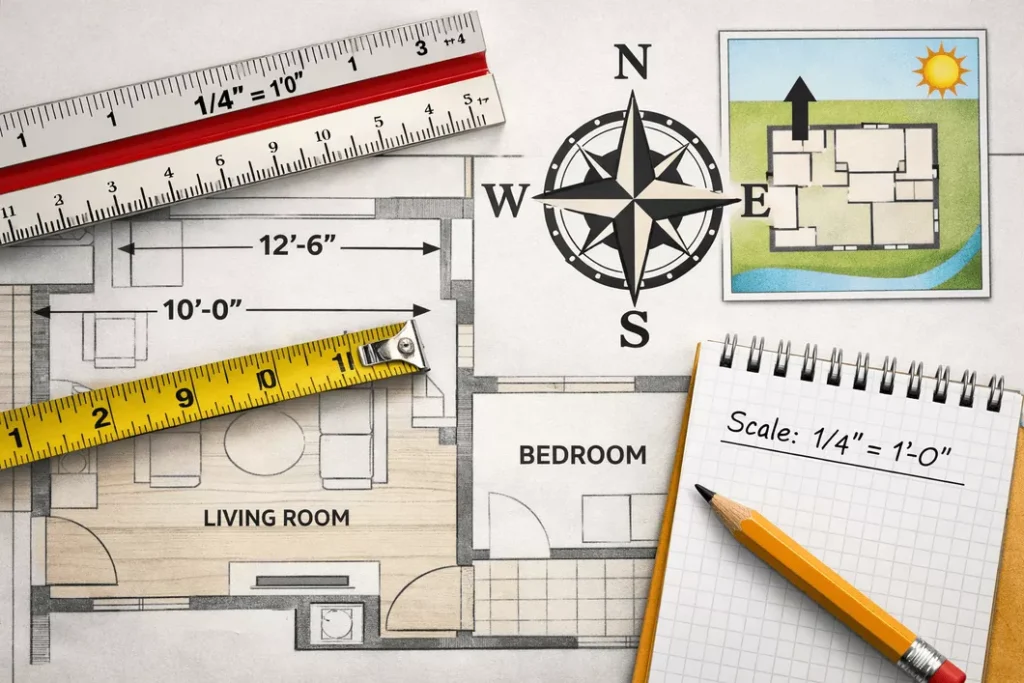
These plans aren’t life‑size, they’re drawn to a scale, like 1/4” = 1’‑0” (U.S. residential norm). Meaning a quarter‑inch on the page equals one foot in real life. This scale is essential for translating the drawing into real physical dimensions.
Look for dimension lines next to walls—they typically include actual measurements (e.g., 12′‑6″). These tell you room lengths and widths and help you assess things like whether your sofa will really fit where you want it.
Orientation
Floor plans often include a north arrow or compass rose so you can tell which way the layout actually faces. This helps you understand natural light, views, and energy flow.
Understanding Every Symbol on a Floor Plan
Walls
They are shown with parallel lines. Exterior walls are typically thicker than interior ones.
Doors and Windows
- Doors are shown as openings in walls with an arc marking the swing direction, the arc tells you which way the door opens and how much space it takes.
- Windows are breaks in walls with thin lines showing glass. Both placement and size tell you how much light enters a room.
Stairs
Stairs appear as a series of rectangles or lines with an arrow showing whether you’re going up or down.
Rooms and Labels
Rooms are usually labeled as Living Room, Bedroom 1, 2 and sometimes include suggested furniture layouts.
Symbols and Fixtures
Plans also includes icons for particular fixtures such as:
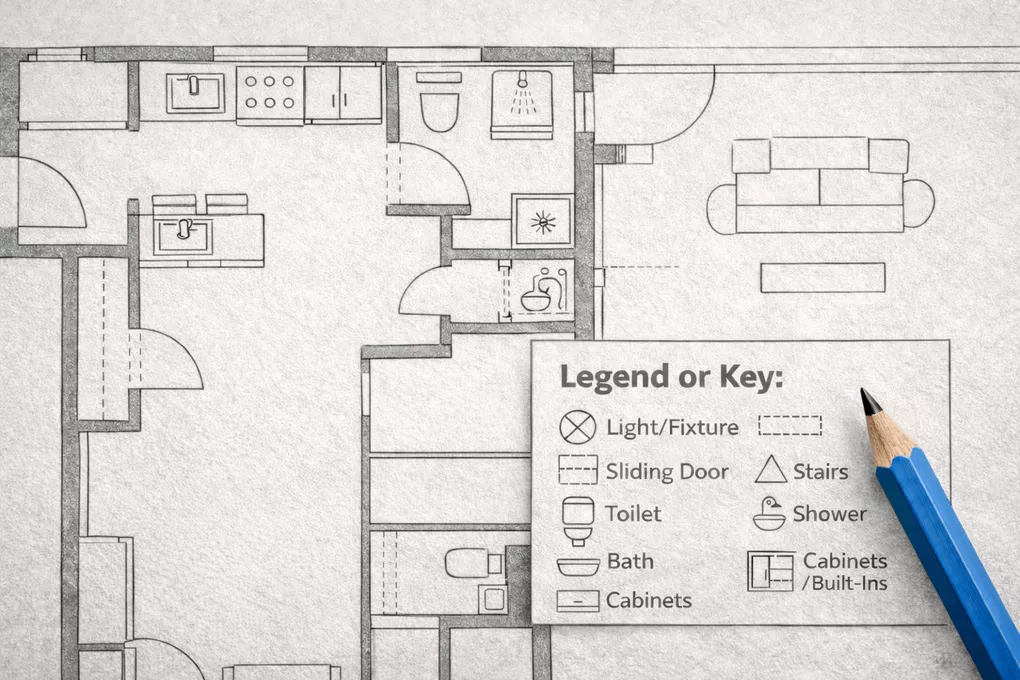
For kitchen appliances (sink, stove, fridge), bathroom fixtures (toilet, bath, shower), built‑ins (cabinets, islands).
These help you understand how the space will be used and where all the pieces in the room go.
Don’t forget the legend or key on the plan. For example, a floor plan might show a small circle with an “X” inside or a dashed line or a symbol like triangle. To understand these symbols, you check a small box that mostly lies in the corner of the page.
Reading the Plan Like a Space
Now you recognize symbols and measurements, the next step is to visualize flow and function.
Traffic Flow and Circulation
Look for common things which people generally check, how rooms connect, is the kitchen convenient to the dining area? Does the main bathroom sit far from guests?
Imagining yourself walking through the space helps reveal flaws or conveniences that a simple diagram doesn’t immediately show.
Furniture and Function
Some plans already include furniture outlines. Nowadays, most of them have it, thanks to AI.
If there are no furniture outlines present, get a pen or pencil, sketch your own to scale. This helps you check whether your bed, sofa, dining table, or other essential furniture actually fits in the space.
Check Light, Views, and Privacy
This part, I leave it up to you. Take your time and decide how much orientation matters to you. Think about how each element affects your daily comfort.
What Floor Plans Don’t Tell You
A floor plan won’t show everything. It’s a flat, top‑down view, so it can’t communicate with things like:
- Ceiling height or finishes
- Texture and materials
- Detailed structural elements
- The look and feel of a space
For those details, you’d look at elevations, sections, or 3D renderings.
Conclusion
Reading floor plans doesn’t require architectural hardcore education or training. It’s about the basic language of scale, symbols and spatial relationships. Once you learn to interpret them, a plan becomes a tool for decision making. Whether you’re interested in real estate, planning an interior remodel or starting to build your house from scratch.
Don’t Miss These Guides:
- Mistakes Homeowners Make That Turn Into Costly Pitfalls
- Architect Marketing Plan for Online Presence
From blueprint to brilliance, grow your design confidence with Lines and Volumes.

Dipanjan is a digital marketing professional with five years of hands-on experience across strategy building, content, and performance-driven campaigns. He has worked on building structured marketing systems that focus on reach, engagement, and measurable growth. Known for his analytical thinking and consistency, he brings a practical approach to digital execution. Outside of work, he loves cooking, painting and enjoys exploring interior setups. Connect with him on LinkedIn.