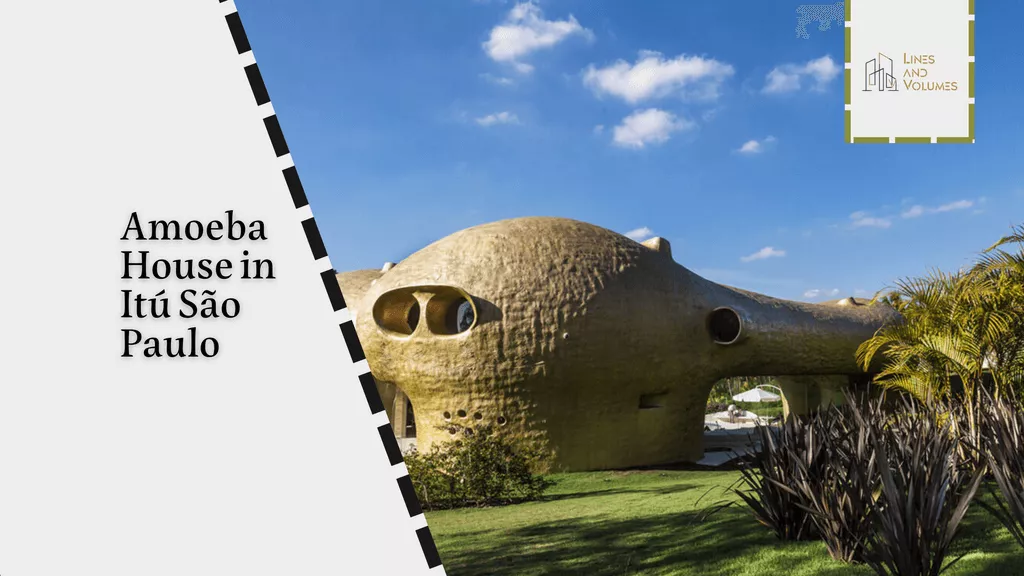
Not just an ordinary house that politely sits on but more like one that settles in slowly. Just like something living would.
Amoeba house located in Itu, about two house drive from Sao Paulo. The house sits inside a private residential enclave wrapped around a golf course. From the outset, find greenery wherever your eyes go, both carefully manicured and wild, tangled, and a little unruly. Senosiain, who always leaned towards architecture that feels grown, not built.
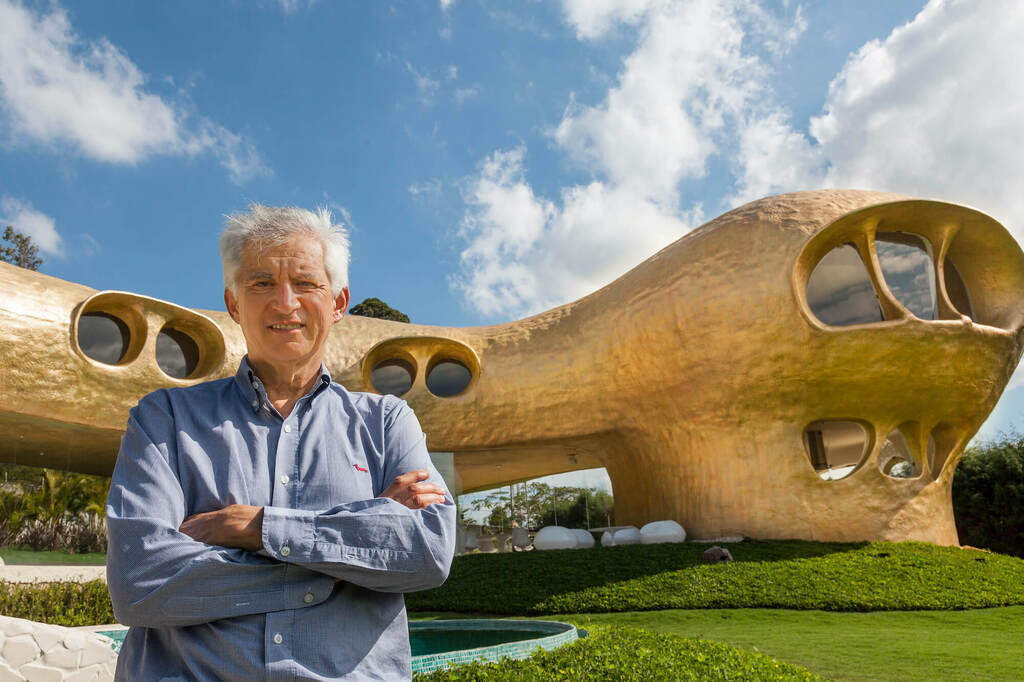
The plot faces the fairway and enjoys a generous northern orientation, which already feels like cheating. Add to that a curious rule imposed by the development: every house must sit like an island in the middle of its lot. No fences, no hard boundaries just live with the landscape, not against it.
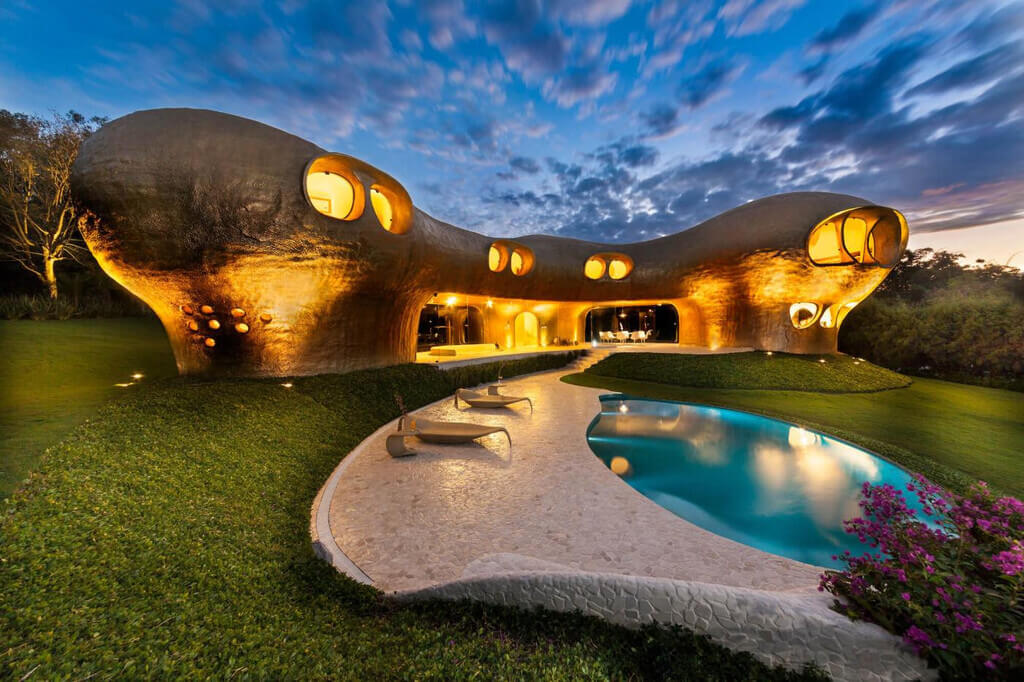
So the ground remains untouched, without flattening or correction. Instead, the house, terrace, and pool follow the slope almost instinctively, as if they had always planned to be there.
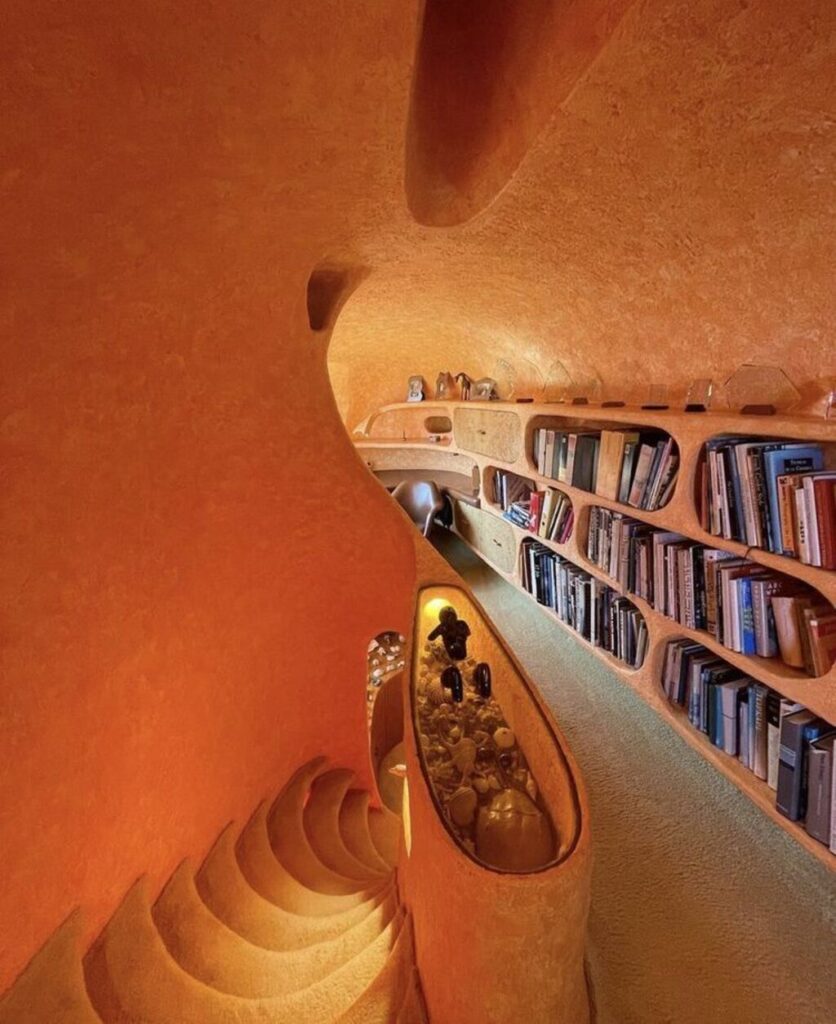
In the same spirit, the lawn doesn’t stop at the edge of the property. It just keeps going, visually bleeding into the golf course. At times, it’s hard to tell where one ends and the other begins.
The house includes three shared spaces, a kitchen, a TV room, and a game room. The design follows a three-legged ground floor, with each leg dedicated to one of those functions. Between them, wide-open zones stretch out into dining and living areas, with long, uninterrupted views that cut straight through the house, out to the fairway on one side and the garden on the other. No visual dead ends, no boxed-in corners.
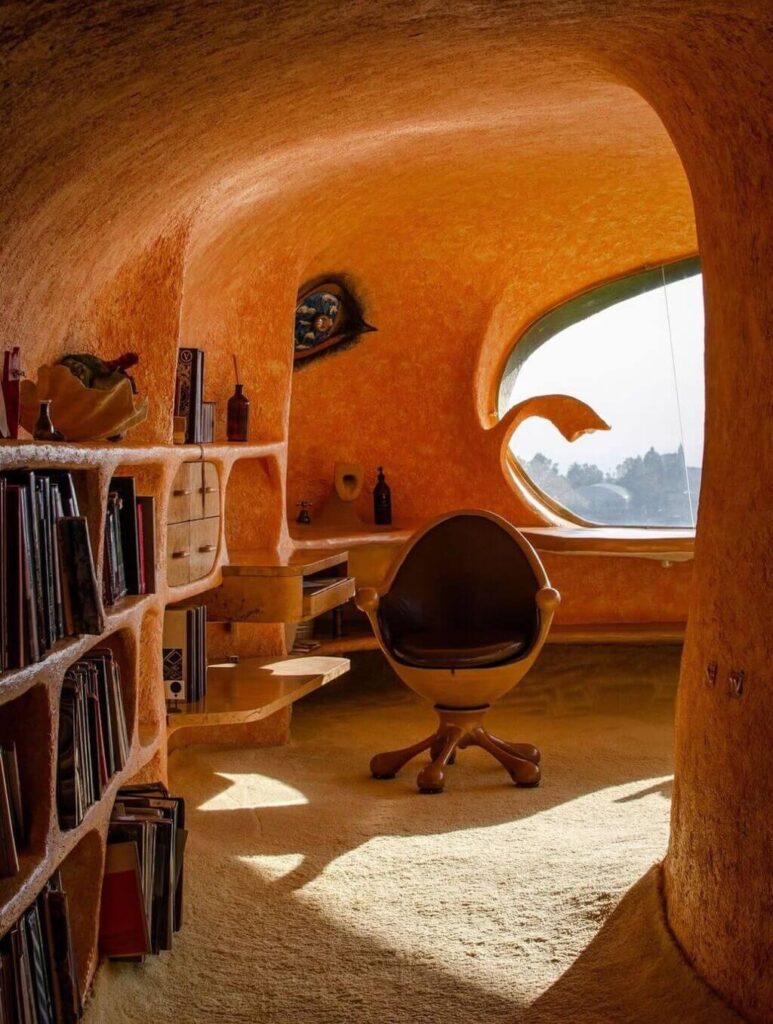
Above this tripod-like base sits the private zone for bedrooms and a family room. It appears to hover lightly, supported by the same three legs below. From up there, the golf course feels theatrical, especially in the early morning.
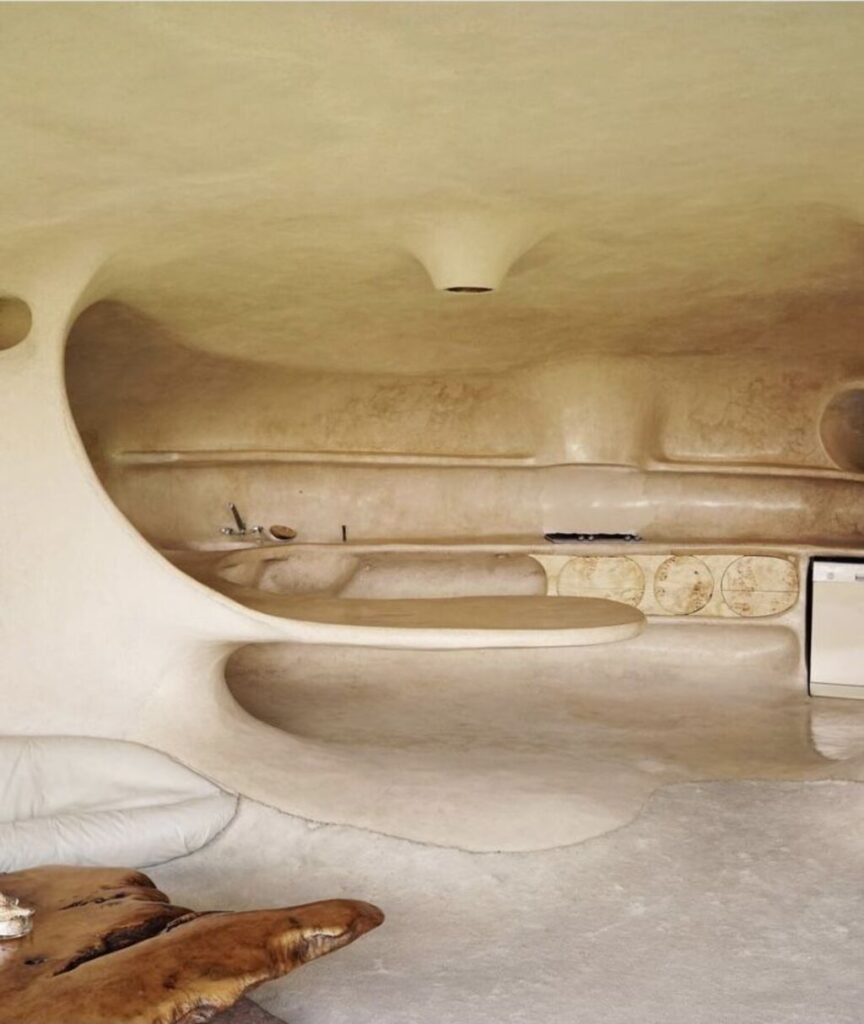
The design doesn’t hide the structural legs. Instead they’re highlighted in metallic tones, golds and copper patinas that catch the light differently as the day drags on. Inside, things calm down. Beige dominates, but not monotonously. Materials shift subtly from floor to floor, enough to register, not enough to shout.
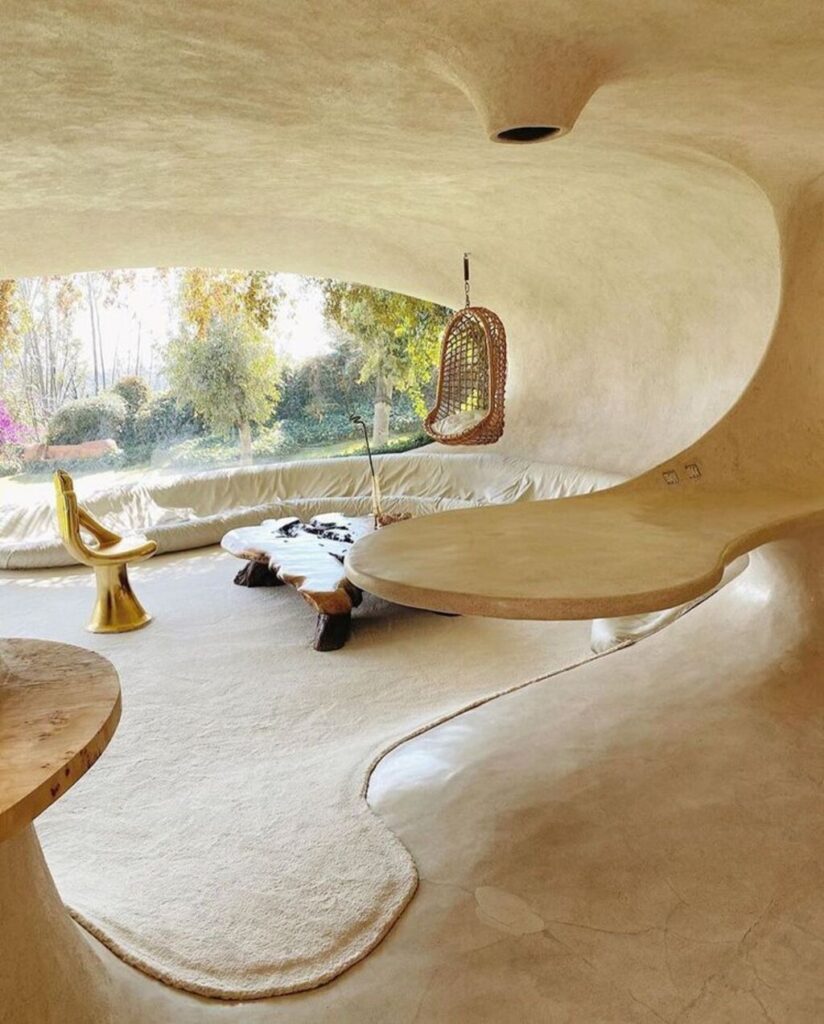
Movement through the house is easy, almost casual. That’s partly because much of the furniture is built in, folded directly into the architecture. The dining area, garden, and pool zones are the exceptions, and rightly so. Those spaces are meant to change, to host, to be rearranged on a whim.
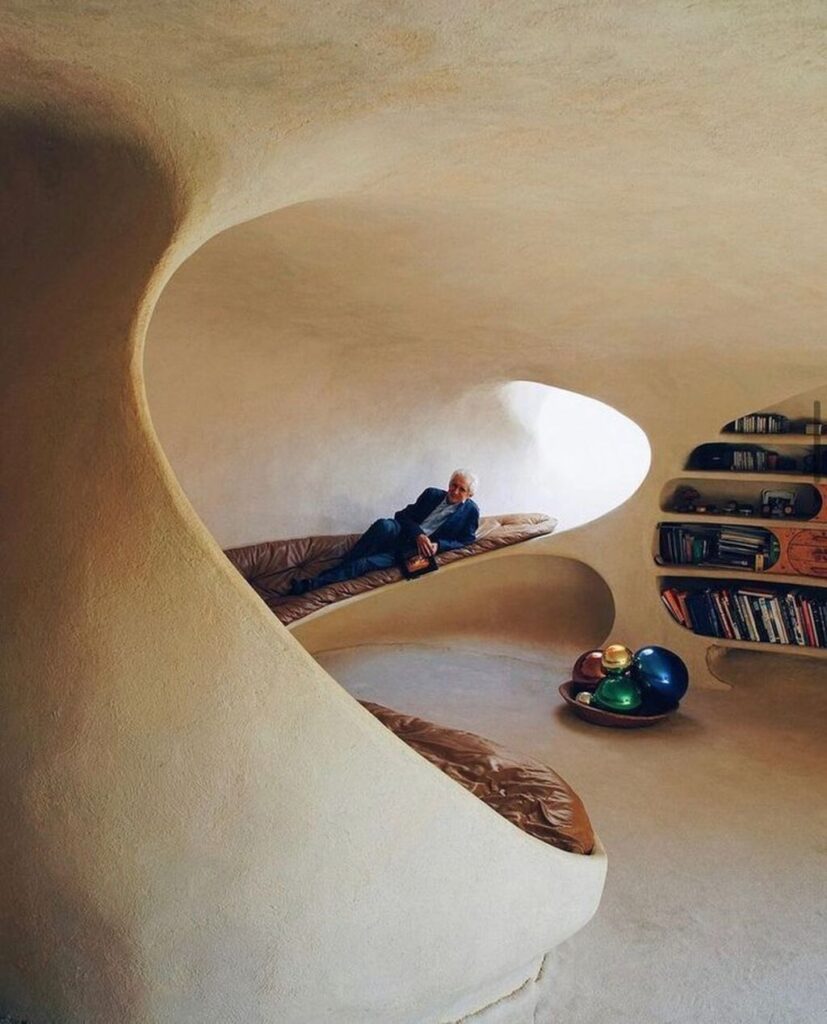
In the end, Casa Amiba doesn’t try to impress with spectacle. It just sits there, maybe that’s the hardest thing to design.
For new architecture project updates visit Lines And Volumes.
More like this:

Navdeep is a PHP programmer by profession, & rider by passion with a strong interest in writing, reflection, and travel. His writing draws from daily experiences across online and real-world settings, often influenced by an interest in interior design and how spaces affect mood and function.